

Bank loan for tractor can offer a lifeline to maintain productivity without the hefty upfront costs. In today’s agriculture sector, reliable equipment is key to success, but buying a tractor outright can strain your finances. A bank loan provides a way to spread out the costs over time, ensuring you have the equipment you need now.
Quick Summary on Bank Loan for Tractor:
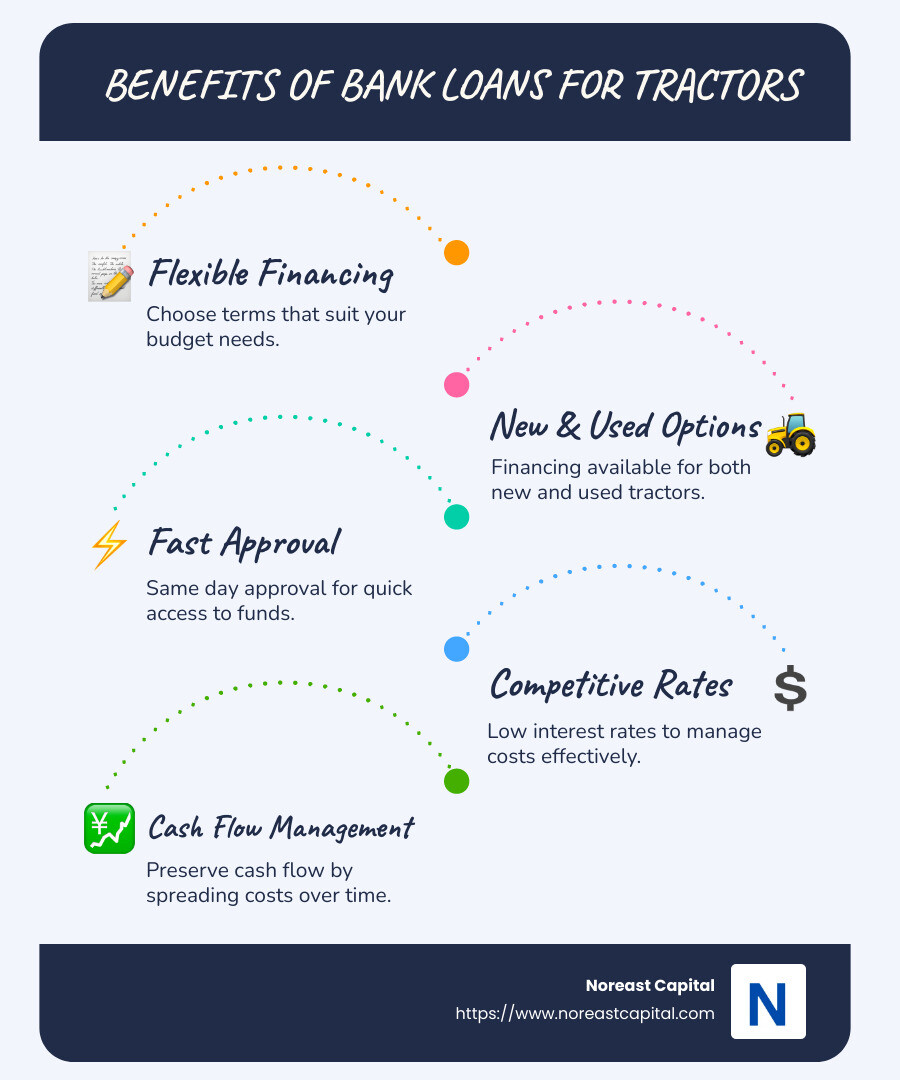
– Flexible Financing: Choose terms that work for your budget.
– Options for New and Used Tractors: Financing available for both.
– Same Day Approval: Funds often available immediately.
– Low Interest Rates: Competitive rates to keep costs manageable.
Why Choose a Bank Loan?
– Preserve cash flow by making monthly payments instead of a lump sum.
– Gain immediate access to critical farming equipment.
– Potentially benefit from tax deductions on interest payments.
I’m Vincent Cerniglia, an expert in equipment financing with years of experience helping businesses across the U.S. secure practical solutions. At Noreast Capital, we pride ourselves on offering customized bank loan for tractor options to meet the diverse needs of farmers and agricultural businesses.
Bank loan for tractor terms you need:
– rent to own tractors no credit check
– tractor financing
Understanding Tractor Loans
When it comes to financing a tractor, understanding the different loan types and financing options is crucial. This knowledge helps you make informed decisions that best suit your needs and financial situation.
Loan Types for Tractors
Term Loans: These are traditional loans where you borrow a specific amount and repay it over a set period with interest. Ideal for purchasing new or used tractors, they offer fixed monthly payments, making budgeting easier.
Operating Loans: Often short-term, these loans cover day-to-day expenses like maintenance or seasonal needs. They are helpful for farmers who need quick cash flow to keep operations running smoothly.
Financing Options
Banks and financial institutions offer various financing options custom to agricultural needs. These options are designed to help you get the equipment necessary for your farm without breaking the bank.
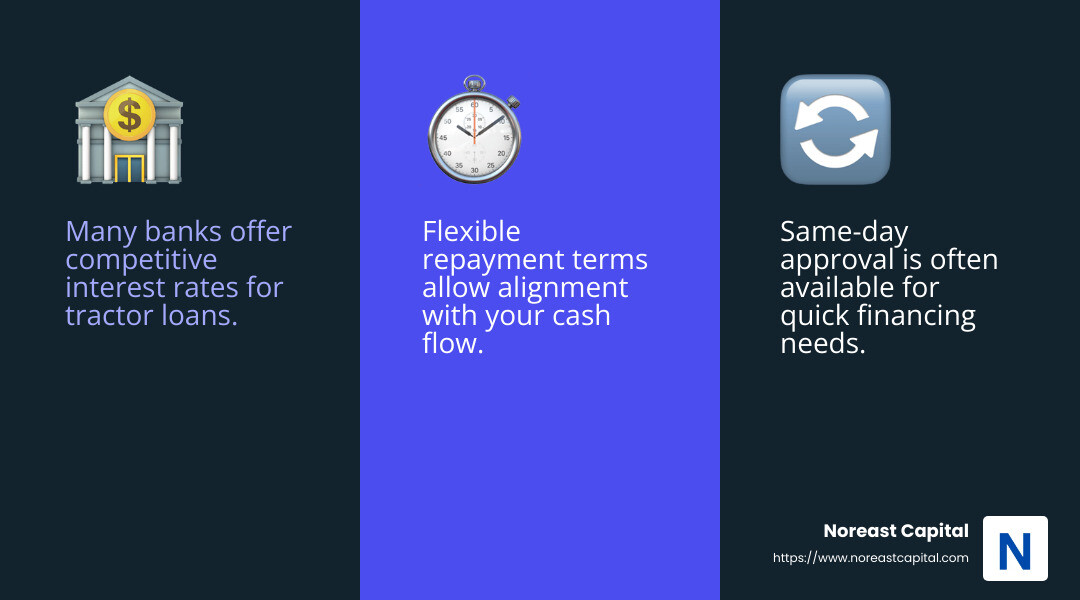
Low Interest Rates: Many banks offer competitive rates to make tractor loans affordable. This helps keep your overall costs down.
Flexible Terms: Choose repayment terms that align with your cash flow. Whether you prefer shorter terms with higher payments or longer terms with lower payments, flexibility is key.
Same Day Approval: Quick approval processes mean you can often get the funds you need the same day you apply, ensuring you don’t miss out on time-sensitive opportunities.
Ownership Benefits
Owning a tractor outright comes with several advantages:
Asset Ownership: A loan means you own the tractor once it’s paid off. This can be a valuable asset for your farm.
Tax Benefits: You may be able to deduct interest payments on your taxes, providing additional financial relief.
No Usage Restrictions: Owning your tractor means no mileage limits or usage restrictions, giving you full control over your equipment.
Understanding these elements of tractor loans empowers you to make the best decision for your agricultural business. With the right loan, you can maintain productivity, manage costs, and invest in your farm’s future.
Best Bank Loan Options for Tractors
When you’re in the market for a bank loan for a tractor, it’s important to explore various financing options. Understanding interest rates, loan amounts, and financing terms is key to making the best choice for your farm’s financial health.
Interest Rates
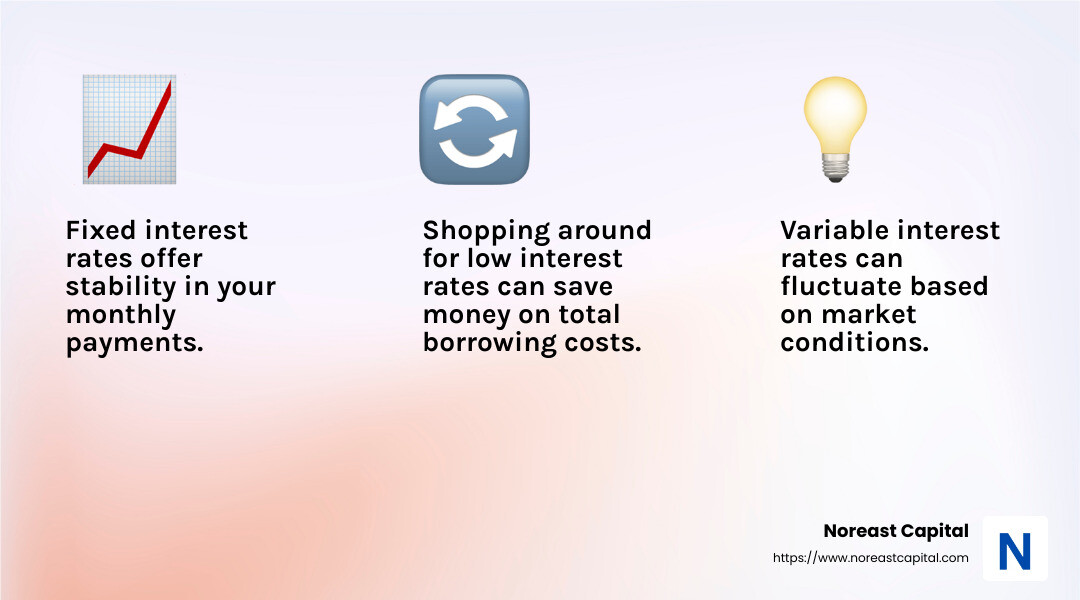
Interest rates for tractor loans can vary widely, so it’s crucial to shop around for the best deals. Low interest rates make loans more affordable by reducing the overall cost of borrowing.
Fixed Rates: These rates remain constant throughout the loan term, making it easier to plan and budget. Fixed rates are ideal if you want predictability in your monthly payments.
Variable Rates: These rates can change over time based on market conditions. While they might start lower than fixed rates, they can increase, affecting your monthly payments.
Loan Amounts
The loan amount you qualify for depends on several factors, including your credit score and the value of the tractor you’re purchasing. Financing options are available that can cover up to 100% of the tractor’s purchase price, especially for new equipment.
New Tractors: Lenders may be more willing to finance a larger portion of the cost for new tractors due to their higher resale value and longer lifespan.
Used Tractors: While loans for used tractors are available, they might come with higher interest rates and shorter terms due to depreciation and wear.
Financing Terms
The financing terms you select can significantly impact your loan’s affordability and your farm’s cash flow.
Short-Term Loans: These have higher monthly payments but lower overall interest costs. They are ideal if you can handle larger payments and want to pay off the loan quickly.
Long-Term Loans: These offer lower monthly payments, which can ease cash flow constraints, but you’ll pay more in interest over the life of the loan.
Flexible Repayment Options: Some lenders offer flexibility in repayment schedules, allowing you to align payments with your farm’s income cycles.
It’s important to work with a lender who understands the agricultural industry and can offer terms that fit your specific situation.
By understanding these key aspects of bank loans for tractors, you can make informed decisions that support your farm’s growth and sustainability.
How to Qualify for a Tractor Loan
Securing a tractor loan involves a few important steps. Understanding what lenders look for can significantly improve your chances of approval. Let’s break it down.
Credit Requirements
Your credit score plays a major role in qualifying for a tractor loan. It acts as a financial report card that shows how reliable you are as a borrower. A higher credit score often means lower interest rates and better loan terms.
Good Credit Score: Typically, a score above 700 is considered good. It can open doors to more favorable interest rates and loan terms.
Average or Low Credit Score: Scores below 700 might still qualify you for a loan, but expect higher interest rates. It might be worth improving your score before applying.
Application Process
Applying for a tractor loan involves a few key steps. Here’s a quick look at what you need to prepare:
Gather Financial Information: Have your annual income, existing debts, and any financial statements ready.
Loan Amount and Purpose: Know how much you want to borrow and how you plan to use the funds. This will help lenders assess your needs.
Property Details: If you’re using property as collateral, provide details like acreage and estimated value.
Submit Application: Many lenders offer online applications. For amounts up to $75,000, decisions can often be made the same day if submitted early.
Collateral
Collateral is an asset that secures your loan, reducing the lender’s risk.
Tractor as Collateral: The tractor itself can often serve as collateral, especially if it’s new and has a high resale value.
Property or Equipment: Some lenders may require additional collateral, like other farm equipment or real estate. Make sure the collateral you offer is free of existing liens or mortgages.
By understanding these key factors, you can better prepare for the application process and improve your chances of getting a tractor loan. This preparation not only helps you qualify but also ensures you get the best possible terms for your farm’s needs.
Next, we’ll tackle some frequently asked questions about tractor loans to clear up any lingering doubts.
Bank Loan for Tractor: Key Considerations
When considering a bank loan for a tractor, it’s crucial to understand the key elements that will affect your borrowing experience. Let’s explore the details of loan terms, repayment options, and interest rates.
Loan Terms
Loan terms refer to the length of time you have to repay the loan. For tractors, terms can vary widely based on the age and condition of the equipment.
New Tractors: Loans for new tractors often come with terms ranging from 1 to 7 years. New equipment typically allows for longer terms due to its higher value and resale potential.
Used Tractors: If you’re purchasing a used tractor, expect shorter loan terms. The age and condition of the tractor will influence how long the bank is willing to extend the loan.
Repayment Options
Repayment options for tractor loans are designed to fit the seasonal nature of farming. Flexible repayment schedules can accommodate cash flow variations throughout the year.
Monthly Payments: This is a common option for borrowers with steady monthly income. It’s straightforward and helps in budgeting.
Annual Payments: Ideal for farmers who receive income seasonally, such as after a harvest. This option aligns payments with your income cycle, reducing financial strain during off-seasons.
Bi-annual or Quarterly Payments: Some lenders offer these options to provide even more flexibility, allowing you to tailor payments to your unique financial situation.
Interest Rates
Interest rates determine the cost of borrowing and can vary based on several factors, including your credit score and the loan term.
Fixed Rates: These remain constant throughout the loan term, providing stability and predictable payments. This can be beneficial in a rising interest rate environment.
Variable Rates: These can fluctuate based on market conditions. While they might start lower than fixed rates, they carry the risk of increasing over time.
Credit Impact: As mentioned earlier, a good credit score can secure you lower interest rates. Conversely, lower scores might lead to higher rates, increasing the overall cost of the loan.
By understanding these considerations, you can make informed decisions that align with your financial situation and farming needs. Next, we’ll tackle some frequently asked questions about tractor loans to clear up any lingering doubts.
Frequently Asked Questions about Tractor Loans
Do banks give loans for tractors?
Yes, banks do provide loans for tractors, but there are also alternative financing options available, such as equipment leasing through companies like Noreast Capital. Leasing can be a flexible solution for farmers and agricultural businesses to acquire the equipment they need without the long-term commitment of ownership. With leasing, the equipment itself often serves as collateral, similar to a bank loan.
Ownership benefits are a key advantage of financing through a bank loan. Once you complete your payments, you own the tractor outright. This can be especially beneficial if you plan to use the tractor for many years.
What should you consider when choosing a financing option for tractor acquisition?
When selecting a financing option for acquiring a tractor, consider several factors:
Interest Rates: Lower interest rates mean you’ll pay less over the life of the loan or lease. It’s crucial to shop around and compare rates from different providers.
Loan or Lease Amounts: Ensure the financing option covers the full cost of the tractor you wish to acquire. Some providers may have limits on the amount they are willing to finance.
Financing Terms: Look for flexible terms that suit your financial situation. Some providers offer terms up to 7 years, especially for new tractors, which can help keep monthly payments manageable.
Are tractor loans or leases hard to get?
Securing a tractor loan or lease can be challenging, depending on your financial situation. Here are some credit requirements and potential financing challenges you might face:
Credit Score: A higher credit score can improve your chances of approval and help you secure a lower interest rate. Providers see good credit as a sign of reliability.
Collateral: The tractor itself is often used as collateral, but a solid credit history can sometimes reduce the need for additional collateral.
Financing Challenges: Rising interest rates and higher equipment costs can make loans or leases more expensive. As noted in recent news, farmers are facing higher interest expenses, which adds to the financial burden.
Understanding these elements will help you steer the process of obtaining a tractor loan or lease. Next, we’ll explore how Noreast Capital can support your equipment leasing needs and the cash flow benefits associated with it.
Conclusion
At Noreast Capital, we understand that acquiring the right equipment is crucial for your business’s success. Our equipment leasing solutions offer a flexible alternative to traditional ownership, allowing you to use the latest tractors without the need for outright purchase. This approach not only helps you stay current with technology but also enables you to maintain and improve your cash flow.
Leasing with us means you can allocate your capital to other essential areas of your business while enjoying the benefits of using top-quality equipment. Our custom leasing options are designed to fit your specific needs, ensuring you can focus on what you do best—growing your business.
Whether you’re a small farm or a larger agricultural operation, Noreast Capital is here to support you every step of the way. Our competitive rates and flexible terms make it easier to access the equipment you need without straining your finances.
For more information on how we can help you with your tractor financing needs, visit our Tractor Loan page. Let us be your partner in success, providing the financial tools you need to thrive in today’s competitive market.