

Why Car Leasing Makes Financial Sense for Your Business
Car leasing for businesses is a strategic financing option that allows companies to use vehicles without the burden of ownership, typically with lower monthly payments than purchasing.
Here’s what you need to know about business car leasing:
| Key Aspect | Business Car Leasing Details |
|---|---|
| Definition | Long-term rental agreement where businesses pay for vehicle use over a set period (typically 2-5 years) |
| Main Benefits | Lower monthly payments, no depreciation risk, tax-deductible expenses, regular access to new vehicles |
| Common Terms | 24, 36, or 48 months with mileage limits usually between 10,000-15,000 miles annually |
| Tax Advantages | Lease payments often 100% deductible as business expenses; VAT-registered businesses can reclaim up to 50% on payments |
| End Options | Return vehicle, purchase at residual value, or extend lease |
Are you tired of putting thousands of business miles on your personal car? Or perhaps you need more professional vehicles for client meetings but don’t want to commit to large down payments and depreciation risks?
Many entrepreneurs find that leasing vehicles through their business offers a practical solution that preserves capital and simplifies budgeting. Unlike buying, leasing allows you to:
- Conserve cash flow with minimal upfront costs
- Upgrade regularly to newer models with the latest technology
- Simplify accounting with predictable monthly expenses
- Avoid depreciation losses that typically range from 15-35% in the first year alone
Most vehicles lose between 50-60% of their value during the first three years – a significant hit that your business can avoid by leasing instead.
I’m Vincent Cerniglia from Noreast Capital Corporation, where I’ve helped countless businesses develop strategic car leasing for businesses solutions that maximize cash flow and minimize long-term costs. My experience as a direct lender providing nationwide financing and leasing solutions has given me unique insight into how businesses can leverage vehicle leasing to maintain liquidity while projecting a professional image.

Car leasing for businesses terms at a glance:
– Car lease approval process
– Car lease negotiation strategies
– Car lease terms explained
Car leasing for businesses: Basics and Strategic Benefits
Ever wondered why so many successful companies lease their vehicles instead of buying them outright? Car leasing for businesses is fundamentally about using vehicles without owning them. Rather than purchasing cars that immediately start losing value, your business enters an agreement to use vehicles for a specific period while making regular payments. The leasing company keeps ownership of the vehicle, which means they—not you—shoulder the burden of depreciation.
This arrangement creates several powerful advantages for your business:
Capital preservation becomes a game-changer for many companies. Instead of sinking large chunks of cash into vehicles that lose 15-35% of their value in the first year alone, leasing frees up your capital for what really matters—growing your business and investing in profit-generating activities.
Access to newer technology keeps your team equipped with the best tools. With typical lease terms of 2-3 years, your business can regularly upgrade to vehicles with the latest safety features, better fuel efficiency, and cutting-edge technology without the hassle of selling used vehicles.
Tax benefits make leasing especially attractive for many businesses. Under Section 179 of the tax code, you can deduct lease costs and driving expenses throughout the lease period, though remember this applies only to the percentage of use that’s business-related.
Improved business image isn’t just about vanity—it’s about perception. When clients see your team arriving in clean, modern vehicles, it subtly communicates success and reliability. As one fleet manager told us, “We switched from buying to leasing our sales team’s vehicles three years ago, and not only did we improve our cash position, but our maintenance costs dropped dramatically while our team’s morale improved with newer models.”

Want to dive deeper? Learn more about the Benefits of Car Leasing on our dedicated page.
Car leasing for businesses vs personal leasing
Business car leasing differs from personal leasing in several important ways that could significantly impact your bottom line:
Credit separation gives your company breathing room. For limited companies, business leases typically don’t appear on personal credit reports, creating a healthy boundary between business and personal finances. This separation can be crucial when you’re growing your business while protecting your personal credit score.
VAT advantages put money back in your pocket. If your business is VAT-registered, you can reclaim up to 50% of the VAT on lease payments and 100% on any maintenance plan—effectively giving you an immediate discount that personal lessees don’t enjoy.
Liability structure often works in your favor with business leases. These agreements can be structured to protect personal assets if your business encounters difficulties, offering peace of mind alongside financial benefits.
Driver perks make company cars an attractive employee benefit. Offering leased vehicles can improve recruitment and retention while potentially providing tax advantages compared to equivalent salary increases.
One important note: business lease quotes typically exclude VAT in the advertised price, while personal lease quotes include it. This can sometimes make business leases appear cheaper at first glance, so always compare total costs.
Key advantages of car leasing for businesses
When considering car leasing for businesses, these benefits often make it the preferred choice for companies of all sizes:
Lower monthly payments free up your cash flow. Business lease payments typically run 30-60% lower than loan payments for the same vehicle because you’re only paying for the vehicle’s depreciation during the lease term, not its entire value.
Frequent upgrades keep your fleet fresh and reliable. Leasing allows your business to refresh its vehicles every few years, ensuring you always have modern, dependable transportation that reflects positively on your brand and reduces maintenance headaches.
Deductible expenses improve your tax position. Lease payments are generally fully tax-deductible as business expenses (when the vehicle is used for business purposes), potentially reducing your company’s tax burden significantly.
Off-balance-sheet agility gives you financial flexibility. While accounting standards have evolved with ASC 842, leasing still offers balance sheet advantages compared to ownership, particularly with operating leases.
A growing delivery service client in Baltimore put it perfectly: “Leasing our delivery vans instead of buying them meant we could expand from 3 to 12 vehicles in two years without securing additional financing or straining our credit lines.” That’s the kind of growth-enabling flexibility that makes car leasing for businesses so attractive to companies focused on expansion rather than asset management.
Lease Structures & Contract Terms
When diving into car leasing for businesses, understanding the different lease structures is like knowing which tool to pick from your toolbox – choose the right one, and everything runs smoothly.
The two main types you’ll encounter are:
Open-end leases are often the go-to for businesses expecting high mileage. Think of them as flexible partnerships – there’s no fixed residual value set in stone. When your lease wraps up, your business either covers the difference if the vehicle’s worth less than expected, or you receive credit if it’s worth more. One of our clients who runs a regional sales team loves this option because it accommodates their unpredictable travel schedules, though they recognize it comes with a bit more financial uncertainty.
Closed-end leases are more like what most people think of when they hear “car lease.” These set a fixed residual value upfront, creating predictable payments throughout the term. Stay within your mileage limits, keep the vehicle in good shape, and you can simply hand back the keys when you’re done – no surprises. For businesses that value predictability in their budgeting, this is often the preferred choice.
Beyond these basic structures, you’ll want to get comfortable with other key terms in your contract:
Mileage bands typically allow 10,000-15,000 miles annually for standard business leases. If your team covers more ground, you can purchase additional miles upfront (usually at a better rate) or pay for excess mileage when the lease ends. One savvy approach I’ve seen work well is analyzing your actual business driving patterns before selecting your mileage allowance.
Residual value is that predetermined amount representing what your vehicle should be worth when the lease ends. This figure directly impacts your monthly payments – higher residual values translate to lower monthly payments. It’s simple math that works in your favor when leasing vehicles that hold their value well.
TRAC (Terminal Rental Adjustment Clause) leases are specialized business leases that allow adjustments at lease-end based on the vehicle’s actual value versus what was predicted. These can be particularly useful for businesses with unique usage patterns.
Inclusion amount is the IRS’s way of limiting tax advantages on higher-value leased vehicles. For vehicles above certain thresholds, this required amount effectively reduces your deduction, similar to depreciation limitations on purchased vehicles.

Want to decode all the industry jargon? Check out our comprehensive guide to Car Lease Terms Explained where we break everything down in plain English.
Understanding the approval process
Getting approved for car leasing for businesses isn’t quite the same as applying for a personal lease. Here’s what typically happens behind the scenes:
First comes the business credit assessment. Leasing companies will look at your business credit score and history to gauge your reliability. Companies with established, positive credit histories naturally secure better terms – it’s like being rewarded for good financial housekeeping.
For newer ventures or businesses with limited credit history, a personal guarantee might come into play. This means your personal credit becomes relevant to the application. As one of our startup clients mentioned, “I knew my business was solid but too new to stand on its own credit, so I was prepared for the personal guarantee requirement.”
Some businesses prefer EIN-only applications, using just their Employer Identification Number. While this approach can help separate business and personal finances, it typically requires well-established business credit and may still involve some level of personal credit review.
Be prepared with your documentation requirements. Having these ready speeds up the process considerably:
– Business license or registration
– Financial statements (balance sheet, income statement)
– Bank statements (typically the last three months)
– Tax returns
– Proof of business operations
– Insurance verification
One of our Washington, DC clients shared: “Having our financial documents organized and ready when applying for our fleet lease not only sped up the process but also demonstrated our financial responsibility, helping us secure better terms.”
For a detailed walkthrough of what to expect, visit our Car Lease Approval Process page.
Negotiation essentials
When sitting down to negotiate your business car lease, focus on these key elements – they’re where the real savings happen:
Cap cost (capitalized cost) is essentially the vehicle’s selling price and forms the foundation of your lease calculation. Always negotiate this figure just as you would when buying outright. Every dollar you trim from the cap cost flows through to lower monthly payments. Don’t be shy about comparing offers between dealers – competition works in your favor.
The money factor is lease-speak for interest rate, though it’s expressed as a decimal. Here’s a quick insider tip: multiply it by 2,400 to convert to an APR equivalent. For instance, a money factor of 0.00028 equals a 6.72% APR. Businesses with stronger credit profiles can often secure lower money factors, so it pays to maintain healthy business credit.
Residual negotiation typically offers less flexibility since residual values are usually set by the leasing company based on industry projections. However, some wiggle room may exist, particularly with open-end leases or when you’re leasing multiple vehicles as part of a fleet deal.
I always remind our clients that when leasing multiple vehicles, fleet discounts can make a substantial difference. Many manufacturers offer special pricing for businesses leasing two or more vehicles, which can significantly reduce your capitalized cost. One of our restaurant clients saved nearly 12% on their delivery vehicle lease simply by negotiating as a multi-vehicle deal rather than separate leases.
For more advanced strategies that can save your business thousands, check out our comprehensive guide to Car Lease Negotiation Strategies.
Cost Breakdown & Tax Strategy
Let’s talk dollars and sense when it comes to car leasing for businesses. Understanding what you’re really paying for helps you make smarter decisions and avoid those “wait, what?” moments when the bill arrives.
When you lease a business vehicle, your wallet opens in several ways:
Your upfront pay-in typically includes your first monthly payment, possibly a security deposit (usually refundable), some acquisition fees, and maybe a down payment if you want lower monthly payments. While this is much gentler on your cash flow than purchasing a vehicle outright, you’ll still need to budget for these initial costs.
The monthly rental is where most of your expense lives – covering the vehicle’s depreciation during your lease term, plus interest (that’s the money factor), taxes, and various fees. The good news? These payments are almost always lower than what you’d pay on a loan for the same vehicle.
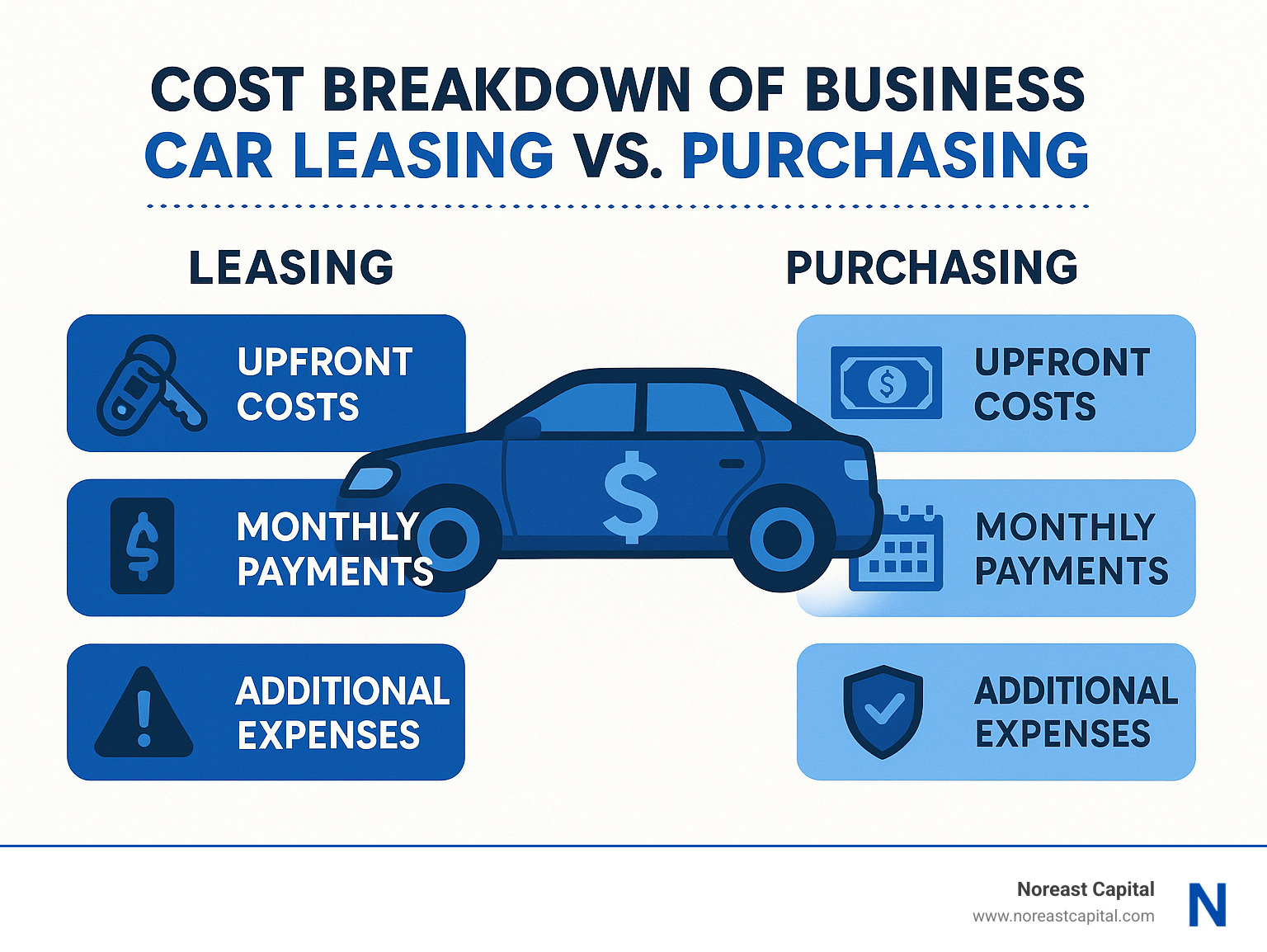
Don’t forget about those sneaky additional fees – like disposition fees when you return the vehicle (think of it as a cleaning fee for your apartment), excess wear-and-tear charges if your sales team wasn’t exactly gentle with the vehicles, and early termination fees if you need to end the lease early.
Your insurance costs might be higher than expected too. Leasing companies typically require comprehensive and collision coverage with specific liability limits that often exceed what you might choose when owning a vehicle outright.
One of the most common budget-busters? Excess mileage charges. If your team drives more than your contracted allowance, you’ll pay a per-mile fee (usually $0.10 to $0.25). Trust me, these add up faster than coffee expenses at a marketing firm.
The tax picture includes several moving parts: the “inclusion amount” for higher-value vehicles, company car tax or Benefit-in-Kind (BiK) tax for personal use by employees, and choices between IRS mileage deduction versus the actual expense method.
Want to crunch some numbers? Check out our guide on How to Calculate Lease Payment for Car. For the tax details straight from the source, consult the IRS guidance on business vehicle expenses.
Comparing leasing vs buying total 3-year cost
Let’s look at a real-world example comparing leasing versus buying over three years:
| Cost Category | Leasing | Buying |
|---|---|---|
| Initial outlay | $3,000 (first payment, fees) | $10,000 (20% down payment) |
| Monthly payments | $450 x 36 = $16,200 | $800 x 36 = $28,800 |
| Maintenance | Covered in lease = $0 | $2,500 (estimated) |
| End value | $0 (return vehicle) | $25,000 (residual value) |
| Total cost of use | $19,200 | $16,300 |
| Cash flow impact | $19,200 | $41,300 |
| Cash preserved | $22,100 | $0 |
At first glance, buying might seem cheaper when you factor in the residual value. But here’s the real magic: look at the cash flow difference. With leasing, you’re keeping over $22,000 in your business that can be invested elsewhere.
As Mark, one of our clients in Annapolis, told me recently: “The $20,000 we didn’t tie up in vehicle purchases allowed us to expand our marketing efforts, resulting in a 30% increase in new business—far outweighing the slightly higher long-term cost of leasing.”
Maximizing deductions & compliance
Want to keep the IRS happy while maximizing your tax benefits? Here are some practical tips for car leasing for businesses:
Keep meticulous mileage logs. The IRS isn’t just being nosy – they require contemporaneous records of business mileage. Use a logbook or one of those handy mobile apps to track the date, business purpose, locations, odometer readings, and total miles for each trip. Your future self (and accountant) will thank you during tax season.
Make sure your vehicles meet the 50% business use threshold. To deduct lease costs, your vehicles need to be used for business more than half the time. Personal use will reduce your deductible amounts proportionally, so keep those weekend joyrides to a minimum.
Choose your deduction method wisely. You can either go with the standard mileage rate (67 cents per mile for 2024) or track actual expenses (including lease payments, maintenance, insurance, etc.). Once you pick a method for a leased vehicle, you generally need to stick with it for the duration of the lease.
If you’re running a larger business, don’t forget about ASC 842 reporting compliance. These accounting standards require most leases to appear on the balance sheet, so proper documentation of all lease terms is essential for accurate reporting.
Here’s a pro tip I share with my clients: Spread any advance lease payments evenly over the lease term for tax purposes rather than trying to deduct them all upfront. It’s smoother for your tax planning and less likely to raise eyebrows at the IRS.
While I’ve outlined the basics here, every business has unique circumstances. A quick consultation with your accountant before signing a lease can save you thousands in potential tax benefits.
Fleet Management, Scaling & Future Trends
Managing one leased vehicle is straightforward, but what happens when your business grows? That’s when smart fleet management becomes your best friend. Today’s businesses are using some pretty cool tools to keep their vehicle fleets running smoothly:
Telematics and GPS tracking systems have transformed how businesses monitor their vehicles. Imagine having real-time data showing where every vehicle is, how drivers are performing, how much fuel they’re using, and when maintenance is needed. One of our clients in Philadelphia told us, “Once we installed telematics across our fleet, we cut idle time by 30% and saved nearly $12,000 in fuel costs the first year alone.”
Analytics platforms take all that data and turn it into actionable insights. These systems can spot patterns you might miss, predict when vehicles will need maintenance before they break down, and help you determine which vehicles are being underused.
Most businesses find their sweet spot with replacement cycles between 2-4 years. This timing hits the perfect balance between depreciation, maintenance costs, and keeping up with technology. As one fleet manager put it, “We used to run vehicles until they died, but now we replace at 36 months and our maintenance costs have plummeted.”
Does your business have seasonal peaks? You’re not alone. Some leasing companies now offer seasonal leases with flexible terms as short as 3 months or options to skip payments during your slow season. This can be a game-changer for businesses like landscaping companies or seasonal delivery services.
Looking ahead, several exciting trends are reshaping car leasing for businesses:
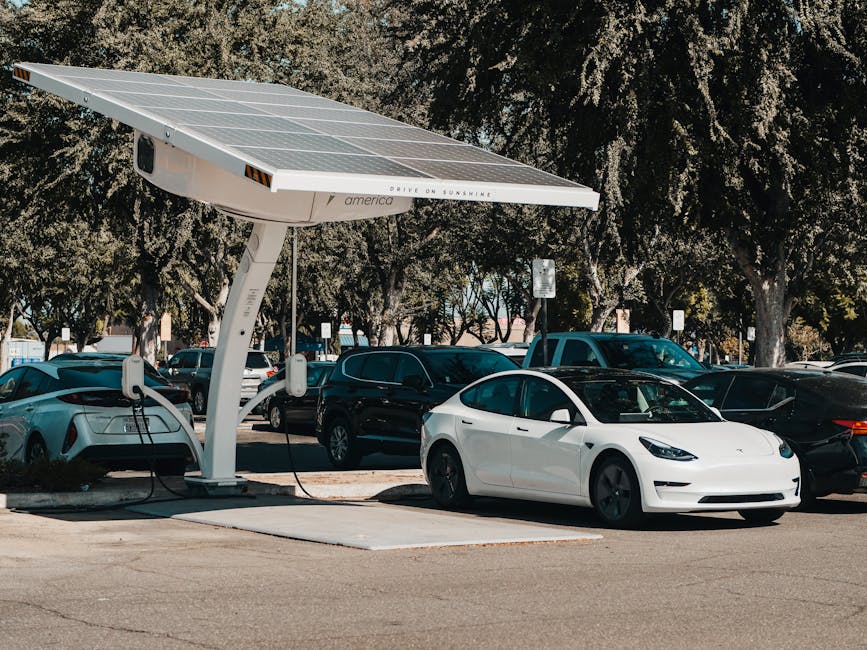
EV leasing is booming as more businesses aim to reduce both their carbon footprint and operating costs. The higher upfront cost of electric vehicles actually makes leasing them particularly attractive – why tie up all that capital when you can spread it out?
Subscription models are bringing Netflix-style flexibility to vehicle leasing. These services bundle everything – lease payments, maintenance, insurance, roadside assistance – into one monthly fee with shorter commitment periods. Perfect for businesses that need flexibility.
Many companies are developing fleet electrification strategies with a phased approach. Rather than converting everything at once, they’re starting with pilot programs for specific use cases like local delivery or sales vehicles that return to base each night.
As business needs become less predictable in our rapidly changing world, more companies are turning to open-ended flexibility in their leases, allowing them to adjust terms as their needs evolve.
For extra peace of mind, don’t forget to check out Car Lease Gap Insurance, which covers the “gap” between what you owe on your lease and what insurance will pay if the vehicle is totaled.
Managing multiple leased vehicles efficiently
When your business has multiple vehicles on the road, staying organized becomes crucial. Here are some practical ways to streamline your fleet management:
Fuel cards do more than just simplify expense tracking – they’re a powerful management tool. These dedicated business cards often provide discounts at the pump and generate detailed reports showing which vehicles (and drivers) are using the most fuel. One construction company we work with saved over 8% on fuel costs in their first year using a fleet fuel card program.
Keeping track of maintenance across multiple vehicles can be a headache without a system. Maintenance dashboards centralize all your service schedules, warranty information, and repair history in one place. This prevents costly breakdowns and ensures you’re complying with all lease maintenance requirements.
Clear driver policies are worth their weight in gold. When everyone knows the rules about vehicle use, maintenance responsibilities, and what to do after an accident, you’ll reduce risks and costs while ensuring consistent treatment across your organization.
For businesses with open-end leases or purchase options, developing systematic remarketing strategies can make a big difference to your bottom line. Knowing when and how to sell vehicles can maximize their residual values and minimize those end-of-lease costs that sometimes catch businesses by surprise.
“We reduced downtime by 40% and caught several warranty issues before they became major problems,” reported one of our DC-based clients after implementing a centralized maintenance dashboard for their 12-vehicle fleet, “saving us thousands in potential repair costs.”
Electric and specialty vehicles considerations
Thinking about adding electric vehicles or specially equipped vehicles to your fleet? Smart move, but there are some unique factors to consider:
EV tax credits and incentives work differently with leases. While the leasing company typically claims the federal tax credit for EVs, many pass some savings along to you through reduced payments. Don’t forget to check for state and local incentives too – these may still be available directly to your business.
Before signing those EV lease agreements, think about your charging infrastructure. Will drivers charge at home? Do you need workplace charging stations? Installation of workplace charging can qualify for tax incentives, but it requires planning and sometimes electrical upgrades to your facility.
If your business needs upfits and customizations – like shelving in service vans or specialized equipment on trucks – make sure your lease agreement clearly addresses three things: who pays for these modifications, whether they can be transferred to future vehicles, and what happens to them at the end of the lease.
Many businesses lease EVs as part of broader sustainability goals. The good news is that tracking and reporting the emissions reduction from your EV fleet can support your corporate sustainability initiatives and improve your brand image. Several of our clients now feature their carbon reduction metrics in their marketing materials.
For the most current information on available incentives, visit the U.S. DOE EV incentives page.
Frequently Asked Questions about Car leasing for businesses
What happens at the end of a lease?
The end of your car leasing for businesses agreement doesn’t have to be complicated. You’ll typically have four straightforward options to choose from:
When you return the vehicle, the leasing company will inspect it for any damage beyond normal wear and tear. Think of it like checking out of a hotel – they’re making sure everything’s in reasonable condition before you hand over the keys. You’ll also settle any excess mileage charges at this time.
If you’ve grown attached to your business vehicle, the purchase option lets you buy it at the predetermined residual value. This can be particularly smart if the market value exceeds the residual value. I recently worked with a construction company that purchased their leased truck because the residual was $5,000 below market value – instant equity!
Need more time? Most leasing companies offer lease extensions on a month-to-month basis. While these typically come with slightly higher rates, they provide valuable flexibility when you’re not quite ready to commit to a new vehicle.
Many of our clients simply swap into a new lease, returning their current vehicle and driving away in a fresh model with updated features and technology. This perpetuates the cash flow advantages that made leasing attractive in the first place.
One Annapolis client shared: “We initially planned to return all our vehicles, but after calculating the market value versus the residual value, we purchased two of the five vehicles in our fleet and leased three new ones, saving about $12,000 in the process.”
How do mileage limits work and can they be adjusted?
Mileage limits are central to most car leasing for businesses agreements, but they’re more flexible than many people realize.
Your lease will specify an annual mileage allowance, typically between 10,000-15,000 miles per year for standard business leases. Think of it as your mileage budget – stay within it, and you’re fine. Exceed it, and additional charges apply.
Smart business owners often purchase pre-paid miles upfront if they anticipate higher usage. This approach typically saves money, costing around $0.10 per mile versus the $0.15-$0.25 per mile you might pay at lease end. It’s like buying in bulk – more upfront, but cheaper per unit.
If you do exceed your total allowance, you’ll pay overage fees as specified in your agreement. These can add up quickly – I’ve seen businesses face thousands in unexpected charges because they underestimated their driving needs.
Some leasing programs offer mid-lease adjustment options. Nissan’s SignatureFLEX Lease, for example, allows you to purchase additional miles during the lease term at about 60% of what you’d pay at the end. This can be a lifesaver if your business travel patterns change unexpectedly.
For businesses with truly unpredictable mileage needs, an open-end lease might be more suitable. These don’t typically have fixed mileage restrictions but instead adjust the residual value based on your actual usage – more miles means lower residual value, and vice versa.
Will a lease affect my business or personal credit?
Understanding how car leasing for businesses affects credit is crucial for smart financial planning. The impact largely depends on how your lease is structured.
For established limited companies, business leases typically appear only on your business credit reports, not personal ones. This creates a healthy separation between your business and personal finances. However, if you’re a sole proprietor or have personally guaranteed the lease (common for newer businesses), the lease will likely appear on your personal credit report and influence your personal credit score.
The good news? Consistently making on-time lease payments creates positive credit-building opportunities for your business. One of our clients, a small marketing agency, used their first vehicle lease specifically to establish stronger business credit, which later helped them secure more favorable terms on office space.
For businesses looking to build credit while protecting personal scores, I recommend these steps:
- Structure the lease in your business name with no personal guarantee if possible
- Verify that the leasing company reports to business credit bureaus
- Set up automatic payments to ensure you never miss a deadline
- Start with a smaller lease to establish credit before taking on larger commitments
As one Baltimore client told me: “We strategically used our first two vehicle leases to build our business credit profile, which helped us secure much better terms when we expanded to a ten-vehicle fleet three years later.”
With careful planning, your business vehicle lease can become a valuable tool for establishing stronger business credit while keeping your personal finances separate.
Conclusion & Next Steps
Looking back at everything we’ve covered, it’s clear that car leasing for businesses offers so much more than just a way to get vehicles. It’s really a strategic financial decision that can help your company thrive.
Think about the benefits we’ve discussed throughout this guide – they’re pretty compelling when you add them all up. You’re looking at lower upfront costs that keep your bank account healthy, predictable monthly payments that make budgeting a breeze, and the peace of mind that comes from knowing you’re not stuck with a rapidly depreciating asset.
One of my favorite aspects of business leasing is the tax advantage. Those lease payments are typically deductible as business expenses (always check with your accountant, of course!), which can make a significant difference come tax season. Plus, there’s something genuinely exciting about being able to upgrade to newer vehicles every few years without the hassle of selling your old ones.
At Noreast Capital, we’ve seen how the right leasing strategy can transform a business’s financial outlook. I remember working with a small construction company in Baltimore that was pouring thousands into maintaining their aging trucks. By switching to a leasing model, they freed up enough capital to hire two additional employees and expand their service area. That’s the kind of real-world impact that makes this work rewarding.
We understand that every business has its own unique needs. The perfect leasing solution for a solo consultant in Annapolis will look very different from what works for a growing delivery service in DC. That’s why we take the time to understand your specific situation before recommending any particular approach.
Ready to explore how car leasing could work for your business? Here’s a simple way to get started:
First, take some time to think about your actual needs – how many vehicles do you require? What’s your typical monthly mileage? Are there specific features that are must-haves for your industry?
Next, gather your business documentation. Having your financial statements, tax returns and bank statements ready will make the approval process much smoother. (Nothing worse than having to hunt down paperwork when you’re excited to move forward!)
Then, reach out to our team for a conversation about your specific situation. We promise no high-pressure sales tactics – just helpful guidance based on our years of experience in the industry.
Finally, we’ll provide clear comparisons of your options so you can make a decision you feel confident about. Transparency is something we take seriously at Noreast Capital.
For those who want to understand the broader picture of equipment financing beyond just vehicles, our guide on What-is-Leasing-vs-Financing offers a comprehensive overview.
The vehicles your business uses are more than just transportation – they’re mobile billboards for your brand, tools for your team, and in many ways, a reflection of your company’s success. The right leasing strategy helps ensure they’re working for your business, not draining resources away from your growth.
We’d love to help you steer the road ahead with a leasing solution that feels just right for where your business is today – and where you want it to go tomorrow.