

If you’re considering catering kitchen rentals, you’re likely looking to expand your culinary offerings without the hefty overhead costs of a permanent kitchen. Here’s a quick summary of what you need to know about accessing these spaces:
- What They Are: Commercial, shared-use, or commissary kitchens offer fully equipped, licensed spaces that multiple businesses can rent for short or long-term use.
- Why Use Them: They help reduce costs, offer flexibility, and foster a community of collaboration.
- Who They’re For: Ideal for small food businesses, caterers, and aspiring chefs needing a professional environment.
In today’s competitive culinary landscape, shared-use kitchens stand out as a practical solution for food entrepreneurs. These spaces provide access to commercial-grade equipment and facilities without the burdens of long-term leases. By leveraging this model, food businesses can focus on what they do best—creating delicious experiences—while mitigating financial risks.
I’m Vincent Cerniglia, an expert in equipment financing and leasing at Noreast Capital. With years of experience, I’ve seen how smart use of catering kitchen rentals can transform small businesses by offering them the flexibility and resources they need to thrive. Stay tuned, as we’ll explore more about making the most of these culinary spaces.
Catering kitchen rentals terms to know:
– church commercial kitchen rental
– industrial kitchens
– kitchen rental for cooking
Benefits of Catering Kitchen Rentals
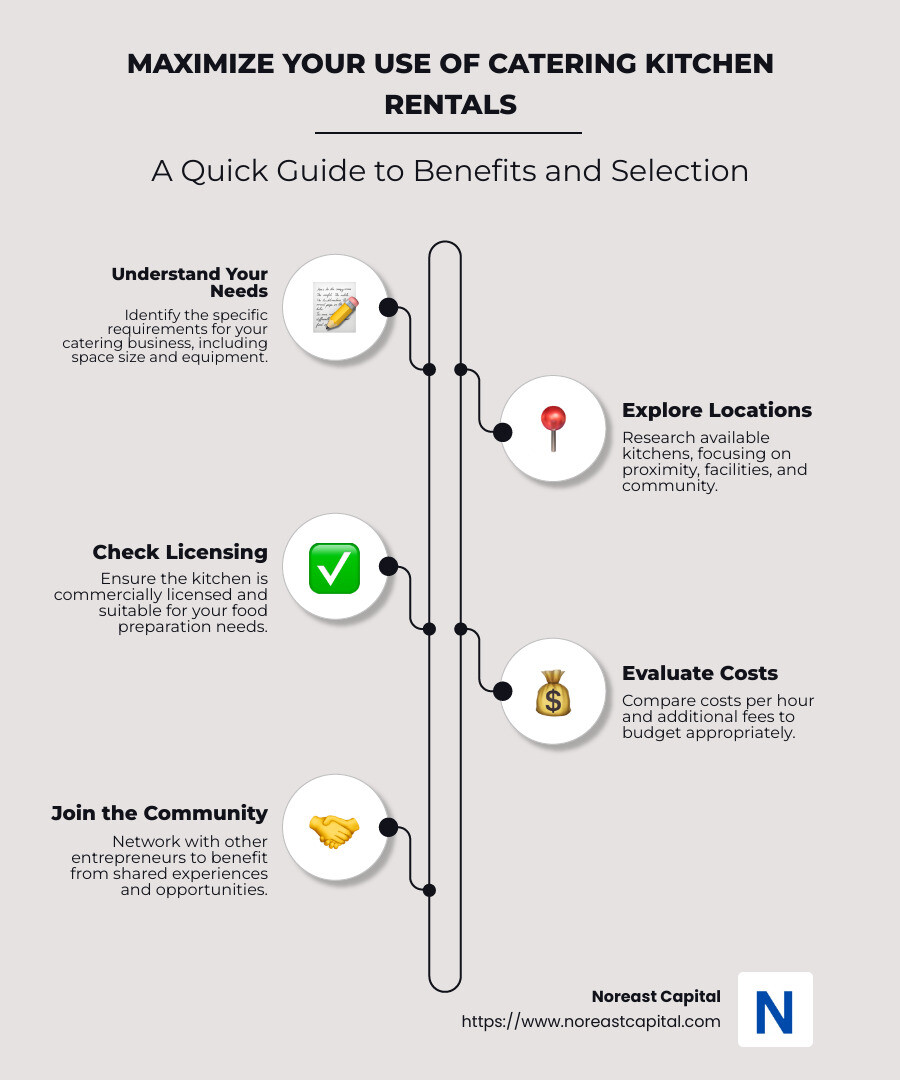
Renting a catering kitchen offers numerous advantages for food entrepreneurs who want to grow their business without breaking the bank. Here’s why catering kitchen rentals could be a game-changer for you:
Reduce Overhead
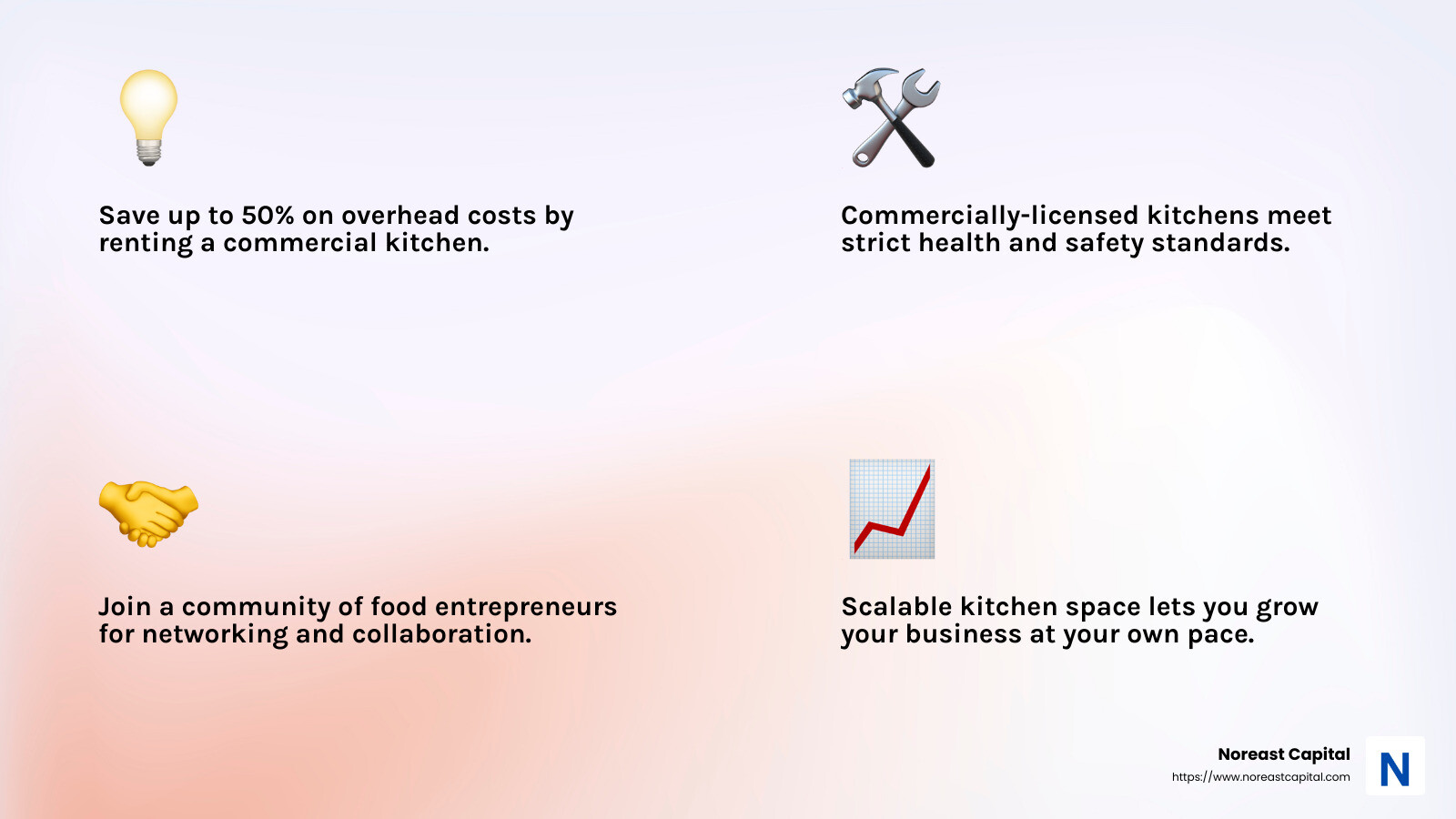
A challenge for small food businesses is managing costs. Owning a commercial kitchen involves hefty expenses—think rent, utilities, equipment, and maintenance. By opting for a rental, you can significantly cut down on these overhead costs. You pay only for the time and space you need, freeing up capital to invest in other areas of your business.
Access to Commercially-Licensed Space
Starting a food business requires meeting strict health and safety standards. Renting a commercially-licensed kitchen ensures you’re compliant with local regulations without the hassle of securing your own permits. This ready-to-use space allows you to focus on perfecting your menu and delivering great service to your clients.
Join a Kitchen Community
Working in a shared kitchen offers more than just physical space. It opens doors to a vibrant community of like-minded food entrepreneurs. This community can provide invaluable networking opportunities, from sharing tips and resources to collaborating on projects. Many shared kitchens, like La Chow in Baltimore, foster environments that support business growth through custom solutions and support services.
Flexible and Scalable
Catering kitchen rentals offer the flexibility to adjust your space usage according to your business needs. Whether you’re scaling up for a big event or testing a new product line, these kitchens provide the adaptability to accommodate your growing ambitions. With 24/7 access and various rental options, you can tailor your kitchen time to fit your schedule and needs.
In summary, renting a catering kitchen isn’t just about having a place to cook. It’s about gaining access to a supportive community, reducing financial risk, and having the flexibility to grow your business at your own pace. These benefits make catering kitchen rentals an attractive option for anyone looking to make their mark in the culinary world.
Next, let’s explore the top locations for catering kitchen rentals in Baltimore and beyond.
Top Locations for Catering Kitchen Rentals
When it comes to catering kitchen rentals, location matters. Let’s explore some of the best spots in the Baltimore area where you can find the perfect kitchen to lift your culinary business.
Baltimore: A Hub for Culinary Creativity
Baltimore is more than just a city; it’s a thriving community of food entrepreneurs. Here, you’ll find spaces designed to foster creativity and growth. One standout location is B-More Kitchen, a 10,000-square-foot facility that’s a powerhouse for local food makers.
Located conveniently in Baltimore, B-More Kitchen offers everything you need to get started. With a 65-foot hood line and a range of commercial-grade equipment, it’s perfect for chefs, caterers, and food truck operators alike. The facility also features dedicated prep and storage areas, so you can focus on what you do best—creating delicious dishes.
Liz Bower, Co-Owner of Well Crafted Kitchen, praises the seamless permitting process at B-More Kitchen, highlighting how it saves new entrepreneurs significant stress.
Catonsville: A Growing Culinary Scene
Just a short drive from Baltimore, Catonsville offers a quieter setting with the same level of opportunity for food entrepreneurs. Known for its supportive community, Catonsville is rapidly becoming a popular choice for those seeking catering kitchen rentals.
The area is home to several shared-use kitchens that provide commercially-licensed space without the hefty overhead costs. Whether you’re just starting out or looking to expand, Catonsville offers flexible rental options that can be custom to your needs.
Why Choose These Locations?
Both Baltimore and Catonsville provide unique advantages for culinary entrepreneurs:
- Proximity to Markets: Easy access to local markets means you can efficiently transport your culinary creations to clients.
- Community Support: Both areas boast vibrant communities that offer networking opportunities and support services.
- Scalable Spaces: With options ranging from small prep areas to large commercial kitchens, you can find a space that grows with your business.
If you’re ready to open up your culinary potential, consider these top locations for your next catering kitchen rental. Whether you’re drawn to the busy energy of Baltimore or the supportive environment of Catonsville, you’ll find the perfect space to bring your culinary dreams to life.
Next, we’ll guide you on how to choose the right catering kitchen that fits your unique needs.
How to Choose the Right Catering Kitchen
Selecting the perfect catering kitchen is crucial for your business’s success. Here are the key factors to consider: kitchen space, equipment, and storage areas.
Kitchen Space
The right kitchen space can make all the difference. You’ll want enough room to prep, cook, and store your ingredients without feeling cramped. Look for kitchens that offer:
- Flexible Layouts: Spaces that can adapt to your needs as your business grows.
- Dedicated Areas: Separate zones for prep, cooking, and cleaning help streamline your workflow.
In places like B-More Kitchen, you get access to a whopping 10,000 square feet, which offers ample space for all your operations.
Equipment
Equipment is the backbone of any catering business. Be sure the kitchen you choose is well-stocked with the tools you need:
- Commercial-Grade Ovens and Stoves: Essential for high-volume cooking.
- Mixers and Processors: Speed up prep time with the right appliances.
- Specialty Equipment: Depending on your menu, you might need items like pizza ovens or sous vide machines.
A facility like B-More Kitchen comes equipped with a 65-foot hood line and a range of commercial-grade equipment, making it ideal for a variety of culinary needs.
Storage Areas
Proper storage is vital for maintaining the quality and safety of your ingredients. Look for kitchens that offer:
- Cold Storage: Essential for meats, dairy, and fresh produce.
- Dry Storage: Keep your non-perishables like spices and grains organized.
- Freezer Space: For long-term storage of frozen goods.
Having enough storage can help you manage inventory more effectively and reduce waste. Spaces like those found in Catonsville are known for offering flexible storage solutions to suit different business sizes.
By focusing on these three factors—kitchen space, equipment, and storage areas—you can find a catering kitchen that fits your needs and supports your business’s growth. Next, we’ll answer some frequently asked questions about catering kitchen rentals to help you make an informed decision.
Frequently Asked Questions about Catering Kitchen Rentals
How much does it cost to rent a commercial kitchen by the hour?
Renting a commercial kitchen can cost anywhere from $15 to $45 per hour. This range depends on the kitchen’s location, size, and amenities. Additional costs may arise, such as fees for utilities, insurance, or cleaning services. Always inquire about these extra charges to avoid surprises.
What is the difference between a ghost kitchen and a commissary kitchen?
Both ghost kitchens and commissary kitchens are popular options for food businesses, but they serve different purposes.
Ghost Kitchens: These are delivery-only spaces. They have no dine-in presence, focusing solely on preparing food for delivery. This model is growing, with investments like REEF Technology’s $700 million funding to convert underused spaces into ghost kitchen hubs.
Commissary Kitchens: These are shared-use facilities where multiple food businesses can operate. They provide a licensed space for caterers, food trucks, and small producers to prep and cook. Unlike ghost kitchens, commissary kitchens can support businesses that also have a physical dine-in location.
What are the disadvantages of a commissary kitchen?
While commissary kitchens offer many benefits, there are a few drawbacks to consider:
Privacy Concerns: Sharing a space with other businesses means less privacy. You might be working alongside competitors, which can be a concern for some.
Sharing Space: You’ll need to coordinate with other users for time and equipment. This can lead to scheduling conflicts or limited access during peak times.
Despite these challenges, many businesses find the cost savings and community support of a commissary kitchen outweigh the disadvantages. By understanding these aspects, you can better assess if a commissary kitchen aligns with your business goals.
Conclusion
Catering kitchen rentals are a smart choice for food entrepreneurs looking to reduce overhead and access fully-equipped, commercially-licensed spaces. They offer flexibility and community support, helping businesses focus on growth without the burden of owning and maintaining a kitchen.
At Noreast Capital, we understand the financial challenges that come with starting or expanding a food business. That’s why we offer custom equipment financing solutions to help you maintain cash flow while accessing the best kitchen equipment.
Our financing options allow you to lease high-quality equipment without the need for upfront ownership. This means you can conserve your capital and invest it in other crucial areas of your business, like marketing or staff training.
By choosing Noreast Capital as your financing partner, you gain access to flexible terms and competitive rates. We are committed to supporting your culinary journey every step of the way.
Ready to open up your culinary potential? Explore our commercial kitchen rental options and find how we can help you achieve your business goals. Your success is our success, and we’re here to help you thrive in food entrepreneurship.