

A catering kitchen serves as the crucial backbone for many culinary professionals, offering a specialized space designed to handle large-scale food production and event catering. Whether you’re planning a wedding feast, corporate luncheon, or community fundraiser, a catering kitchen ensures you have the necessary facilities and equipment to bring your culinary vision to life.
Here’s what you need to know about catering kitchen:
- Purpose: Custom for preparing and storing food in large quantities.
- Features: Equipped with commercial-grade appliances, extensive prep stations, and refrigeration units.
- Benefits: Improves efficiency, ensures food safety, and provides opportunities for cost savings and community networking.
- Importance: A well-situated and equipped kitchen can boost your business potential by streamlining operations and reducing overhead costs.
By addressing these aspects, businesses can maximize their productivity and focus on delivering outstanding culinary experiences.
As Vincent Cerniglia, I draw on my expertise at Noreast Capital to highlight how a strategically chosen catering kitchen can be a stepping stone to success for your food business, particularly regarding equipment leasing options that sidestep the pitfalls of hefty investment costs.

Catering kitchen terminology:
– church commercial kitchen rental
– industrial kitchens
– kitchen rental for cooking
What is a Catering Kitchen?
A catering kitchen is a specialized space designed to meet the needs of professional caterers. Unlike a regular home kitchen, it is equipped with commercial-grade appliances that can handle the demands of preparing food for large events. This includes weddings, corporate gatherings, and community events.
Key Features
Caterer’s Kitchen: This term refers to a kitchen that is specifically designed for catering purposes. It usually includes:
Commercial-Grade Appliances: These are powerful and durable machines like high-capacity ovens, industrial mixers, and large refrigerators. They are built to withstand heavy use and are essential for efficiently preparing large quantities of food.
Event Catering: A catering kitchen is optimized for producing food that will be served off-site. This means it has facilities for both cooking and storing food safely until it is transported to the event location.
Why is it Important?
A catering kitchen allows chefs and caterers to prepare, cook, and store large amounts of food in a safe and efficient manner. This is crucial for event catering, where timing and quality are everything.
Consider this: A wedding with 200 guests might require hundreds of individual dishes, each needing careful preparation and timing. A well-equipped catering kitchen makes this possible by providing the right tools and space.

Real-World Example
One notable figure in the catering industry, Zac, leveraged his 20+ years of experience as a chef to start The Catered Kitchen. His catering kitchen allows him to create wholesome meals not just for events but also for busy families. This setup helps him spend more quality time with his family, while also offering the same opportunity to his clients by bringing them back to the dinner table.
By investing in a catering kitchen, businesses can streamline their operations and focus on what truly matters: delivering delicious and memorable culinary experiences.
This section sets the stage for understanding the key features of a catering kitchen, which we’ll explore next.
Key Features of a Catering Kitchen
When it comes to running a successful catering business, the catering kitchen is your command center. It’s where culinary magic happens, turning raw ingredients into delightful dishes for large gatherings. Let’s explore the essential features that make these kitchens tick.
Commercial-Grade Ovens
In a catering kitchen, commercial-grade ovens are the workhorses. These ovens are designed to handle large volumes of food with precision and speed. Whether you’re baking hundreds of pastries or roasting multiple turkeys, these ovens ensure even cooking and consistent results every time.
Capacity and Speed: These ovens can accommodate large trays and cook food quickly, which is vital when you’re preparing meals for hundreds of guests.
Durability: Built to withstand heavy use, commercial-grade ovens are robust and reliable, reducing the risk of breakdowns during critical times.
Refrigeration Units
Keeping food fresh and safe is paramount in catering. That’s where refrigeration units come into play. These units are larger and more powerful than typical home fridges, providing ample space and optimal conditions for storing ingredients and prepared dishes.
Ample Storage: Large refrigeration units ensure you have enough space to store all your ingredients and prepared meals, maintaining their freshness until it’s time to serve.
Temperature Control: With precise temperature settings, these units keep perishable items at safe temperatures, ensuring food safety and quality.
Prep Stations
Efficiency in food prep is crucial for catering success. Prep stations in a catering kitchen are designed to streamline the preparation process, providing ample space and organization.
Space for Teams: These stations are spacious enough to accommodate multiple chefs working simultaneously, which is essential for large-scale food preparation.
Organization: With designated areas for chopping, mixing, and assembly, prep stations help keep the workflow smooth and organized, minimizing chaos and maximizing productivity.
Bringing It All Together
A well-equipped catering kitchen is the backbone of any catering operation. It combines commercial-grade ovens, refrigeration units, and prep stations to create an environment where chefs can work efficiently and effectively. This setup not only supports the high demands of event catering but also ensures that every dish served is of the highest quality.
By understanding and utilizing these key features, catering businesses can improve their operations and deliver outstanding culinary experiences to their clients.
Benefits of Using a Catering Kitchen
Operating a catering kitchen offers significant advantages for food entrepreneurs. These kitchens are designed to streamline food preparation and boost your business. Let’s explore the key benefits: cost efficiency, flexibility, and community support.
Cost Efficiency
One of the biggest advantages of using a catering kitchen is cost efficiency. Renting a fully-equipped kitchen means you avoid the hefty costs of building and maintaining your own.
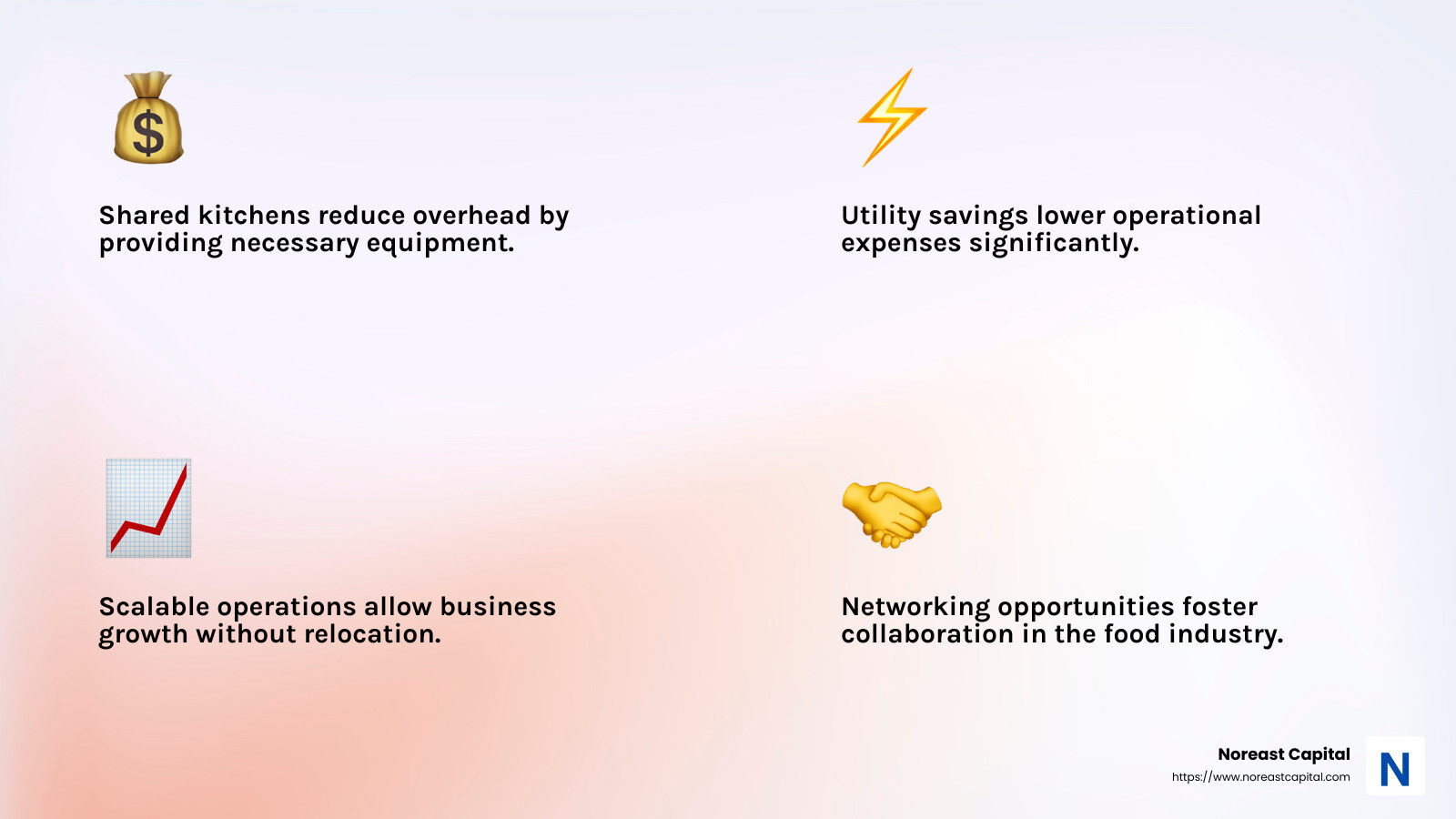
Lower Overhead: Shared kitchens provide all the necessary equipment, reducing the need for expensive purchases. You pay only for the time and space you use, which is a budget-friendly option for startups.
Utility Savings: With shared utilities, you won’t shoulder the full cost of electricity, gas, or water. This can significantly lower your operational expenses.
Flexibility
Catering kitchens offer the flexibility that many food entrepreneurs need. Whether you’re just starting out or scaling up, these spaces can adapt to your needs.
Scalable Operations: As your business grows, you can increase your kitchen usage without the hassle of relocating. This scalability is crucial for expanding your operations smoothly.
Adaptable Schedules: Many shared kitchens operate 24/7, allowing you to choose the hours that work best for your business. This flexibility means you can meet tight deadlines and cater to last-minute events without stress.
Community Support
Being part of a catering kitchen often means joining a supportive community of like-minded entrepreneurs.
Networking Opportunities: Shared kitchens are hubs for food professionals. Collaborate and learn from others, exchange ideas, and find new opportunities for growth.
Shared Knowledge: Many kitchens offer workshops and seminars on topics like food safety, marketing, and business development. This support can be invaluable, especially for newcomers navigating the food industry.
In summary, using a catering kitchen is a smart move for food entrepreneurs. It provides cost-effective, flexible solutions and fosters a supportive community, all of which are essential for growing a successful catering business.
How to Set Up a Catering Kitchen
Setting up a catering kitchen can seem daunting, but breaking it down into key components makes it manageable. Here’s what you need to focus on: layout, equipment, and licensing.
Layout
A well-planned layout is crucial for an efficient catering kitchen. It should streamline workflow and minimize movement, saving you time and effort.
Zoned Areas: Divide your kitchen into specific zones—prep, cooking, and cleaning. This keeps everything organized and reduces clutter.
Clear Pathways: Ensure there’s enough space for staff to move freely. Avoid bottlenecks by placing equipment and workstations strategically.
Accessible Storage: Keep frequently used items within easy reach. This reduces time spent searching for utensils or ingredients.
Equipment
The right equipment is the backbone of any successful catering kitchen. Choose wisely to improve productivity and meet your culinary needs.
Commercial-Grade Appliances: Invest in durable, high-capacity equipment like ovens, mixers, and refrigerators. They handle large volumes and are built to last.
Prep Stations: Ensure you have enough space for chopping, mixing, and assembling dishes. Stainless steel tables are ideal as they’re easy to clean and sanitize.
Specialized Tools: Depending on your menu, you may need specific gadgets like pasta makers or sous-vide machines. List your essential tools before purchasing.
Licensing
Before you start cooking, you must comply with local regulations. Proper licensing ensures your catering kitchen operates legally and safely.
Health Permits: Obtain the necessary health department approvals. This involves inspections to ensure your kitchen meets hygiene and safety standards.
Business License: Register your business with local authorities. This is essential for operating legally and paying taxes.
Insurance: Protect your business with liability insurance. It covers accidents and damages that might occur during operations.
In setting up your catering kitchen, prioritize a thoughtful layout, invest in essential equipment, and secure the necessary licenses. This foundation will help you run a smooth and successful catering operation.
Frequently Asked Questions about Catering Kitchens
What is the difference between a catering kitchen and a commercial kitchen?
A catering kitchen and a commercial kitchen often get mixed up, but they serve different purposes.
Catering Kitchen: Specifically designed for preparing food for events. It usually has equipment custom for large-scale cooking and quick transport. Think of it as a mobile food production hub. It’s perfect for off-site catering where meals are prepared in advance and transported to the event location.
Commercial Kitchen: This is a broader term that includes any kitchen used for food production on a large scale, like those in restaurants or food trucks. They are equipped to handle daily high-volume cooking and often have a more permanent setup.
How much does it cost to build a catering kitchen?
Building a catering kitchen can be a significant investment, but it varies greatly depending on several factors:
Size and Location: Larger kitchens in prime locations will naturally cost more. In places like Los Angeles, renting alone can range from $55 to $450 per hour.
Equipment: High-quality, commercial-grade equipment is necessary. Items like ovens, refrigerators, and prep stations add to the cost but are essential for efficiency.
Construction and Renovation: If you’re starting from scratch or renovating an existing space, construction costs can add up quickly. Consider budgeting for plumbing, electrical work, and ventilation systems.
Budget Planning: To avoid surprises, factor in additional costs like insurance, utilities, and potential site improvements. A detailed budget plan helps ensure you don’t overextend financially.
What are the requirements for a catering kitchen?
Setting up a catering kitchen involves meeting specific requirements to operate legally and safely:
Licensing: You need a business license and health permits. These ensure your kitchen complies with local health regulations and safety standards.
Health Regulations: Your kitchen must pass health inspections. This includes having proper sanitation practices, safe food storage, and pest control measures in place.
Equipment: Invest in the right tools. Your kitchen should have commercial-grade appliances that can handle large volumes of food preparation.
Understanding these distinctions and requirements helps streamline the process of setting up or renting a catering kitchen, making sure you’re prepared for success.
Conclusion
As we wrap up our exploration of catering kitchens, it’s clear that they are essential for event-based food preparation. But setting up such a kitchen can be a daunting task, especially when you consider the costs and requirements involved. This is where Noreast Capital comes into play.
Noreast Capital specializes in equipment financing, offering a lifeline to businesses aiming to establish or expand their catering operations. By providing options to lease high-quality, commercial-grade equipment, we allow businesses to maintain cash flow while accessing the tools they need for growth. This means you can focus on creating memorable culinary experiences without the financial strain of purchasing equipment outright.
Our flexible financing solutions are designed to support your business growth. Whether you’re a startup looking to enter the catering industry or an established business aiming to expand, our team is here to guide you every step of the way. We understand the unique challenges of the food industry and are committed to being your partner in success.
By choosing Noreast Capital, you’re not just getting a financing partner; you’re gaining a collaborator dedicated to helping you achieve your culinary dreams. Let us help turn your vision into reality with the right financial support. Your success is our success, and together, we can cook up something extraordinary.
Ready to take the next step? Explore our commercial kitchen rental options and see how we can assist you in your journey.