
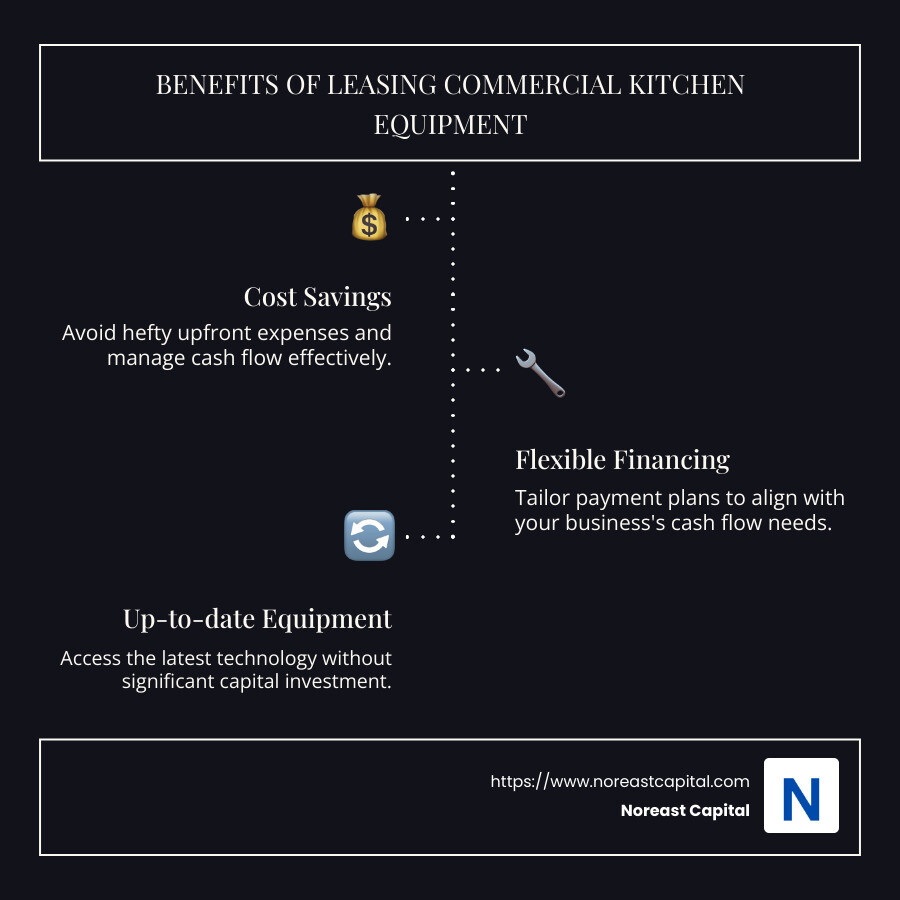
Commercial kitchen equipment lease offers a smart solution for many business owners. Instead of a large upfront payment, it spreads costs over time, providing financial relief. Here’s why it’s advantageous:
- Cost Savings: Avoid hefty upfront expenses.
- Flexible Financing: Tailor payments to align with your cash flow.
- Up-to-date Equipment: Access the latest technology without breaking the bank.
For business owners looking to save money and manage cash flow effectively, leasing provides a viable option.
I’m Vincent Cerniglia, and I’ve built a career providing equipment financing solutions to businesses across the nation. Over the years, I’ve seen how strategic financing—like a commercial kitchen equipment lease—can transform small businesses’ operational efficiency and financial health.
Understanding Commercial Kitchen Equipment Lease
Leasing commercial kitchen equipment can be a game changer for restaurant owners. But understanding the ins and outs is crucial. Let’s break it down into simple terms.
Lease Terms
When you enter a commercial kitchen equipment lease, you’re agreeing to specific terms. These terms cover how long you’ll lease the equipment, monthly payment amounts, and any end-of-lease options. Typically, leases can range from a few months to several years. This flexibility lets you pick what fits your business needs best.
- Lease Period: Choose a term that aligns with your business plan. Short-term leases offer flexibility, while long-term leases might provide better rates.
- Monthly Payments: Know how much you’ll pay each month. This helps with budgeting and cash flow management.
- End-of-Lease Options: Decide whether to return, renew, or buy the equipment at the end of the lease. Each option has its pros and cons.
Tax Benefits
Leasing can offer significant tax advantages. Monthly lease payments are often tax-deductible as a business expense. This can lower your overall tax bill, which is a welcome relief for any business.
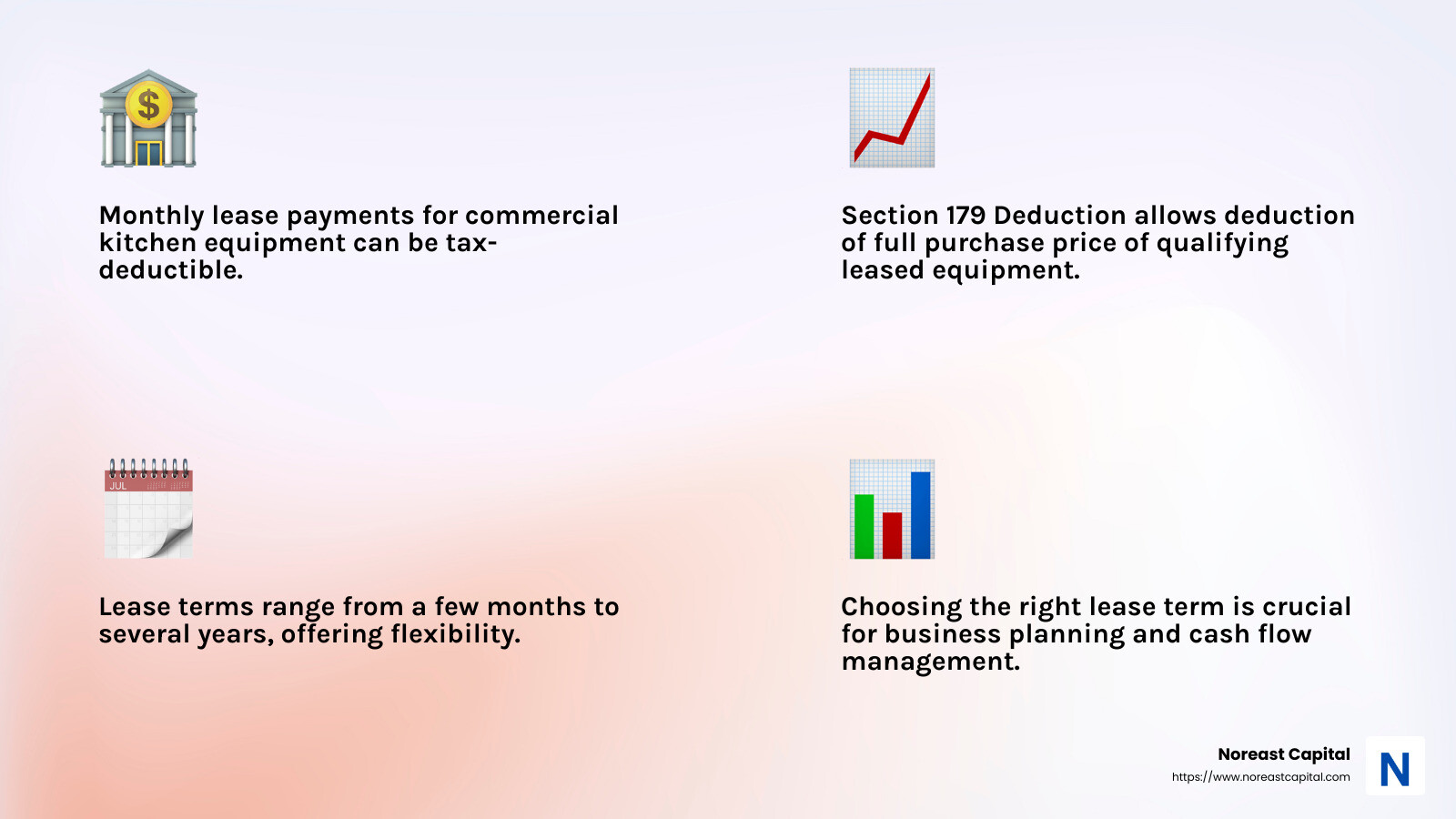
Additionally, under the Section 179 Deduction, businesses can sometimes deduct the full purchase price of qualifying equipment leased during the tax year. This deduction can make leasing a very attractive option for small and medium-sized businesses.
Maintenance and Support
One of the standout features of leasing is the maintenance and support that often comes with it. Many leases include maintenance agreements, meaning the lessor handles repairs and upkeep. This keeps your equipment in top condition and reduces downtime.
- Maintenance: Regular servicing ensures your equipment runs smoothly, saving you from unexpected repair costs.
- Support: Access to professional support can be invaluable, especially when dealing with high-tech kitchen gadgets.
By understanding these aspects of a commercial kitchen equipment lease, you can make informed decisions that benefit your business. Leasing not only helps with cost savings but also offers peace of mind with tax benefits and maintenance support.
In the next section, we will dig into the advantages of leasing commercial kitchen equipment and how it can keep your business ahead of the competition.
Advantages of Leasing Commercial Kitchen Equipment
Leasing commercial kitchen equipment offers several compelling advantages that can significantly benefit your restaurant business.
Cost Savings
Leasing allows you to access high-quality equipment without the hefty upfront costs. Instead of draining your bank account with a large purchase, you can spread out payments over time. This keeps more cash in your pocket for other essential expenses like marketing or staffing.
- Preserve Capital: Use your funds for growth instead of tying them up in equipment.
- Lower Initial Costs: Start your restaurant without the financial burden of buying everything at once.
Up-to-Date Equipment
In the world of food service, staying current with technology is crucial. Leasing offers the flexibility to upgrade to the latest and most efficient equipment as it becomes available. This ensures your kitchen remains competitive and can meet customer demands.
- Stay Competitive: Equip your kitchen with the latest technology to improve efficiency and service quality.
- Easy Upgrades: Swap old equipment for new models as part of your lease terms.
Fixed Payments
One of the most attractive features of leasing is predictable monthly payments. This consistency makes budgeting easier and helps manage cash flow effectively. No more worrying about unexpected repair costs or price hikes.
- Budget-Friendly: Know exactly what you’ll pay each month, with no surprises.
- Cash Flow Management: Maintain a steady cash flow to cover other operational costs.
Tax Benefits
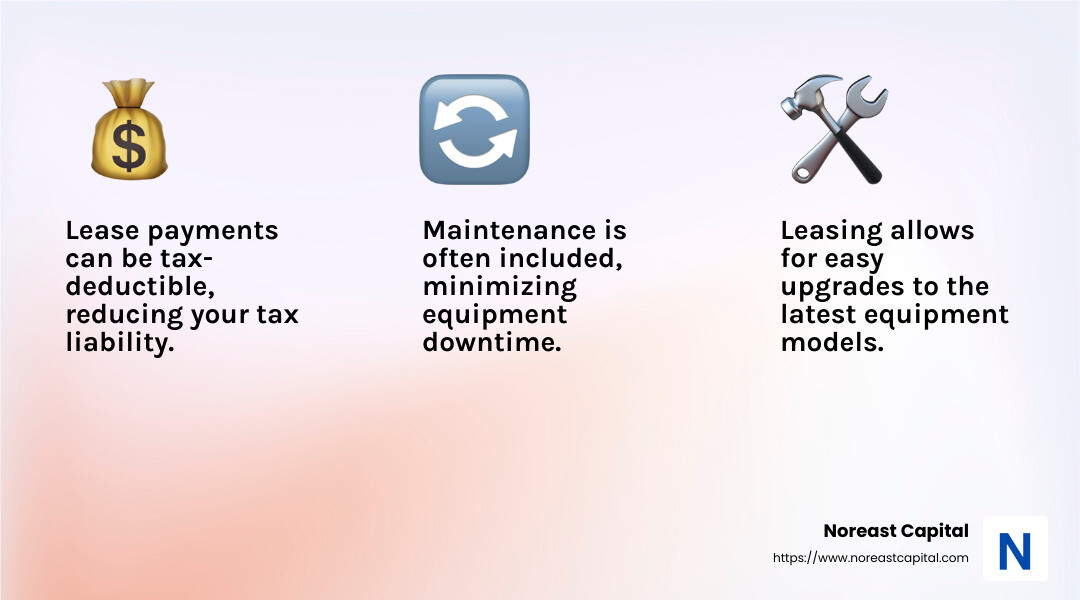
Leasing can offer significant tax advantages. Monthly lease payments are typically tax-deductible as a business expense, reducing your overall tax liability.
- Tax Deductible: Lower your tax bill with deductible lease payments.
- Section 179 Deduction: Potentially deduct the full purchase price of leased equipment during the tax year.
Maintenance
Many leasing agreements include maintenance and support services. This means the lessor takes care of repairs and upkeep, ensuring your equipment stays in optimal condition and minimizing downtime.
- Reduced Downtime: Keep your kitchen running smoothly with regular maintenance.
- Professional Support: Access expert help for any equipment issues.
In summary, leasing commercial kitchen equipment provides cost savings, access to the latest technology, predictable payments, tax benefits, and maintenance support. These advantages can give your restaurant a competitive edge and contribute to your business’s success.
Next, we’ll explore the potential disadvantages of leasing commercial kitchen equipment and what to watch out for.
Disadvantages of Leasing Commercial Kitchen Equipment
While leasing commercial kitchen equipment offers many benefits, there are some potential drawbacks to consider when deciding if it’s the right choice for your business.
End-of-Lease Options
At the end of a lease term, you typically face a decision: return the equipment, renew the lease, or purchase the equipment outright. Each option comes with its own set of challenges.
- Returning Equipment: If you choose to return the equipment, you may need to spend additional time and money finding replacements. This can lead to disruptions in your kitchen operations.
- Lease Renewal: Renewing the lease might result in continued payments for equipment that may now have a reduced value.
- Buy-Out Costs: Purchasing the equipment at the end of the lease can be expensive, especially if the buy-out price is based on fair market value, which might be higher than expected.
Potential Higher Long-Term Cost
While leasing can offer short-term savings, it may end up costing more in the long run compared to purchasing equipment outright. This is due to several factors:
- Interest and Fees: Leasing agreements often include interest and fees that increase the overall cost. These additional charges can add up, especially over lengthy lease terms.
- No Ownership: Unlike purchasing, leasing doesn’t build equity. By the end of the lease, you may have spent a significant amount without owning the equipment.
Understanding these disadvantages can help you make a more informed decision about whether leasing is the right fit for your restaurant. Next, we will explore how to make the most of your commercial kitchen equipment lease, including strategies for lease-to-own and flexible cash budgeting.
How to Make the Most of Your Commercial Kitchen Equipment Lease
Leasing commercial kitchen equipment can be a smart move, but maximizing its benefits requires strategy. Here’s how to make the most of your commercial kitchen equipment lease.
Lease-to-Own: A Path to Ownership
One effective way to leverage a lease is through a lease-to-own option. This approach allows you to eventually own the equipment by making regular lease payments over time. It combines the benefits of leasing—like lower upfront costs—with the advantage of ownership at the end of the lease term.
- Flexibility: Lease-to-own agreements often offer flexibility in payment terms, making it easier to manage cash flow.
- Investment: Your monthly payments contribute toward owning the equipment, turning expenses into an investment.
Flexible Cash Budgeting: Keeping Finances Fluid
Leasing helps maintain financial flexibility, which is crucial for any business. By spreading the cost of equipment over several months or years, you can keep more cash on hand for other business needs.
- Predictable Payments: Fixed monthly payments make budgeting easier and more predictable.
- Cash Flow Management: With less capital tied up in equipment purchases, you can allocate resources to other areas, such as marketing or staffing.
Hedging Against Inflation: Protecting Your Bottom Line
Leasing can also serve as a hedge against inflation. As the cost of new equipment rises over time, a locked-in lease rate ensures that your payments remain consistent, regardless of market changes.
- Stable Costs: Fixed lease payments protect you from price hikes in equipment costs.
- Financial Planning: Knowing your expenses in advance aids in long-term financial planning and stability.
By exploring these strategies—lease-to-own, flexible cash budgeting, and hedging against inflation—you can maximize the benefits of your commercial kitchen equipment lease. Next, we’ll address some frequently asked questions about commercial kitchen equipment leasing to further improve your understanding.
Frequently Asked Questions about Commercial Kitchen Equipment Lease
What is a Commercial Equipment Lease?
A commercial equipment lease is a contract between two parties: the lessee (you, the restaurant owner) and the lessor (the company providing the equipment). This agreement allows the lessee to use the kitchen equipment for a specified period while making regular payments.
- Contract Details: The lease outlines terms such as the duration, payment schedule, and responsibilities of both parties.
- Lessee and Investor Roles: As a lessee, you gain access to necessary equipment without the burden of full ownership costs. The lessor, often an investor, retains ownership and benefits from the lease payments.
How Long Should Commercial Kitchen Equipment Last?
The lifespan of commercial kitchen equipment varies based on factors like usage, maintenance, and quality.
- Durability: High-quality equipment can last anywhere from 5 to 15 years, depending on the type and frequency of use.
- Maintenance: Regular maintenance is crucial. Proper care can extend the equipment’s life and ensure it operates efficiently.
How Do You Make Money from Equipment Leasing?
Leasing companies generate revenue through various mechanisms:
- Lease Establishment Fees: Initial fees charged for setting up the lease agreement.
- Secondary Market: At the end of a lease term, equipment can be sold or re-leased, providing additional income.
- Extended Payments: Some leases may include options for extended payments, which can increase the total revenue over time.
Understanding these aspects of a commercial kitchen equipment lease can help you make informed decisions about your business needs. By knowing what a lease entails, how long your equipment should last, and how leasing companies profit, you can better steer the leasing landscape.
Conclusion
Leasing commercial kitchen equipment can be a game-changer for your food business. At Noreast Capital, we offer equipment financing solutions custom to help you maintain cash flow and grow your business without the heavy burden of upfront costs.
Why Choose Noreast Capital?
We understand that running a successful kitchen requires more than just talent—it requires the right tools. Our flexible leasing options allow you to access top-notch equipment without owning it outright. This means you can save money, avoid obsolescence, and keep your cash working for you in other areas of your business.
Benefits of Equipment Financing
Cash Flow Management: By spreading payments over time, you can better manage your cash flow. This flexibility is crucial, especially when unexpected expenses arise or during slow sales periods.
Tax Advantages: Leasing can offer tax benefits, such as deductions under Section 179, which allow you to write off the full purchase price of qualifying equipment in the year it is put into service.
Up-to-date Equipment: Leasing ensures that you have access to the latest technology and equipment, which can be crucial in a competitive industry like foodservice.
Fixed Payments: With fixed monthly payments, budgeting becomes easier and more predictable, helping you to plan effectively for the future.
By partnering with us, you’re not just leasing equipment; you’re gaining a team of experts dedicated to supporting your culinary dreams. Whether you’re a seasoned restaurateur or just starting out, our goal is to make the equipment leasing process as smooth and beneficial as possible.
Explore our equipment lease options and see how Noreast Capital can help set your business up for success. Let’s cook up success together, one lease at a time!