

Trends Shaping the Future of Construction Equipment Leasing
Construction equipment leasing is becoming an ever more pivotal strategy in an industry marked by rapid change and economic volatility. When project timelines are tight, and budgets are stretched thin, leasing offers an adaptable and financially sound alternative to purchasing heavy equipment outright.
Quick Summary:
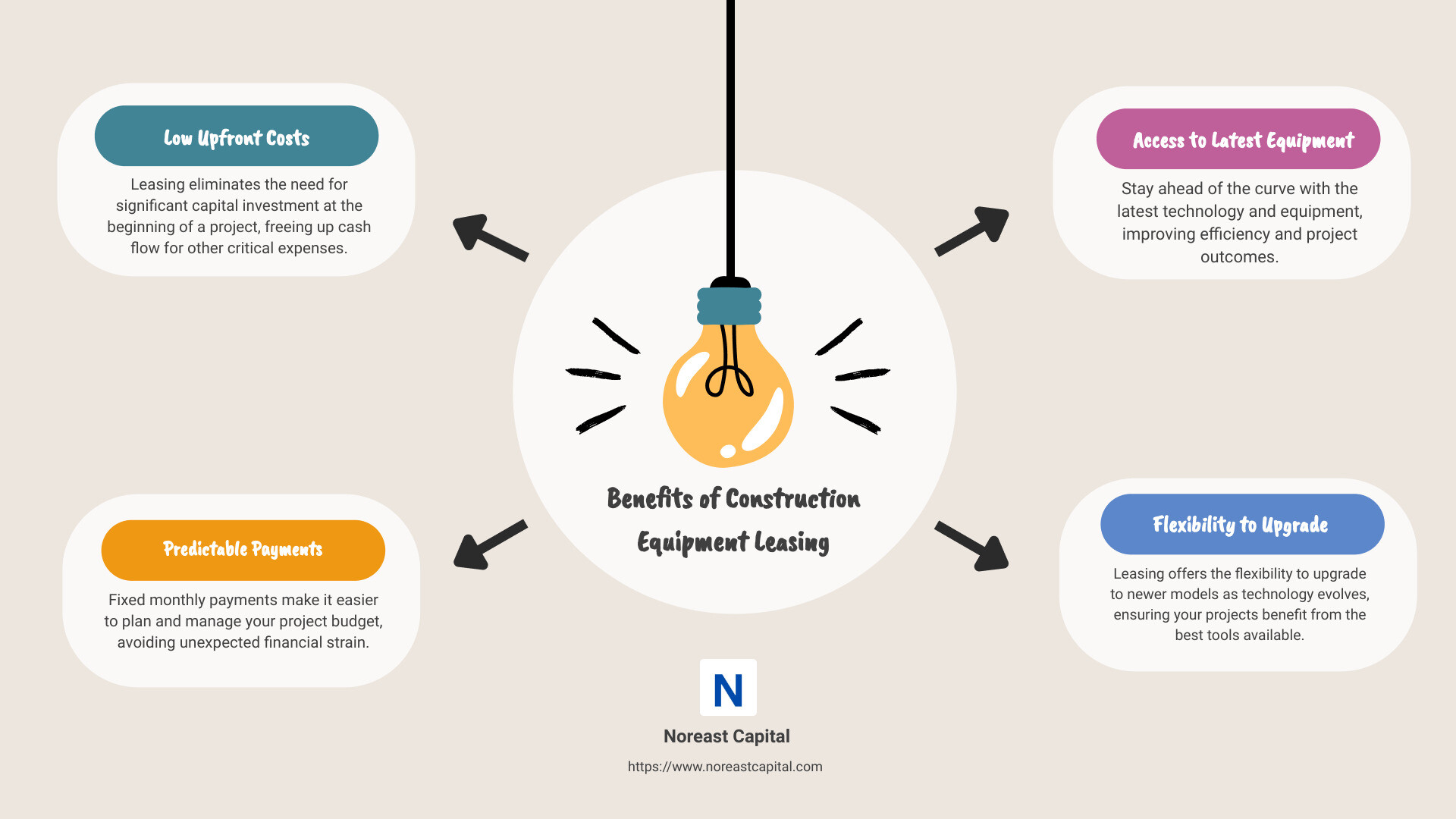
- Leasing lowers upfront costs and conserves cash flow.
- Access to refurbished equipment without compromising on quality.
- Fixed monthly payments make budgeting easier.
- Flexibility to upgrade to newer equipment as technology evolves.
In 2020, for instance, the economic climate was more unpredictable than ever, with fluctuating equipment costs and lead times impacting construction projects across the board. Leasing came to the rescue for many businesses, providing essential machinery without the burden of heavy financial commitments.
I’m Vincent Cerniglia, and with extensive experience at Noreast Capital Corporation, I’ve seen how construction equipment leasing can lift small businesses. As a direct lender, we support companies from startups to Fortune 500s by offering flexible and competitive leasing solutions.
Transition into the next section, where we will dive deeper into the core concepts and fundamental agreements involved: Understanding Equipment Leasing.
Handy construction equipment leasing terms:
– heavy equipment financing
– how does equipment leasing work
– leasing vs financing
Understanding Equipment Leasing
Lease Basics
Equipment leasing is a financing option where businesses rent equipment instead of purchasing it outright. This allows companies to access essential machinery without the hefty upfront costs. Leasing is particularly beneficial for businesses that need to upgrade equipment frequently or those operating on tight budgets.
Contractual Agreement
When you lease equipment, you enter into a contractual agreement with the equipment owner or vendor. This contract outlines:
- Lease term: Duration of the lease, usually ranging from 3 to 10 years.
- Monthly payments: Fixed payments covering the cost of leasing, interest, and any additional fees.
- End-of-lease options: Choices available at the end of the lease, such as renewing the lease, purchasing the equipment, or returning it.
It’s crucial to read the contract carefully to understand your responsibilities and the terms of the lease.
Lessee and Lessor Roles
In a leasing agreement, there are two main parties:
- Lessee: The business leasing the equipment. The lessee is responsible for making monthly payments and maintaining the equipment.
- Lessor: The owner of the equipment. The lessor provides the equipment and sets the terms of the lease.
The lessee benefits from using the equipment without the financial burden of ownership, while the lessor earns revenue from the lease payments.
Key Elements of a Leasing Agreement
- Monthly Payments: Includes the cost of leasing, interest, and any additional fees.
- Maintenance and Repairs: Specifies who is responsible for upkeep and repairs.
- Insurance: Details the insurance obligations to protect against liabilities.
- Termination Clauses: Outlines penalties for breaking the lease early or damaging the equipment.
Understanding these elements ensures a smooth leasing experience and helps avoid unexpected costs.
Next, we will explore the different types of equipment leases available and how to choose the right one for your business needs: Types of Equipment Leases.
Types of Equipment Leases
When considering construction equipment leasing, understand the different types of leases available. Each type has distinct features and benefits, making it suitable for various business needs. Here are the most common types:
Operating Leases
Operating leases are similar to rental agreements. They are typically short-term and do not cover the equipment’s entire useful life. The equipment does not appear on your balance sheet, making this a good option for businesses looking to keep liabilities off their financial statements.
- Term Length: Usually shorter than the equipment’s useful life.
- End-of-Lease Options: Return the equipment, renew the lease, or upgrade to newer equipment.
- Best For: Businesses needing frequent upgrades or those with short-term projects.
Finance Leases
Finance leases, also known as capital leases, are long-term and resemble a loan. The lessee is responsible for maintenance and insurance, and the equipment appears on the balance sheet as an asset.
- Term Length: Typically matches the equipment’s useful life.
- End-of-Lease Options: Often includes a buyout option, allowing you to purchase the equipment for a nominal fee.
- Best For: Companies looking for long-term use and eventual ownership of the equipment.
Fair Market Value Lease
A Fair Market Value (FMV) Lease allows you to use the equipment and, at the end of the lease term, purchase it at its fair market value, renew the lease, or return the equipment.
- Term Length: Varies, but usually between 12 to 60 months.
- End-of-Lease Options: Buy the equipment at fair market value, renew the lease, or return the equipment.
- Best For: Businesses needing flexibility and access to the latest technology without committing to ownership.
Dollar Buy-Out Lease
A Dollar Buy-Out Lease is similar to a finance lease but includes a fixed purchase option at the end of the term. You can buy the equipment for $1, making it essentially yours from the start.
- Term Length: Matches the useful life of the equipment.
- End-of-Lease Options: Purchase the equipment for $1.
- Best For: Businesses that are sure they want to own the equipment after the lease term.
Comparison Table
| Lease Type | Term Length | End-of-Lease Options | Best For |
|---|---|---|---|
| Operating Lease | Short-term | Return, renew, or upgrade | Short-term projects, frequent upgrades |
| Finance Lease | Long-term | Buyout option, usually for a nominal fee | Long-term use, eventual ownership |
| Fair Market Value Lease | 12 to 60 months | Buy at FMV, renew, or return | Flexibility, access to latest technology |
| Dollar Buy-Out Lease | Matches equipment life | Purchase for $1 | Certain ownership after the lease term |
Understanding these lease types helps you make informed decisions that align with your business needs. Next, we will discuss the benefits of leasing construction equipment and how it can positively impact your business.
Benefits of Leasing Construction Equipment
Cash Flow Conservation
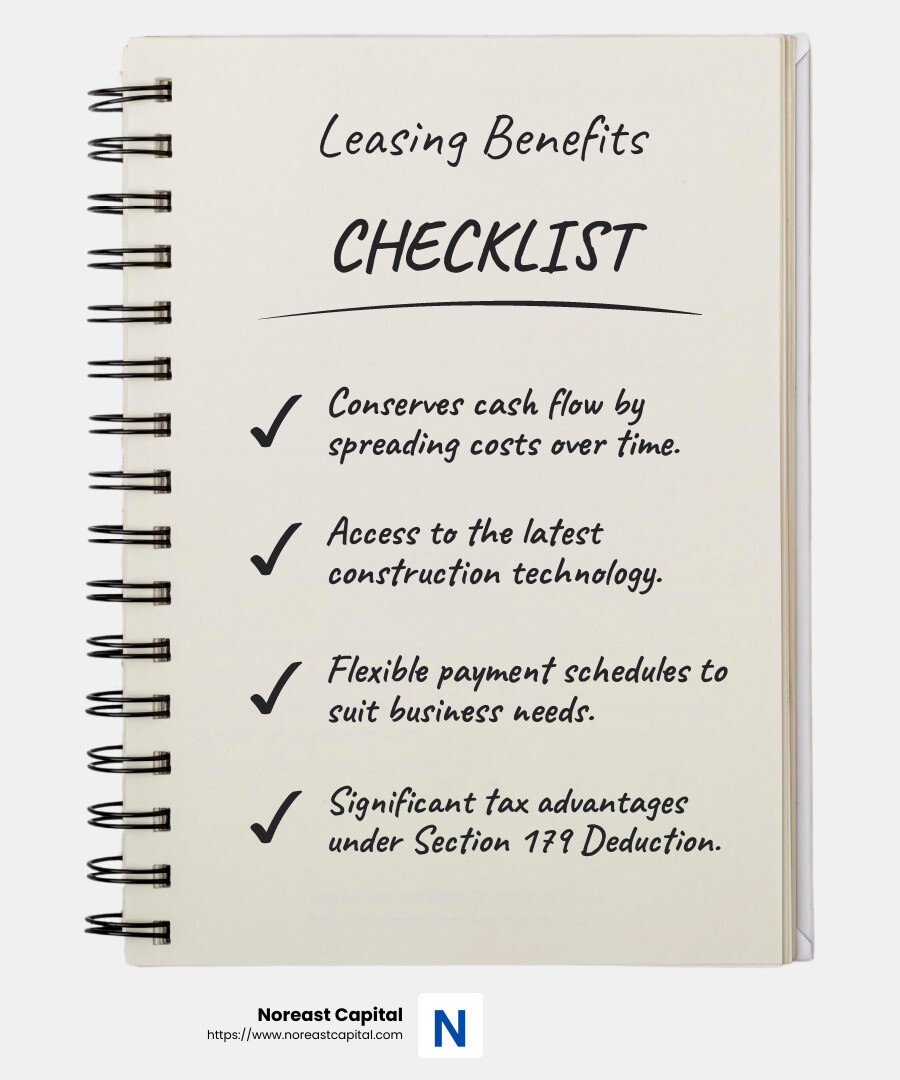
Leasing construction equipment helps keep your cash flow steady. Instead of spending a large sum upfront to buy equipment, you spread the cost over time. This means more money stays in your pocket to handle daily operations, payroll, or unexpected expenses.
For example, a construction company needing a bulldozer might face a hefty purchase price. Leasing allows them to use that bulldozer without draining their bank account. According to industry statistics, over $4 billion worth of heavy equipment is leased annually by businesses in the United States, showing how common and beneficial this practice is.
Access to Latest Technology
Technology in construction equipment evolves rapidly. Leasing gives you access to the latest machinery without the need to constantly buy new equipment. This is crucial for staying competitive and efficient.
Imagine needing the most advanced excavator for a big project. Leasing allows you to get it right away. And when newer technology comes out, you can easily upgrade. This flexibility is especially beneficial in an industry where having the latest tools can make a big difference in project timelines and quality.
Flexible Payment Schedules
Leasing offers various payment plans to match your business needs. Whether you have seasonal cash flow or need to defer payments, leasing can adapt to your financial situation.
Here are some flexible payment options:
- Seasonal Lease: Best for businesses with seasonal peaks. Pay more during busy months and less during slow periods.
- Deferred Payment: Start payments 2-3 months after getting the equipment, giving you time to generate revenue before making payments.
- $1 Buyout: Own the equipment for just $1 at the end of the lease term, perfect for businesses sure they want to keep the equipment.
Tax Advantages
Leasing construction equipment can also offer significant tax benefits. Under the Section 179 Deduction, you can deduct the full purchase price of qualifying equipment financed during the tax year. This can result in substantial tax savings, which improves your bottom line.
For instance, if you lease equipment worth $10,000 and qualify for the Section 179 Deduction, you could deduct the entire amount from your taxable income. If you’re in a 35% tax bracket, that’s a tax saving of $3,500. This makes leasing not only a cash flow-friendly option but also a tax-efficient one.
Leasing construction equipment offers numerous benefits that can significantly impact your business positively. Next, we will explore how to qualify for equipment leasing and what you need to know about the application process.
How to Qualify for Equipment Leasing
Credit Score Requirements
Your credit score is a key factor in qualifying for equipment leasing. Most lenders look for a minimum personal credit score of 575 to 600. A higher score increases your chances of approval and may get you better terms.
However, don’t lose hope if your score is lower. Some lenders specialize in working with businesses that have less-than-perfect credit. They might require additional documentation or collateral but can still offer viable leasing options.
Financing with Bad Credit
If your credit score is around 500, securing a lease can be challenging but not impossible. Here are some strategies to improve your chances:
- Substantial Down Payment: Offering a larger down payment can reduce the lender’s risk and improve your approval odds.
- Co-Signer: A co-signer with a strong credit history can bolster your application.
- Business Plan: Presenting a solid business plan and financial statements can demonstrate your ability to manage lease payments.
Noreast Capital provides financing options for businesses with bad credit, helping them meet their cash flow needs and grow.
Application Process
The application process for equipment leasing is straightforward. Here’s a step-by-step guide to help you steer it:
- Identify Your Needs: Determine what equipment you need and whether leasing is the best option.
- Gather Financial Documents: Collect your business financial statements, tax returns, and credit reports. These documents help lenders assess your financial health.
- Fill Out the Application: Complete the leasing application with accurate information about your business and financial status.
- Submit the Application: Send your application to the lender along with the required financial documents.
- Review Terms: Once approved, review the lease terms carefully. Look for details on payment schedules, interest rates, and any additional fees.
- Sign the Agreement: If the terms are acceptable, sign the lease agreement and arrange for the equipment delivery.
Many lenders offer same-day loan approval, making the process quick and efficient. They might even provide options like skip lease payments during periods of decreased workflow, helping you manage your cash flow better.
Understanding these steps and requirements can make the process of qualifying for equipment leasing much smoother. Next, we’ll look at how to maximize your construction projects with equipment leasing.
Maximizing Projects with Leasing
Construction equipment leasing can transform how you manage your projects. Here’s how you can make the most of it.
Project Budget Management
Leasing helps you manage your project budget more effectively. By spreading out the cost of equipment over time, you can avoid large upfront expenses. This keeps your cash flow stable and lets you allocate funds to other critical areas.
For example, a construction company might lease a bulldozer for $2,000 per month instead of buying it outright for $150,000. This way, they can use the remaining funds for other project needs.
Key Benefits:
– Predictable Payments: Fixed monthly payments make budgeting easier.
– Preserve Capital: Keep more cash on hand for emergencies or new opportunities.
Seasonal Workflow Adaptation
Many construction businesses face seasonal fluctuations. Leasing offers flexible payment options to match your cash flow.
Seasonal Leases: Pay more during busy months and less during slow periods. For instance, an accounting firm might pay higher lease amounts during tax season and lower amounts off-season. This flexibility ensures you can always meet your payment commitments.
Advantages:
– Cash Flow Alignment: Payments align with your revenue cycles.
– Reduced Financial Stress: Lower payments during off-peak seasons.
Equipment Upgrade Strategy
Technology evolves quickly, and so do your equipment needs. Leasing lets you upgrade to the latest models without the hassle of selling outdated equipment.
Fair Market Value Lease: At the end of the lease term, you can buy the equipment at its current market value, return it, or renew the lease. This is ideal for equipment with rapid depreciation, like computers or gym gear.
$1 Buyout Lease: Similar to a loan, you pay to rent the equipment and can purchase it for $1 at lease termination. This is great for long-term use.
Benefits:
– Stay Competitive: Always have access to the latest technology.
– Flexible Options: Choose to buy, return, or renew the lease.
Asset Management
Efficient asset management is crucial for maximizing the value of your leased equipment.
Asset Management Portals: These digital dashboards help you track your leased equipment, schedule maintenance, and store documents.
Features:
– Track Equipment: Know where each piece is and how it’s being used.
– Maintenance Alerts: Get reminders for regular servicing.
– Document Storage: Keep all your lease agreements, manuals, and service records in one place.
Maintenance: Regular maintenance prevents downtime, preserves quality, and saves costs. Allocate part of your budget for routine checks and servicing.
Upgrading Equipment: Regularly assess your equipment’s performance and market innovations to decide when to upgrade.
Benefits:
– Prevent Downtime: Avoid interruptions in your operations.
– Cost Savings: Early issue detection saves on repairs.
– Improved Efficiency: Newer models are often more energy-efficient and faster.
By leveraging these strategies, you can maximize your construction projects with equipment leasing, ensuring your business stays ahead of the curve. Next, we’ll explore the challenges you might face in equipment leasing and how to steer them.
Navigating Challenges in Equipment Leasing
Leasing construction equipment comes with its own set of challenges. Understanding these can help you steer them effectively.
Maintenance and Repair
When you lease equipment, maintenance and repair responsibilities can vary. Always check your lease agreement for details on who covers what.
Key Points:
– Covered Maintenance: Some leases include maintenance services. This can save you money and ensure the equipment stays in top condition.
– Lessee Responsibility: In other cases, you might be responsible for maintenance. Budget for routine checks and minor repairs to avoid unexpected costs.
– Repair Contacts: Know who to contact for repairs. Some leasing companies offer dedicated support for quick fixes.
Example: A construction firm leased an excavator with a maintenance package included. This saved them from high repair costs and minimized downtime.
Lease Termination Options
Ending a lease early can be tricky. Understand your options and any associated fees before signing.
Early Termination Fees: These can be costly. Always ask about penalties for breaking the lease early.
Negotiable Terms: Some leases offer flexibility. Negotiate terms that allow for early termination without hefty fees.
Prepayment Options: Some agreements let you pay off the remaining balance early. This can save on interest but may come with a fee.
Example: A company needed to end their lease early due to a project cancellation. They had negotiated a flexible lease, so their termination fees were minimal.
Equipment Return Policies
Returning leased equipment involves specific steps. Make sure you know the process to avoid additional charges.
Inspection Requirements: Equipment must often be returned in good condition. Document any pre-existing damage when you first receive the equipment.
Return Deadlines: Missing the return deadline can result in extra charges. Set reminders to ensure timely returns.
Buyout Options: Some leases offer a buyout option at the end. You can purchase the equipment at its current market value or a pre-agreed price.
Example: A construction business returned a leased bulldozer on time and in good condition, avoiding extra fees. They chose not to buy it, as newer models were available.
Navigating these challenges effectively ensures a smooth leasing experience. Next, we’ll discuss how to qualify for equipment leasing and what you need to know about the application process.
Conclusion
As we wrap up our exploration of construction equipment leasing, it’s clear that this approach offers numerous advantages for businesses looking to stay competitive and manage their resources effectively.
Noreast Capital
At Noreast Capital, we understand the unique needs of the construction industry and are committed to providing flexible, custom leasing solutions. Our goal is to help you acquire the equipment you need without the heavy upfront costs associated with purchasing. By leasing equipment, you can conserve cash flow, benefit from predictable monthly payments, and stay current with the latest technology.
Future of Construction Equipment Leasing
The future of construction equipment leasing looks promising. With the global construction equipment market expected to reach $313 billion by 2031, the demand for flexible and cost-effective solutions will only grow.
Key Trends to Watch:
– Technological Advancements: Leasing allows businesses to access the latest technology without the need for large capital investments.
– Economic Flexibility: In a volatile economic climate, leasing provides a buffer against market fluctuations by offering adaptable payment terms.
– Sustainability: Leasing often includes options for equipment upgrades, ensuring that businesses can stay compliant with evolving environmental regulations.
By partnering with Noreast Capital, you position your business to take full advantage of these trends. Our expertise and commitment to your success mean you can focus on what you do best—completing projects on time and within budget.
In conclusion, construction equipment leasing is a strategic choice that can help your business thrive. Whether you’re managing project budgets, adapting to seasonal workflows, or planning for future growth, leasing provides the flexibility and financial stability you need. Trust Noreast Capital to be your partner in navigating the complexities of equipment leasing and achieving your business goals.
Explore our leasing options and let us help you maximize your construction projects today.