

The difference between lease and loan is a crucial consideration for small business owners contemplating car financing. At its core, this difference boils down to ownership and payment structures:
- Ownership:
- Loan: You purchase and eventually own the car.
Lease: You rent the car and do not own it at the end of the term.
Payments:
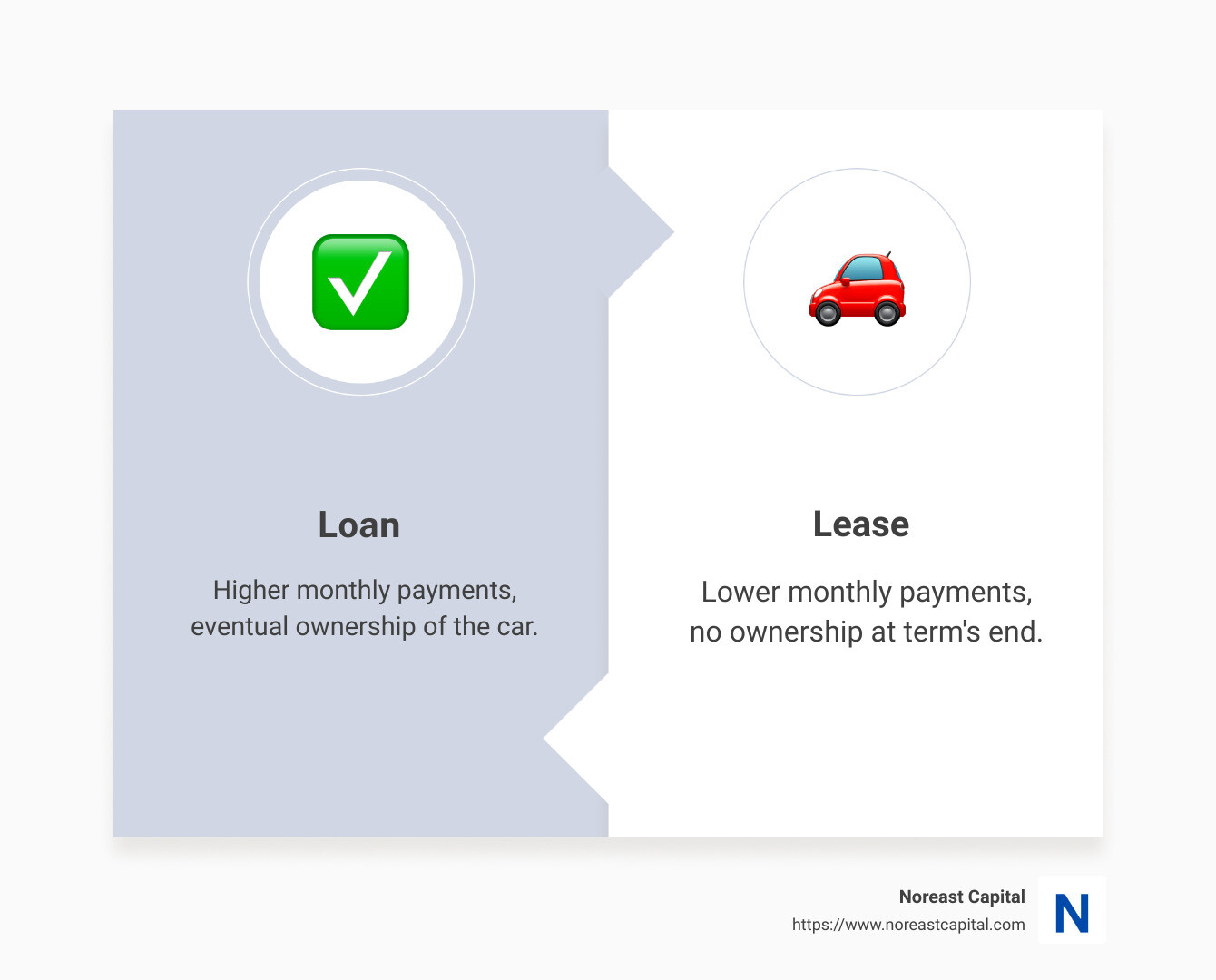
- Loan: Higher monthly payments, but you retain the asset.
- Lease: Lower monthly payments, with no ownership.
Navigating the choice between a lease and a loan isn’t just about numbers—it’s a strategic decision that can significantly impact your business’s cash flow and financial health. Whether you aim to drive a new set of wheels every few years or plan to own a car outright, understanding your options is key to making an informed choice.
I’m Vincent Cerniglia, a seasoned expert with Noreast Capital, where I’ve assisted various businesses in understanding the difference between lease and loan for car financing. My role involves offering direct lending solutions to help companies make wise financial decisions that suit their unique needs.
Easy difference between lease and loan glossary:
– difference between a capital lease and a loan
– difference between equipment lease and loan
– difference between bank loan and leasing
Understanding the Basics
When it comes to car financing, understanding the difference between lease and loan is key to making the best decision for your needs. Let’s break down the basics:
Loan Definition
A loan is essentially borrowing money from a lender to buy a car. You pay back this money over time, with interest. Once the loan is fully paid off, you own the car outright. This means you can do whatever you like with it—sell it, modify it, or drive it as much as you want.
Lease Definition
A lease, on the other hand, is more like renting a car for a certain period. You make monthly payments to use the car, but you don’t own it. At the end of the lease, you usually have the option to buy the car, return it, or lease a new one.
Ownership
Ownership is the big difference here. With a loan, you’re working towards owning the car. With a lease, you’re paying for the right to use the car, but you won’t own it unless you decide to purchase it at the end of the lease term.
Payment Structures
Payments differ significantly between loans and leases:
Loan Payments: These are typically higher each month because you’re paying off the entire value of the car plus interest. However, once the loan is paid off, the car is yours.
Lease Payments: These tend to be lower because you’re only paying for the car’s depreciation during the lease term, plus interest and fees. But remember, since you don’t own the car, you must return it or buy it at the end of the lease.
Understanding these basics will help you decide which option aligns with your financial situation and goals. Whether you plan to own a car or prefer the flexibility of leasing, knowing the difference between lease and loan is crucial for making an informed decision.
Key Differences Between Lease and Loan
When deciding between a lease and a loan for car financing, it’s important to understand the key differences in ownership, payment structures, interest rates, collateral, and flexibility. These factors can significantly affect your financial planning and decision-making.
Ownership
Ownership is a major distinction. With a loan, you gradually work towards owning the car. Once all payments are completed, the car is yours to keep, modify, or sell. In contrast, a lease is essentially renting the car. You make payments for the right to use it, but you don’t own it unless you choose to buy it at the lease’s end. This means less responsibility for depreciation but also no equity in the vehicle.
Payment Structures
Payment structures differ based on whether you choose a loan or a lease:
Loan Payments: These are generally higher because you’re covering the entire cost of the car plus interest. Over time, this builds equity, leading to ownership.
Lease Payments: These are often lower as they cover only the car’s depreciation, interest, and fees. However, once the lease term ends, you don’t own the vehicle unless you opt to purchase it.
Interest Rates
Interest rates can also vary:
Loan Interest Rates: Loans may have fixed or floating interest rates. A fixed rate remains the same, while a floating rate can change, affecting your monthly payments.
Lease Rates: Lease rates are typically fixed, providing predictable monthly expenses. This can simplify budgeting but might include other fees, like acquisition or disposition fees.
Collateral
Collateral requirements differ between the two options:
Loan Collateral: Loans usually require collateral, such as the car itself or other assets. This provides security for the lender but adds risk for the borrower if payments are missed.
Lease Collateral: In leasing, the car itself acts as the collateral. This can be advantageous as no additional assets are needed to secure the lease.
Flexibility
Flexibility is another key consideration:
Loan Flexibility: Loans offer less flexibility in terms of payment structures and terms. However, they provide the benefit of ownership, allowing you to keep the car as long as you wish.
Lease Flexibility: Leases offer more flexible terms, such as shorter durations and lower payments. They also allow for easy upgrades to newer models, which can be beneficial if you prefer driving the latest cars.

These key differences highlight the importance of evaluating your specific needs and financial goals. Whether you prioritize ownership or prefer the flexibility and lower payments of leasing, understanding the difference between lease and loan is crucial in making an informed decision.
Pros and Cons of Leasing
Leasing a vehicle can be an attractive option for many, thanks to several key advantages. However, it also comes with its share of drawbacks. Let’s break down the pros and cons of leasing.
Lower Monthly Payments
One of the biggest perks of leasing is the lower monthly payments. When you lease, you’re only paying for the car’s depreciation during the lease term, not the full purchase price. This can significantly reduce your monthly expenses, making it easier to manage your budget.
For example, the average car lease payment was $522 in the first quarter of 2022, compared to $648 for a car loan payment. This difference can make leasing a more affordable option for those watching their cash flow.
Flexibility
Leasing offers great flexibility. At the end of a lease term, you have several options: return the car, purchase it at a predetermined residual value, or lease a new one. This flexibility allows you to adapt to changes in your needs or preferences without the long-term commitment of ownership.
For businesses, this can be particularly beneficial. If your business relies on the latest technology or models, leasing allows you to upgrade without the financial burden of owning outdated equipment.
Obsolescence Risk
However, one downside of leasing is the risk of obsolescence. Since you don’t own the asset, you can’t sell it if it becomes outdated. If the equipment or vehicle remains effective for many years, continually leasing can end up being more expensive than purchasing it outright through a loan.
No Ownership
With leasing, there’s no ownership at the end of the term unless you choose to buy the asset. This means you don’t build equity, which can be a downside if owning the asset is important to you. You also lack the freedom to modify the vehicle without potential penalties.
Additional Fees
Leasing can come with additional fees. These might include charges for exceeding mileage limits, excessive wear and tear, or early termination of the lease. It’s important to read the lease agreement carefully to understand all potential costs.
Leasing offers lower monthly payments and flexibility but comes with the drawback of no ownership and potential additional fees. Understanding these pros and cons can help you decide if leasing is the right choice for your situation.
Pros and Cons of Bank Loans
When considering a bank loan, weigh the pros and cons to determine if it’s the right financial move for you or your business.
Ownership Benefits
Ownership is a major advantage of bank loans. Once you pay off the loan, you own the asset outright. This means you have complete control over it and can use it as you see fit. For example, if you buy a delivery van with a bank loan, you can customize it to fit your business needs, like adding your company’s branding or installing special equipment.
This ownership can provide long-term value, especially if the asset retains its utility and relevance over time.
Interest Deductions
Bank loans often come with the benefit of interest deductions, which can offer significant tax savings. The interest paid on a business loan is usually tax-deductible. According to the IRS, businesses can deduct interest on loans used for business purposes, reducing taxable income and potentially lowering your overall tax burden.
This is an important consideration for businesses looking to maximize their tax efficiency.
Collateral Requirements
However, a notable downside of bank loans is the requirement for collateral. To secure a loan, lenders typically ask for assets like real estate, inventory, or equipment. This means if you default on the loan, the bank can seize these assets.
For small business owners, this can be risky, especially if personal property is used as collateral. It’s crucial to assess your ability to meet loan obligations before committing.
Restrictive Covenants
Another potential drawback of bank loans is the presence of restrictive covenants. These are conditions set by the lender that you must adhere to during the loan term. They might include maintaining certain financial ratios, limits on additional borrowing, or restrictions on how the loan is used.
According to Madison Capital, failing to meet these covenants can lead to the bank calling the loan, which can have serious financial implications.
In conclusion, bank loans offer the benefit of ownership and potential tax advantages but come with collateral requirements and restrictive covenants. Understanding these factors helps in deciding if a bank loan aligns with your financial strategy.
Next, we’ll explore when to choose a lease or loan, considering factors like short-term use, high-value equipment, and tax deductions.
When to Choose a Lease or Loan
Deciding between a lease and a loan can feel like solving a puzzle. But it boils down to understanding how each option fits your needs.
Short-Term Use
If your business only needs equipment for a short time, leasing is often the smarter choice. Leasing allows you to use the equipment without a long-term commitment. For example, a construction company might lease a crane for a specific project that lasts just a few months. When the project is done, they return the equipment without worrying about selling it.
Long-Term Use
Conversely, if you plan to use the equipment for many years, a loan might be more cost-effective. Owning the equipment means you can use it as long as you need. For instance, a restaurant investing in kitchen appliances may prefer a loan. Once the loan is paid off, the appliances are theirs to keep, providing value for years to come.
High-Value Equipment
For high-value items like industrial machinery, opting for a loan can be beneficial. Ownership of such equipment can be a significant asset for your business. With a loan, you eventually own the equipment outright, which can be a financial advantage if the equipment retains its value.
Equipment Upgrades
In industries where technology evolves rapidly, leasing offers flexibility. You can easily upgrade to the latest models at the end of your lease term. A tech startup, for instance, might lease computers to ensure they always have the latest technology without the hassle of selling outdated models.
Tax Deductions
Both leasing and loans offer tax benefits, but they differ. With a lease, you can usually deduct the entire lease payment as a business expense. This can simplify your accounting and improve cash flow. On the other hand, a loan allows you to deduct interest payments and claim depreciation on the equipment, potentially leading to significant tax savings over time.
Understanding these scenarios can help you decide whether a lease or loan is the right fit for your business. Next, we’ll address some frequently asked questions to further clarify the difference between lease and loan.
Frequently Asked Questions about the Difference Between Lease and Loan
What is the difference between a lease and a bank loan?
Understanding the difference between a lease and a bank loan is crucial for making smart financial decisions. Let’s break it down:
Ownership: With a bank loan, you borrow money to buy an asset and own it once the loan is paid off. In contrast, a lease allows you to use the equipment for a set period without owning it. You’re essentially renting the asset.
Rental Payments: Lease payments are like rent. You pay for using the equipment, not for owning it. Loan payments, however, are installments toward owning the asset.
Down Payment: Loans typically require a down payment, often 20-40% of the equipment’s cost. Leases usually have lower or no down payments, making them more accessible for businesses with limited upfront capital.
Why is a lease better than a loan?
Leasing has several advantages over taking out a loan, particularly in certain situations:
Lower Payments: Lease payments are generally lower than loan payments because you’re only paying for the asset’s usage during the lease term. This can free up cash flow for other business needs.
Flexibility: Leasing offers greater flexibility. At the end of the lease term, you can return the equipment, purchase it, or upgrade to a newer model. This is especially beneficial in industries where technology changes rapidly.
Obsolescence: Leasing helps mitigate the risk of equipment becoming obsolete. If technology advances, you can trade up to the latest model at the end of the lease, keeping your business competitive without the burden of outdated equipment.
What happens if my equipment becomes obsolete?
Obsolescence is a major concern for businesses relying on technology. Here’s how leasing and loans handle it:
Lease Trade-Up: One of the key benefits of leasing is the option to trade up. When your lease ends, you can upgrade to the latest equipment, ensuring your business remains up-to-date without the hassle of selling outdated assets.
Loan Ownership Risk: If you purchase equipment with a loan, you own it, but you also bear the risk of obsolescence. Selling outdated equipment can be a financial burden, especially if its value has depreciated significantly.
By understanding these nuances, you can make an informed decision that aligns with your business goals and financial strategy.
Conclusion
Choosing between a lease and a loan is a critical decision that can shape your business’s financial future. Understanding the difference between lease and loan is crucial to making a choice that aligns with your long-term strategy and operational needs.
Decision Factors
When deciding, consider how long you plan to use the equipment. If it’s for the short-term, leasing might be the way to go due to its lower payments and flexibility. For long-term use, a loan might be more cost-effective since you eventually own the asset.
Your monthly budget is another key factor. Leasing often means lower monthly payments, which can help maintain cash flow, a vital aspect for any growing business. Additionally, if your industry is prone to rapid technological changes, leasing allows for easy upgrades, reducing the risk of owning outdated equipment.
Noreast Capital’s Role
At Noreast Capital, we specialize in helping businesses like yours steer these decisions. Our expertise in equipment financing ensures you get the best solution custom to your needs. Whether you choose to lease or take a loan, we’re here to support you every step of the way.
Financial Advice
Lastly, always consult with a financial advisor to get personalized advice. They can help you assess your business’s financial health and long-term goals, ensuring you make an informed decision. The right financing choice can propel your business forward, keeping it financially robust and adaptable.
For more insights into leasing and buying, visit our Understanding the Difference Between Lease and Buying page. Let us help you secure the right equipment financing solution to drive your business forward.