

Understanding the Difference Between a Loan and a Lease
When considering new equipment for your business, understanding the difference between loan and lease options is crucial. Here’s a quick comparison:
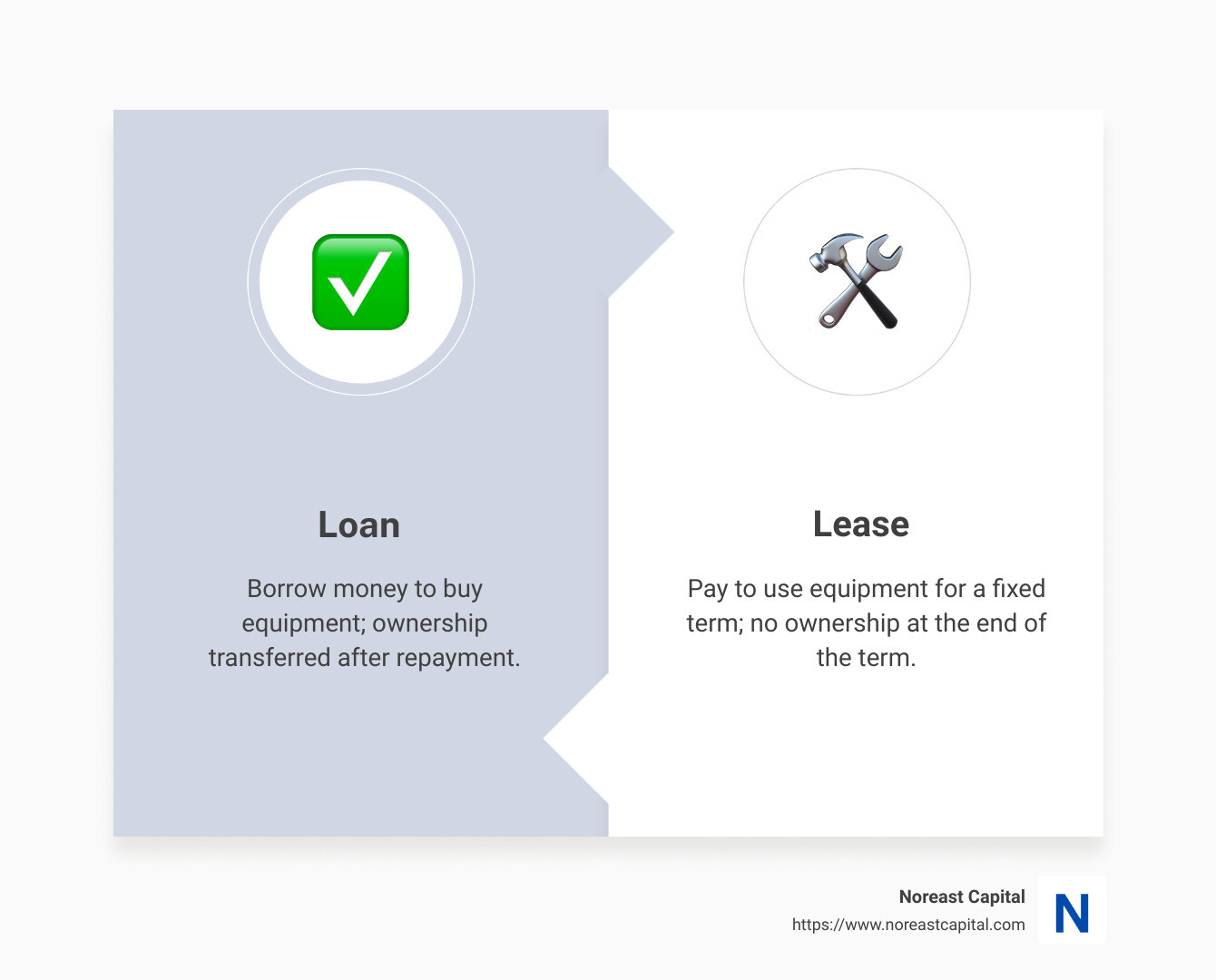
- Loan: You borrow money to buy equipment and own it after repayments.
- Lease: You pay to use equipment without owning it, typically for a fixed term.
Knowing these differences can help you make smarter financial decisions for your business.
Now, let’s dive deeper into these concepts.
I’m Vincent Cerniglia, an expert in equipment financing and leasing with Noreast Capital Corporation. I’ve seen how knowing the differences between loans and leases can save businesses money and improve cash flow.
Let’s explore these options in more detail to find the best fit for your business needs.
What is a Loan?
A loan is when you borrow money from a financial institution or lender. This could be for various needs like buying a house, a car, or funding a business. When you take out a loan, you agree to pay back the borrowed amount over a specific period, along with interest.
Key Features of a Loan
1. Borrowing Money
When you take out a loan, you receive a lump sum of money from the lender. This amount is called the principal. You can use this money for your intended purpose, like purchasing equipment or covering business expenses.
2. Ownership
With a loan, you own the asset from day one. For example, if you take out a car loan, you own the car, even though you still owe money to the lender.
3. Repayment Terms
Loans come with specific repayment terms. These include the length of time you have to repay the loan (usually 4-6 years for car loans), the amount of each monthly payment, and the interest rate.
4. Interest Rates
Interest rates on loans can be fixed or floating. A fixed interest rate stays the same throughout the loan term, making it easier to budget. A floating interest rate can change, often based on a benchmark rate, which can affect your monthly payments.
5. Monthly Payments
Your monthly loan payment typically includes a portion of the principal and the interest. These payments are higher compared to lease payments because you’re paying off the entire cost of the asset.
6. Collateral
Most loans require collateral. This is an asset that the lender can seize if you fail to repay the loan. For instance, a car loan uses the car as collateral.
7. Financial Ratios
Lenders often look at financial ratios to decide if they will give you a loan. These ratios help them understand your ability to repay the loan. Important ratios include your debt-to-income ratio and your credit score.
Pros and Cons of Loans
Ownership
Once you pay off your loan, you fully own the asset. This means you can keep it, sell it, or trade it in for a new one.
No Mileage Limits
Unlike leases, loans do not have mileage limits. You can drive as much as you want without worrying about extra fees.
Build Equity
With each payment, you build equity in the asset. This can be beneficial if the asset retains its value over time.
Cons
Higher Monthly Payments
Loans often have higher monthly payments compared to leases. This is because you are paying to own the asset outright.
Interest Charges
Interest can add a significant amount to the total cost of the loan. The longer the loan term, the more interest you will pay.
Additional Collateral
You may need to provide additional collateral to secure the loan. This adds risk, as you could lose the collateral if you default on the loan.
Understanding the key features, pros, and cons of loans can help you decide if a loan is the right choice for your financial needs.
Now that we’ve covered loans, let’s move on to leases and how they differ from loans.
What is a Lease?
A lease is essentially a term rental agreement. It allows you to use a vehicle for a set period without taking ownership. Here, we’ll dive into the key features and pros and cons of leasing.
Key Features of a Lease
Term Rental Agreement
When you lease a car, you’re entering into a rental agreement for a specific term, usually between 2 to 4 years. You get to drive the vehicle during this period, but you don’t own it.
Possession Without Ownership
Unlike buying, leasing means you don’t own the car. Instead, you have possession of it for the lease term. At the end of the lease, you return the car to the dealer unless you choose to buy it.
Fixed Payments
Leases come with fixed monthly payments. These payments are generally lower than loan payments because they are based on the vehicle’s depreciation during the lease term, not its full value.
Monthly Payments
Lease payments are calculated based on the car’s expected depreciation, rent charges, taxes, and other fees. This often results in lower monthly payments compared to loans.
Depreciation
In a lease, you pay for the car’s depreciation—the loss in value over time. For example, if a car is worth $30,000 and is expected to be worth $20,000 after a 3-year lease, you pay for the $10,000 depreciation, plus rent charges.
Mileage Limits
Leases often come with mileage limits, typically 12,000 to 15,000 miles per year. Exceeding these limits results in additional fees, usually charged per mile.
End-of-Term Options
At the end of the lease, you have a few options: return the car, buy it for its residual value, or lease a new vehicle. This flexibility can be appealing for those who like driving new cars.
Pros and Cons of Leases
Lower Monthly Payments
One of the biggest advantages of leasing is lower monthly payments. Because you’re only paying for the car’s depreciation, your payments are generally lower than if you were buying the car.
No Ownership
A major downside is that you don’t own the car. You won’t build any equity, and you have to return the vehicle at the end of the lease term unless you choose to buy it.
Mileage Restrictions
Leases come with mileage limits, which can be restrictive. If you drive a lot, these limits can be a significant drawback. Exceeding the mileage limit will result in extra fees.
Early Termination Fees
If you need to end your lease early, be prepared for hefty early termination fees. These fees can make it costly to get out of a lease before the term is up.
Less Maintenance Hassle
Leasing often means fewer maintenance issues. Since most leases are for new cars, they are usually covered by the manufacturer’s warranty, reducing the likelihood of costly repairs.
End-of-Term Flexibility
At the end of the lease, you have options. You can return the car, buy it, or lease a new one. This flexibility can be a big advantage for people who like driving new cars frequently.
Next, we’ll dive into a detailed comparison between loans and leases to help you make an informed decision.
Detailed Comparison: Loan vs. Lease
When deciding between a loan and a lease, there are several key factors to consider. Understanding the difference between a loan and a lease can help you make an informed decision that best suits your financial situation and lifestyle needs.
Ownership
Loan: Ownership After Repayment
When you take out a car loan, you are borrowing money to buy the vehicle. Once you have repaid the loan, you own the car outright. This means you have full control over the vehicle and can keep it as long as you want, sell it, or trade it in for a new one.
Lease: No Ownership
With a lease, you are essentially renting the car for a specific period. You do not own the vehicle, and at the end of the lease term, you must return it to the dealer unless you choose to purchase it for its residual value.
Monthly Payments
Loan: Higher Payments
Loan payments are generally higher than lease payments. This is because you are financing the entire cost of the vehicle, plus interest. For example, a $36,000 car loan at 3% interest over four years would result in a monthly payment of about $796.
Lease: Lower Payments
Lease payments are typically lower because you are only paying for the car’s depreciation during the lease term, plus interest and fees. Using the same $36,000 car example, a lease might cost around $561 per month at 3% interest.
Duration
Loan: 4-6 Years
Car loans usually have terms ranging from four to six years. During this time, you make monthly payments until the loan is paid off. Afterward, you own the car outright.
Lease: 2-4 Years
Leases generally last between two and four years. At the end of the lease term, you have the option to return the car, purchase it, or lease a new one.
Flexibility
Loan: More Flexible
Loans offer more flexibility in terms of vehicle use. There are no mileage restrictions, and you can customize the car as you see fit. Additionally, you can sell or trade in the car at any time, although you will need to pay off the remaining loan balance.
Lease: More Restrictions
Leases come with more restrictions. You are limited in how many miles you can drive each year, typically 12,000 to 15,000 miles. Exceeding this limit results in additional fees. You also face penalties for excessive wear and tear and are often restricted from making modifications to the vehicle.
Understanding these differences can help you decide whether a loan or a lease is the better option for you. Next, we’ll answer some frequently asked questions to further clarify these points.
Frequently Asked Questions about the Difference Between Loan and Lease
What is the difference between leasing and loaning a car?
A vehicle loan and a vehicle lease are two different ways to finance a car. When you take out a vehicle loan, the bank owns the car until you finish paying off the loan. You make monthly payments that cover the car’s full price plus interest. Once the loan is paid off, you own the car.
In contrast, a vehicle lease is like a long-term rental. You pay to use the car for a set period, usually 2 to 4 years. Monthly payments are typically lower because you’re only paying for the car’s depreciation during the lease term, not its full value. At the end of the lease, you usually have the option to return the car, buy it for its residual value, or lease a new one.
What’s better, a loan or a lease?
The answer depends on your needs and financial situation.
Lower Payments: Leases often come with lower monthly payments compared to loans. This can be appealing if you want to keep your monthly costs down.
Vehicle Depreciation: With a lease, you don’t have to worry about the car losing value because you can return it at the end of the lease term. When you own a car through a loan, its value depreciates, but you can sell it later.
Trade-In Options: Loans give you the flexibility to trade in or sell your car whenever you want, potentially using the money as a down payment for your next car. With a lease, you have to wait until the lease term ends unless you’re willing to pay early termination fees.
What is the difference between a rental and a loan?
A rental and a loan also have distinct differences. A rental gives you temporary rights to use a car. You pay for the time you use it, and you have to return it when you’re done. Rentals are short-term and usually more expensive per day compared to leases or loans.
A loan, on the other hand, involves borrowing money to buy a car. You make monthly payments until the loan is paid off, at which point you own the car. Loans are long-term and spread the cost of the car over several years.
In summary, a loan means borrowing money to eventually own the car, while a rental means paying for temporary use without any ownership.
Next, let’s dive deeper into the pros and cons of each option to help you make the best decision for your situation.
Conclusion
Understanding the difference between loan and lease is crucial for making the right financial decision. Both options have their unique benefits and drawbacks, and the best choice depends on your individual needs and circumstances.
Summary
To recap:
- Loans: You borrow money to buy a car, making monthly payments until you own it. This option usually involves higher monthly payments but gives you ownership of the vehicle at the end.
- Leases: You pay for the use of a car for a specific period. Monthly payments are typically lower, but you don’t own the car, and there are mileage limits and potential fees for early termination.
Choosing the Right Option
When deciding between a loan and a lease, consider your financial situation, how often you drive, and how long you plan to keep the vehicle.
- If you want ownership and plan to keep the car for many years, a loan might be the better choice.
- If you prefer lower monthly payments and like driving a new car every few years, leasing could be more suitable.
Noreast Capital
At Noreast Capital, we understand that every business has unique needs. That’s why we offer flexible leasing options to help you get the equipment you need without the high upfront costs. Our leases come with fixed payments, making budgeting easier and allowing you to focus on growing your business.
Final Thoughts
Whether you choose a loan or a lease, the key is to understand the terms and implications of each option. We hope this guide has clarified the difference between loan and lease and will help you make an informed decision.
For more information or to explore our leasing options, visit our website or contact us directly. We’re here to help you find the best financing solution for your needs.
