

Do you need to issue a 1099 for equipment rental? The straightforward answer is yes, if you pay $600 or more for equipment rental to an unincorporated entity such as a sole proprietorship or partnership during the tax year, you must report it on Form 1099-MISC under Box 1: Rents.
Maintaining tax compliance when it comes to equipment leasing is crucial for avoiding complications with the IRS. When you’re renting equipment for your business, staying ahead of the IRS regulations can save you from potential penalties and ensure that your business runs smoothly. Properly issuing a 1099 form for equipment rental payments not only keeps your finances in order but also protects you against unforeseen tax issues.
I’m Vincent Cerniglia from Noreast Capital, a leader in equipment financing and leasing solutions. My background in providing nationwide finance services gives me extensive knowledge in knowing exactly when you need to issue a 1099 for equipment rental. Confidence in these details helps businesses like yours maintain compliance and focus on growth. Now, let’s dig into the complexities of handling 1099 forms for equipment rentals.

Understanding Form 1099-MISC
Form 1099-MISC is a key tool for reporting miscellaneous income to the IRS. It’s essential for businesses that pay out certain types of income, including rental fees. When you rent equipment, this form helps keep everything above board and ensures that both you and your leasing provider are aligned with IRS reporting requirements.
What is Miscellaneous Income?
Miscellaneous income covers a range of payments that don’t fit into other specific categories. This includes rent, which is common in equipment leasing. If you pay $600 or more in rental fees to an unincorporated entity—like a sole proprietor or partnership—you need to report it using Form 1099-MISC. This is crucial for keeping your business in compliance with tax laws.
Reporting Rental Fees
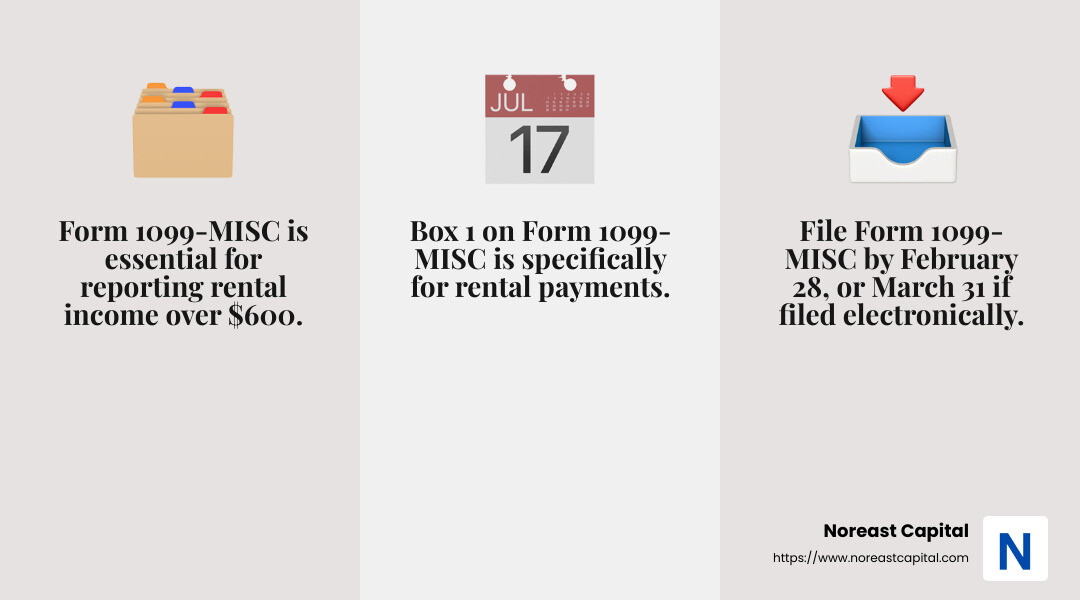
When you rent equipment and pay $600 or more, you must report this on Form 1099-MISC under Box 1: Rents. This box specifically captures rental payments, including those for equipment like bulldozers, computers, or even meeting rooms. The IRS uses this information to ensure that income is properly reported by the recipient.
Meeting IRS Reporting Requirements
Timeliness is vital. The IRS requires that you file Form 1099-MISC by February 28, or March 31 if you’re filing electronically. Missing these deadlines can lead to penalties, so it’s wise to set reminders or use automated systems to ensure timely submission.
Double-check all details before submitting. Errors in the recipient’s name, address, or Tax ID can lead to delays and penalties. Keeping accurate records and verifying information can save you from unnecessary headaches.
By understanding Form 1099-MISC and its role in reporting rental fees, you can keep your business compliant and avoid IRS complications. Now, let’s explore how to fill out this form for equipment leases.
Do You Need to Issue a 1099 for Equipment Rental?
When it comes to equipment rental, the IRS sets a clear $600 threshold. If you pay a leasing provider $600 or more in a tax year, you must issue a Form 1099-MISC. This form is crucial for reporting rental payments, ensuring that both you and the leasing provider meet tax compliance requirements.
Understanding the $600 Threshold
The $600 rule is straightforward. If your business rents equipment and the total payment to the leasing provider reaches or exceeds this amount, you have a reporting obligation. This applies whether the payment is for a bulldozer, a photocopier, or any other type of equipment.
Choosing a Leasing Provider
Working with a reputable leasing provider can simplify your reporting process. They should provide you with all necessary information, including their Tax Identification Number (TIN), to help you fill out Form 1099-MISC accurately.
IRS Deadlines to Remember
- January 31: Provide a copy of Form 1099-MISC to the leasing provider.
- February 28: Submit the form to the IRS if you’re filing on paper.
- March 31: Submit electronically if you prefer digital filing.

These deadlines are non-negotiable. Missing them can result in penalties, so it’s crucial to stay organized. Setting reminders or using tax software can help you meet these important dates without stress.
By understanding these key aspects, you can ensure that your business remains in good standing with the IRS. Now, let’s dive into how to fill out Form 1099-MISC for equipment leases.
How to Fill Out Form 1099-MISC for Equipment Leases
Filling out Form 1099-MISC for equipment leases may seem complex, but breaking it down into steps makes it manageable. Here’s a simple guide to help you get it right.
Gather Recipient Information
First, collect essential details from the leasing provider. Accurate information is crucial:
- Legal Name: Get the correct legal name of the leasing company.
- Address: Note their complete mailing address.
- Tax ID Number: This is found on the provider’s W-9 form.
- Account Number: Include this if applicable for easier reference.
Provide Your Company Details
Next, you’ll need to fill in your business information:
- Company Name: Enter your official business name.
- Physical Address: Provide your business location.
- Tax Identification Number: Include your business’s TIN.
- Contact Details: Add a phone number or email for follow-up questions.
Fill Out the Form
Now, let’s look at the key parts of the form:
Box 1: Rents: This is where you report the total payment made for equipment leasing over the year. It’s essential to ensure this amount is accurate to avoid any issues with the IRS.
Box 15 and 17: These are for organizations submitting combined federal and state forms. Fill them out only if applicable to your situation.
Use the IRS FIRE System
If you’re filing more than 100 information returns, electronic filing is a must. Here’s how to use the IRS FIRE System:
- Set Up an Account: Register for a FIRE System account on the IRS website.
- File Form 4419: This form is needed to obtain a Transmitter Control Code (TCC).
- Submit Electronically: Once you have your TCC, you can upload your 1099 forms online.
Double-Check Everything
Before submission, review all information to avoid errors. Incorrect details can lead to penalties and delays.
By following these steps, you can ensure your Form 1099-MISC is filled out correctly and submitted on time.
Next, let’s explore some common mistakes to avoid when dealing with equipment lease 1099s.
Common Mistakes to Avoid
When dealing with equipment lease 1099s, it’s easy to make mistakes that can lead to penalties or compliance issues. Here are some common pitfalls to watch out for:
Incorrect Classification
One of the most frequent errors is incorrect classification of payments. Many businesses mistakenly report equipment rental payments as “non-employee compensation” instead of “rents” on Form 1099-MISC.
Philip Perkins, a professional in the field, noted: “Almost all the people I work for who send me IRS form 1099s put the money they’ve paid me for equipment rental in the ‘non-employee compensation’ line of the 1099, as opposed to ‘rents’.”
To avoid this, make sure to enter the amount in Box 1: Rents for equipment leases.
Misunderstanding Non-Employee Compensation
Non-employee compensation is reported on a different form, the 1099-NEC. It’s crucial not to confuse this with rental payments. Rental payments belong on the 1099-MISC, specifically in Box 1. Mixing these up can lead to IRS scrutiny and potential penalties.
Missing IRS Deadlines
Failing to meet IRS deadlines for submission is another common mistake. Here are the key dates to remember:
- Copy B must be sent to the vendor by January 31.
- Copy A should be submitted to the IRS by February 28 if filing on paper, or by March 31 if filing electronically.
Missing these deadlines can result in penalties, so mark your calendar and plan ahead.
Penalties for Errors
Errors on Form 1099-MISC can lead to penalties. The IRS charges penalties for late filing, incorrect information, or failing to file altogether. Double-check all entries to ensure accuracy and compliance.
By avoiding these common mistakes, you can ensure your equipment lease 1099s are handled correctly and keep your business in good standing with the IRS.
Next, let’s address some frequently asked questions about equipment rental 1099s.
Frequently Asked Questions about Equipment Rental 1099s
Is equipment lease 1099 reportable?
Yes, equipment lease payments are reportable on Form 1099-MISC. If your business pays $600 or more in rent to a leasing provider during the tax year, you must report these payments. Make sure to list the amount in Box 1: Rents on the form.
It’s essential to ensure that rental payments are correctly classified to avoid IRS complications. Misreporting these payments as non-employee compensation can lead to issues.
Do I need to issue a 1099 for equipment purchase?
No, you do not need to issue a 1099 for an equipment purchase. When you buy equipment, you’re acquiring an asset, not paying for a service or renting it. Therefore, equipment purchases are not reportable on a 1099 form.
However, if you pay an unincorporated entity $600 or more for services related to the equipment, such as installation or maintenance, you must issue a 1099-NEC for those services.
Are lease payments reported on 1099?
Yes, lease payments are indeed reported on Form 1099-MISC. As mentioned earlier, these payments should be listed in Box 1: Rents. Correctly reporting lease payments is crucial to maintain compliance with IRS regulations.
For tax purposes, lease payments can impact your Schedule C if you’re reporting them as business expenses. Ensure you accurately report these payments to avoid any issues with your tax filings.
These FAQs should help clarify when and how to issue a 1099 for equipment rentals, ensuring you remain compliant with IRS requirements.
Conclusion
At Noreast Capital, we understand that navigating the complexities of tax compliance can be daunting, especially when it comes to equipment leasing. That’s why we’re committed to simplifying the process and helping your business grow with ease.
Equipment financing is a smart strategy for businesses looking to maintain cash flow while accessing the latest technology. By leasing equipment, you avoid the hefty upfront costs of ownership. This means you can save money and invest in other vital areas of your business, keeping you competitive and agile.
Our commercial equipment finance solutions are designed to be flexible and cater to your unique needs. Whether you’re in need of office equipment, machinery, or any other business essentials, we have the expertise to guide you through the financing options that best suit your operations.
Partnering with Noreast Capital means choosing a team dedicated to your success. We offer customizable financing options that help you acquire high-quality equipment without compromising your financial stability. Our goal is to support your business growth and help you achieve your objectives efficiently.
By leveraging the right financial support, you can focus on what matters most—growing your business and achieving your goals. Let us help you turn your equipment leasing challenges into opportunities for success.
For more information on how we can assist with your equipment financing needs, visit our Office Equipment Financing page.