

Equipment finance for startups is central to fueling growth and innovation. Startups, often constrained by limited financial resources, can benefit greatly from strategic equipment financing options, which allow them to acquire essential tools while maintaining healthy cash flow.
- Secure necessary machinery without hefty upfront costs
- Preserve working capital to grow swiftly
- Access cutting-edge technology by leveraging leasing options
Whether opting for a loan that eventually leads to ownership or leasing equipment for flexibility, startups can effectively use these financial strategies to scale quickly and efficiently.
As Vincent Cerniglia from Noreast Capital, my experience in the equipment finance for startups sector empowers me to guide businesses in acquiring vital assets while ensuring financial stability and growth. Keep reading to find custom solutions that fit your startup’s unique needs and aspirations.

Easy equipment finance for startups word list:
– difference between financed and leased
– lease vs buy equipment
– leasing vs financing
Understanding Equipment Finance for Startups
Equipment finance for startups is a game-changer. It opens doors to growth by enabling access to necessary tools and machinery without draining cash reserves. Let’s break down the key options: equipment loans and leasing.
Equipment Loans
An equipment loan lets startups buy equipment by spreading out the cost over time. The loan is paid back in monthly installments, which includes interest and fees. At the end of the loan term, the startup owns the equipment outright. This approach can help build a positive credit history, which is crucial for future financing.
Key benefits of equipment loans:
- Ownership: At the end of the loan, the equipment is yours.
- Tax Advantages: Interest on the loan is usually tax-deductible.
- Credit Building: Helps establish a credit history for your business.
Leasing Options
Leasing is like renting the equipment for a set period. You pay a monthly fee, and at the end of the lease, you have the option to buy the equipment, return it, or upgrade to newer technology. This option is perfect for startups needing flexibility or facing rapid technological changes.
Key benefits of leasing:
- Lower Monthly Payments: Leasing often comes with lower payments than loans.
- Flexibility: At the end of the lease, you can upgrade to newer equipment.
- Tax Benefits: Lease payments can often be written off as a business expense.
Cash Flow Management
Both equipment loans and leasing help manage cash flow effectively. By avoiding large upfront costs, startups can preserve their working capital for other critical areas like marketing or hiring.
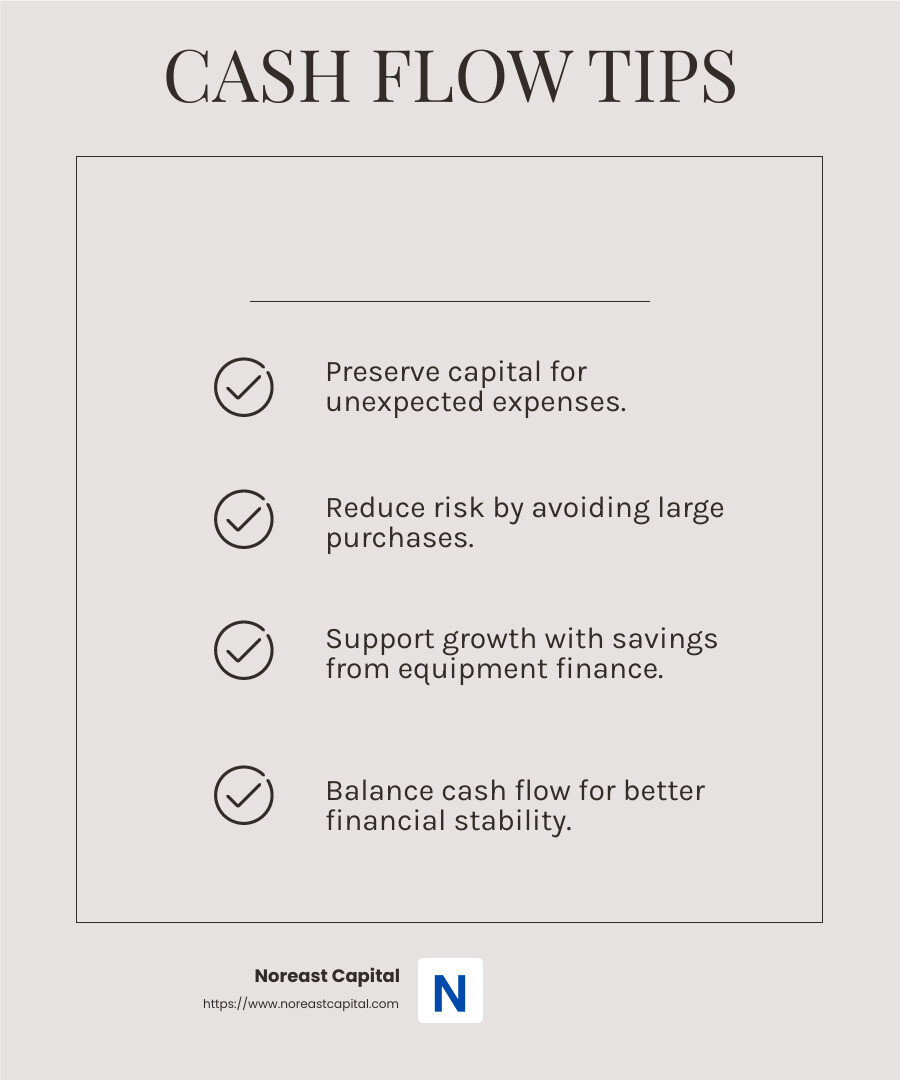
Why is this important?
- Preserves Capital: Keep cash available for unexpected expenses or opportunities.
- Reduces Risk: Avoids the financial strain of large purchases.
- Supports Growth: Use savings to invest in other growth areas.
In summary, whether through loans or leasing, equipment finance for startups is about strategic asset acquisition while maintaining financial health. This makes it easier to scale, innovate, and compete in a market.
Types of Equipment Financing
When it comes to equipment finance for startups, understanding the different types of financing options is crucial. Each option has its unique benefits and can cater to different business needs. Let’s explore the three main types: loans, leases, and lines of credit.
Equipment Loans
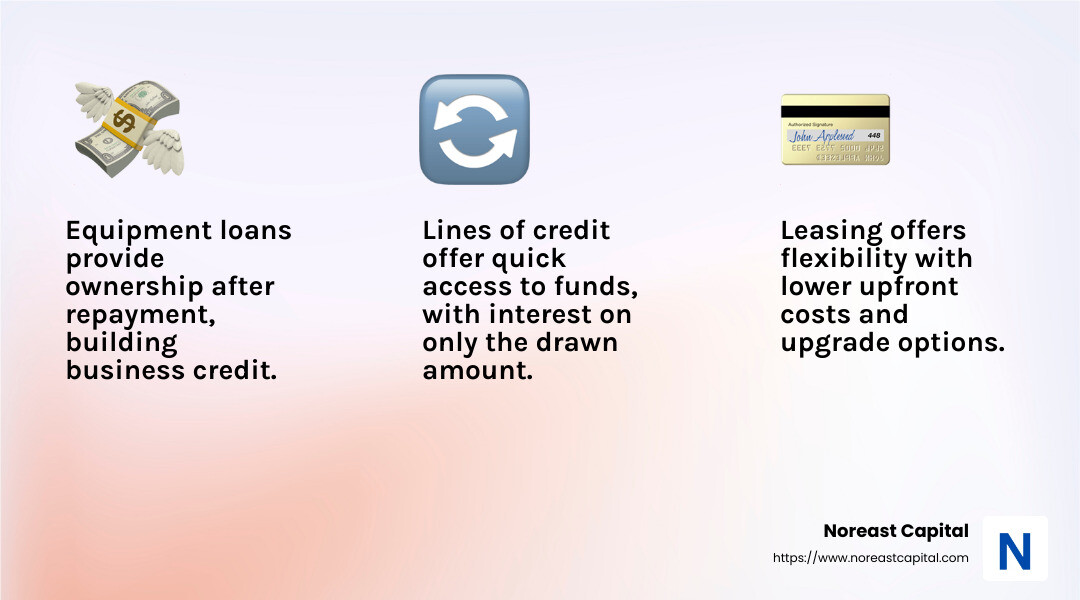
Equipment loans are a straightforward way for startups to purchase equipment. The startup borrows money to buy the equipment and repays the loan over time with interest. By the end of the loan term, the business owns the equipment outright.
Pros of Equipment Loans:
- Ownership: Once the loan is paid off, the equipment is completely yours.
- Builds Credit: Regular payments can help build your business’s credit history.
- Tax Deductible: Interest payments are often tax-deductible.
Equipment Leases
Leasing allows startups to use equipment without owning it. Think of it as renting. You pay a monthly fee to use the equipment. At the end of the lease term, you can choose to buy the equipment, return it, or lease a newer model.
Pros of Leasing:
- Lower Initial Costs: Leases usually require less money upfront.
- Flexibility: Upgrade to newer equipment at the end of the lease term.
- Tax Benefits: Lease payments can often be expensed for tax purposes.
Lines of Credit
A line of credit is another flexible option for startups. It provides a pool of funds that businesses can draw from as needed to purchase equipment or cover other expenses. You only pay interest on the amount you use.
Pros of Lines of Credit:
- Flexibility: Use funds as needed, rather than receiving a lump sum.
- Interest Savings: Only pay interest on the amount you draw.
- Quick Access: Funds are readily available for urgent needs.
Choosing the Right Option
- Consider Your Needs: Do you need ownership, flexibility, or quick access to funds?
- Evaluate Costs: Compare interest rates, fees, and tax benefits.
- Think Long-Term: Consider how each option affects your business’s growth and financial health.
By understanding these types of equipment financing, startups can make informed decisions that support their growth and stability. Each option offers unique advantages, so choose the one that best aligns with your business goals and cash flow needs.
How to Qualify for Equipment Financing
Qualifying for equipment finance for startups might seem challenging, but breaking it down into simple steps makes it manageable. Let’s explore the key factors: credit score, collateral, and down payment.
Credit Score
Your credit score is a major player in the financing game. Think of it as your financial reputation.
Good Credit Score: If your credit score is solid, you’re in luck. Lenders are more likely to offer you better rates and terms. Even if your startup is brand new, a strong personal credit score can help you secure financing.
Fair to Poor Credit: Don’t worry if your score isn’t perfect. Some lenders are still willing to work with you, especially if you have a convincing business plan or other strengths.
Collateral
Collateral is like a security blanket for lenders. It reassures them that they’ll get their money back, one way or another.
No Collateral Needed: In many cases, the equipment itself serves as collateral. This means you might not need to put up additional personal or business assets.
Additional Collateral: If your credit is less than stellar, offering extra collateral can make your application more appealing. It shows that you’re serious about repaying the loan.
Down Payment
Think of a down payment as a gesture of goodwill. It shows lenders that you’re committed.
Higher Down Payment: A larger down payment can sometimes offset a lower credit score. Lenders see it as a sign of stability and responsibility.
Lower Down Payment Options: Some lenders offer lower down payment options for startups with strong business plans or promising market potential.
By focusing on these three areas—credit score, collateral, and down payment—you can increase your chances of qualifying for equipment financing. Startups that understand and prepare for these requirements often find themselves in a better position to secure the financing they need to grow.
Benefits of Equipment Finance for Startups
When you’re launching a startup, every dollar counts. Equipment finance for startups offers several key benefits that can help you manage your resources wisely and set your business up for success.
Tax Benefits
One of the most attractive aspects of equipment financing is the potential for tax savings. The Section 179 Deduction allows businesses to deduct the full purchase price of qualifying equipment bought or financed during the tax year. This means that if you purchase $10,000 worth of equipment, you might be able to deduct the entire amount, reducing your taxable income significantly. For a startup, this could translate into thousands of dollars saved, allowing you to reinvest in your business.
Working Capital Preservation
Preserving working capital is crucial for startups. By financing equipment instead of buying it outright, you can keep more cash on hand. This liquidity allows you to cover unexpected costs, seize new opportunities, or invest in marketing and growth. Equipment financing often comes with flexible terms, like low or zero down payments, which means you can spread the cost over time without straining your cash flow.
Asset Retention
Equipment finance options, like leasing, offer the advantage of keeping your balance sheet light. When you lease equipment, it doesn’t show up as a liability, which can make your financials look more attractive to potential investors or lenders. Plus, at the end of the lease, you have the option to upgrade to the latest technology, ensuring your startup stays competitive without the burden of outdated equipment.
By understanding these benefits, startups can make informed decisions that support their growth and financial health. In the next section, we’ll address some common questions about equipment finance for startups, helping you steer this essential aspect of business planning.
Frequently Asked Questions about Equipment Finance for Startups
What are the typical terms for equipment financing?
When it comes to equipment finance for startups, the terms can vary widely depending on several factors.
Interest rates for equipment financing often depend on your credit score. A higher credit score generally means lower interest rates, making borrowing more affordable. Rates can range from as low as 4% to as high as 30%, so it’s crucial to shop around.
Loan terms usually span anywhere from 1 to 7 years. The length of the term can impact your monthly payments and the total cost of the loan. Longer terms mean lower monthly payments but might result in paying more interest over time.
Can a new business qualify for equipment financing?
Yes, a new business can qualify for equipment financing, but there are some problems to overcome.
Credit requirements are one of the main challenges. Lenders typically prefer to work with businesses that have been around for at least two years, as this reduces their risk. However, if you have a strong personal credit score and can provide a personal guarantee, you increase your chances of securing financing.
Startup challenges include limited credit history and higher perceived risk by lenders. To mitigate these, you might need to offer collateral or a larger down payment. Some lenders are willing to work with startups if the business plan is solid and the owners have a strong financial background.
How does equipment leasing differ from equipment loans?
Understanding the difference between equipment leasing and loans is crucial for making the right financial decision.
Lease vs Loan:
Equipment loans involve borrowing money to purchase equipment, with the equipment itself often serving as collateral. Once the loan is paid off, you own the equipment outright.
Leasing, on the other hand, means you pay to use the equipment for a set period. At the end of the lease, you might have the option to purchase the equipment, return it, or upgrade to newer models.
Payment plans for leases are often more flexible. They can include lower monthly payments and sometimes cover maintenance costs, making them appealing for startups that want to preserve cash flow.
Choosing between leasing and loans depends on your business needs and financial situation. Leasing can offer more flexibility and less upfront cost, while loans can be a better option if long-term ownership is your goal.
In the next section, we’ll explore how you can leverage these options to fuel your startup’s growth.
Conclusion
When it comes to fueling growth, equipment finance for startups is a game-changer. At Noreast Capital, we specialize in providing custom equipment leasing solutions that help startups manage their cash flow effectively.
Why Choose Noreast Capital?
Equipment Leasing Expertise: We offer businesses the opportunity to use essential equipment without the burden of ownership. This approach allows startups to conserve cash and allocate resources where they are needed most.
Cash Flow Management: By opting for equipment leasing, startups can benefit from lower monthly payments compared to traditional loans. This flexibility helps maintain a healthy cash flow, which is crucial for navigating the early stages of business growth.
Access to the Latest Technology: Leasing gives startups the option to upgrade to newer equipment models at the end of the lease term. This ensures that your business stays competitive with the latest tools and technology.
For startups looking to make smart financial decisions, understanding the difference between leasing and financing is key. Leasing can be particularly advantageous for those who prioritize cash flow management and flexibility.
Explore our leasing vs financing page to learn more about how Noreast Capital can support your startup’s growth journey.
In the world of startups, making informed financial decisions can set the foundation for long-term success. Let us help you steer the complexities of equipment finance and fuel your startup’s growth with confidence.