

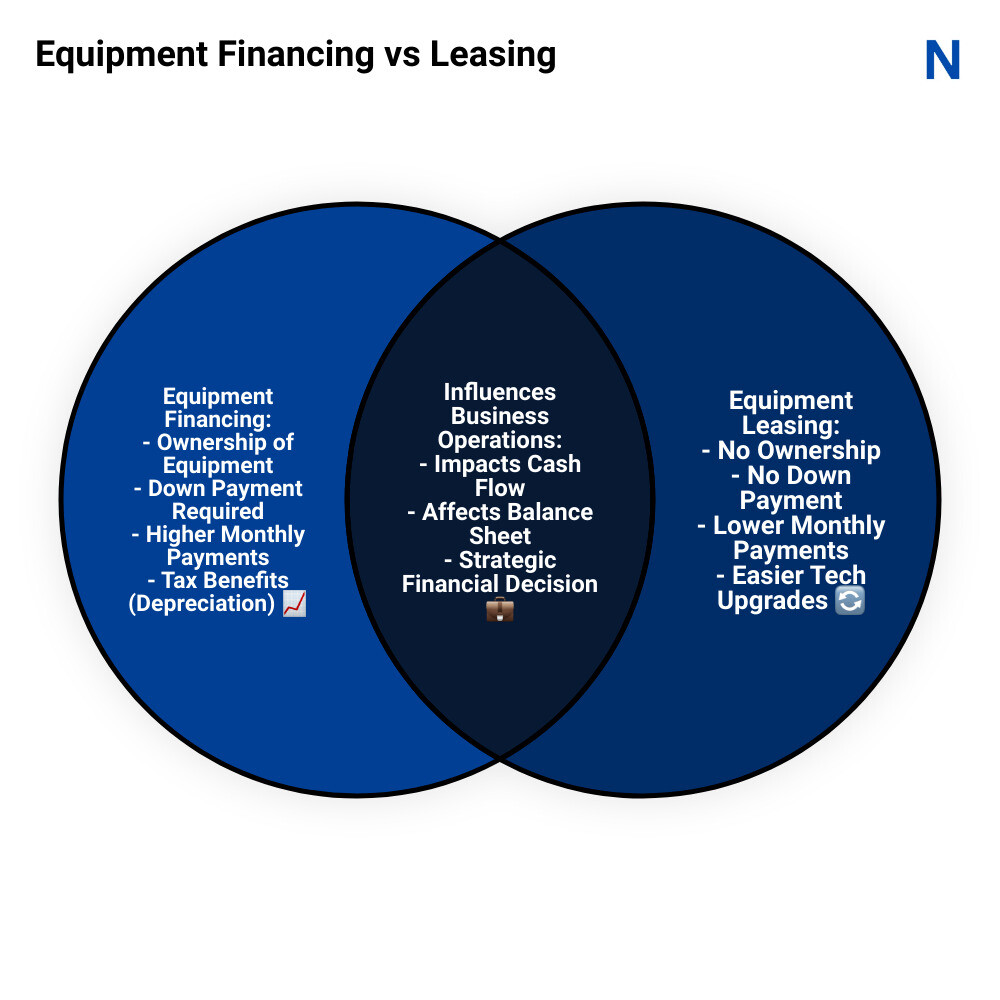
Equipment financing vs leasing is a critical choice businesses face when deciding how to acquire the necessary tools and machinery for operations. Here’s a quick comparison:
- Equipment Financing:
- Provides ownership of the equipment.
- Often requires a down payment.
- Payments are typically higher but end with asset ownership.
Might offer tax benefits through depreciation.
Leasing Equipment:
- No ownership; you’re renting the equipment.
- Generally requires no down payment.
- Lower monthly payments but no asset at the end.
- Allows for easy upgrades to new technology.
When it comes to equipping your business, making informed financial decisions is crucial. Equipment needs play a pivotal role in business operations, impacting productivity, efficiency, and overall success. Choosing between financing or leasing can influence your cash flow and balance sheet, making it essential to weigh the pros and cons of each option to align with your business’s strategic goals.
I’m Vincent Cerniglia from Noreast Capital Corporation, a leader in the equipment financing and leasing market. With extensive experience providing nationwide solutions for businesses, I understand both the intricacies and practical considerations of equipment financing vs leasing. Let me guide you through this important financial decision.
Understanding Equipment Leasing
When a business chooses to lease equipment, it’s essentially entering into a rental contract. This means the business, or lessee, pays a set monthly fee to use the equipment for a specific time without owning it. This approach can be especially beneficial for companies that need equipment for short-term projects or want to keep pace with rapidly changing technology.
Types of Equipment Leases
Operating Lease
An operating lease allows businesses to use equipment without the burden of ownership. It’s ideal for assets that quickly become outdated, like tech gadgets or specialized machinery. The lessee can deduct lease payments as a business expense, which can be a tax advantage. At the end of the lease, you can return the equipment, renew the lease, or purchase the equipment at its fair market value.
Capital Lease
Unlike an operating lease, a capital lease (or finance lease) is more like a loan. It’s designed for businesses that eventually want to own the equipment. You pay over time, and at the end, you might purchase the equipment for a nominal fee. This type of lease allows you to claim depreciation and interest expenses, which can be beneficial for tax purposes.
Fair Market Value (FMV) Lease
An FMV lease, often called a true lease, is a flexible option. You pay a fixed rate and, at the end of the term, decide whether to purchase the equipment at its current market value, return it, or upgrade to newer equipment. This is great for businesses that anticipate their equipment needs will change.
$1 Buyout Lease
A $1 buyout lease is a type of capital lease where, after making all the lease payments, you can buy the equipment for just one dollar. This option is perfect if you know you’ll need the equipment long-term and want to own it eventually.
Terminal Rental Adjustment Clause (TRAC) Lease
A TRAC lease is popular for businesses managing large vehicle fleets. It offers flexibility in payment and residual value terms, allowing for adjustments based on the equipment’s use and condition at lease end. This can help manage costs more effectively.
Each type of lease offers unique benefits and considerations. Choosing the right one depends on your business needs, financial situation, and long-term strategy. Leasing can provide flexibility, lower upfront costs, and reduce the risk of owning obsolete equipment, making it a smart choice for many businesses.
Exploring Equipment Financing
Equipment financing is a strategic choice for businesses looking to secure essential tools without the immediate financial burden of outright purchase. Let’s explore the benefits of equipment financing and how it can serve your business needs.
Loan and Line of Credit
When you opt for equipment financing, you’re essentially taking out a loan or using a line of credit to acquire the equipment. This means you make regular payments over time, and once the loan is paid off, you own the equipment outright. Unlike leasing, this gives you full ownership, allowing you to build equity in your assets.
Ownership and Equity
Owning your equipment means that you can use it as collateral for future loans, potentially opening up more financial opportunities for your business. Plus, owning equipment can improve your balance sheet as the asset value appreciates over time.
Tax Benefits
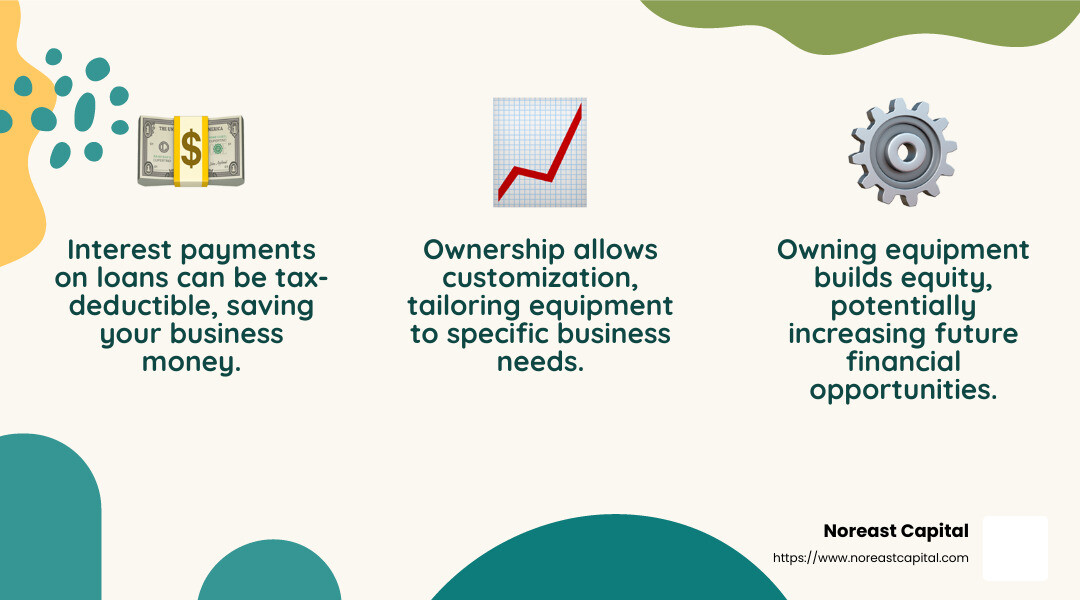
Financing equipment can also offer significant tax benefits. You might be able to deduct loan interest payments and claim depreciation on the equipment, reducing your taxable income. This can provide substantial savings, especially for businesses with high-value equipment.
Customization
Another advantage of equipment financing is the ability to customize. Since you own the equipment, you can modify it to better suit your business needs—something that’s not typically possible with leased equipment. This flexibility ensures that your equipment aligns perfectly with your operational requirements.
In summary, equipment financing allows businesses to own their equipment while enjoying tax benefits and customization options. It’s a smart choice for companies that value ownership and want to build equity in their assets.
Next, we’ll explore the key differences between equipment financing and leasing, helping you decide which option aligns best with your business strategy.
Equipment Financing vs Leasing: Key Differences
When deciding between equipment financing vs leasing, understanding the key differences can help you make the best choice for your business.
Ownership
Financing gives you ownership of the equipment. Once you’ve made all your payments, the equipment is yours. This can be beneficial if you plan to use the equipment for a long time or want to build equity. In contrast, leasing is more like renting. You use the equipment for a set period, but you don’t own it unless you choose to buy it at the end of the lease.
Monthly Payments
Leasing often comes with lower monthly payments compared to financing. This is because you’re essentially paying for the use of the equipment, not its full value. Financing typically requires higher monthly payments since you’re working towards ownership. However, once the loan is paid off, you have no more payments, while leasing requires ongoing payments if you continue to renew the lease.
Tax Implications
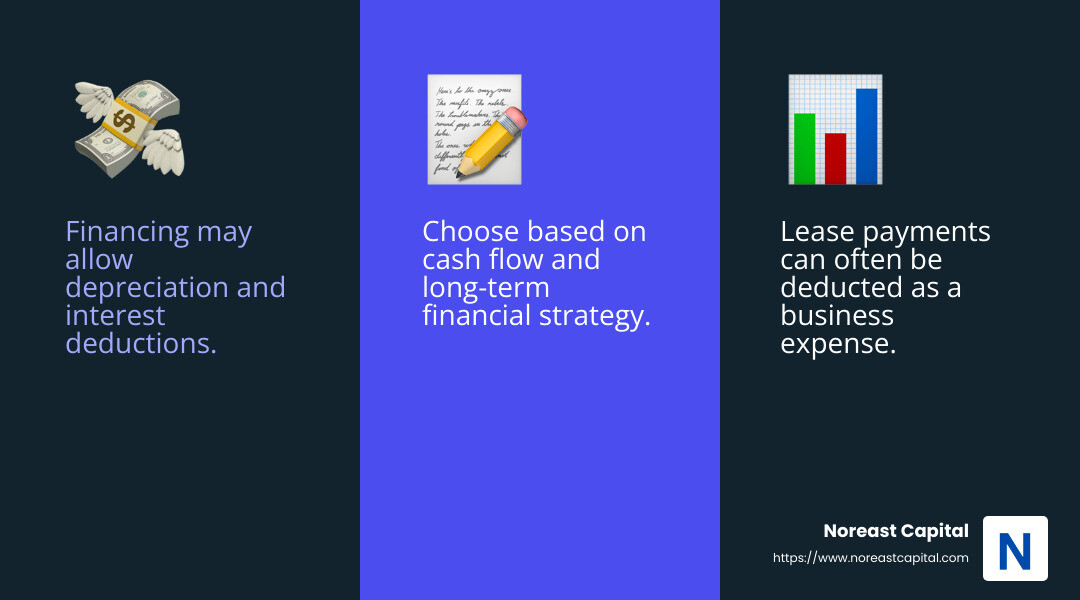
Both options have different tax benefits. With financing, you might be able to deduct interest payments and depreciate the equipment over time, which can lower your taxable income. Leasing, on the other hand, often allows you to deduct lease payments as a business expense. This can be advantageous for managing cash flow and reducing tax liability in the short term.
Flexibility and Risk
Leasing offers more flexibility. It allows you to upgrade to newer equipment more easily, which is useful in industries with rapid technological advancements. It also reduces the risk of obsolescence. With financing, you’re committed to the equipment you purchase, which could become outdated.
In summary, the choice between equipment financing and leasing depends on your business’s needs regarding ownership, payment structure, and tax advantages. Consider these factors carefully to determine which option aligns best with your strategic goals.
Advantages of Equipment Leasing
When it comes to acquiring equipment for your business, leasing offers some clear advantages. Let’s explore the key benefits: lower upfront costs, flexibility, and obsolescence risk.
Lower Upfront Costs
One of the greatest perks of leasing is the lower upfront cost. Unlike financing, leasing often requires no down payment. This means you can conserve your cash for other critical business needs. By spreading the cost over the lease term, you maintain better cash flow. This is especially helpful for businesses that are just starting out or those with tight budgets.
Flexibility
Leasing provides best flexibility. You can tailor lease agreements to fit your business’s cash flow, with options like seasonal leases or deferred payments. Moreover, leasing allows you to try out the latest equipment models without committing to a purchase. This is a huge advantage if your industry evolves quickly or if you need to adapt to changing market demands.
Obsolescence Risk
In industries, equipment can become obsolete quickly. Leasing mitigates this obsolescence risk because it allows you to upgrade to newer models more easily. Instead of being stuck with outdated technology, you can return the equipment at the end of the lease term and lease newer, more advanced models. This keeps your business competitive without the burden of owning outdated equipment.
Leasing can be a strategic choice for businesses looking to minimize upfront costs, maintain flexibility, and manage the risk of equipment becoming obsolete. Whether you’re a startup or an established company, these advantages can help you make smarter financial decisions.
Frequently Asked Questions about Equipment Financing vs Leasing
What is the difference between equipment leasing and financing?
When it comes to equipment leasing vs financing, the key difference is ownership. With financing, you own the equipment once you pay off the loan. This means you’re building equity in the equipment over time. Leasing, however, is more like renting. You pay to use the equipment for a set period, but you don’t own it unless you choose to buy it at the end of the lease.
Monthly payments also vary between the two options. Financing often involves higher monthly payments because you’re paying off the equipment’s full cost plus interest. Leasing generally has lower monthly payments, making it easier on your cash flow.
Is it better to lease or buy equipment for tax purposes?
Tax implications can be a deciding factor in whether to lease or buy. When you buy equipment through financing, you can often claim depreciation on your taxes. This can reduce your taxable income over time. Plus, the interest on your loan might be tax-deductible.
Leasing, on the other hand, allows you to deduct lease payments as a business expense. This can simplify tax reporting and improve your cash flow since you’re not tying up capital in equipment purchases. The right choice depends on your business’s financial strategy and tax situation.
Why use equipment financing?
Equipment financing is a smart choice for businesses that want to gain access to technology and build equity in their assets. Owning equipment means you can customize it to meet your specific needs, which is often crucial for specialized industries.
Financing also helps with balance sheet management. Equipment loans can be listed as liabilities, but owning the equipment adds assets to your balance sheet. This can improve your company’s financial ratios and make it more attractive to investors.
In summary, whether you choose leasing or financing depends on your business’s needs, financial goals, and industry dynamics. Understanding the differences in ownership, tax implications, and financial impact can help you make an informed decision.
Conclusion
Choosing between equipment leasing and financing is a pivotal decision for any business. At Noreast Capital, we understand the nuances of this choice and are committed to helping you find the best fit for your needs.
Financial Flexibility is at the core of what we offer. Leasing allows businesses to access the latest technology without a hefty upfront investment. This means you can maintain your cash flow and redirect funds to other critical areas of your business. On the other hand, equipment financing lets you build equity and potentially benefit from tax deductions, such as depreciation and interest expenses.
Our goal is to support your business growth. Whether you’re a restaurant looking to upgrade your kitchen or a tech company needing the latest equipment, we provide customized solutions. Our flexible terms and competitive rates ensure you get the equipment you need without stretching your budget.
By partnering with us, you’re not just getting a financial service—you’re gaining a partner invested in your success. We offer a range of options that cater to your unique situation, ensuring you can focus on what you do best: running your business.
Explore how Noreast Capital can help you achieve your business goals by visiting our equipment lease page. Let us be part of your journey to success, providing the financial flexibility you need to thrive.