

How Equipment Leasing Boosts Business Efficiency
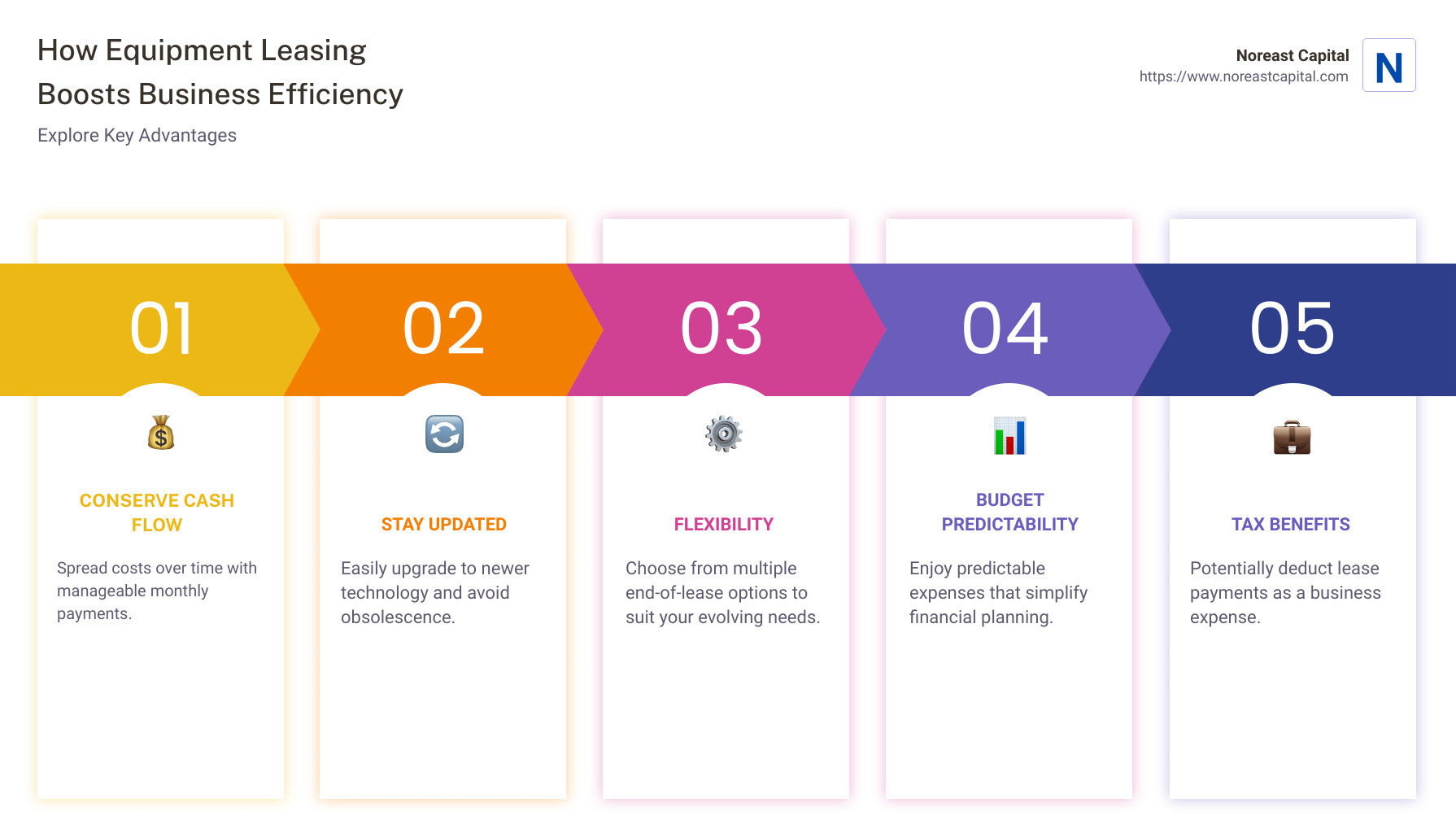
When considering new tools for your business, equipment leasing advantages stand out as a key solution. Leasing offers a strategic path to acquire necessary equipment without the hefty upfront costs associated with buying. Here’s a quick look at why leasing can be an efficient choice:
- Conserve Cash Flow: Spread costs over time with manageable monthly payments.
- Stay Updated: Easily upgrade to newer technology and avoid obsolescence.
- Flexibility: Choose from multiple end-of-lease options to suit your evolving needs.
- Budget Predictability: Enjoy predictable expenses that simplify financial planning.
- Tax Benefits: Potentially deduct lease payments as a business expense.
In today’s business environment, equipment leasing provides both financial efficiency and strategic value. It enables small businesses to stay competitive without being tied to outdated tools, helping them to continuously adapt to market changes.
My name is Vincent Cerniglia, and as a leader in the equipment financing and leasing market at Noreast Capital, I’ve seen how these equipment leasing advantages can transform business operations. Stay with me as I dive deeper into how leasing lifts business efficiency and fuels strategic growth.
Understanding Equipment Leasing
When it comes to acquiring new equipment, businesses face a crucial choice: buy or lease? Let’s break down why leasing is often the smarter option.
Conserve Cash Flow
Leasing helps you keep your cash flow steady. Instead of a big upfront payment, you spread the cost over time. This way, you can plan your budget more effectively.
For example, Lafayette General, a loyal customer, has used leasing to keep its cash flow healthy. They’ve managed to handle the costs of around $3.5 million in equipment with just $74,000 in monthly payments over an average 30-month lease term. This approach allows them to invest in other business areas without financial strain.
Hedge Against Obsolescence
Technology changes fast. What’s cutting-edge today might be outdated tomorrow. Leasing lets you stay on top of these changes without breaking the bank.
Take Deaconess Healthcare System, for instance. They upgraded from the Stryker system 7 to the latest system 8 seamlessly within their lease framework, ensuring they remain competitive in the healthcare field.
Strategic Flexibility
When you lease, you’re not locked into a single piece of equipment or technology. You have the flexibility to adapt as your business needs change.
At the end of your lease, you can choose to buy the equipment, renew the lease, extend it, or even return it. This flexibility is crucial for businesses that need to pivot quickly in response to market changes. In fact, 38% of our medical sector clients choose to renew their leases, highlighting the value of this adaptability.
Equipment leasing advantages not only include financial benefits but also strategic ones, allowing businesses to remain agile and responsive in a dynamic market environment. Whether it’s conserving cash, staying technologically relevant, or maintaining flexibility, leasing offers a compelling path forward.
Next, let’s explore the financial benefits that make leasing an even more attractive option for businesses.
Equipment Leasing Advantages
Equipment leasing offers several compelling benefits that can help businesses thrive. Let’s explore these advantages, focusing on how they aid in conserving cash flow, hedging against obsolescence, and providing strategic flexibility.
Conserve Cash Flow
One of the primary equipment leasing advantages is the ability to lower upfront costs. Instead of shelling out a large sum of money to purchase equipment, leasing allows businesses to spread payments over time. This means you can maintain a steady cash flow and allocate funds to other critical areas of your business.
For example, Lafayette General successfully managed $3.5 million worth of equipment with manageable monthly payments of $74,000. This approach not only keeps their cash flow healthy but also enables them to plan their budget effectively, ensuring financial stability.
Hedge Against Obsolescence
In today’s world, technology evolves rapidly. Leasing gives businesses the flexibility to upgrade their equipment and stay competitive without the burden of ownership. By leasing, you can easily switch to newer models as they become available, ensuring your business remains at the forefront of innovation.
Consider Deaconess Healthcare System, which seamlessly upgraded from the Stryker system 7 to the latest system 8 within the framework of their lease. This strategic move allowed them to stay relevant and competitive in the healthcare industry.
Strategic Flexibility
Leasing provides businesses with adaptability and flexible end-of-lease options. Unlike purchasing, leasing doesn’t lock you into a single piece of equipment. At the end of your lease term, you have multiple options: buy the equipment, renew the lease, extend it, or return the equipment. This flexibility is crucial for businesses that need to pivot quickly in response to market changes.
In fact, 38% of our medical sector clients choose to renew their leases, underscoring the adaptability and value leasing offers. This strategic flexibility allows businesses to adjust their operations without being tied down to outdated or unnecessary equipment.
Equipment leasing advantages extend beyond just financial savings. They empower businesses to remain agile, technologically relevant, and strategically flexible in an ever-changing market landscape.
Next, let’s dive into the financial benefits that make leasing an even more attractive option for businesses.
Financial Benefits of Leasing
When considering equipment leasing, businesses often find themselves drawn to the financial perks that come along with it. Let’s break down these benefits, focusing on tax incentives, reduced maintenance costs, and an easier financing process.
Tax Incentives
Leasing equipment comes with valuable tax incentives. Lease payments are typically considered a business expense, making them tax-deductible. This means you can deduct these payments from your taxable income, potentially lowering your overall tax liability.
A key advantage here is the Section 179 Deduction, which allows businesses to deduct the full purchase price of qualifying equipment and software purchased or financed during the tax year. This deduction is designed to encourage companies to invest in themselves, making leasing an attractive option for those looking to maximize their tax savings.
Reduced Maintenance Costs
One of the often-overlooked equipment leasing advantages is the reduction in maintenance costs. When you lease equipment, the vendor typically assumes responsibility for maintenance. This can significantly lower your emergency fund needs, as you won’t be caught off guard by unexpected repair bills.
For instance, if a piece of equipment breaks down, the leasing company handles the repair, saving you both time and money. This arrangement not only reduces expenses but also allows your team to focus on core business activities rather than worrying about equipment upkeep.
Easier Financing Process
Leasing equipment generally involves a simpler and quicker financing process compared to purchasing. Companies that lease often face less stringent credit requirements, making it easier for businesses with limited credit history to get the equipment they need.
Moreover, the approval process for a lease is typically faster than securing a loan for a purchase. This means you can get the equipment you need without lengthy delays, keeping your business operations running smoothly.
In conclusion, the financial benefits of leasing are substantial. From tax incentives to reduced maintenance costs and a streamlined financing process, leasing offers a host of advantages that can contribute to your business’s success. Next, we’ll address some frequently asked questions to further clarify how leasing can be a strategic choice for your company.
Frequently Asked Questions about Equipment Leasing
What are the advantages of leasing equipment?
Leasing equipment offers several key advantages that can significantly benefit your business. First and foremost, it lowers upfront costs. When you lease, you don’t have to pay the full price of the equipment right away. Instead, you spread out the cost over time with fixed monthly payments. This setup helps protect your cash flow and allows you to allocate your funds to other critical areas of your business.
Moreover, leasing provides flexibility. You can choose from a variety of lease terms that suit your business needs, including options to upgrade or buy the equipment at the end of the lease. This adaptability ensures that you can keep pace with changes in your industry without being locked into outdated technology.
What is the biggest advantage of leasing?
The biggest advantage of leasing is the ability to spread payments over time. This arrangement helps businesses avoid large upfront costs that can strain their finances. By making predictable, fixed monthly payments, you maintain a steady cash flow, which is crucial for day-to-day operations and financial planning.
Leasing also simplifies budgeting. With consistent payments, you can better anticipate expenses and manage your financial resources more effectively. This predictability can provide peace of mind and allow you to focus on growing your business.
How does leasing help with equipment obsolescence?
Leasing is an excellent strategy to hedge against equipment obsolescence. In today’s world, technology evolves rapidly, and staying competitive means having access to the latest tools and equipment. Leasing offers upgrade options that allow you to keep your technology relevant without the hassle of selling outdated equipment.
For example, if a new version of the equipment becomes available, you can often upgrade to the latest model at the end of your lease term. This flexibility ensures that your business remains at the forefront of industry advancements, helping you maintain a competitive edge.
In summary, equipment leasing provides numerous advantages, from protecting cash flow to offering upgrade flexibility. By spreading payments and avoiding large upfront costs, leasing helps businesses manage their finances efficiently while staying current with technology trends.
Conclusion
At Noreast Capital, we understand that making smart financial decisions is critical for your business’s success. Equipment leasing is a powerful tool that can drive business growth by offering financial efficiency and strategic value.
Leasing allows you to access high-quality equipment without the burden of ownership. This means you can keep your business agile, adapt to industry changes swiftly, and avoid the pitfalls of technological obsolescence. By choosing to lease, you conserve cash and maintain a healthy cash flow, enabling you to invest in other areas of your business that require immediate attention.
Our expertise in equipment leasing ensures that you receive custom solutions that align with your specific needs. We offer flexible lease terms and competitive rates, allowing you to scale your operations without financial strain. This adaptability is crucial in today’s business environment, where staying competitive often means having access to the latest technology.
In addition to financial benefits, leasing with Noreast Capital also simplifies the often complex process of acquiring new equipment. Our streamlined approval process and expert guidance ensure that you can focus on what matters most—growing your business.
By partnering with us, you gain more than just access to equipment; you gain a partner committed to your success. Our goal is to support your business growth with the right financial solutions, so you can focus on delivering exceptional value to your customers.
Explore how our leasing options can benefit your business by visiting our equipment lease page. Let us help you achieve your business goals with the flexibility and financial efficiency that only leasing can provide.