

Navigating the Equipment Funding Journey: A Startup’s Guide
When you’re building a startup, every dollar counts. That’s where equipment leasing for startup companies comes into play – a smart financing solution that lets your new business access essential equipment without draining your bank account. Instead of paying everything upfront, you make manageable monthly payments while keeping your precious working capital where it belongs: fueling your growth.
| Quick Guide to Equipment Leasing for Startups |
|---|
| Definition: Arrangement where a lessor (finance company) purchases equipment and rents it to your startup for monthly payments |
| Benefits: Preserves cash flow, potential tax advantages, easier qualification than loans, protection from obsolescence |
| Typical Terms: 24-60 months, often with low or no down payment |
| Eligibility: Available for startups with 0+ months in business, personal credit scores as low as 520 |
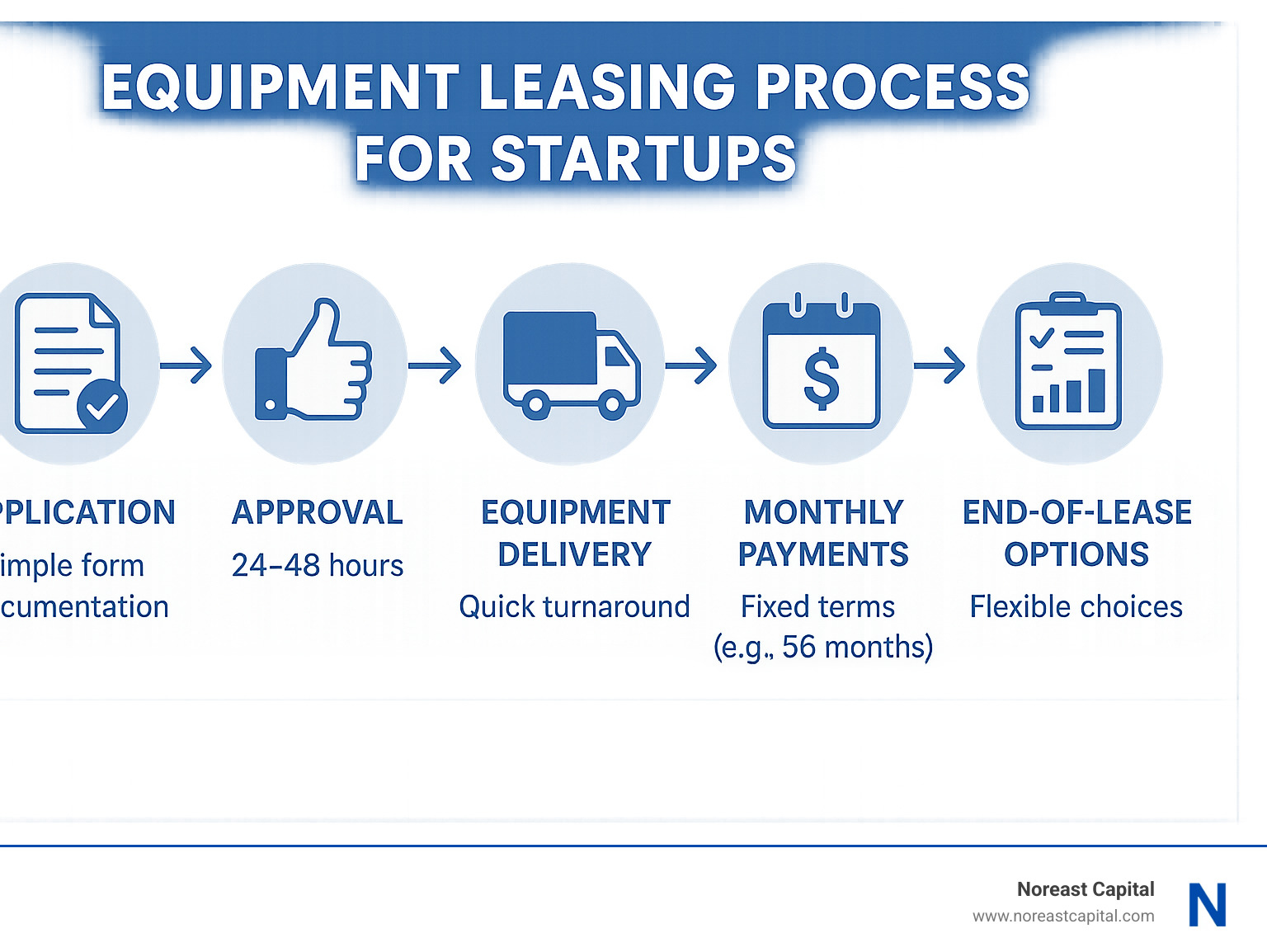
| Process: Simple application, approval in 24-48 hours, quick equipment delivery |
Did you know that over 80% of businesses today choose equipment leasing? There’s good reason for this popularity. For startups watching every penny, this approach can transform your early journey from a constant financial struggle into a path of sustainable growth.
Think of equipment leasing for startup companies as your financial breathing room. It preserves your working capital for critical needs like marketing and operations. You’ll enjoy predictable monthly payments that you can actually plan around. Many founders appreciate the potential tax advantages, as lease payments are often fully deductible. Plus, you get your equipment immediately – no waiting months to save up for a purchase. In today’s fast-changing tech landscape, leasing also protects you from getting stuck with outdated equipment.
Here’s something fascinating many entrepreneurs don’t realize: the entire modern venture debt industry (now representing $20-30 billion in startup financing) actually evolved from equipment leasing. This financing approach has been refined specifically to address the unique challenges that new companies face.
I’m Vincent Cerniglia from Noreast Capital Corporation. Over the years, I’ve helped countless startup founders steer equipment leasing for startup companies in ways that extend their runway and set them up for long-term success.
Want to learn more about equipment leasing for startup companies? These resources might help:
– Business equipment loan rates
– Equipment lease vs finance
– difference between lease and loan
Equipment Leasing for Startup Companies: How It Works
Think of equipment leasing for startup companies as renting the tools you need to build your dream. Instead of emptying your bank account to buy equipment outright, you make manageable monthly payments while a leasing company (that’s us, Noreast Capital) actually owns the equipment. You get all the benefits of using the equipment without the hefty upfront cost.
Here’s what happens behind the scenes: as the lessor, we purchase the equipment you’ve selected and then let you (the lessee) use it in exchange for those monthly payments. Your startup gets essential equipment immediately, and we get a steady return on our investment. It’s a partnership that works beautifully for cash-conscious founders.
The typical leasing journey looks like this: you pick out the equipment you need, submit a simple application, get approved (often within a day), sign some paperwork, and then we buy the equipment from your vendor. You start using it right away while making regular payments, and when the lease ends, you have options – buy it, give it back, or maybe upgrade to something newer.
This approach has deep roots in venture debt, which gives it unique advantages for startups. Since the equipment itself serves as collateral, getting approved is often easier than with traditional loans.
“Leasing is typically safer than other startup financing options,” as financial expert Marc Betesh puts it. “Since the equipment is crucial to your operations, there’s a natural incentive to keep up with payments.”
Want to dig deeper into how we structure equipment financing? Check out our Equipment Finance for Startups page.
What Is “Equipment Leasing for Startup Companies”?
Equipment leasing for startup companies is specifically designed with new businesses in mind. We understand that startups face unique challenges, so our leasing programs typically feature minimal time-in-business requirements (often accepting companies with zero months in operation), flexible credit criteria, streamlined paperwork, and payment structures that align with your projected cash flow.
Leases generally come in two flavors:
Operating leases work more like traditional rentals. They usually run shorter than the equipment’s useful life, and you don’t automatically own the equipment when the lease ends (though you can choose to purchase it). The big benefit? Payments are fully tax-deductible as operating expenses.
Capital leases, on the other hand, function more like financing a purchase. They’re structured with the expectation that you’ll own the equipment when the lease ends. While the payments aren’t fully deductible like with operating leases, you may qualify for Section 179 tax deductions and depreciation benefits.
Either way, your startup gets to use the equipment during those critical early stages when preserving cash flow matters most.
Typical Flow From Quote to Delivery
Getting equipment through leasing is refreshingly straightforward. When you work with us at Noreast Capital, here’s what to expect:
First, get a quote from your preferred equipment vendor. Then complete our simple one-page application. We’ll review your credit (often without requiring financial statements for amounts up to $250,000) and typically give you a decision within 24-48 hours.
Once approved, you’ll electronically sign the lease documents, and we’ll pay your vendor directly. The vendor then delivers and installs your equipment, usually within 72 hours of approval. That’s it!
Michael Reynolds, who founded a biotech startup in Baltimore, shares: “From application to having equipment running in our lab took less than a week. That speed was crucial for meeting our development milestones.”
We’ve stripped away unnecessary bureaucracy because we understand that when you’re racing to market, every day counts. Our process is built specifically for startups who need equipment quickly without draining their precious capital reserves.
Equipment Leasing vs. Equipment Financing Loans
Deciding between leasing equipment or buying it with a loan is one of the biggest financial choices your startup will face. Let’s break down these options in a way that makes sense for your business journey.
Think about it like this: leasing is like renting an apartment, while financing is like buying a home with a mortgage. Both get you what you need, but with very different long-term implications.
| Feature | Equipment Lease | Equipment Loan |
|---|---|---|
| Ownership | Lessor owns during lease; you may own at end | You own immediately, lender holds security interest |
| Down Payment | Often 0-10% | Typically 10-20% |
| Monthly Payment | Usually lower | Usually higher |
| Balance Sheet Impact | Operating leases may be off-balance sheet | Always on balance sheet as asset and liability |
| Upgrade Flexibility | Often built into lease terms | Must sell or trade in owned equipment |
| End of Term | Multiple options (buy, return, renew) | You own equipment outright |
| Maintenance | May be included in lease | Your responsibility |
| Tax Treatment | Payments fully deductible (operating lease) or Section 179 eligible (capital lease) | Interest deductible; Section 179 and depreciation benefits |
I’ve seen many founders gravitate toward leasing in their early stages because it preserves precious cash and offers flexibility. As your business matures, ownership through financing might make more sense – especially for equipment you’ll use for many years.
Want to dive deeper into how leases work? Check out our guide to Understanding Equipment Leasing.
Total Cost of Ownership Over 5 Years
When you’re weighing equipment leasing for startup companies against buying, it helps to look at the complete picture over time – what we call the total cost of ownership (TCO).
With leasing, your TCO includes your monthly payments (rent), any upfront fees or deposits, potential end-of-term purchase costs, and maintenance (which is often bundled into your lease – a nice perk!).
For buying, you’re looking at your down payment, all loan payments (principal plus interest), maintenance costs (entirely your responsibility), minus whatever you might get if you sell the equipment later.
Let me give you a real-world example. For a $50,000 piece of manufacturing equipment:
A lease might cost you $1,050 monthly for 60 months, totaling $63,000 (maintenance included).
Buying the same equipment might mean $10,000 down plus $950 monthly for 60 months, plus about $7,500 in maintenance over that period. That’s $74,500 total.
The numbers tell an interesting story, but remember: if that equipment will still be valuable after five years or you’ll use it much longer, buying might win in the very long run. For tech equipment that becomes outdated quickly? Leasing often makes more sense.
As billionaire J. Paul Getty wisely advised: “Buy that which appreciates, lease that which depreciates.”
Cash-Flow Smoothing & Credit Building
For startups, equipment leasing for startup companies offers two powerful benefits that often get overlooked: it smooths out your cash flow and helps build business credit.
The cash flow advantage is huge. Instead of watching your bank account take a massive hit all at once, you get predictable monthly payments you can budget around. This keeps your cash reserves intact for emergencies or growth opportunities. Many of our clients also appreciate how we can structure payments to align with their revenue cycles – especially helpful if your business is seasonal.
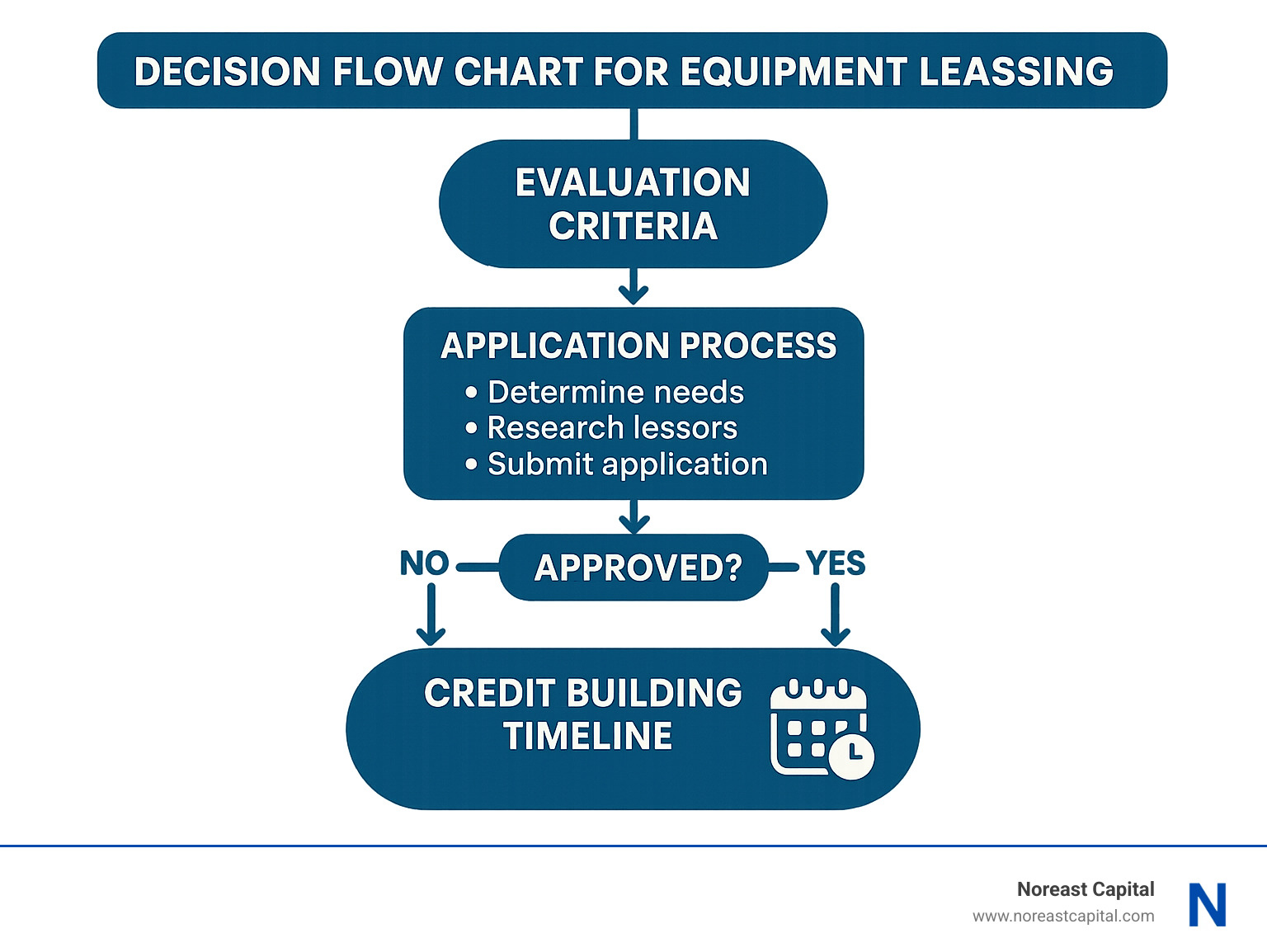
But the credit-building aspect might be even more valuable in the long run. From day one, your lease payments establish your business credit history. Every on-time payment gets reported to business credit bureaus, creating a positive track record that opens doors later.
I remember working with Dr. Sarah Chen, who founded a medical device startup in DC. She told me: “We chose leasing for our initial lab equipment not just to preserve cash, but to establish our company’s credit profile. After 18 months of on-time lease payments, we qualified for a much larger facility expansion loan that wouldn’t have been possible otherwise.”
While you can typically pay off a lease early if you want, many startup founders find the real value comes from stretching those payments to match their growth trajectory while building solid business credit foundations.
That’s the beauty of equipment leasing for startup companies – it’s not just about getting equipment today; it’s about setting yourself up for greater financial flexibility tomorrow.
Why Startups Choose Leasing Over Buying Outright

When you’re running a startup, every dollar counts. That’s why so many founders are turning to equipment leasing for startup companies instead of making outright purchases. It’s not just about saving money—it’s about making smart strategic decisions during those critical early days.
In our conversations with startup founders across Annapolis, Baltimore, and Washington DC, we’ve heard compelling stories about why leasing makes sense. Nearly 9 out of 10 founders mentioned preserving their precious working capital as their top reason. As one founder put it, “Cash is oxygen for a startup—we needed to keep breathing.”
Beyond cash preservation, many founders (72%) told us they sleep better at night knowing they’re not stuck with outdated tech when the industry moves forward. Another 65% appreciate the tax benefits, while 58% needed equipment immediately to hit their launch targets. For about 43%, keeping large equipment assets off their balance sheet was a significant plus.
“We’re in the business of leveling the playing field,” explains Vincent Cerniglia at Noreast Capital. “When a startup can access the same equipment as established players without draining their bank account, magic happens. They can compete from day one.”
Want to dive deeper into how equipment leasing can transform your startup’s potential? Check out our guide on the Top Benefits of Equipment Leasing for Small Businesses.
Impact on Cash Flow & Working Capital
Picture this: Your tech startup needs $100,000 in server equipment to launch. You have two options:
Option A: Buy everything outright, watching 40% of your hard-earned cash vanish overnight, leaving you vulnerable when unexpected expenses pop up (and they always do).
Option B: Lease the same equipment for about $2,400 monthly, keeping your cash reserves intact for marketing, product development, and the thousand other things startups need to survive.
For most founders, Option B is a no-brainer. Equipment leasing for startup companies preserves your runway—that precious time before you need additional funding. In the startup world, extending your runway by even a few months can mean the difference between success and having to close up shop.
Financial advisor Irish Taylor puts it bluntly: “Keeping their working capital liquid and not tied up in equipment is essential for a startup’s success! Startups with sufficient working capital to survive the first three years are extremely rare.”
This is especially crucial during what investors call the “valley of death”—that scary period when you’re developing products but not yet generating significant revenue. Leasing helps you bridge that gap with minimal cash burn.
Tax Benefits & Section 179 Write-Offs
The tax advantages of equipment leasing for startup companies can be substantial, giving your bottom line an extra boost when you need it most.
With operating leases, your monthly payments are typically 100% tax-deductible as business expenses. It’s clean, simple, and immediately beneficial to your cash flow.
Capital leases offer a different but equally valuable benefit—they may qualify for Section 179 deduction, allowing you to write off the full equipment cost in year one. Add in bonus depreciation options, and you’re looking at significant tax savings right when your startup needs them most.
For 2025, the Section 179 deduction allows businesses to deduct up to $1,250,000 in qualifying equipment costs. That applies whether you purchase outright or use a capital lease structure. The best part? These deductions aren’t subject to Alternative Minimum Tax limits for most businesses.
As one of our clients memorably put it: “New Equipment Today. Full Write-off This Year.” By combining equipment leasing for startup companies with Section 179 benefits, you can effectively reduce your equipment costs by 30% or more, depending on your tax bracket.
Of course, tax laws can be complex, so it’s always worth checking the IRS Section 179 details and discussing your specific situation with your tax advisor. But the potential savings are too significant to ignore.
Qualifying for an Equipment Lease: Eligibility & Application Roadmap
One of the most appealing aspects of equipment leasing for startup companies is the relatively accessible qualification criteria compared to traditional bank loans. At Noreast Capital, we’ve designed our startup leasing programs to accommodate the realities of new businesses.
Basic eligibility requirements typically include:
- Time in business: 0-24 months (yes, we work with day-one startups!)
- Personal credit score: Minimum 520 (though 650+ improves terms)
- Industry type: Most industries qualify (some restrictions apply)
- Equipment purpose: Must be for business use
- Lease amount: Typically $5,000 minimum up to $500,000
“Financing a startup business is no longer a difficult task!” is our philosophy at Noreast Capital. We understand that traditional banks often shy away from new ventures, creating a financing gap that equipment leasing fills perfectly.
The application process is designed to be straightforward:
- Complete our simple one-page application
- Provide basic business information (EIN, address, contact details)
- Include personal information for guarantors (typically owners with 15%+ stake)
- Submit equipment quote or invoice from your vendor
- Include three months of bank statements (business or personal)
- Add a brief business experience letter for context
For more information on qualification criteria, visit our page on Is It Difficult for a Small Business to Get an Equipment Lease?
“Equipment Leasing for Startup Companies” With No/Bad Credit
Even startups with credit challenges can access equipment leasing options. At Noreast Capital, we take a holistic approach to evaluating applications rather than relying solely on credit scores.
For startups with limited or imperfect credit, we offer several pathways:
- Security deposit option: Providing 1-3 months’ payments as security can offset credit concerns
- Co-signer arrangements: Adding guarantors with stronger credit profiles
- Alternative data evaluation: We consider bank statements, revenue trends, and industry experience
- Stepped approval approach: Starting with smaller leases to build payment history before larger commitments
“We’ve helped numerous startups with sub-600 credit scores secure essential equipment,” shares our leasing specialist at Noreast Capital. “In one case, a Washington DC food startup with a 580 credit score qualified for $75,000 in kitchen equipment by providing a detailed business plan and three months’ security deposit.”
Bankruptcies generally need to be at least three years discharged, though exceptions exist. The key is transparency—include a credit explanation letter addressing past issues and recovery steps.
Step-by-Step Approval Timeline
The equipment leasing approval process at Noreast Capital is designed for speed and efficiency—critical factors for startups racing against the clock:
- Pre-qualification call (Day 1): 15-minute discussion to understand your needs and outline options
- Application submission (Day 1): Complete our streamlined application with basic documentation
- Initial review (Day 1-2): Our underwriting team evaluates your application
- Additional documentation (if needed, Day 2): We’ll request any supplementary information
- Approval decision (Day 2-3): Receive your approval and lease terms
- Document signing (Day 3): E-sign lease agreements
- Vendor payment (Day 3-4): We issue payment to your equipment supplier
- Equipment delivery (Day 4-7): Vendor delivers and installs your equipment
“From a fast-tracked conversion schedule to implementation, we have been very impressed with the service,” notes John Carter, a recent leasing client.
For leases under $15,000, we often offer “application-only” programs requiring minimal documentation and providing same-day decisions. Larger amounts typically require additional financial information but still move quickly compared to traditional financing.
Costs, Terms, Fees & End-of-Lease Options

Let’s talk money—because when it comes to equipment leasing for startup companies, understanding the full picture helps you avoid those “why didn’t anyone tell me about this?” moments down the road.
At Noreast Capital, we believe in laying all cards on the table. No smoke and mirrors here! Your typical lease package includes several components that affect your overall costs:
Interest rates generally fall between 5% and 25%, with your specific rate depending on your credit profile, how long you’ve been in business, and what type of equipment you’re leasing. Most startups find themselves somewhere in the middle of this range.
Lease terms are wonderfully flexible, ranging from 24 to 60 months. For most of the startups we work with, we’ve found that a 36-month term hits the sweet spot—long enough to keep monthly payments manageable but short enough to upgrade before technology becomes outdated.
“In our humble opinion, the best term for a startup equipment lease is 36 months,” says leasing expert Irish Taylor. “This balances affordable payments with a reasonable timeline for building credit and evaluating equipment needs.”
Documentation fees typically run $100-$300—these cover the paperwork processing (boring but necessary!). Security deposits, meanwhile, usually range from zero to three months’ payments, depending on your credit story.
Your end-of-term options significantly impact both your monthly payments and what happens when your lease concludes:
With a Fair Market Value (FMV) lease, you’ll enjoy lower monthly payments throughout the term. The trade-off? If you want to keep the equipment when the lease ends, you’ll need to pay whatever it’s worth at that time.
A $1 Buyout lease works more like traditional financing—your monthly payments will be higher, but when the lease ends, the equipment is yours for just a dollar. (Yes, literally one dollar!)
The 10% Purchase Option lease offers middle ground—your payments fall between the other two options, and you’ll know from day one exactly what you’ll pay to keep the equipment (10% of the original cost).
Want to dive deeper into affordable leasing strategies? Check out our resource on How Can I Affordably Lease Equipment as a Small Business?
Hidden Charges & How to Spot Them
While we pride ourselves on transparency at Noreast Capital, not all lessors operate with the same philosophy. It’s worth knowing what to watch for in the fine print.
Personal guarantees are standard for most startup leases (sorry, that’s just reality when you’re new), but their scope can vary dramatically. Some cover only specific situations while others are essentially blank checks.
Evergreen clauses are the sneaky auto-renewals of the leasing world. These provisions automatically extend your lease unless you jump through specific hoops to terminate it—often with precise timing requirements.
“Some equipment lenders have a strong sales culture and may sneak in questionable clauses,” warns finance expert Marc Betesh. “Always read the fine print.”
Insurance requirements, late payment penalties (typically 5-15% of your payment), early termination fees, maintenance responsibilities, and return condition standards can all hide in the shadows of a lease agreement.
Before signing on the dotted line, ask direct questions: Is there a personal guarantee? What happens if I need to end the lease early? Are there automatic renewals? What condition must the equipment be in if returned? Are there any fees not included in my quoted monthly payment?
A reputable lessor won’t hesitate to provide clear answers—and if they do, that’s your cue to keep shopping around.
What Happens at Lease End?
The final months of your lease term are when the magic happens—you’ve got options! Let’s explore what those look like:
You can purchase the equipment at either a predetermined price (that $1 we mentioned for buyout leases), fair market value (for FMV leases), or a percentage of the original cost (typically 10-15%). About that last option—industry data shows most lease buyouts hover around 10-15% of original equipment value, creating a nice advantage for startups that want eventual ownership without the initial cash outlay.
If the equipment no longer serves your needs, the return option lets you give it back to the lessor. Just remember you’ll need to meet the return condition requirements spelled out in your contract, and you might be responsible for shipping or removal costs.
Need more time to decide? The renewal option extends your lease, usually at reduced monthly payments. This keeps the equipment in your hands without committing to purchase.
Ready for an upgrade? Many lessors offer an upgrade option that lets you trade up to newer equipment, rolling into a fresh lease term. This is particularly valuable for tech-heavy startups where yesterday’s cutting-edge is tomorrow’s paperweight.
At Noreast Capital, we recommend starting to think about your end-of-lease strategy about 90 days before your term wraps up. This gives you breathing room to evaluate the equipment’s condition, assess your business needs, and negotiate the best possible arrangement.
Equipment leasing for startup companies isn’t just about getting through today—it’s about setting yourself up for success tomorrow. The right end-of-lease strategy can be just as important as the initial lease structure in maximizing your startup’s financial health.
Risks, Pitfalls & Best Practices

Like any financial decision, equipment leasing for startup companies comes with its share of potential pitfalls. As a founder, you’re juggling countless responsibilities already—the last thing you need is an equipment lease that keeps you up at night.
When we work with startups in the Annapolis, Baltimore, and Washington DC areas, we make sure they understand both the benefits and the risks. Knowledge is your best protection, after all.
Most startup leases come with full recourse liability, meaning you’re personally responsible for those payments even if your business hits rough waters. This personal guarantee aspect catches many founders by surprise. Yes, your shiny new equipment can be repossessed if payments are missed, but that might not release you from the remaining balance.
“I’ve seen too many founders sign on the dotted line without fully understanding their personal exposure,” shares Vincent Cerniglia at Noreast Capital. “We believe in transparent conversations upfront to prevent surprises down the road.”
The equipment leasing industry itself experiences cycles that mirror broader economic trends. According to the latest data from U.S. SBA on small business lending, lease defaults tend to spike during downturns, with early-stage companies particularly vulnerable. Remember Comdisco? Their bankruptcy after the dot-com bust serves as a sobering reminder that even leasing companies themselves aren’t immune to economic shifts.
Another subtle risk is the “equipment candy store” effect—when qualification is relatively easy, it’s tempting to lease more equipment than you truly need. This over-leasing can strain your cash flow precisely when you need flexibility the most.
Common Mistakes Startups Make in “Equipment Leasing for Startup Companies”
After helping countless startups steer equipment leasing, we’ve noticed some recurring missteps that are easily avoided with a bit of foresight.
Under-insuring equipment tops our list of common mistakes. That comprehensive coverage might seem like an unnecessary expense when you’re watching every penny, but inadequate insurance creates a major liability gap if something goes wrong.
Many founders also ignore maintenance requirements, focusing solely on making the monthly payments. But proper equipment upkeep isn’t just about protecting your investment—it’s often a contractual obligation with financial consequences if neglected.
“One client came to us after facing steep penalties because they returned equipment in poor condition at lease end,” recalls our leasing specialist. “A little preventative maintenance would have saved them thousands.”
Skipping end-of-term planning is another frequent oversight. The end of your lease might seem far away when you’re signing the agreement, but those months fly by. Waiting until the last minute to decide whether to purchase, return, or renew limits your options and negotiating power.
We also see startups submitting applications to multiple leasing companies simultaneously, thinking this improves their chances. Unfortunately, this strategy often backfires as numerous credit inquiries can damage credit scores and raise red flags with potential lessors.
Perhaps most concerning is misunderstanding personal guarantees. Many founders don’t fully grasp how their personal assets might be at risk if business challenges arise. This isn’t meant to scare you—just to ensure you enter agreements with eyes wide open.
Best Practices to Protect Your Startup
The good news? With some strategic thinking, you can enjoy all the benefits of equipment leasing while minimizing the risks.
Negotiate terms whenever possible. First-time entrepreneurs often don’t realize that almost everything in a lease agreement can be negotiated—from payment structure to end-of-lease options. Don’t be afraid to ask for better terms; the worst they can say is no.
Be thoughtful about aligning lease length with useful life. A five-year lease might offer lower monthly payments, but it’s a poor choice if the equipment will be obsolete in three years. Match your lease term to how long you realistically need the equipment.
Always read term sheets carefully, especially regarding guarantees and end-of-term obligations. The fine print matters tremendously in leasing agreements. If something isn’t clear, ask questions until you understand completely.
Consult your CPA before choosing between lease structures. The tax implications can vary significantly, and what works for one startup might be suboptimal for another. A quick consultation could save you substantial money at tax time.
“Document equipment condition upon receipt,” advises Marc Betesh, a finance expert we work with regularly. “Taking dated photos when equipment arrives creates clear evidence that can prevent disputes later on.”
Maintain equipment properly following manufacturer recommendations. This preserves value and prevents return penalties if you choose not to purchase at lease end.
At Noreast Capital, we provide a dedicated lease management portal to help you track all lease obligations, payment schedules, and end dates. This simple tool has saved our clients from missed deadlines and overlooked opportunities.
Finally, build relationships with your lessors. Open communication channels can create flexibility if challenges arise. We’ve often been able to work with clients through temporary difficulties because they reached out proactively rather than avoiding difficult conversations.
Equipment leasing remains one of the smartest ways for startups to acquire essential equipment while preserving precious capital. By understanding the potential pitfalls and following these best practices, you’ll be well-positioned to make leasing a powerful tool in your startup’s growth strategy.
Frequently Asked Questions About Equipment Leasing for Startups
How quickly can a startup access leased equipment?
One of the most pleasant surprises for founders is just how quickly you can get your hands on the equipment you need through leasing. At Noreast Capital, we’ve streamlined our process to match the pace startups operate at.
Most of our clients move from application to having equipment in their facility in about a week – sometimes even faster. Here’s what the timeline typically looks like:
From submitting your application to receiving approval usually takes just 24-48 hours. Once you’ve signed the paperwork, funding happens within 24-72 hours. After that, it’s just a matter of your vendor’s delivery schedule, which generally ranges from 1-7 days.
“The speed was honestly shocking,” shares Michael Warren, who founded a manufacturing startup in Baltimore. “We went from wondering how we’d afford our equipment to having it installed and operational in less than a week. We are now a lean, mean leasing machine.”
What makes this possible is our “application-only” approach for amounts up to $250,000, which requires minimal documentation. For startups racing against the clock (and who isn’t?), we can often provide same-day decisions when you’re in a time crunch.
Can I lease almost any type of equipment?
The short answer is yes – if your business needs it to operate, chances are we can help you lease it. Equipment leasing for startup companies covers an impressively wide range of assets.
At Noreast Capital, we regularly help startups access everything from cutting-edge technology (servers, software systems, telecommunications) to manufacturing machinery (CNC machines, production lines), medical devices, construction equipment, restaurant setups, office furniture, commercial vehicles, and all sorts of industry-specific tools.
“Last month alone, we helped a biotech startup lease lab equipment, a food truck entrepreneur get their mobile kitchen, and a construction company access excavators – all within the same week,” notes Vincent from our leasing team. “You can lease almost any type of new or used equipment, from restaurant equipment to trucks to heavy machinery.”
There are a few exceptions – things like routes, vending machines, and extremely specialized equipment with limited resale markets can be challenging. But for the equipment most startups need to get off the ground, we’ve got solutions ready to go.
Are lease payments fully tax-deductible?
This is where things get interesting from a financial planning perspective – and potentially very beneficial for your startup’s tax situation.
The tax treatment depends on what type of lease you choose:
With operating leases (true leases), your payments are generally 100% tax-deductible as business expenses. This creates an immediate tax benefit that can significantly improve your startup’s cash position each year.
For capital leases (finance leases), while the full payment isn’t deductible in the same way, you gain access to other powerful tax benefits. These include the Section 179 deduction (allowing write-off of up to $1,160,000 in 2023), depreciation deductions over the equipment’s useful life, and interest expense deductions.
“The right lease structure can be like finding money you didn’t know you had,” explains one of our clients who saved over $12,000 in taxes her first year through strategic equipment leasing decisions.
What works best for your startup depends on your specific situation, growth plans, and current tax position. That’s why we always recommend chatting with your tax advisor before finalizing your lease structure – a small conversation upfront can lead to significant savings down the road.
For startups watching every dollar, the immediate deductibility of operating lease payments often provides greater short-term benefits than the depreciation schedules associated with purchased equipment. It’s one more way equipment leasing for startup companies helps preserve that precious early-stage cash flow.
Conclusion
Equipment leasing for startup companies represents more than just a financing option—it’s a strategic growth accelerator that can transform your early-stage venture’s trajectory. By choosing leasing over outright purchases, you preserve your precious capital reserves while still accessing the tools you need to build, create, and compete.
I’ve watched hundreds of founders in the Baltimore-Washington corridor make this pivotal shift in thinking—from “I need to own everything” to “I need to use everything efficiently.” This mental shift often marks the difference between startups that struggle and those that thrive.
When you partner with us at Noreast Capital, you’re not just getting equipment financing—you’re gaining an ally who understands the unique pressures of startup life. We’ve helped countless entrepreneurs steer their journey from those nervous first days to confident, established businesses.
Think about what matters most right now: preserving your runway to give your ideas time to take root and grow. Every dollar not spent on upfront equipment purchases is a dollar that can fund your marketing, product development, or that crucial extra month of operations before revenue flows.
The flexibility of leasing means you can stay technologically current without getting stuck with obsolete equipment. As many of our clients have finded, the ability to upgrade as your needs evolve is worth its weight in gold in today’s rapidly changing business landscape.
Perhaps most valuable for new ventures is the opportunity to build business credit through regular lease payments. I’ve seen startups transform their financial profile in just 12-18 months of consistent payment history, opening doors to larger financing options that seemed impossible at the outset.
Smart founders also appreciate how leasing helps align expenses with revenue—structuring payments to match your projected cash flow rather than draining your accounts before you’ve had a chance to generate income. This synchronization can make the difference between comfortable growth and constant financial stress.
The tax advantages of leasing shouldn’t be overlooked either. Our clients work closely with their accountants to maximize deductions through strategic lease structuring, often finding significant savings compared to traditional purchase arrangements.
As your business grows, leasing allows you to scale efficiently, adding equipment capacity precisely when you need it without facing capital constraints. This agility gives you a competitive edge that can be the difference-maker in crowded markets.
I’m reminded of the wisdom J. Paul Getty shared: “Buy that which appreciates, lease that which depreciates.” For most startups, equipment falls squarely in the “depreciates” category, making leasing not just convenient but financially prudent.
Ready to explore how equipment leasing for startup companies can fuel your growth journey? Reach out to us at Noreast Capital. Our team specializes in helping startups in Annapolis, Baltimore, and Washington DC access the equipment they need without compromising their financial health. We understand your challenges because we’ve helped businesses just like yours overcome them.
For more insights on making this important financial decision, check out our detailed guide on what is the difference between a lease and a loan.
The equipment decisions you make today will echo through your company’s future for years to come. Choose wisely, and let us help you steer the path from promising startup to established success story.