
Why Leasing Restaurant Equipment is a Smart Move
Equipment leasing restaurant can be a game changer. Instead of making hefty upfront payments, restaurant owners can pay in affordable monthly installments while using the equipment. This approach offers flexibility and can help preserve working capital—a key factor for any growing or startup eatery.
Quick Benefits:
– Affordable Monthly Payments: Spread costs over time, freeing up cash flow.
– Tax Advantages: Monthly payments can be tax deductible.
– Flexibility: Easier to upgrade or return equipment if business needs change.
Deciding between purchasing and leasing restaurant equipment is crucial. With challenges like managing cash flow and maintaining competitive operations, equipment financing can be a strategic solution. It allows restaurants to remain agile, preserve capital, and respond swiftly to business opportunities.
I’m Vincent Cerniglia, with experience in equipment leasing restaurant. I help restaurant businesses make smart financing decisions to foster growth and efficiency.
Next, we’ll explore the ins and outs of equipment leasing and how it could be the right fit for your restaurant’s needs.

Simple guide to equipment leasing restaurant:
– lease restaurant equipment
– restaurant equipment leasing
– how to lease equipment for business
Understanding Equipment Leasing for Restaurants
What is Equipment Leasing?
Equipment leasing is a financial arrangement where a restaurant rents equipment for a set period, typically through a contractual agreement. Instead of purchasing the equipment outright, the restaurant makes regular, affordable monthly payments to use it. This setup helps businesses avoid large upfront costs and preserve their working capital.
Here’s how it works:
- Contractual Agreement: You enter into a lease agreement with a lender or leasing company.
- Set Payments: You pay a fixed amount each month, which is often lower than loan payments.
- Lease Term: The lease term can vary from a few months to several years, depending on the agreement.
- Buyout Option: At the end of the lease, you may have the option to buy the equipment at a reduced price.
Types of Equipment Leases
When it comes to equipment leasing restaurant, there are two main types of leases: finance leases and operating leases. Understanding the differences between them can help you choose the best option for your business.
Finance Leases
A finance lease (also called a capital lease) is similar to a loan. You lease the equipment with the intention of owning it at the end of the lease term. Here are some key features:
- Ownership Mindset: You’re essentially buying the equipment over time.
- Financial Advantage: The lease appears on your balance sheet, which can be beneficial for tax purposes.
- End-Term Options: Usually, you can buy the equipment for a nominal fee at the end of the lease term.
Finance leases are ideal for equipment that has a long useful life and is crucial to your restaurant’s operations, such as True Refrigerators or Atosa Freezers.
Operating Leases
An operating lease is more like renting. It’s perfect if you plan to upgrade or replace the equipment at the end of the lease term. Key features include:
- Off-Balance Sheet: The lease doesn’t appear on your balance sheet, keeping your liabilities lower.
- Flexibility: It’s easier to upgrade to newer equipment once the lease term ends.
- Shorter Terms: Operating leases typically have shorter terms than finance leases.
Operating leases are suitable for equipment that becomes obsolete quickly or for trying out new technology before committing to a purchase, like the latest commercial ovens or dishwashers.
Benefits and Conditions
Both types of leases offer unique benefits and come with specific conditions:
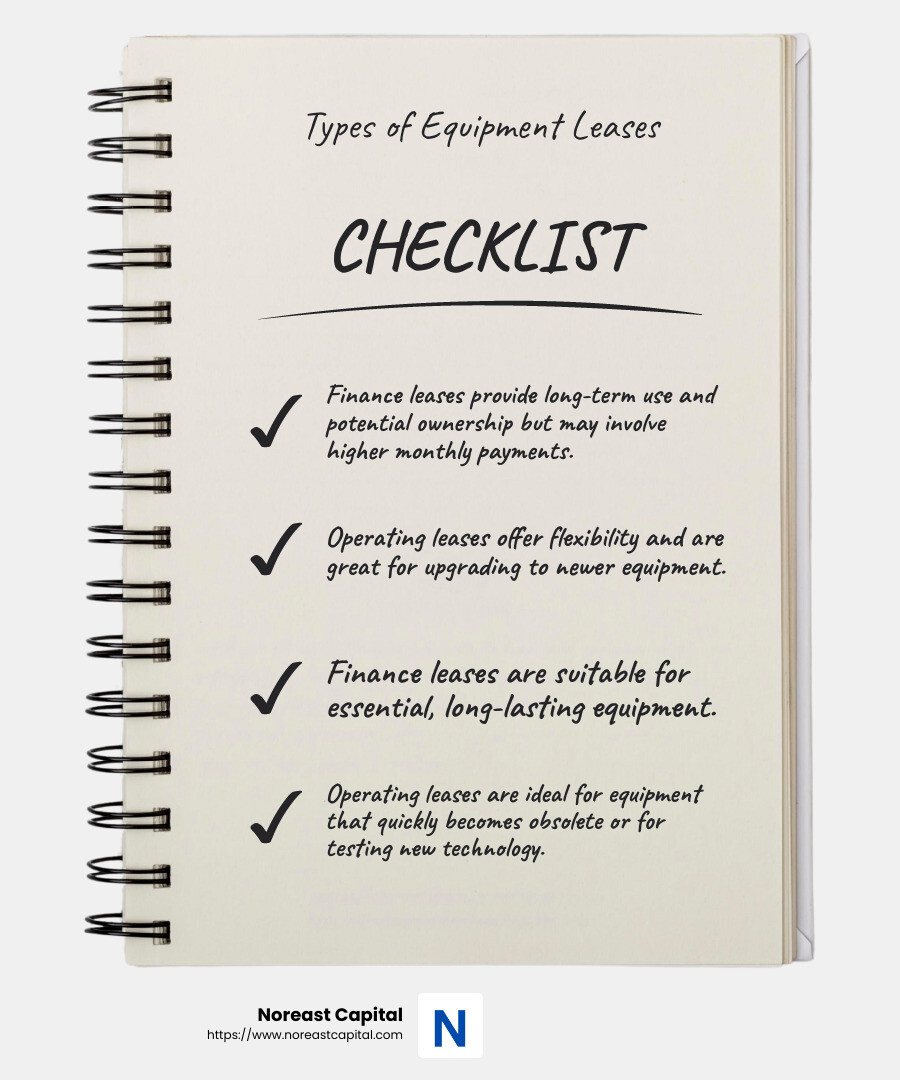
- Finance Leases: Provide long-term use and potential ownership but may involve higher monthly payments.
- Operating Leases: Offer flexibility and lower monthly payments but don’t build equity.
Before signing any lease, it’s crucial to understand the terms, including:
- Maintenance Responsibilities: Who is responsible for keeping the equipment in good working order.
- Early Termination Fees: Penalties if you end the lease early.
- Buyout Options: Conditions under which you can purchase the equipment at the end of the lease term.
By carefully considering these factors, you can make an informed decision that aligns with your restaurant’s needs and financial situation.
Next, we’ll dive into the numerous advantages of leasing restaurant equipment and how it can benefit your business.
Advantages of Leasing Restaurant Equipment
When you’re running a restaurant, having the right equipment is crucial. But buying it all upfront can be expensive. That’s where leasing comes in. Let’s explore the key advantages of leasing restaurant equipment.
Access to Equipment with Less Capital
One of the biggest benefits of equipment leasing restaurant is that it requires less capital upfront. Instead of paying a large sum to purchase equipment, you make smaller, fixed monthly payments.
Imagine opening a new restaurant. You need everything from Atosa Refrigerators to Pizza Prep Tables. Leasing allows you to get this essential equipment without emptying your bank account. This way, you can use your capital for other critical needs like marketing or inventory.
Tax Benefits of Leasing
Leasing equipment can also offer significant tax advantages. Monthly lease payments are often considered a business operating expense, making them tax-deductible. This can reduce your overall tax liability.
For example, under the Section 179 Deduction, businesses can deduct the full purchase price of qualifying equipment leased during the tax year. This can lower the net cost of your equipment, making leasing an attractive option for tax purposes.
Flexibility for Short-Term Needs
Leasing provides flexibility, especially if you have short-term needs or plan to upgrade your equipment frequently.
- Affordable Equipment: You can lease high-quality equipment that might be too expensive to buy outright.
- Return Options: At the end of the lease, you can return the equipment if it no longer meets your needs.
- Lease Term Flexibility: Lease terms can be custom to match your business cycles, helping you manage cash flow more effectively.
For instance, if you need the latest commercial ovens or dishwashers to meet customer demands, leasing allows you to upgrade easily when newer models become available.
Opportunity to Buy at Lease End
Many leasing agreements offer a buyout option at the end of the lease term. This means you can purchase the equipment at a reduced price if it still meets your needs.
- Buyout Options: You may have the option to buy the equipment for a nominal fee at the end of the lease term.
- Credit Rating: Leasing can help build your business credit, making it easier to secure future financing.
- Long-Term Planning: If you plan to keep the equipment for a long time, the buyout option can be a cost-effective way to eventually own it.
By understanding these advantages, you can make a well-informed decision that aligns with your restaurant’s financial strategy and operational needs.
Next, we’ll look into the disadvantages of leasing restaurant equipment to provide a balanced perspective.
Disadvantages of Leasing Restaurant Equipment
Leasing restaurant equipment has its perks, but it’s not always the perfect fit. Here are some of the key drawbacks to consider.
No Opportunity to Build Equity
When you lease equipment, you don’t own it. It’s similar to renting an apartment—you pay to use it, but you can’t sell it or make it your own.
- No Ownership: At the end of the lease, you must return the equipment unless you opt for a buyout.
- No Resale Value: You can’t sell the equipment to recoup some costs.
- Equity Limitations: Unlike owning, leasing doesn’t allow you to build equity, which could be a financial cushion for future needs.
Limited Coverage of Costs
Leasing doesn’t cover everything you need. Some essentials, like dinnerware or furniture, usually can’t be leased.
- Non-Leasable Items: You’ll still need to purchase items that aren’t available for lease.
- Additional Expenses: Costs for non-leasable items can add up quickly.
- Financing Limitations: Leasing might not cover delivery, installation, or other upfront costs, requiring additional out-of-pocket expenses.
High Interest Rates
Leasing might seem cheaper upfront, but it can be costly in the long run.
- Interest Costs: Leasing can come with high interest rates, increasing the overall expense.
- Credit Impact: High-interest leases can affect your credit score if payments are missed.
- Overall Expense: Over time, leasing can cost more than buying the equipment outright due to accumulated interest.
Early Termination Fees
Life is unpredictable, and sometimes you may need to end a lease early. However, doing so can be expensive.
- Contract Terms: Leases are binding agreements, and breaking them can incur penalties.
- Penalties: Early termination fees can be hefty, adding financial strain.
- Financial Implications: Exiting a lease early means you lose the chance to recoup costs, and you might have to pay extra to get out of the contract.
Understanding these disadvantages helps you weigh the pros and cons of leasing restaurant equipment. Next, we’ll explore the benefits of buying equipment to provide a well-rounded view.
Benefits of Buying Restaurant Equipment
Buying restaurant equipment has its own set of benefits that can make it a more attractive option compared to leasing. Here are some of the key advantages:
Building Equity
When you buy equipment, you own it outright. This ownership comes with several perks:
- Ownership Benefits: You have complete control over the equipment. This means you can modify, sell, or upgrade it whenever you like.
- Resale Opportunities: If you decide to upgrade or close your restaurant, you can sell the equipment. This can help recoup some of your initial investment.
- Financial Asset: Owning equipment is an asset that adds value to your business. It can also serve as collateral for future loans.
No Interest Rates
One of the biggest financial advantages of buying equipment is the absence of interest rates:
- Cost Savings: Without monthly interest payments, the overall cost of owning the equipment is often lower than leasing.
- Upfront Payment: Although the initial cost is higher, you avoid the long-term expense of interest.
- Financial Planning: Owning equipment simplifies financial planning. You make a single, upfront payment and don’t have to worry about fluctuating interest rates.
Long-Term Investment
Buying equipment is a long-term investment that can benefit your restaurant in multiple ways:
- Durability: High-quality equipment can last for many years, providing long-term value and reliability.
- Long-Term Use: Once you own the equipment, you can use it for as long as it remains functional, without worrying about lease terms ending.
- Business Growth: Owning your equipment can free up capital for other investments, such as marketing or hiring staff, which can contribute to business growth.
In summary, buying restaurant equipment offers ownership benefits, cost savings, and long-term value. This makes it a viable option for many restaurant owners.
Next, we’ll look at alternatives to both leasing and buying, such as scratch and dent options and various financing plans.
Alternatives to Leasing and Buying
When it comes to acquiring restaurant equipment, leasing and buying aren’t your only options. You might find some alternatives better suited to your needs and budget. Let’s explore some of these options.
Scratch and Dent Options
Scratch and Dent equipment can be a fantastic way to save money. These items are typically new but have minor cosmetic damages like small scratches or dents. Here’s why they’re worth considering:
- Discounted Prices: You can get commercial equipment at a fraction of the cost. For example, a slightly dented refrigerator might be sold at a 30% discount.
- Performance Unaffected: These minor damages don’t affect the performance or functionality of the equipment. You get the same reliability at a lower price.
You can find these deals in specialized outlets like the Scratch and Dent Outlet at various restaurant supply stores. This option is particularly appealing for those on a tight budget but still looking for high-quality equipment.
Financing Options
If neither leasing nor buying outright fits your financial situation, various financing options can help you get the equipment you need without a massive upfront cost.
Financing plans allow you to spread out payments over time, making it easier to manage your cash flow. Many companies offer competitive rates and terms custom to different budgets. Here are some benefits:
- Affordable Payments: Instead of a large one-time payment, you make manageable monthly payments.
- Financial Flexibility: Financing plans can be adapted to your financial situation, offering terms that fit your budget.
Another popular option is Lease-to-Own. This is a hybrid between leasing and buying, where you make monthly payments like a lease but have the option to buy the equipment at the end of the term, often for a nominal fee. This gives you the best of both worlds:
- Eventual Ownership: You get to own the equipment after the lease term ends, without a large initial investment.
- Manageable Payments: Similar to leasing, you make smaller, regular payments, easing the strain on your finances.
In summary, alternatives like Scratch and Dent and financing options offer practical solutions for acquiring restaurant equipment. These methods provide financial flexibility, discounted prices, and the potential for ownership without the hefty upfront costs.
Next, we’ll dig into some frequently asked questions about equipment leasing for restaurants to help you make an informed decision.
Frequently Asked Questions about Equipment Leasing Restaurant
What is commercial equipment leasing?
Commercial equipment leasing is like renting equipment for your restaurant. Instead of buying expensive items like ovens or refrigerators upfront, you pay a fixed amount each month to use them.
Benefits:
– Less Upfront Cost: No need for a large initial payment.
– Tax Deductions: Monthly lease payments can be tax-deductible.
– Flexibility: Easier to upgrade to newer equipment.
How to make money leasing equipment?
Leasing equipment can help your restaurant make money in several ways:
- Preserving Cash Flow: By spreading out payments, you keep more cash on hand for other expenses like marketing or hiring staff.
- Increased Productivity: Newer equipment often works better and faster, helping you serve more customers.
- Tax Savings: Lease payments are usually considered a business expense, reducing your taxable income.
What are the two types of equipment leases?
There are two main types of equipment leases: Finance Leases and Operating Leases.
Finance Leases:
– Ownership: You usually own the equipment at the end of the lease term.
– Long-Term: Ideal for equipment you plan to use for many years.
– Higher Payments: Generally higher monthly payments compared to operating leases.
Operating Leases:
– No Ownership: You return the equipment at the end of the lease.
– Short-Term: Great for equipment that may become outdated quickly.
– Lower Payments: Typically lower monthly payments.
Conditions:
– Maintenance: Terms will specify who is responsible for maintaining the equipment.
– Buyout Options: Some leases allow you to buy the equipment at the end of the term for a reduced price.
Understanding these types can help you choose the best lease for your restaurant’s needs and budget.
Conclusion
Deciding between leasing and buying restaurant equipment is a crucial decision that can significantly impact your restaurant’s financial health and growth potential.
Leasing offers flexibility, less upfront capital, and potential tax benefits. It’s ideal for restaurants that need to preserve cash flow, upgrade equipment frequently, or require short-term solutions. For example, if you’re opening a new restaurant and need top-of-the-line ovens, leasing allows you to get started without a hefty initial investment. You can also deduct lease payments as a business expense, which can be a tax advantage.
However, buying equipment can be more advantageous for long-term use. Ownership builds equity and can save you money on interest rates. If you plan to use the equipment for many years and want to avoid monthly payments, buying may be the right choice. Equipment like True Refrigeration units, which come with a long-term warranty, can be a sound investment that pays off over time.
At Noreast Capital, we understand the challenges and opportunities in the restaurant industry. Our goal is to provide you with flexible, custom financing options that align with your business goals. Whether you choose to lease or buy, we offer solutions that help you maintain cash flow, manage your financial planning, and support your restaurant’s growth.
Our expertise in restaurant equipment financing, backed by years of experience, ensures that you get the best financial tools and resources. We’re here to guide you through the process, from application to approval and beyond.
Ready to take your restaurant to the next level? Explore our equipment financing options and let us help you make the best decision for your business.
Your success is our success. Together, we can achieve great things.