

Maximizing Your Farm’s Potential with Equipment Leasing
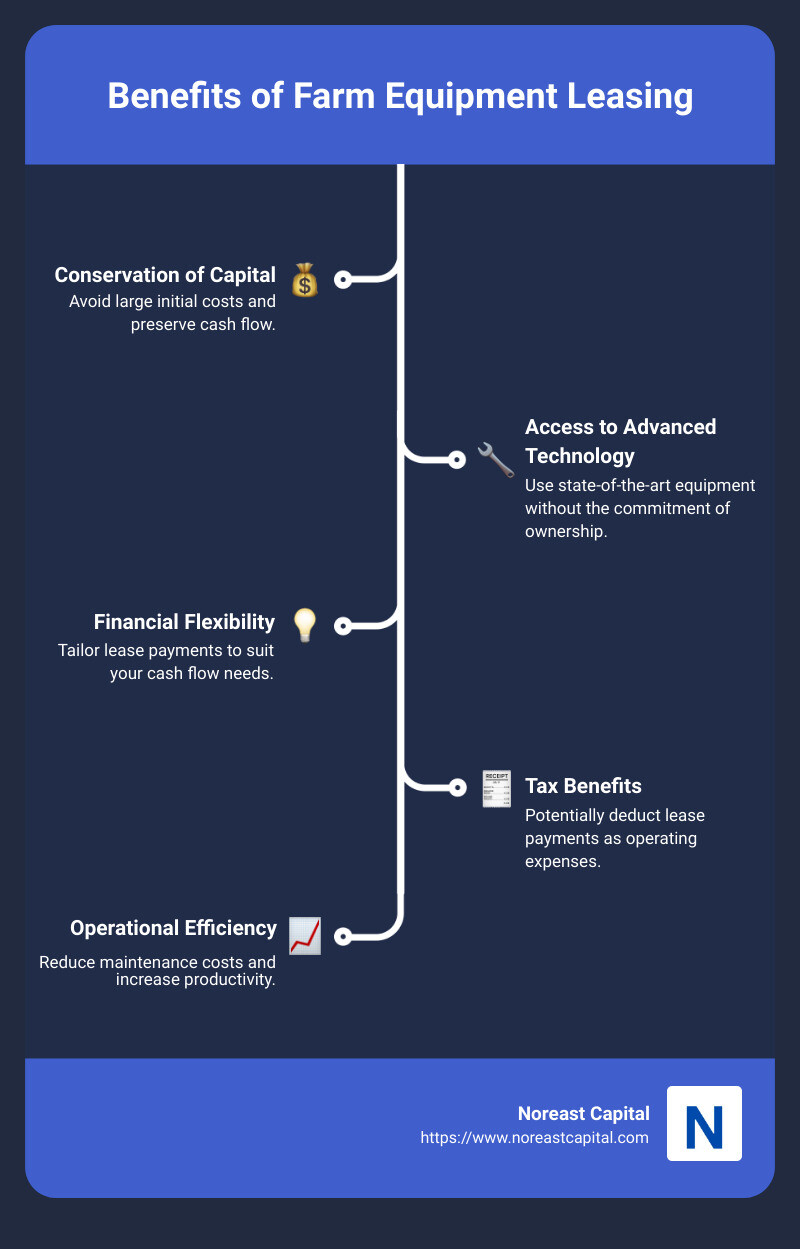
Farm equipment leasing provides an efficient and flexible way for farmers to access the necessary machinery without the heavy financial burden of outright purchasing. Whether tackling fluctuating economic conditions or embracing the latest technology, leasing offers several advantages:
- Conservation of capital: Avoid large initial costs and preserve cash flow.
- Access to advanced technology: Use state-of-the-art equipment without the commitment of ownership.
- Financial flexibility: Tailor lease payments to suit your cash flow needs.
- Tax benefits: Potentially deduct lease payments as operating expenses.
“Embracing leasing as a financing option can bring many benefits to your business and open up new opportunities for growth in an increasingly competitive market,” explains Chris Schimke, AgDirect territory manager.
I’m Vincent Cerniglia. With years of experience at Noreast Capital Corporation, I’ve helped many farmers achieve their goals through farm equipment leasing, providing custom financing solutions that promote growth and efficiency. Let’s dig into why this can be a smart choice for your farming operation.
Similar topics to farm equipment leasing:
– equipment loan
– how equipment leasing works
– leasing vs financing
Why Lease Farm Equipment?
Leasing farm equipment offers numerous benefits, both financial and operational. Let’s break down why this option can be a smart choice for your farming operation.
Financial Benefits
Cost Savings: One of the primary advantages of leasing is the significant cost savings. Rather than paying a large upfront amount, you only need to make the first rental payment at the close of the lease. This frees up your capital for other critical investments.
Cash Flow Management: Leasing allows you to manage your cash flow more efficiently. Payments can be structured to match your revenue cycles, whether they are monthly, quarterly, semi-annual, or annual. This flexibility ensures that your cash flow remains stable and predictable.
No Down Payment: Unlike buying, leasing typically requires no down payment. This means you can start using the equipment without having to dip into your savings or take out a loan.
Tax Advantages: Leasing can provide tax benefits too. Lease payments may be deductible as operating expenses, which can reduce your taxable income. Always consult with a tax advisor to understand how leasing will impact your specific situation.
Debt-to-Asset Ratio Improvement: Leasing can improve your balance sheet by not adding to your liabilities. This can make your farm more attractive to lenders and investors. For example, eliminating a $100,000 tractor from your balance sheet can reduce your debt-to-asset ratio from 25% to 20%, as shown by economist Tina Barrett.
Working Capital Conservation: By leasing, you conserve your working capital, allowing you to invest in other areas of your farm, such as seeds, fertilizer, or labor. This can lead to better overall financial health and operational flexibility.
Operational Benefits
Access to Latest Technology: Leasing gives you access to the latest and most advanced equipment. This can improve your farm’s efficiency and productivity. As Chris Schimke from AgDirect points out, “Farm equipment leases play a pivotal role in facilitating technological adoption.”
Up-to-Date Equipment: Leasing ensures that you always have up-to-date equipment. This minimizes downtime and reduces the risk of breakdowns, which can be costly and disruptive.
Reduced Maintenance Costs: Many leases include maintenance and repair services, reducing your out-of-pocket expenses for upkeep. This means you can focus more on your farming operations rather than worrying about equipment repairs.
Flexibility in Equipment Usage: Leasing offers flexibility at the end of the term. You can choose to purchase the equipment, trade it in, renew the lease, or return it. This flexibility allows you to adapt to changing needs and circumstances.
Leasing farm equipment can be a strategic choice that provides both financial relief and operational efficiency. Next, we’ll explore the types of farm equipment available for leasing.

Types of Farm Equipment Available for Leasing
Farm equipment leasing can provide access to a wide range of essential machinery and tools. Let’s explore some of the types of equipment you can lease to boost your farming operations.
Tractors and Harvest Equipment
Tractors: Tractors are the backbone of any farm. Leasing allows you to use the latest models without the hefty upfront costs. Whether you need a small utility tractor or a large row-crop tractor, leasing options can fit your specific needs.
Combines: Harvesting crops efficiently is crucial for maximizing yield. Leasing combines can ensure you have the latest technology to harvest quickly and effectively, reducing crop loss and increasing productivity.
Plows: Preparing the soil is the first step in any successful planting season. Leasing plows can help you get the job done right, without the financial burden of purchasing equipment outright.
Specialized Equipment
Irrigation Systems: Efficient water management is vital for crop health and yield. Leasing advanced irrigation systems can help you optimize water usage, ensuring your crops get the right amount of water at the right time. This is especially beneficial for regions facing water scarcity.
Solar Projects: Sustainable farming practices are becoming more important. Leasing solar panels and related equipment can help you reduce energy costs and your farm’s carbon footprint. It’s a win-win for both your budget and the environment.
Greenhouse Structures: Extending the growing season and protecting crops from harsh weather can be achieved with greenhouses. Leasing these structures can provide the flexibility to expand or modify your setup as needed, without the large initial investment.
Vehicles
Farm Trucks: From transporting goods to moving equipment, farm trucks are indispensable. Leasing farm trucks can provide you with reliable transportation without the significant capital outlay. Plus, you can upgrade to newer models as they become available.
Processing Lines
Processing Lines: For farms involved in processing their own produce, leasing processing lines can be a cost-effective way to scale operations. This includes everything from sorting and packaging to more complex processing machinery. Leasing ensures you can keep up with demand without stretching your finances.
Leasing these types of farm equipment can significantly improve your farm’s efficiency and productivity. Next, let’s compare the pros and cons of leasing versus buying farm equipment.
Comparing Leasing vs. Buying Farm Equipment
Pros of Leasing
Lower Upfront Costs: Leasing farm equipment typically requires much lower initial payments compared to buying. This can be a big advantage for farmers who need to manage cash flow carefully. For example, instead of paying a large sum upfront, you might only need to cover the first rental payment.
Flexibility: Leasing offers flexibility in terms of payment schedules and lease duration. You can tailor payments to match your cash flow, whether that means monthly, quarterly, or annually. At the end of the lease, you often have options to purchase, renew, or return the equipment.
No Depreciation: When you lease, you don’t own the asset, so you don’t have to worry about it losing value over time. Farm equipment tends to depreciate rapidly, and leasing can help you avoid this financial hit.
Access to Latest Technology: Leasing allows you to use the newest equipment without the need for frequent large investments. This is crucial in an industry where technology advances can significantly impact productivity and efficiency.
Cons of Leasing
No Equity Build-Up: One major downside of leasing is that you don’t build equity in the equipment. Once the lease term ends, you don’t own the equipment, and you’ll need to lease again or find another solution.
Potential Tax Issues: Leasing can have complex tax implications. According to Tina Barrett, an economist with the University of Nebraska, certain lease agreements might be classified as Conditional Sales Contracts by the IRS, which could affect your ability to deduct lease payments as operating expenses. Always consult with a tax advisor to understand your specific situation.
Long-Term Costs: While the initial costs are lower, leasing can be more expensive in the long run. Over multiple lease terms, the total payments can exceed what you would have paid if you had financed and purchased the equipment outright.
Tax Implications
Deductions: True leases allow you to deduct lease payments as operating expenses. This can lower your taxable income, providing immediate tax benefits. However, if the lease is classified as a Conditional Sales Contract, you may need to depreciate the asset instead, which can complicate your tax planning.
IRS Guidelines: The IRS has specific rules for what constitutes a true lease versus a Conditional Sales Contract. Factors include whether the agreement involves equity interest, the presence of a buyout option, and whether part of the payment is considered interest. Failing to meet these guidelines can disqualify your lease from being deductible as a rental expense.
Equity Considerations
When you buy equipment, you build equity over time. This equity can be a valuable asset, serving as collateral for future loans or as an investment in your farm’s long-term value. Leasing, on the other hand, offers no such benefit. You use the equipment but don’t gain any ownership stake.
Bottom Line: Leasing farm equipment can offer lower upfront costs, flexibility, and access to the latest technology, but it comes with downsides like no equity build-up, potential tax issues, and higher long-term costs. Understanding these pros and cons can help you make the best decision for your farm’s financial health and operational needs.
Next, we’ll explore how to choose the right leasing program to fit your specific requirements.
How to Choose the Right Leasing Program
Choosing the right leasing program for your farm involves assessing your needs, evaluating lease terms, and understanding different lease structures. Here’s a breakdown to help you make an informed decision.
Types of Leases
True Lease (Operating Lease)
A true lease allows you to use the equipment for a specified period without gaining ownership. At the end of the lease, you usually have options to renew, return, or purchase the equipment. True leases often have lower monthly payments and are ideal for equipment that may become obsolete quickly.
Capital Lease (Finance Lease)
A capital lease is more like a purchase agreement. You lease the equipment but have the option to buy it at the end of the term, often for a nominal price. This type of lease is beneficial for equipment with a long useful life. Capital leases can help you eventually own the equipment while spreading out the cost over time.
Customized Terms
Many leasing programs offer customized terms to fit your specific needs. This flexibility can include custom payment schedules, lease durations, and end-of-lease options. Customization is key to aligning the lease with your farm’s cash flow and operational requirements.
Key Considerations
Assessing Needs
Before choosing a leasing program, evaluate what equipment you need and how it will be used. For example, if you need a tractor for long-term use, a capital lease might be more suitable. On the other hand, for rapidly evolving technology like irrigation systems, a true lease could be a better fit.
Evaluating Terms
Carefully review the terms of the lease. Look at the monthly payments, interest rates, and any additional fees. Make sure you understand the total cost over the lease term and compare it to the cost of purchasing the equipment outright.
Understanding Lease Structures
Understanding the structure of the lease is crucial. For instance, the IRS has specific rules that determine whether a lease is classified as a true lease or a Conditional Sales Contract. This classification affects your ability to deduct lease payments as operating expenses. Always consult a tax advisor to understand how different lease structures will impact your taxes.
Lease Duration
The length of the lease should match the useful life of the equipment. Short-term leases are suitable for items that become obsolete quickly, while long-term leases are better for durable equipment. Make sure the lease duration aligns with your operational needs and equipment usage.
Payment Schedules
Leases can offer various payment schedules, such as monthly, quarterly, or annually. Choose a schedule that matches your cash flow. For example, if your farm has seasonal income, an annual payment might be more manageable.
End-of-Lease Options
Understand your options at the end of the lease. Can you renew the lease, return the equipment, or purchase it? Knowing these options in advance helps you plan better and avoid unexpected costs.
By carefully considering these factors, you can choose a leasing program that best fits your farm’s needs and financial situation. Next, we’ll address some frequently asked questions about farm equipment leasing to help you further understand this option.
Frequently Asked Questions about Farm Equipment Leasing
How much does it cost to lease a tractor?
The cost of leasing a tractor can vary widely based on several factors. The model and size of the tractor, the lease duration, and the terms of the lease all play a role in determining the monthly payment. On average, you might expect to pay between $500 to $1,500 per month for a standard tractor lease.
That some leases may require a minimum usage commitment or have additional fees for exceeding certain hours of operation. Always check the specifics with your leasing provider to understand the total cost.
What are the tax implications of leasing farm equipment?
Leasing farm equipment can have significant tax benefits, but it’s important to understand the details. Lease payments are generally considered an ordinary and necessary business expense, which means they can be deducted from your taxable income. This can provide substantial tax savings compared to purchasing equipment outright.
However, the IRS has strict guidelines on what constitutes a true lease versus a Conditional Sales Contract. According to IRS Publication 535, a true lease should not have an equal payment as the buyout, should not state an interest rate, and should not allow you to gain equity in the asset.
If your lease does not meet these criteria, it may be reclassified as a purchase for tax purposes, affecting your ability to deduct the payments. Always consult with a tax advisor to ensure compliance and maximize your tax benefits.
Can leasing improve my farm’s financial ratios?
Yes, leasing can positively impact your farm’s financial ratios, particularly the debt-to-asset ratio and working capital.
Debt-to-Asset Ratio: Leasing equipment reduces the amount of debt on your balance sheet because you are not taking out a loan to purchase the equipment. This improves your debt-to-asset ratio, making your farm appear more financially stable and potentially improving your ability to secure financing for other needs.
Working Capital: Leasing also conserves your working capital. Instead of making a large upfront payment to purchase equipment, you can spread the cost over the lease term. This allows you to use your available capital for other operational needs, such as purchasing seeds, fertilizers, or hiring labor.
For example, a Nebraska Farm Business Inc. study found that removing current debt from the balance sheet through leasing improved both the current ratio and working capital for many farms. However, be aware that some lenders may include upcoming lease payments as current debt, which could affect these ratios depending on the individual situation.
By understanding these factors, you can make a more informed decision about whether leasing is the right choice for your farm.
Conclusion
In summary, farm equipment leasing offers numerous benefits for farmers looking to maintain financial flexibility and access the latest technology without the burden of large upfront costs. Leasing can help manage cash flow, improve financial ratios, and provide operational benefits like reduced maintenance costs and up-to-date equipment.
At Noreast Capital, we understand the unique challenges and opportunities in the agricultural sector. Our leasing options are designed to provide you with the financial tools needed to grow and sustain your farm. Whether you need tractors, harvest equipment, or specialized machinery like irrigation systems, we have custom solutions to meet your needs.
By choosing to lease with Noreast Capital, you gain a partner dedicated to your success. Our flexible terms, competitive rates, and expert support ensure you can focus on what you do best—farming. We are committed to helping you steer the complexities of equipment financing and making informed decisions that benefit your operation.
For more information on how we can support your farm equipment leasing needs, visit our Office Equipment Financing page. Let’s work together to secure the future of your farm.
In conclusion, leasing farm equipment is a smart choice that offers financial and operational advantages, enabling you to keep your farm running smoothly and efficiently. With Noreast Capital by your side, you can lease with confidence, knowing you have a trusted partner invested in your farm’s success.