

Financing for software is crucial for small business owners looking to acquire cutting-edge tools without the burden of high upfront costs. In today’s digital age, software solutions are essential for boosting efficiency, automating tasks, and enhancing productivity. However, the financial strain of purchasing these tools outright can impede cash flow and restrict growth opportunities.
To address this, businesses can explore diverse software financing options:
- Leases allow use without ownership, maintaining cash flow.
- Loans provide long-term software ownership.
- Subscription-based models offer flexible terms.
- Vendor financing and SBA loans cater to specific business needs.
Why rely solely on conventional buying when smarter, cost-spreading options are just a conversation away?
I am Vincent Cerniglia, with experience in the equipment financing and leasing sector, having worked with businesses to tailor custom solutions that emphasize the strategic value of financing for software. Transitioning next, we’ll dig deeper into understanding software financing’s myriad benefits.

Understanding Software Financing
Software financing is a strategic approach that allows businesses to acquire essential software tools without the hefty upfront costs. Instead of paying all at once, companies can spread the expense over time, making it easier to manage cash flow.
What is Software Financing?
Simply put, software financing is a method of purchasing software by paying in installments. This can be done through various means like leasing, loans, or subscription models. The key benefit here is the ability to access the latest technology without disrupting your financial stability.
Benefits of Software Financing
Preserve Cash Flow: By spreading payments over months or years, businesses can keep more cash on hand for other needs. This ensures that day-to-day operations aren’t affected by large one-time expenses.
Flexible Terms: With software financing, companies can choose payment plans that fit their budget. Whether it’s monthly or quarterly payments, flexible terms allow businesses to align costs with revenue cycles.
Access to Cutting-Edge Tools: Financing opens the door to software and technology that might otherwise be out of reach. This can be a game-changer for small businesses looking to compete with larger firms.
Budget Predictability: Fixed monthly payments make it easier to plan and predict expenses. This helps in crafting a more accurate budget and avoiding surprises.
How It Impacts Cash Flow
Software financing is particularly beneficial for improving cash flow. Instead of a large outlay, businesses can maintain liquidity for other investments or unexpected expenses. This is crucial for small businesses that might not have large cash reserves.

Flexible Payment Options
One of the standout features of software financing is its flexibility. Businesses can choose from a variety of payment structures:
Deferred Payment Options: Start using the software now and pay later. This is ideal for businesses that need immediate access but want to delay payments until revenue increases.
Rent-to-Own Models: These allow businesses to eventually own the software after a series of payments, combining the benefits of leasing and buying.
By understanding these aspects, businesses can make informed decisions about integrating software financing into their financial strategy. This approach not only provides immediate access to necessary tools but also supports long-term growth and stability.
Next, we’ll explore the different types of software financing options available to cater to diverse business needs.
Types of Software Financing Options
When it comes to financing for software, businesses have several options to choose from. Each option has its own set of advantages and can cater to different financial needs and business strategies. Let’s explore some common types:
Software Lease
A software lease is similar to leasing a car. You get to use the software for a set period without owning it. At the end of the lease, you can renew, purchase, or return the software. This option is great for businesses that need flexibility and do not want to commit to a permanent purchase. Leasing helps in keeping technology up-to-date without the burden of ownership.
Subscription-Based Financing
With the rise of Software as a Service (SaaS), subscription-based financing has become popular. Businesses pay a regular fee—monthly or annually—to access and use software. This model offers flexibility, allowing companies to upgrade or downgrade their subscriptions as needed. It’s like having a Netflix account for your business software needs.
Vendor Financing
Some software vendors offer in-house financing programs. These can come with perks like low or no interest rates and additional support services. Vendor financing can be a good option if you have a strong relationship with a particular software provider. It’s like getting a special deal directly from the source.
SBA Loans
The Small Business Administration (SBA) offers loans custom for small businesses to acquire software. These loans often have lower interest rates and longer repayment terms, making them attractive for small enterprises. SBA loans are great for businesses that qualify and want to invest in essential software without high costs.
Bank Loans
Traditional bank loans and lines of credit are also available for software purchases. Although they typically come with higher interest rates, they can provide the necessary capital for businesses ready to invest. Bank loans are often suitable for established businesses with a solid credit history.
Each of these software financing options offers unique benefits, and choosing the right one depends on your business needs, financial situation, and strategic goals. By understanding these options, you can make a more informed decision and select the best fit for your software investment needs.
Next, we’ll dig into how software financing works, including payment solutions and models like rent-to-own.
How Software Financing Works
Understanding how software financing works can help you make the best choice for your business. Let’s break down some key components:
Payment Solutions
Software financing offers various payment solutions to cater to different business needs. Instead of paying a large sum upfront, businesses can spread the cost over time. This helps preserve cash flow and allows funds to be used elsewhere.
Monthly Payments
Most software financing agreements involve monthly payments. These payments are often fixed, making it easier for businesses to budget. By spreading costs over several months or years, companies can access essential software without straining their finances.
Deferred Payment Options
Some financing solutions offer deferred payment options. This means you can start using the software immediately but delay payments until a later date. Deferred payments can be particularly helpful for businesses that need time to generate revenue before starting repayments.
Rent-to-Own Models
Rent-to-own models provide businesses with the opportunity to eventually own the software. You start by renting the software, and a portion of your payments goes toward purchasing it. This option combines the benefits of leasing and owning, offering flexibility and long-term investment.
These financing models provide businesses with the flexibility to choose a payment plan that best suits their needs. Whether opting for monthly payments, deferring costs, or exploring rent-to-own options, software financing can be a strategic move to improve your business operations without compromising cash flow.
Next, we’ll explore the key benefits of software financing, such as capital access and cash flow management.
Key Benefits of Software Financing
Software financing offers several benefits that can significantly impact your business’s financial health and operational efficiency. Here’s a closer look at the key advantages:
Access to Capital
One of the most compelling benefits of software financing is the ability to access capital quickly. Unlike traditional loans, which often involve lengthy approval processes, software financing solutions provide fast access to the funds you need. This enables businesses to invest in the latest technology without draining their cash reserves.
Flexible Terms
Financing for software often comes with flexible terms custom to meet the specific needs of your business. Whether you prefer monthly, quarterly, or customized payment schedules, software financing can accommodate your cash flow patterns. This flexibility means you can align payments with your revenue cycles, making it easier to manage finances.
Budgeting Made Easy
Fixed monthly payments make budgeting straightforward. Knowing exactly how much you will pay each month allows for better financial planning and reduces the risk of unexpected expenses. This predictability is especially beneficial for small businesses that need to maintain tight control over their finances.
Cash Flow Management
Preserving cash flow is crucial for any business, and software financing helps achieve this by spreading the cost of software over time. This approach frees up cash that can be used for other critical business activities, such as marketing, hiring, or product development. By managing cash flow effectively, businesses can maintain liquidity and avoid financial strain.
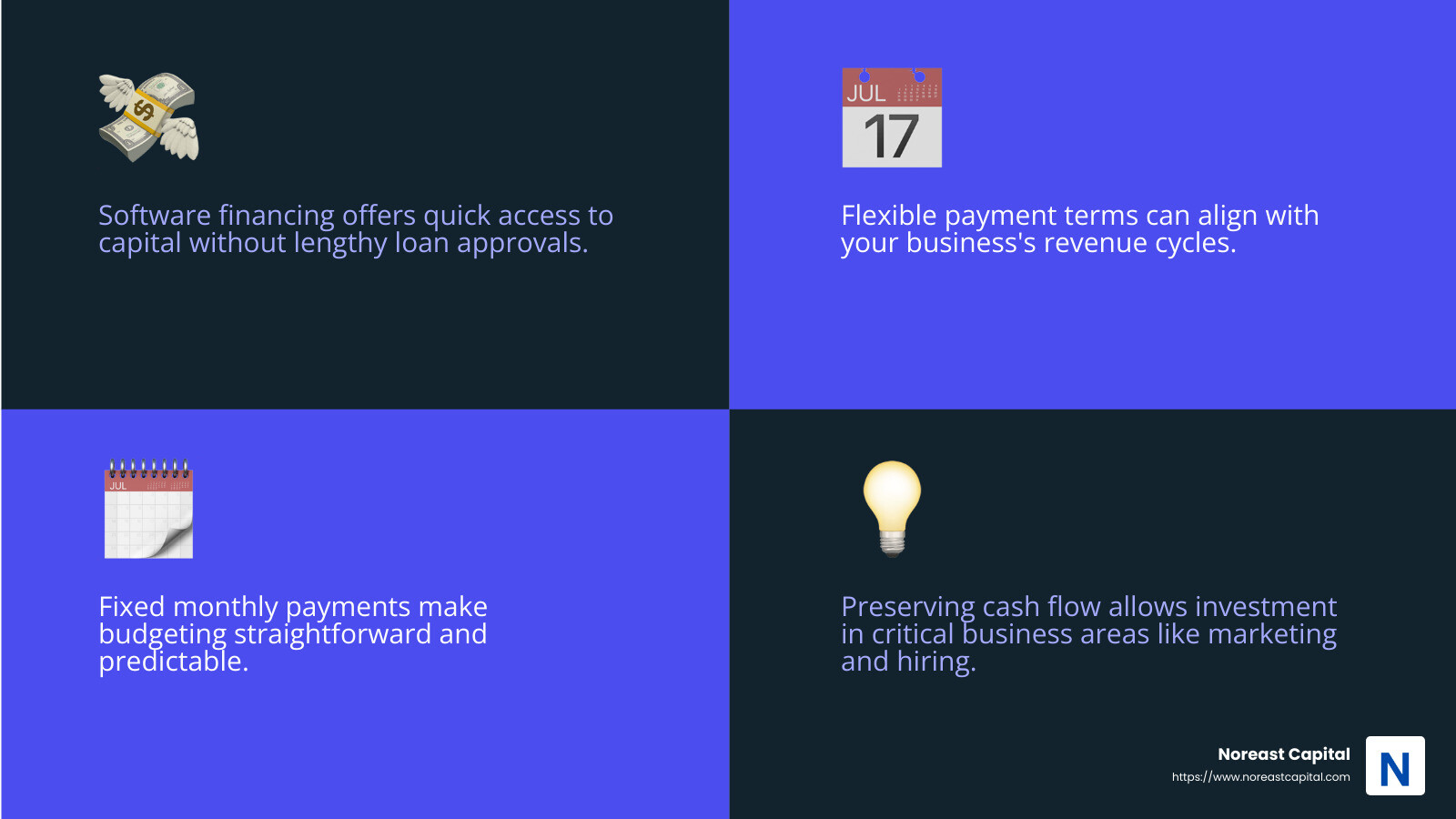
These benefits make software financing an attractive option for businesses looking to invest in technology without impacting their cash reserves. By accessing capital quickly, enjoying flexible terms, and managing budgets and cash flow efficiently, companies can focus on growth and innovation.
In the next section, we’ll address some frequently asked questions about financing for software, such as the possibility of leasing software and the best finance software options available.
Frequently Asked Questions about Financing for Software
Can you lease software?
Yes, leasing software is a viable option for many businesses. Leasing allows you to use the latest technology without the hefty upfront costs. This means you can access essential software immediately and pay for it over time through manageable monthly payments.
Benefits of Leasing Software:
- Lower Upfront Costs: Avoid large initial investments, which can help maintain your cash flow.
- Tax Advantages: Leasing can provide ongoing tax deductions, as you can deduct lease payments from your taxable income over the lease term.
- Flexibility: Easily upgrade to newer versions or different software as your needs evolve.
- Preserve Credit Lines: Keep your credit lines open for other business needs while still acquiring necessary software.
By leasing, you can stay competitive and agile in a market.
What software do people in finance use?
Finance professionals rely on a variety of software tools to analyze data, forecast trends, and manage resources efficiently. Here are some popular options:
- Microsoft Excel: A staple in finance for data analysis, budgeting, and financial modeling. Its versatility makes it indispensable.
- SQL (Structured Query Language): Used for managing and querying large databases. Essential for handling complex data sets.
- Python: A programming language favored for its robustness in data analysis, automation, and financial modeling.
- Tableau: A powerful tool for data visualization, helping finance teams create interactive and easy-to-understand dashboards.
These tools help finance professionals make informed decisions and streamline their workflows.
Which finance software is best?
Choosing the best finance software depends on your specific business needs. Here are some top contenders:
- SAP Analytics Cloud: Offers comprehensive analytics and planning capabilities, ideal for businesses seeking integrated solutions.
- Oracle Hyperion Planning: Known for its strong budgeting and forecasting features, making it a favorite among large enterprises.
- Kepion: Provides a user-friendly interface for budgeting and planning, suitable for businesses of all sizes.
Each of these platforms offers unique features, so consider your business requirements and goals when selecting the right software.
In the next section, we’ll explore how Noreast Capital can support your business in acquiring the right technology solutions through effective financing strategies.
Conclusion
At Noreast Capital, we understand how crucial it is for businesses to have access to the latest technology without compromising their cash flow. Our equipment financing solutions are designed to help you achieve just that. By opting for financing, you can invest in the necessary software and technology to drive your business forward without the burden of hefty upfront costs.
Why Choose Noreast Capital?
Maintain Cash Flow: Our financing options allow you to spread out the cost of software over time, keeping more cash in your pocket for other essential business activities.
Flexible Terms: We offer custom financing solutions that align with your business needs, ensuring that you can upgrade or switch software as your requirements evolve.
Business Growth: With the right technology in place, you can improve productivity, streamline operations, and ultimately boost your business growth.
Whether you’re looking to lease software or explore other financing options, our team is here to guide you every step of the way. By partnering with us, you can focus on what you do best—growing your business—while we take care of your financing needs.
For businesses in Annapolis, Baltimore, and Washington, DC, Noreast Capital is your go-to partner for acquiring cutting-edge technology through effective financing strategies. Let’s work together to ensure your business stays competitive and ready for success.