

Financing vs leasing calculator—a tool that can be a game changer for small business owners looking to make informed decisions about equipment acquisition. Whether you choose to lease or buy can impact your finances significantly. Here’s a quick comparison to help guide your decision:
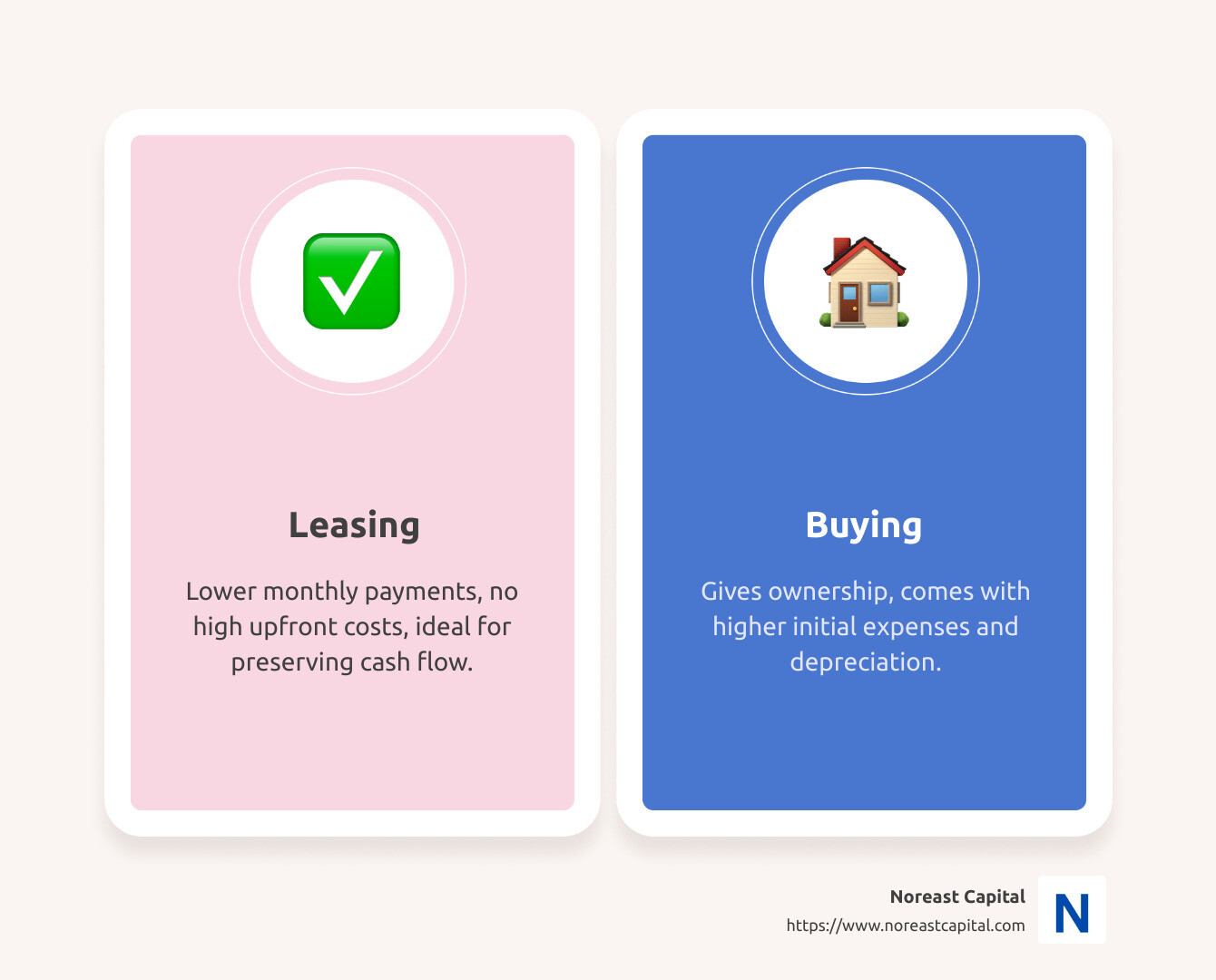
- Leasing usually offers lower monthly payments and avoids high upfront costs, perfect for those who want to preserve cash flow.
- Buying gives you ownership, but often comes with higher initial expenses and the burden of depreciation.
In the end, the decision boils down to your financial situation and business goals.
I’m Vincent Cerniglia, with experience in the financing and leasing industry as a leader at Noreast Capital. I’ve helped businesses steer these choices using tools like a financing vs leasing calculator to optimize financial outcomes.
Financing vs leasing calculator terms to remember:
– how is lease vs finance car calculated
– what is leasing vs financing
– why finance a car vs lease
Understanding Leasing and Financing
When deciding between leasing and financing a vehicle or equipment, it’s crucial to understand the benefits and costs associated with each option. Let’s break it down:
Leasing Benefits
Leasing is like renting a car for a specific period. Lower monthly payments are a significant advantage of leasing. You pay for the vehicle’s depreciation during the lease term, not the entire purchase price. This can free up cash for other expenses, which is particularly beneficial for businesses.
Another perk is the flexibility to upgrade. If you love driving the latest models, leasing allows you to switch to a new vehicle every few years without the hassle of selling your old one.
Additionally, leasing often includes limited maintenance and repair costs. Since the vehicle is usually under warranty, you won’t have to worry much about unexpected repair expenses.
Financing Benefits
Financing, or buying, means you are working toward owning the vehicle outright. The most significant benefit is ownership. Once you’ve paid off the loan, the car is yours. No more monthly payments, and you can drive as much as you want without mileage restrictions.
Though monthly payments might be higher than leasing, financing can be more cost-effective in the long run. You can sell the car at any time, potentially recouping some of your investment. Plus, insurance premiums tend to be lower for owned vehicles compared to leased ones.
Cost Comparison
When comparing costs, consider both monthly payments and total expenses over the vehicle’s life. Leasing often results in lower monthly payments, but if you keep the car for many years, buying might be cheaper in the long run.
Here’s a simple comparison table:
| Factor | Leasing | Financing |
|---|---|---|
| Monthly Payments | Lower | Higher |
| Upfront Costs | Lower | Higher |
| Ownership | No (return at lease end) | Yes (after loan is paid off) |
| Mileage Restrictions | Yes | No |
| Flexibility to Upgrade | Easy (at lease end) | More complex (selling required) |

The choice between leasing and financing depends on your financial situation and personal or business needs. Use our financing vs leasing calculator to see which option aligns best with your goals.
How to Use Our Financing vs Leasing Calculator
Deciding between leasing and financing a vehicle can be tricky. Our financing vs leasing calculator makes it easier by breaking down the costs and helping you see which option fits your budget and lifestyle.
Input Details
To get started, you’ll need to enter some basic information:
- Vehicle Price: The total selling price of the car you’re interested in.
- Down Payment: How much cash you plan to pay upfront.
- Sales Tax Rate: The estimated tax rate based on your location.
- Credit Score: Your approximate credit score to get personalized payment estimates.
- Loan/Lease Terms: The length of time you plan to finance or lease the car.
Monthly Payments
Once you’ve entered your details, the calculator will show you the estimated monthly payments for both leasing and financing.
- Leasing: Typically results in lower monthly payments. This is because you’re only paying for the car’s depreciation during the lease term, plus interest and fees.
- Financing: Usually involves higher monthly payments since you’re working toward full ownership of the vehicle.
Total Cost
Beyond monthly payments, consider the total cost over the term of the lease or loan.
- Leasing Total Cost: Includes your upfront costs, monthly payments, and any end-of-lease fees. Note that you won’t own the car at the end of the lease.
- Financing Total Cost: Covers the down payment, monthly payments, and interest over the loan term. Once paid off, the car is yours, which can be a significant long-term saving.
By comparing both the monthly payments and total costs, you can make a more informed decision about whether leasing or financing is better for you.
Now that you understand how to use the calculator, let’s explore the key factors you should consider when deciding whether to lease or finance a vehicle.
Key Factors to Consider
When deciding between leasing and financing, it’s important to weigh several key factors. Each of these can significantly impact your decision and your wallet.
Mileage Limits
Leasing often comes with mileage limits, usually between 10,000 to 15,000 miles per year. If you exceed these limits, you might face an excess mileage fee ranging from $0.10 to $0.25 per mile. If you drive a lot, consider buying extra miles upfront at a reduced rate or opting for financing, which has no mileage restrictions.
Residual Value
Residual value is what the car is worth at the end of the lease. A higher residual value can mean lower monthly payments. However, if you’re financing, the residual value affects your car’s resale or trade-in value. Research and negotiate this value to ensure it accurately reflects market conditions.
Interest Rates
Interest rates play a crucial role in both leasing and financing. In leasing, this is often referred to as the money factor. A lower interest rate or money factor means lower monthly payments. Your credit score heavily influences these rates, so it’s wise to check and improve your score before applying.
Upfront Costs
Both leasing and financing require upfront costs. For leasing, these might include a cap cost reduction and an acquisition fee, which can range from $395 to $1,098. Financing requires a down payment, which reduces the loan amount and, consequently, your monthly payments. Calculate these costs to see which option aligns with your budget.
Understanding these factors can help you make a more informed decision, whether you’re leaning towards leasing or financing. Now, let’s dive into some common questions people have about leasing and financing.
Frequently Asked Questions about Leasing and Financing
What is better, leasing or financing?
Choosing between leasing and financing depends on your personal needs and financial situation. Monthly costs are often lower with leasing, making it attractive if you’re looking for a new car with a smaller monthly payment. However, leasing means you don’t own the car at the end of the term. In contrast, financing typically involves higher monthly payments, but you gain full ownership of the vehicle once the loan is paid off.
Consider long-term expenses as well. Leasing can result in continuous payments if you keep renewing leases, while financing allows you to eventually eliminate monthly payments. Think about your long-term goals and whether you prefer owning a car outright or enjoying the flexibility of changing vehicles every few years.
What is the 1% rule in car leasing?
The 1% rule is a simple guideline to evaluate if a lease offer is a good deal. It suggests that your monthly lease payment should be roughly 1% or less of the vehicle’s MSRP (Manufacturer’s Suggested Retail Price). For example, if a car’s MSRP is $30,000, a good lease deal would have a monthly payment of $300 or less. This rule helps you quickly assess if the lease offer is competitive, but remember to consider other factors like the lease term and mileage limits.
Is it financially smarter to lease a car?
Deciding if leasing is financially smarter depends on your short-term costs versus long-term savings. Leasing often requires lower upfront costs and monthly payments, which can be appealing if you want to minimize immediate expenses. It’s also beneficial if you prefer driving a new car every few years without worrying about selling or trading it in later.
However, if your goal is to save money over the long term, buying might be the better choice. Once you’ve paid off the loan, you own the car and can drive it without monthly payments. Your personal preference plays a big role here—whether you value the flexibility of leasing or the financial benefits of owning a car in the long run.
Understanding these aspects can guide you in making a choice that best fits your lifestyle and financial goals.
Conclusion
At Noreast Capital, we understand that choosing between leasing and financing can be a pivotal decision for any business. Our mission is to offer equipment leasing solutions that empower businesses to thrive without the burden of ownership.
Equipment leasing with us means you can access the latest technology and tools without a hefty upfront investment. This approach allows you to maintain cash flow and allocate resources to other vital areas of your business. Whether you’re upgrading kitchen equipment for a restaurant or acquiring machinery for a manufacturing plant, our flexible solutions are custom to meet your unique needs.
Our expertise in the leasing industry is backed by years of experience and a commitment to helping businesses succeed. We offer customizable financing options that ensure you can acquire high-quality equipment without compromising your financial stability. With our competitive rates and flexible terms, you can improve your operational efficiency and boost your business’s overall performance.
Choosing Noreast Capital means choosing a partner that values your success. We’re here to support you at every step, from application to approval and beyond. Let us help you make informed decisions with our financing vs leasing calculator and find the solution that best fits your business goals.
Trust Noreast Capital to be your partner in growth. Together, we can achieve great things for your business.