

The Big Decision: Financing vs Leasing
When it comes to getting a new vehicle, the first big decision is often financing vs leasing. Here’s a quick rundown to help you understand the main differences:
- Financing: You borrow money to buy the vehicle, making monthly payments until you own it.
- Leasing: You rent the vehicle, making monthly payments to use it for a set period.
Leasing often means lower monthly payments but you don’t own the car. Financing costs more each month, but you will eventually own the vehicle.
Understanding whether to finance or lease is crucial because it impacts your long-term financial health and lifestyle. If you drive a lot, prefer lower payments, or enjoy having a new car frequently, leasing might suit you. If ownership, building equity, and long-term savings are your goals, financing could be the better path.
I’m Vincent Cerniglia, a seasoned expert in equipment financing and leasing. Over the years, I’ve helped numerous small business owners steer these decisions. Let’s dig into the details to ensure you make the best choice for your needs.

Essential financing vs leasing terms:
– how is lease vs finance car calculated
– why finance a car vs lease
What is Car Financing?
Car financing means taking out a loan to help pay for your vehicle. You make monthly payments until the loan is paid off, and then the car is yours. This approach is popular because it allows you to own the car outright, giving you the freedom to sell or trade it in whenever you like.
Dealership Financing
Dealership financing is when you get a loan through the car dealership. The dealer works with banks or other lenders to offer you a loan. This can be convenient because you can handle everything in one place.
Pros:
– Convenience: Everything is handled at the dealership.
– Special Programs: Dealers sometimes offer manufacturer-sponsored, low-rate, or incentive programs.
Cons:
– Potentially Higher Rates: Dealers might not always offer the best interest rates because they profit from the financing.
Bank or Credit Union Financing
You can also finance your car through your bank or credit union. This option can be good if you have good credit and can secure a competitive interest rate.
Pros:
– Competitive Rates: Banks and credit unions often offer lower interest rates.
– Multiple Lenders: You can compare offers from different institutions to find the best deal.
Cons:
– Separate Process: You need to handle the loan approval process separately from the car purchase.
Personal Loan Financing
If you have good credit, you might consider getting a personal loan from an online lender. This option can be quick and doesn’t require going through a dealership or bank.
Pros:
– Quick Money: Online lenders can provide funds quickly.
– Flexibility: You can use the loan for any car purchase.
Cons:
– Higher Interest Rates: Personal loans might have higher interest rates compared to auto loans.
When deciding on financing vs leasing, consider your long-term goals. Financing means higher monthly payments but leads to ownership and equity. Leasing offers lower payments but no ownership. Understanding your financial situation and driving habits will help you make the best decision.

Next, we’ll explore the details of car leasing and how it compares to financing.
What is Car Leasing?
Car leasing is like renting a car for a set period, usually between 24 and 48 months. Instead of paying for the entire value of the car, you only pay for its depreciation during the lease term. This often results in lower monthly payments compared to financing. However, you don’t own the car at the end of the lease, and there are usually mileage limits and other restrictions.
Dealership Leasing
When you lease a car through a dealership, you work directly with the salesperson to find the car you want and negotiate the lease terms.
Pros:
– Lower Monthly Payments: Lease payments are typically lower than loan payments because you’re only paying for the car’s depreciation.
– Latest Models: Leasing allows you to drive a new car every few years.
– Warranty Coverage: Most leases are short enough that the car remains under warranty, reducing maintenance costs.
Cons:
– No Equity: You don’t own the car, so you can’t sell or trade it in.
– Mileage Limits: Leases often have mileage limits (usually 10,000-15,000 miles per year). Exceeding these limits can result in hefty fees.
– Return Conditions: You must return the car in good condition. Excess wear and tear can lead to additional charges.
Manufacturer Leasing
Leasing directly from the car manufacturer can sometimes offer better terms or discounts. You work with a representative from the car company, which can provide some unique benefits.
Pros:
– Better Terms: Manufacturers may offer special lease deals, including lower interest rates or higher mileage limits.
– Discounts: You might get additional discounts or incentives not available through dealerships.
Cons:
– Limited Options: You may have fewer choices in terms of car models and configurations.
– Standard Terms: While the terms might be better, they are often less negotiable than those at a dealership.
Third-Party Leasing
Third-party leasing involves leasing a car from a lender other than the dealership or manufacturer. These lenders can offer leases to customers who might not qualify through traditional channels.
Pros:
– Flexible Terms: Third-party lenders can offer varied terms that might better suit your needs.
– Broader Access: They may provide leasing options to those with less-than-perfect credit.
Cons:
– Fine Print: Always read the fine print. Terms and conditions can vary widely, and some might include hidden fees or unfavorable conditions.
– Potentially Higher Costs: Third-party leases might come with higher interest rates or other costs compared to manufacturer or dealership leases.
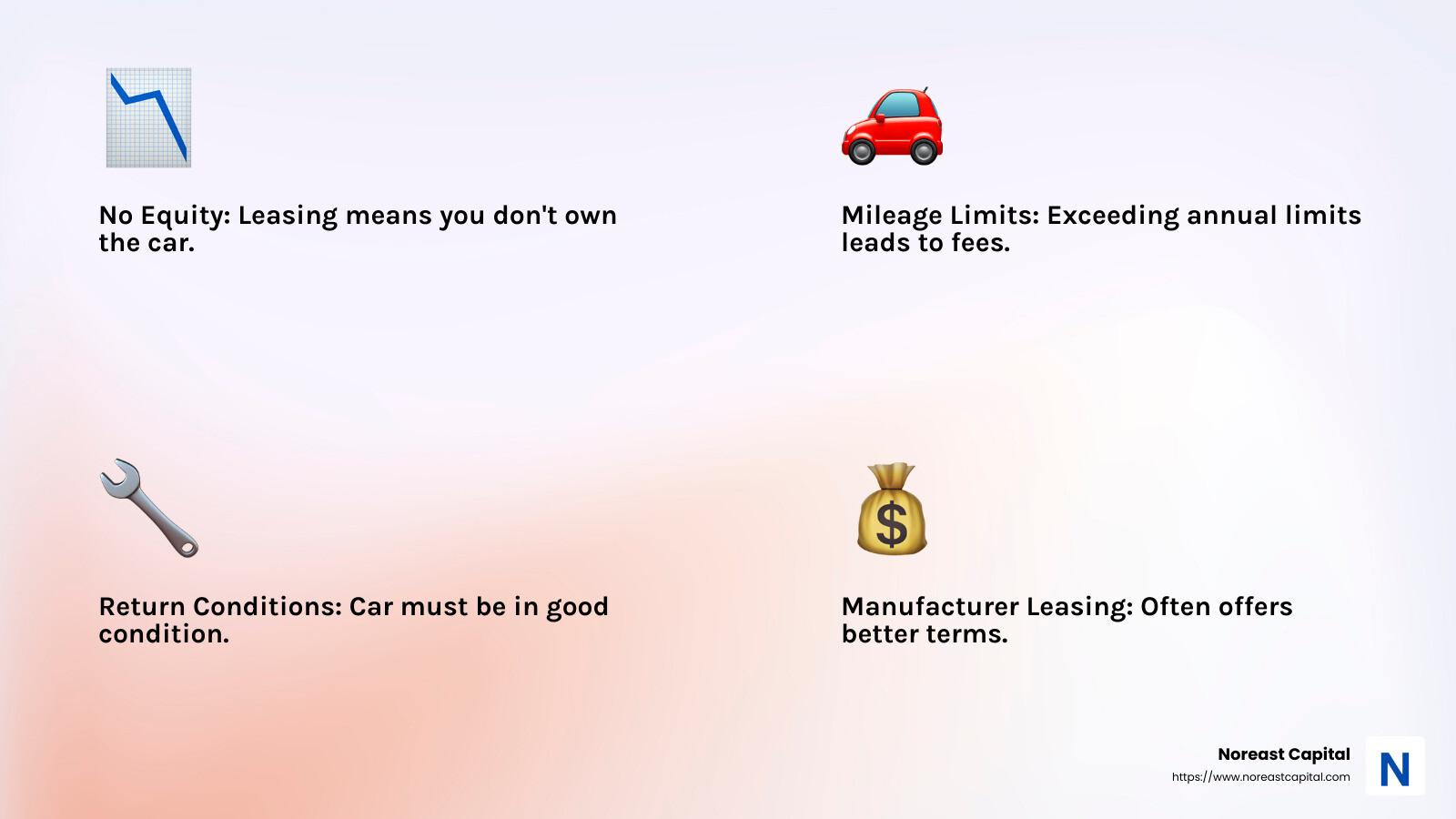
In summary, leasing a car can be a great option if you want lower monthly payments and the ability to drive a new car every few years. However, it comes with restrictions like mileage limits and no ownership at the end of the lease. Next, we’ll dive into the pros and cons of financing vs leasing to help you decide which option is best for you.
Financing vs Leasing: Pros and Cons
When deciding between financing and leasing a car, it’s important to weigh the pros and cons of each option. Here are the key factors to consider:
Monthly Payments
Leasing: Generally, monthly lease payments are lower than financing payments. This is because you’re only paying for the car’s depreciation during the lease term, not the entire value of the vehicle.
Financing: Monthly payments are higher because you’re gradually paying off the entire purchase price of the car, plus interest.
Down Payment
Leasing: Requires a smaller down payment, often referred to as a security deposit. This amount is usually refundable at the end of the lease term.
Financing: Typically requires a larger down payment, usually around 20% of the car’s value. This upfront cost can be a significant financial commitment.
Maintenance and Repair Costs
Leasing: Maintenance and repairs are often covered by the manufacturer’s warranty for the duration of the lease. This can save you a lot of money on unexpected repairs.
Financing: Once the manufacturer’s warranty expires, you’re responsible for all maintenance and repair costs. This can add up, especially as the car ages.
Early Termination
Leasing: Terminating a lease early can result in hefty fees. You’re usually locked into the lease term, and breaking it can be costly.
Financing: You have the flexibility to sell or trade in your car at any time without facing penalties. This can be beneficial if your situation changes and you need a different vehicle.
Mileage Restrictions
Leasing: Leases come with mileage limits, usually between 10,000 and 15,000 miles per year. Exceeding these limits can lead to additional fees.
Financing: There are no mileage restrictions. You can drive as much as you want without worrying about penalties.
Ownership
Leasing: At the end of the lease term, you must return the car to the dealership. You don’t own the vehicle, so you can’t sell or trade it in.
Financing: Once you’ve paid off the loan, you own the car outright. You can keep it, sell it, or trade it in as you see fit.
The Bottom Line
Leasing is ideal for those who want lower monthly payments and enjoy driving a new car every few years. However, it comes with restrictions like mileage limits and no ownership at the end of the lease.
Financing is better for those who want to eventually own their car and don’t mind higher monthly payments and the responsibility of maintenance and repairs.
Next, let’s look at the factors you should consider before making a decision.
Factors to Consider Before Deciding
When deciding between financing vs leasing, several factors can influence your choice. Here are some key considerations:
Credit Report
Before visiting a dealership, obtain a copy of your credit report from AnnualCreditReport.com or call 1-877-322-8228. Your credit report affects loan approval and the interest rates you’ll be offered. A strong credit history can secure better financing terms, while a weaker report may necessitate a co-signer or result in higher interest rates.
Total Cost vs Monthly Payment
Total Cost: Don’t be swayed by low monthly payments alone. Lower monthly payments might mean a longer loan term or higher interest rates, increasing the total cost. Calculate the full expense, including interest, fees, and taxes, to understand the true cost over time.
Monthly Payment: While lower monthly payments are appealing, ensure they fit within your budget. Use tools like the Make a Budget worksheet to assess your financial situation and determine what you can afford comfortably.
Down Payment
Financing: Typically requires a larger down payment, often around 20% of the car’s value. A substantial down payment lowers the amount you need to finance, reducing your total interest costs.
Leasing: Usually requires a smaller initial payment, often called a security deposit. This is generally refundable at the end of the lease term, making it a less significant upfront financial commitment.
Trade-In Value
Research: Check resources like the National Automobile Dealers Association (NADA) Guides, Edmunds, and Kelley Blue Book to determine your current car’s trade-in value. This information helps you negotiate a fair price for your trade-in.
Negotiation: Negotiate the price of your new car before discussing your trade-in. This strategy ensures the dealer doesn’t adjust the new car’s price to offset a generous trade-in offer.
Negative Equity: If you owe more on your current car than it’s worth (negative equity), understand how this will affect your new financing or lease agreement. It may increase your new loan amount, lengthen the loan term, or raise your monthly payment.
Co-Signer
If your credit history isn’t strong enough to secure favorable terms, a co-signer might be necessary. Co-signers share equal responsibility for the loan or lease. Any missed payments will impact both your credit and your co-signer’s credit.
Considering these factors carefully can help you make an informed decision between financing and leasing. Next, let’s address some frequently asked questions about financing vs leasing.
Frequently Asked Questions about Financing vs Leasing
Is it better to finance or lease a car?
The answer depends on your personal needs and financial situation.
Financing a car means you take out a loan to buy it. You’ll have higher monthly payments, but you’ll own the car once the loan is paid off. This can be a good option if you plan to keep the car for a long time and want to build equity.
Leasing a car means you pay to use it for a set period, usually 2-4 years. Monthly payments are generally lower, but you won’t own the car at the end of the lease. Leasing is ideal if you like driving a new car every few years and don’t want to worry about maintenance costs, as they are often covered by the lease agreement.
What is an advantage of leasing over financing?
Lower Monthly Payments: Leasing typically offers lower monthly payments compared to financing. This is because you’re paying for the car’s depreciation during the lease term, not the entire vehicle cost.
Depreciation: When you lease, you don’t have to worry about the car’s depreciation affecting your investment. At the end of the lease, you simply return the car to the dealership.
Flexibility: Leasing allows you to drive a new car every few years without the hassle of selling your old one. This can be particularly beneficial if you like having the latest features and technology.
What are the advantages and disadvantages of financing versus leasing?
Financing Advantages:
– Ownership: You own the car once the loan is paid off.
– No Mileage Restrictions: You can drive as much as you want without worrying about penalties.
– Equity: You build equity in the car, which you can use as a trade-in or sell later.
Financing Disadvantages:
– Higher Monthly Payments: Financing usually requires higher monthly payments.
– Maintenance and Repair Costs: After the warranty expires, you’re responsible for all maintenance and repair costs.
– Depreciation: The car’s value decreases over time, which can affect its resale value.
Leasing Advantages:
– Lower Payments: Monthly payments are generally lower than financing.
– Maintenance: Most leases include maintenance and repairs, reducing your out-of-pocket expenses.
– Flexibility: You can easily upgrade to a new car every few years.
Leasing Disadvantages:
– No Ownership: You do not own the car and must return it at the end of the lease.
– Mileage Restrictions: Leases often come with mileage limits, and exceeding them can result in hefty fees.
– Early Termination Fees: Ending a lease early can be expensive, often involving significant penalties.
Understanding these pros and cons can help you decide whether financing or leasing is the best choice for you.

Next, let’s explore some key factors to consider before making your final decision.
Conclusion
Deciding between financing vs leasing a car boils down to your personal needs, financial situation, and long-term goals. Each option has its own set of advantages and drawbacks, and understanding these can help you make an informed decision.
Summary
Financing a car means taking out a loan to buy it. You’ll have higher monthly payments, but you’ll own the car once the loan is paid off. This is ideal if you plan to keep the car for a long time and want to build equity.
Leasing a car means you pay to use it for a set period, usually 2-4 years. Monthly payments are generally lower, but you won’t own the car at the end of the lease. Leasing is great if you like driving a new car every few years and want to avoid maintenance costs, which are often covered by the lease agreement.
Decision Factors
Monthly Payments: Leasing typically offers lower monthly payments compared to financing. This can be a deciding factor if budget constraints are a primary concern.
Down Payment: Financing generally requires a larger down payment compared to leasing. Assess your savings and decide how much you can afford upfront.
Maintenance Costs: Leases usually include maintenance, saving you from unexpected repair costs. If you finance, you’ll be responsible for maintenance after the warranty expires.
Ownership: Financing allows you to own the car and build equity. Leasing means you’ll need to return the car at the end of the lease term.
Mileage Restrictions: Leases come with mileage limits. If you drive a lot, financing might be a better option to avoid extra fees.
Early Termination: Ending a lease early can be costly due to penalties. Financing offers more flexibility if you need to sell or trade-in your car before the loan term ends.
Noreast Capital
At Noreast Capital, we understand the complexities of choosing between financing and leasing. Our mission is to provide commercial equipment finance solutions that help businesses save money and maintain cash flow. Whether you’re looking to finance or lease, our team is here to guide you through the process and help you make the best decision for your needs.
Consult a Financial Advisor
Before making your final decision, consider consulting a financial advisor. They can provide personalized advice based on your financial situation and goals, ensuring you make an informed choice.
In conclusion, whether you choose to finance or lease, understanding the pros and cons of each option will help you make the best decision for your needs. At Noreast Capital, we’re committed to supporting you every step of the way. Feel free to reach out to us for more information and guidance on your financing or leasing journey.