

When it comes to securing a new vehicle without the burden of high upfront costs, a google car lease calculator can be your best friend. In a nutshell, here’s how it works:
- Input the Car’s Details: Enter the vehicle’s specifics, like price and VIN.
- Specify Financial Info: Include trade-in values, down payment, and financing terms.
- Get an Estimate: See potential monthly payments and compare them to your budget.
Using a leasing calculator simplifies the process and provides clarity, ensuring you can lease with confidence.
As Vincent Cerniglia, I specialize in explaining financial solutions for businesses, leveraging tools like the google car lease calculator to save costs and streamline equipment acquisition. Stay tuned as we dig deeper into car leasing and how you can make the most of these resources.

Google car lease calculator terms explained:
– 3 year lease calculator
– lease payment calculation
– used car lease calculator
Understanding Car Leasing Basics
Leasing a car can feel like a maze of terms and conditions, but understanding some basics can make it much simpler. Let’s break it down.
Lease Contract
A lease contract is an agreement between you and the lessor (the car owner) allowing you to use the car for a specified period. Think of it as a long-term rental. You get to drive the car for a few years, usually two to four, without owning it. At the end of the lease, you return the car unless you decide to purchase it.
Mileage Cap
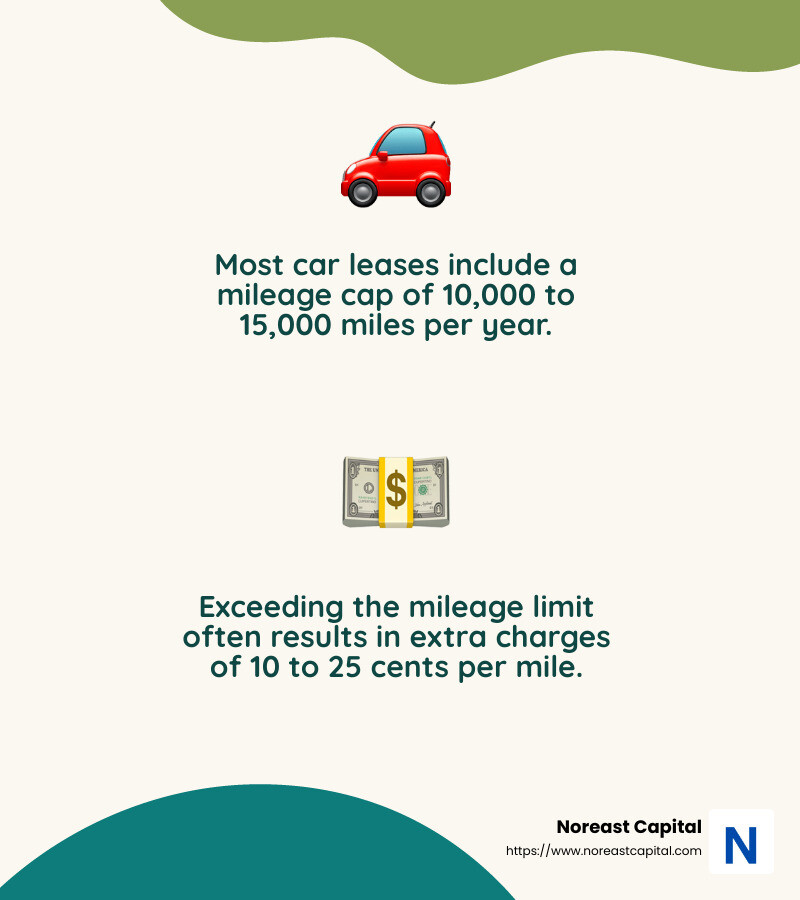
Most lease contracts come with a mileage cap. This is the maximum number of miles you can drive annually without incurring extra charges. In the U.S., standard leases often allow between 10,000 to 15,000 miles per year. Exceeding this limit means paying extra, usually between 10 to 25 cents per mile. It’s crucial to estimate your driving needs accurately to avoid unexpected costs.
Wear and Tear
When you return a leased car, it undergoes an inspection for wear and tear. Normal wear is expected, but excessive damage can lead to fees. To avoid these charges, take care of your car. Regular maintenance and minor repairs can save you money in the long run. Consider investing in wear and tear insurance if you’re worried about potential damages.
Maintenance
Maintenance responsibilities can vary. Typically, the lessee handles regular upkeep like oil changes and tire rotations. Some leases might include maintenance packages, so read your contract carefully. Keeping the car in good shape not only avoids fees but also ensures a smooth ride throughout your lease term.
Understanding these basics can help you steer the leasing process with ease. Next, we’ll explore how to use Google’s Car Lease Calculator to estimate your lease payments accurately.
How to Use Google’s Car Lease Calculator
Navigating car leasing can be tricky, but the Google Car Lease Calculator is here to help. This tool simplifies the process by breaking down complex calculations into easy steps. Here’s how you can make the most of it.
Lease Payment Calculation
When using the calculator, the first thing you’ll need to do is input several key figures. These include the car’s sticker price, the negotiated purchase price, and any additional fees. The calculator uses these numbers to estimate your lease payment.
The lease payment is typically composed of two parts: the depreciation fee and the finance charge. The depreciation fee covers the loss in value of the car over the lease term. The finance charge, on the other hand, is essentially the interest on the lease.
Residual Value
One critical component in the lease payment calculation is the residual value. This is the estimated value of the car at the end of the lease term. A higher residual value usually means lower monthly payments because the car retains more value. You can find this percentage in your lease agreement or ask the dealer for it.
Money Factor
The money factor is another important term to understand. It’s the interest rate you’ll pay on the lease, expressed as a small decimal. To convert it to a more familiar interest rate, multiply the money factor by 2,400. A lower money factor means less interest paid over the lease term.
Using the Calculator
To use the Google Car Lease Calculator, simply enter the details mentioned above. The calculator will then provide an estimate of your monthly lease payment. This tool is invaluable for comparing different lease offers and understanding what you can afford.
By understanding these key elements, you can use the Google Car Lease Calculator to make informed decisions and potentially save money on your next car lease.
Key Factors in Lease Payment Calculation
When you’re diving into the details of a car lease, several key factors determine your monthly payment. Understanding these can help you make smarter financial decisions.
Capitalized Cost
The capitalized cost, or cap cost, is the starting point for your lease. It’s similar to the selling price if you were buying a car. This number is crucial because it’s the basis for calculating depreciation. A lower cap cost means less depreciation and, consequently, lower monthly payments.
Depreciation
Depreciation is how much the car’s value decreases over the lease term. It’s a major part of your monthly lease payment. For example, if a car is valued at $30,000 and is expected to depreciate by $10,000 over the lease, you’ll pay that $10,000 spread out over your lease. In a 36-month lease, that’s about $280 per month just for depreciation.
Down Payment
A down payment can reduce your monthly payments, as it lowers the amount you need to finance. However, be cautious with large down payments on leases. If the car is totaled or stolen, you won’t get that money back. Instead, consider smaller down payments to keep more cash in your pocket.
Residual Value
The residual value is the car’s estimated worth at the end of the lease. It’s expressed as a percentage of the MSRP. A higher residual value means the car holds its value better, leading to lower monthly payments. For instance, if a car’s residual value is 60% of its original price, you’ll finance the remaining 40% as depreciation.
By understanding these factors, you can better steer lease agreements and use tools like the Noreast Capital Lease Calculator to estimate payments effectively. This knowledge empowers you to make informed decisions and potentially save money.
Benefits of Using a Car Lease Calculator
When considering leasing a car, have a clear understanding of the costs involved. This is where a Google Car Lease Calculator becomes an invaluable tool. Let’s explore the benefits it offers.
Cost Estimation
One of the main advantages of using a car lease calculator is its ability to provide an accurate estimate of your monthly payments. By inputting details such as the car’s price, down payment, and lease terms, you can quickly see what your financial commitment will look like. This helps you avoid surprises and plan your budget effectively.
Financial Planning
A lease calculator aids in financial planning by allowing you to adjust different variables and see how they affect your payments. You can experiment with different down payment amounts, lease lengths, and even residual values to find a plan that fits your financial situation. This flexibility ensures that you can tailor the lease to your needs without overstretching your budget.
Lease vs Buy
Deciding whether to lease or buy a car can be challenging. A car lease calculator can help simplify this decision by comparing the costs of leasing versus buying. It breaks down the total cost of ownership over the lease term, including depreciation, interest, and fees. This comparison can highlight the financial benefits of leasing, such as lower monthly payments and reduced maintenance costs, especially if you enjoy driving a new car every few years.
Using a car lease calculator is a smart move for anyone considering a lease. It provides clarity and confidence in your decision-making process, ensuring that you find a deal that aligns with your financial goals.
Frequently Asked Questions about Car Leasing
How much is a lease on a $45,000 car?
Leasing a car involves several key components that determine your monthly payment. For a $45,000 car, the monthly lease payment depends on factors like the residual value, capitalized cost, and the money factor.
Residual Value: This is the estimated worth of the car at the end of the lease term. A higher residual value generally means lower monthly payments because the car retains more value.
Capitalized Cost: This is the negotiated price of the car. The lower this cost, the less you pay each month.
Money Factor: This is the lease’s version of an interest rate. It’s a small decimal, and you can convert it to an interest rate by multiplying by 2,400. A lower money factor results in lower finance charges.
Let’s say your car has a residual value of 55% and a money factor of 0.0015. You can expect to pay around $500 a month, but this can vary based on your specific lease terms.
What is a money factor in leasing?
The money factor is crucial in calculating the finance charge of a lease. It’s the lease equivalent of an interest rate but is expressed as a decimal. To understand its impact, multiply it by 2,400 to convert it to a percentage. For example, a money factor of 0.0025 equals a 6% interest rate.
Dealers determine this factor based on your credit score. A better credit score can lead to a lower money factor, reducing your overall lease cost. It’s always a good idea to negotiate the money factor to ensure you’re getting the best deal possible.
How does mileage affect lease payments?
Mileage plays a significant role in leasing. Most leases come with a mileage cap, typically between 10,000 to 15,000 miles per year. Exceeding this cap can lead to penalty charges.
These charges can range from 10 to 25 cents per mile over the limit. If you drive more than the allowed mileage, factor in these costs when budgeting for your lease.
For example, if you exceed the mileage cap by 4,000 miles and the penalty is 20 cents per mile, you’ll incur an additional $800 charge. To avoid unexpected costs, it’s crucial to choose a mileage limit that matches your driving habits and consider paying for extra miles upfront if necessary.
Understanding these components can help you make informed decisions about leasing a car, ensuring that your choice aligns with your financial situation and driving needs.
Conclusion
Leasing can be a smart financial strategy for businesses and individuals who want to drive a new car without the commitment of ownership. At Noreast Capital, we specialize in providing flexible equipment leasing solutions that help you conserve capital and improve cash flow. Our approach allows businesses to access the latest technology and equipment without the burden of upfront costs.
Equipment leasing with Noreast Capital offers several advantages. By not tying up your resources in ownership, you can allocate funds to other areas of your business, ensuring growth and stability. Our leasing options are designed to be straightforward and transparent, so you can focus on what matters most—running your business.
Financial solutions should be as dynamic as your business needs. Whether you’re looking for ways to manage your fleet or seeking to upgrade your equipment, our leasing programs offer the flexibility and support you need. With locations in Annapolis, Baltimore, and Washington, DC, we’re ready to assist you with custom leasing options that suit your unique requirements.
For more information on how our leasing services can benefit your business, visit our equipment lease page. Explore the possibilities of leasing with Noreast Capital and take the next step in optimizing your financial strategy.