

Breaking into the Industry with Equipment Leasing
If you’re wondering how to become an equipment leasing broker, you’re in the right place. Let’s start with the basics:
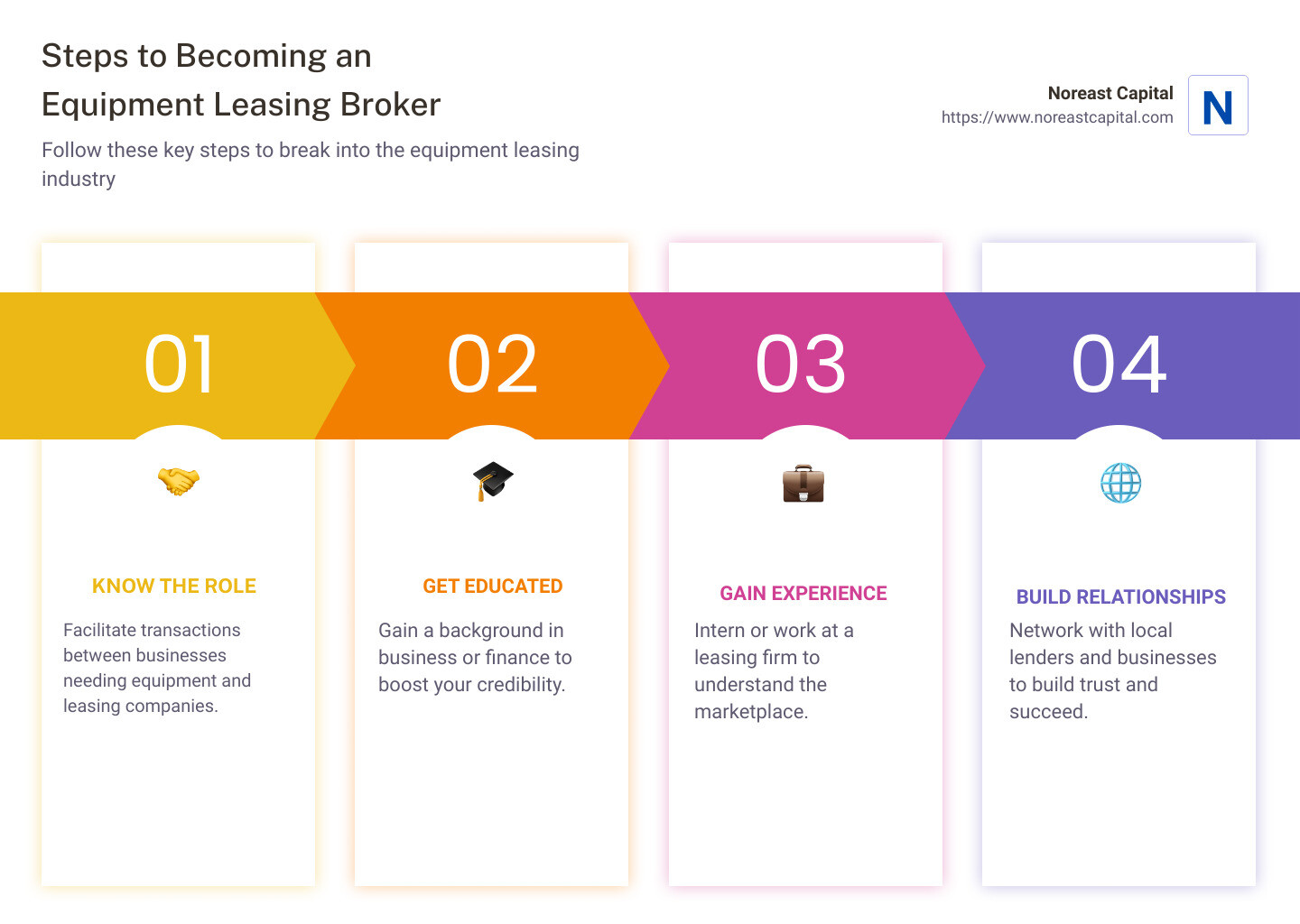
– Know the Role: An equipment leasing broker facilitates transactions between businesses that need equipment and the leasing companies that provide it.
– Get Educated: Most brokers benefit from a background in business or finance. Certifications like CLFP (Certified Lease and Finance Professional) can boost credibility.
– Gain Experience: Practical experience is crucial. Intern or work at a leasing firm to understand the marketplace.
– Build Relationships: Networking with local lenders and businesses is vital. Your success depends on the trust you build with clients and banks.
The equipment leasing industry is a robust and growing sector, with U.S. companies projected to finance over $900 billion in equipment this year. This growth is driven by the need for efficient and cost-effective ways to acquire commercial equipment without hefty upfront costs. Noreast Capital stands out by providing custom leasing solutions that help businesses preserve their cash flow while staying flexible.
I’m Vincent Cerniglia, CEO of Noreast Capital Corporation. With over 37 years in corporate finance, I’ve guided countless businesses through the nuances of equipment leasing. Let’s dive deeper into what it takes to break into this exciting industry.
Understanding Equipment Leasing
Equipment leasing is a financial arrangement that allows businesses to use necessary equipment without the burden of a large upfront payment. Instead of buying equipment outright, companies can lease it for a set period, making regular payments throughout the lease term.
What is Equipment Leasing?
In simple terms, equipment leasing is like renting. Companies pay to use equipment for a specific time, but they don’t own it at the end of the lease unless they opt for a lease-to-own agreement. This approach is popular because it helps businesses conserve cash that can be used for other operational needs.
Commercial Equipment Leasing
Commercial equipment leasing specifically refers to leasing equipment for business purposes. This can range from heavy machinery for construction to office computers and furniture. According to Global Financial Training, U.S. companies are expected to finance over $900 billion in equipment this year.
Financial Arrangements
Leasing arrangements can vary, but they typically fall into two categories:
Operating Leases: These are short-term leases where the lessee (the business) can use the equipment without the intention of owning it. At the end of the lease, the equipment is returned to the lessor (the leasing company).
Capital Leases: These are long-term and often include an option to purchase the equipment at the end of the lease term. This type of lease is more like a loan and is listed as an asset on the company’s balance sheet.
Upfront Payment
One of the main benefits of leasing is the reduction or elimination of upfront costs. Unlike purchasing, which often requires a significant down payment, leasing spreads the cost over time. This can be particularly beneficial for startups or businesses looking to expand without depleting their cash reserves.
For instance, many leases cover “soft costs” such as installation, delivery, and warranties, which can add up to 35% of the equipment cost. This comprehensive coverage makes leasing an attractive option for many businesses.

Vincent Cerniglia, CEO of Noreast Capital Corporation, emphasizes, “Leasing allows businesses to stay agile and responsive to market changes without the financial strain of large capital expenditures.”
In the next section, we’ll explore the steps to becoming an equipment leasing broker. This career path offers the opportunity to help businesses acquire the tools they need while building a rewarding profession.
Steps to Becoming an Equipment Leasing Broker
Determining Your Suitability
To become an equipment leasing broker, you need to be self-motivated and thrive under pressure. Sales experience is crucial, especially in high-pressure environments like telesales. This will help you understand sales quotas, commissions, and incentives. If you find these pressures unbearable, a career in leasing might not be for you.
Intangible sales experience, such as selling insurance or services, can be invaluable. It helps you develop the ability to create rapport with customers and tell a compelling story about your product.
Educational Requirements
While not always required, a bachelor’s degree in business administration can be very beneficial. Courses in marketing, finance, and real estate ethics will prepare you for the field and help gauge your interest.
Alternatively, you could pursue a two-year associate’s degree in business or business management from a community college. This can provide a solid foundation and make you more competitive in the job market.
Gaining Experience
Internships at leasing firms or working in alternate positions within these firms can be a great start. On-the-job training will teach you about the product, whether it’s real estate or equipment, and the clientele you will serve. You’ll also learn sales techniques, ethics, and the law as it relates to leasing.
Consider spending at least one year in this environment. This will help you build relationships, gain product knowledge, and further determine your suitability for the field.
Sales techniques, ethics, and law are essential facets of on-the-job training. This training will help you understand the intricacies of leasing and how to steer the legal landscape.
In the next section, we’ll discuss the certification and licensing you need to become a leasing broker. These credentials are crucial for ensuring you meet industry standards and can operate legally in your jurisdiction.
Certification and Licensing
To become an equipment leasing broker, you need to meet specific certification and licensing requirements. These requirements ensure you are qualified and can operate legally.
State Requirements
State licensure requirements for leasing brokers vary. While some states have stringent rules, others are more lenient, especially for those dealing with business equipment rentals. Always check your local regulations to ensure compliance.
Leasing Agent License and Broker License
In some jurisdictions, you may need a leasing agent license or a broker license. These licenses often require you to:
- Complete specific coursework
- Pass an exam
- Meet experience requirements
National Apartment Leasing Professional (NALP)
If you plan to work with residential properties, consider becoming a National Apartment Leasing Professional (NALP). To obtain this certification from the National Apartment Association, you need:
- A high school diploma or equivalent
- Six months of experience as a leasing agent
- Completion of approved coursework
- Passing an exam
National Association of Equipment Leasing Brokers (NAELB)
For those focusing on equipment leasing, joining the National Association of Equipment Leasing Brokers (NAELB) can be beneficial. Membership requirements include:
- Attending their week-long training school
- Passing subsequent testing
- Participating in their conference
Certified Lease and Finance Professional (CLFP)
Another valuable certification is the Certified Lease and Finance Professional (CLFP). Offered by the CLFP Foundation, this certification requires:
- Three years of experience in the field
- Passing a comprehensive exam
In the next section, we’ll explore how to build your career in equipment leasing. This includes understanding the local business climate and establishing relationships with lenders and clients.
Building Your Career
Breaking into the industry as an equipment leasing broker is just the beginning. Building a successful career involves understanding the local business climate, establishing strong relationships with lenders, and creating a network of repeat clients and referrals. Let’s explore these key areas.
Local Business Climate
Understanding your local business environment is crucial. Each region has its own economic conditions, industry demands, and competitive landscapes. For example, if you’re in a tech hub, there may be high demand for leasing computer equipment. In an agricultural area, farm machinery might be more relevant.
Tip: Keep an eye on local business news and join industry-specific local organizations to stay updated on trends and opportunities.
Lender Relationships
Strong relationships with lenders are the backbone of your business. Lenders provide the capital needed for your clients to lease equipment. Building trust with them can lead to better terms and faster approvals for your clients.
Story: Jane, a successful equipment leasing broker, shares that her career took off when she started attending local lender meetups. “I made it a point to meet every lender in my area. It paid off when I needed quick approvals for my clients,” she says.
Repeat Business and Referrals
Happy clients are the best source of repeat business and referrals. When you provide excellent service, clients are more likely to return to you for future needs and recommend you to others.
Fact: According to Noreast Capital, businesses that lease equipment often need upgrades or additional equipment, creating opportunities for ongoing business.
Independent Leasing Agent
As an independent leasing agent, you have the freedom to build your own brand and choose your clients. This path requires self-discipline and strong marketing skills.
Pros:
– Flexibility to choose your work hours
– Higher potential earnings
Cons:
– No guaranteed income
– Need to manage all aspects of the business
Franchisee
Joining a franchise can provide a structured path with established brand recognition and support. Many franchises offer training, marketing support, and a proven business model.
Fact: Franchising can be a less risky way to start, especially if you’re new to the industry. However, it requires an initial investment and ongoing franchise fees.
Contracted Employee
Working as a contracted employee for an established firm can provide stability while you gain experience. This role typically offers a steady income and benefits but may come with less flexibility.
Pros:
– Steady paycheck
– Training and support from the employer
Cons:
– Less control over your work
– Potentially lower earnings compared to being independent
In the next section, we’ll explore how equipment leasing companies make money, including lease extensions, renewals, and equipment upgrades.
How Equipment Leasing Companies Make Money
Understanding how equipment leasing companies make money can help you succeed as a broker. Here are some key ways they do it:
Lease Extensions
Sometimes, businesses need more time with their leased equipment. In these cases, they can extend the lease. This means more monthly payments for the leasing company.
Renewals
When a lease term ends, companies often renew the lease for the same or new equipment. Renewals create a steady stream of income without the need to find new clients.
Lease Rolls
Lease rolls happen when a company rolls over its current lease into a new one, often upgrading to better equipment. This process keeps clients in a continuous leasing cycle, generating ongoing revenue.
Equipment Upgrades
Businesses frequently need the latest technology or machinery. Leasing companies can offer equipment upgrades, allowing clients to swap old equipment for new. This keeps clients engaged and payments rolling in.
Continued Payments
Leasing companies make money through the monthly payments clients make. These payments cover the cost of the equipment and include a profit margin. Over time, these payments add up to substantial revenue.
Contract Provisions
Contracts often include various provisions that can generate extra income. For example, fees for late payments or early termination can add to the leasing company’s profits.
By understanding these revenue streams, you’ll be better prepared to explain the benefits of leasing to your clients and help your company grow.
Next, we’ll cover the frequently asked questions about becoming an equipment leasing broker.
Frequently Asked Questions about Becoming an Equipment Leasing Broker
What is an Equipment Broker?
An equipment broker is the middle person between a business needing equipment and a lender who can finance it. Equipment finance brokers help businesses find the best leasing or financing options for their needs. They work with various lending hubs to offer a range of funding solutions.
Brokers are essential because they have access to multiple lenders and can find the best terms for their clients. They also handle the paperwork and negotiations, making the process smoother for businesses.
How Big is the Equipment Leasing Industry?
The equipment leasing industry is massive, with an estimated value of over $1 trillion. This industry includes commercial businesses, non-profits, and government organizations that lease equipment to avoid the large upfront costs of purchasing.
According to industry statistics, around 80% of all businesses lease at least some of their equipment. This widespread adoption makes equipment leasing a vital part of the business world.
What is Commercial Equipment Leasing?
Commercial equipment leasing is a financial arrangement where businesses lease the equipment they need instead of buying it outright. This can include machinery, office furniture, computers, and more. Leasing allows companies to use the equipment without making a large upfront payment.
Leasing has several benefits:
- Financial Flexibility: It frees up cash flow for other business needs.
- Tax Advantages: Lease payments can often be deducted as business expenses.
- Up-to-Date Equipment: Leasing allows businesses to upgrade to the latest equipment without the hassle of selling old equipment.
In summary, commercial equipment leasing is a practical and financially savvy option for businesses looking to maintain flexibility and stay competitive.
Next, let’s explore the steps to becoming an equipment leasing broker.
Conclusion
At Noreast Capital, we understand the challenges businesses face when it comes to acquiring the necessary equipment without draining their resources. Our equipment financing solutions are designed to provide the flexibility and support businesses need to grow and thrive in a competitive market.
By choosing our commercial equipment finance options, businesses can save money and maintain a healthy cash flow. This allows them to invest in other critical areas such as marketing, staffing, and development.
Our custom solutions ensure that businesses can:
- Access the Latest Equipment: Stay competitive with up-to-date technology and machinery.
- Improve Financial Flexibility: Keep cash reserves available for unexpected opportunities or expenses.
- Benefit from Tax Advantages: Lease payments can often be deducted, reducing taxable income.
- Avoid Large Upfront Payments: Spread the cost of equipment over time, making budgeting easier.
We believe in building long-term partnerships with our clients, offering not just financing but also invaluable industry insights and support. Whether you’re looking to lease office equipment, machinery, or any other essential tools, Noreast Capital is here to help.
Explore our comprehensive office equipment financing solutions and find how we can help your business reach its full potential.
Thank you for considering Noreast Capital as your trusted partner in equipment financing. We look forward to supporting your journey towards success.