

Save Money and Grow Your Business: Leasing Equipment Made Simple
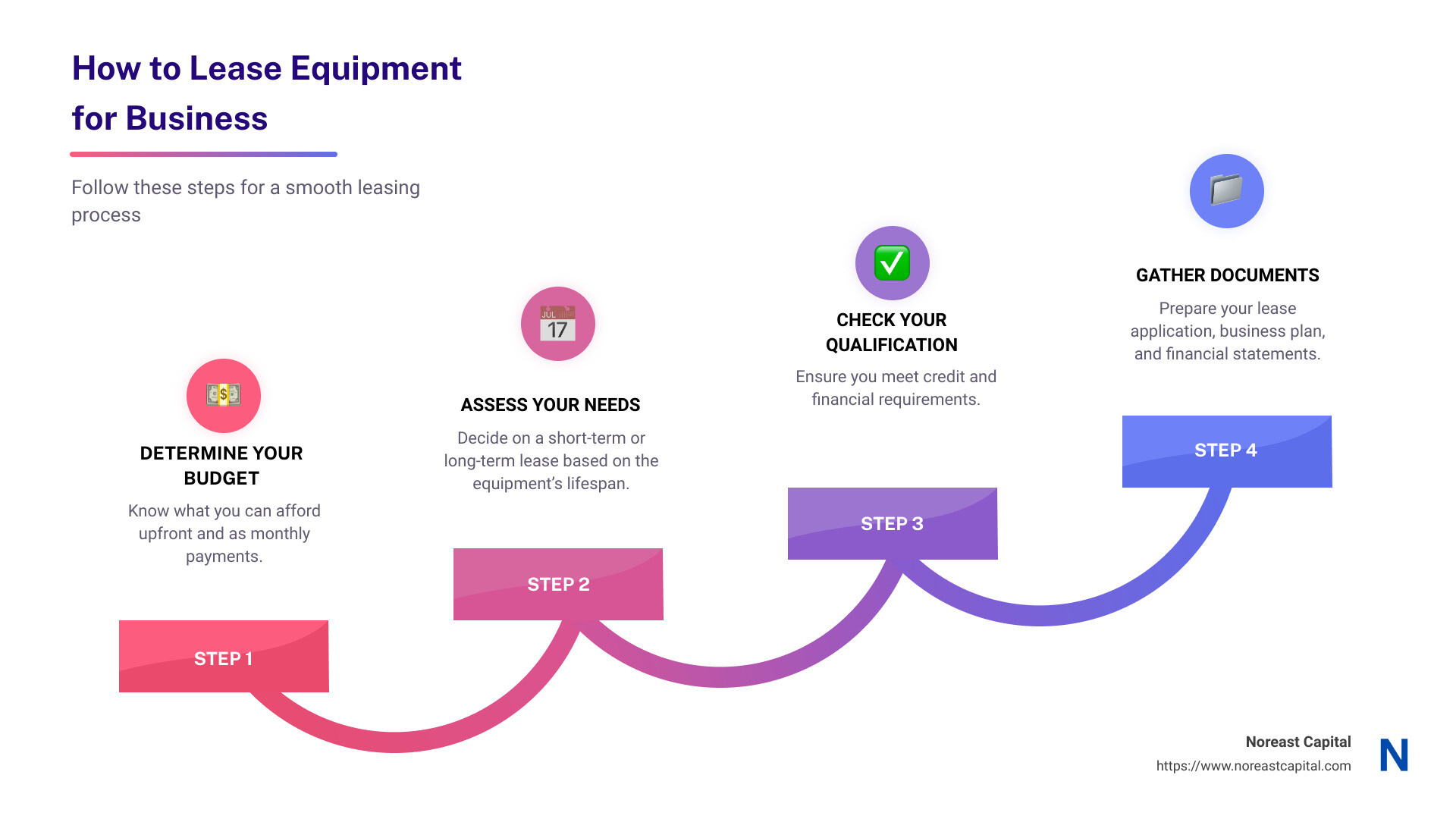
Curious how to lease equipment for business? Here’s a quick snapshot to get you started:
- Determine Your Budget: Know what you can afford upfront and monthly.
- Assess Your Needs: Decide on a short-term or long-term lease based on the equipment’s lifespan.
- Check Your Qualification: Ensure you meet credit and financial requirements.
- Gather Documents: Prepare your lease application, business plan, and financial statements.
Leasing equipment offers considerable advantages for small business owners, particularly those eager to avoid hefty upfront costs and depreciation. It allows businesses to access the tools they need without the financial burden of purchasing, providing greater financial flexibility and conserving cash flow for other essential operations.
Let’s be honest: in today’s business environment, having updated equipment can give you a significant edge. But purchasing new machinery outright can strain your finances and limit your ability to invest in other growth areas. Equipment leasing solves this problem, giving you access to top-tier technology without a massive initial investment.
I’m Vincent Cerniglia of Noreast Capital. With extensive experience helping businesses find financial solutions that fit their unique needs, I specialize in how to lease equipment for business. Trust me, leasing can revolutionize your business model, offering both financial flexibility and access to cutting-edge equipment.
What is Equipment Leasing?
Types of Equipment Leases
Equipment leasing is like a long-term rental agreement. Instead of buying equipment outright, you rent it from a lessor (the owner of the equipment). This allows your business to use the equipment for a specific period while making regular payments. At the end of the lease, you might have the option to buy the equipment, return it, or renew the lease.
There are several types of equipment leases, each with its own terms and benefits. Let’s dive into the most common ones:
Capital Lease
Also known as a finance lease, a capital lease is designed for businesses that plan to own the equipment at the end of the lease term. These leases are often long-term and non-cancelable. The lessee (the business using the equipment) is responsible for maintenance and insurance. At the end of the lease, you can usually purchase the equipment for a nominal amount, like $1.
Example: A manufacturing company leases a production machine for five years. They plan to use the machine daily and want to own it eventually. A capital lease fits their needs perfectly.
Operating Lease
An operating lease is more like a rental agreement. It’s usually short-term and can be canceled with prior notice. The lessor retains ownership of the equipment, and the lessee can return the equipment at the end of the lease term without any further obligation.
Example: A tech startup needs high-end computers for a project lasting six months. An operating lease allows them to use the latest technology without committing to a long-term purchase.
Fair Market Value (FMV) Lease
A FMV lease is a type of operating lease. At the end of the lease term, you have the option to buy the equipment at its fair market value, as determined by the lessor. This type of lease is ideal if you want flexibility at the end of the lease period.
Example: A graphic design firm leases a high-end printer. At the end of the lease, they can buy the printer for its current market value or return it and lease a newer model.
$1 Buyout Lease
The $1 buyout lease is a type of capital lease. At the end of the lease term, you can purchase the equipment for just $1. This lease has higher monthly payments because you’re essentially financing the entire cost of the equipment.
Example: A construction company leases a bulldozer. They plan to use it for many years and want to own it eventually. The $1 buyout lease allows them to do this with predictable monthly payments.
10% Option Lease
In a 10% option lease, your lease payments cover 90% of the equipment’s cost. At the end of the lease, you can buy the equipment by paying the remaining 10%, or you can return it. This option offers lower monthly payments but a larger final payment if you decide to purchase the equipment.
Example: A medical clinic leases an MRI machine. At the end of the lease, they can buy it by paying 10% of its cost or return it and lease a newer model.
TRAC Lease
A Terminal Rental Adjustment Clause (TRAC) lease is specific to vehicles like trucks and tractors. It allows you to set a larger payment at the end of the lease, which lowers your monthly payments.
Example: A logistics company leases a fleet of trucks. They agree to pay 25% of the vehicle’s market value at the end of the lease, making their monthly payments more affordable.
Sale Leaseback
A sale leaseback is when you sell your equipment to a lessor and then lease it back. This arrangement gives you a lump sum of cash while allowing you to continue using the equipment.
Example: A printing company owns a high-value printing press but needs cash for expansion. They sell the press to a leasing company and lease it back, freeing up capital while still using the equipment.

Leasing equipment offers flexibility, financial planning, and access to the latest technology. In the next section, we’ll explore how to lease equipment for business, including the steps you need to take to get started.
How to Lease Equipment for Business
Leasing equipment can be a smart move for many businesses. It offers flexibility, helps manage cash flow, and allows access to up-to-date technology. But how do you get started? Here are the steps you need to follow.
Step 1: Determine Your Budget
First, figure out how much you can afford to spend. Leasing usually means lower upfront costs and monthly payments compared to buying. However, you still need to plan your finances.
Consider these costs:
– Monthly payments: How much can you afford each month?
– Upfront costs: Some leases may require a small down payment or origination fees.
– Additional fees: Don’t forget potential costs like insurance, taxes, and late fees.
Example: Imagine a small bakery that needs a new oven. They budget $200 per month for the lease, knowing they can’t afford a large upfront payment.
Step 2: Figure Out How Long You’ll Use the Equipment
Next, decide on the duration of the lease. This depends on how long you need the equipment and whether it will become obsolete quickly.
Types of leases:
– Short-term leases: Ideal for equipment that may become outdated or if your needs change often.
– Long-term leases: Better for expensive equipment designed to last many years.
Example: A tech startup might choose a short-term lease for laptops, as technology evolves rapidly. In contrast, a construction company might opt for a long-term lease on heavy machinery.
Step 3: Make Sure You Qualify
Leasing companies look at several factors to determine if you qualify.
Key factors include:
– Credit score: Both the business’s and the owner’s personal credit scores are important. A score above 640 is favorable, but above 700 can get you better terms.
– Business plan: A solid business plan can demonstrate your company’s viability.
– Financial statements: Show your company’s financial health, including cash flow and profitability.
Example: A restaurant owner with a credit score of 720 and a detailed business plan showing steady cash flow is more likely to qualify for a lease on new kitchen equipment.
Step 4: Gather Required Documentation
Finally, you’ll need to gather and submit various documents to the leasing company.
Commonly required documents:
– Completed lease application: Basic information about your business.
– Equipment description: Details on the equipment you want to lease and how it will be used.
– Business plan: Outline your business operations and growth strategy.
– Financial statements: Income statements, balance sheets, and cash flow reports from the past three years.
Example: A landscaping business might submit a lease application for new lawnmowers, including a business plan and financial statements showing their profitable summer season.
By following these steps, you’ll be well on your way to leasing the equipment your business needs. Next, we’ll delve into the benefits of leasing equipment and why it might be the best choice for your company.
Benefits of Leasing Equipment
Leasing equipment for your business offers several key benefits that can make it a smart choice. Let’s explore these advantages in detail.
Cash Flow Management
Leasing helps manage cash flow by spreading the cost of equipment over time. Instead of a large upfront payment, you make smaller, predictable monthly payments. This keeps more cash in your business for other expenses like payroll or marketing.
Example: A small bakery can lease an industrial oven without depleting its cash reserves, ensuring funds are available for ingredients and staff wages.
Tax Benefits
Leasing can offer tax advantages. Lease payments are often considered operating expenses, which can be deducted from your taxable income. This reduces your overall tax burden.
Tip: Consult with a financial advisor to understand how leasing can affect your taxes and to ensure you maximize potential deductions.
Flexibility
Leasing provides flexibility in terms of upgrading equipment. Technology and machinery can become outdated quickly. Leasing allows you to upgrade to the latest models without the hassle of selling old equipment.
Example: A tech startup can lease the latest computers and easily upgrade them every couple of years, staying ahead in the competitive market.
Scalability
Leasing supports scalability. As your business grows, you can lease additional equipment without a significant capital outlay. This makes it easier to expand operations and meet increasing demand.
Example: A construction company can lease extra machinery during peak seasons and return it when demand decreases, avoiding the cost of owning idle equipment.
No Down Payment
Many lease agreements do not require a down payment. This is particularly beneficial for businesses that need equipment but lack the cash for a significant upfront investment.
Fact: According to Noreast Capital, 85% of companies choose to lease equipment to avoid large upfront costs and maintain cash flow.
These benefits make leasing an attractive option for businesses of all sizes. In the next section, we’ll discuss the specifics of equipment lease contracts, including rates, terms, and conditions.
Equipment Lease Contract: Rates, Terms, and Conditions
When leasing equipment for your business, understanding the contract’s rates, terms, and conditions is crucial. Let’s break down the key components you need to look out for.
Interest Rates
Interest rates on equipment leases are generally fixed for the duration of the contract. These rates can vary based on several factors:
- Your credit score: A higher credit score can get you a lower interest rate.
- Type of equipment: Specialized or high-risk equipment might come with higher rates.
- Industry: Some industries might have higher rates due to perceived risks.
Typical rates range from 6% to 9%, but this can vary.
Insurance Costs
Insurance is another critical element. Your lease agreement will specify who is responsible for insuring the equipment:
- Included in the lease: Some agreements might bundle insurance costs into your monthly payments.
- Separate fee: Other leases might charge a separate insurance fee.
- Own policy: You may need to provide proof of your own insurance coverage.
Tip: Always verify who is responsible for insurance to avoid unexpected costs.
Processing Fees
Origination fees are common and cover the costs of approving your lease. These fees can include:
- Credit review
- Paperwork handling
Fact: These fees can range from 1% to 4% of the equipment cost.
State/Local Taxes
State and local taxes can also impact your lease costs. Depending on your location, you might be responsible for:
- Tangible personal property tax: Tax on business equipment, machinery, and furniture.
- Other local fees: Additional taxes or fees specific to your area.
Note: Make sure to check your local tax obligations before signing the lease.
Lease Term
The lease term refers to the duration of your lease agreement. This can be:
- Short-term: Ideal for equipment that may become obsolete quickly.
- Long-term: Better for costly equipment meant to last for decades.
Some leases may also include early termination or renewal provisions.
Fair Market Value
For expensive equipment, the lease agreement might disclose the market value. This helps you determine the level of insurance coverage required and understand potential buyout costs.
Cancellation Provisions
Knowing the cancellation provisions is essential. Your agreement should outline:
- Notice period: How much notice you need to give to cancel.
- Early termination penalties: Fees you might incur for ending the lease early.
Tip: Always clarify these provisions to avoid hefty penalties.
Understanding these components will help you navigate the complexities of leasing equipment and ensure you’re making the best decision for your business.
In the next section, we’ll dive into frequently asked questions about leasing equipment for business.
Frequently Asked Questions about Leasing Equipment for Business
How does an equipment lease work?
An equipment lease is a contractual agreement between two parties: the lessor (the equipment owner) and the lessee (the business using the equipment). Here’s a simple breakdown:
Contractual Agreement: You sign a lease agreement that outlines the terms, including duration, monthly payments, and end-of-term options.
Monthly Payments: You make regular payments, usually monthly, to use the equipment. These payments are often lower than loan payments since you’re not buying the equipment outright.
End-of-Term Options: At the end of the lease, you typically have three options: return the equipment, renew the lease, or buy the equipment at a predetermined price.
Can you write off leased equipment?
Yes, you can deduct leased equipment payments on your taxes as a business expense. Here’s how:
Tax Benefits: Lease payments are generally considered operating expenses and can be deducted from your taxable income. This can reduce your overall tax liability.
Section 179: Under Section 179 of the IRS tax code, businesses can deduct the full purchase price of qualifying equipment purchased or financed during the tax year. This applies more to equipment financing than leasing.
Business Expense Deduction: Lease payments are treated as rent, making them deductible as business expenses. This can be a significant advantage for cash flow management.
How to make money leasing equipment?
Leasing equipment can be profitable for both lessors and lessees. Here are some strategies:
Interim Rent: Lessors can charge interim rent for the period between equipment installation and the start of regular payments. This can generate additional income.
Fees: Be aware of potential fees like origination fees, insurance costs, and late fees. These can add up and affect your overall cost.
Lease Extensions: Extending the lease term can be beneficial if you still need the equipment. This can also be a source of additional revenue for lessors.
Buyouts: Some leases offer a buyout option at the end of the term. You can purchase the equipment at a predetermined price, which might be lower than its market value, providing an asset for your business.
Leasing equipment offers flexibility, tax benefits, and manageable monthly payments. By understanding how to navigate the leasing process, you can make informed decisions that benefit your business financially.
Next, we’ll explore the benefits of leasing equipment in more detail.
Conclusion
Leasing equipment can be a game-changer for your business. It offers flexibility, tax benefits, and manageable monthly payments, making it easier to acquire the tools you need without a massive upfront investment.
At Noreast Capital, we specialize in helping businesses like yours navigate the equipment leasing process. Our goal is to provide you with tailored leasing solutions that support your growth and operational efficiency.
Final Thoughts:
- Understand Your Needs: Take the time to assess what equipment your business needs and how long you’ll need it. This will help you choose between short-term and long-term leases.
- Financial Planning: Determine your budget and ensure you have a clear financial plan. This includes understanding monthly payments, potential buyout options, and any additional costs.
- Documentation: Be prepared with the necessary documents, such as your business plan, financial statements, and credit score. This will streamline the leasing process.
- Consult a Professional: Always consult with a financial advisor or legal counsel before signing any lease agreements. They can provide valuable insights and ensure you’re making the best decision for your business.
Leasing equipment can provide the financial flexibility you need to keep your business competitive and innovative. Whether you’re a startup or an established company looking to upgrade, equipment leasing can be a strategic move.
For more information on how we can help you with your equipment leasing needs, visit our office equipment financing page. Let’s work together to take your business to the next level.