

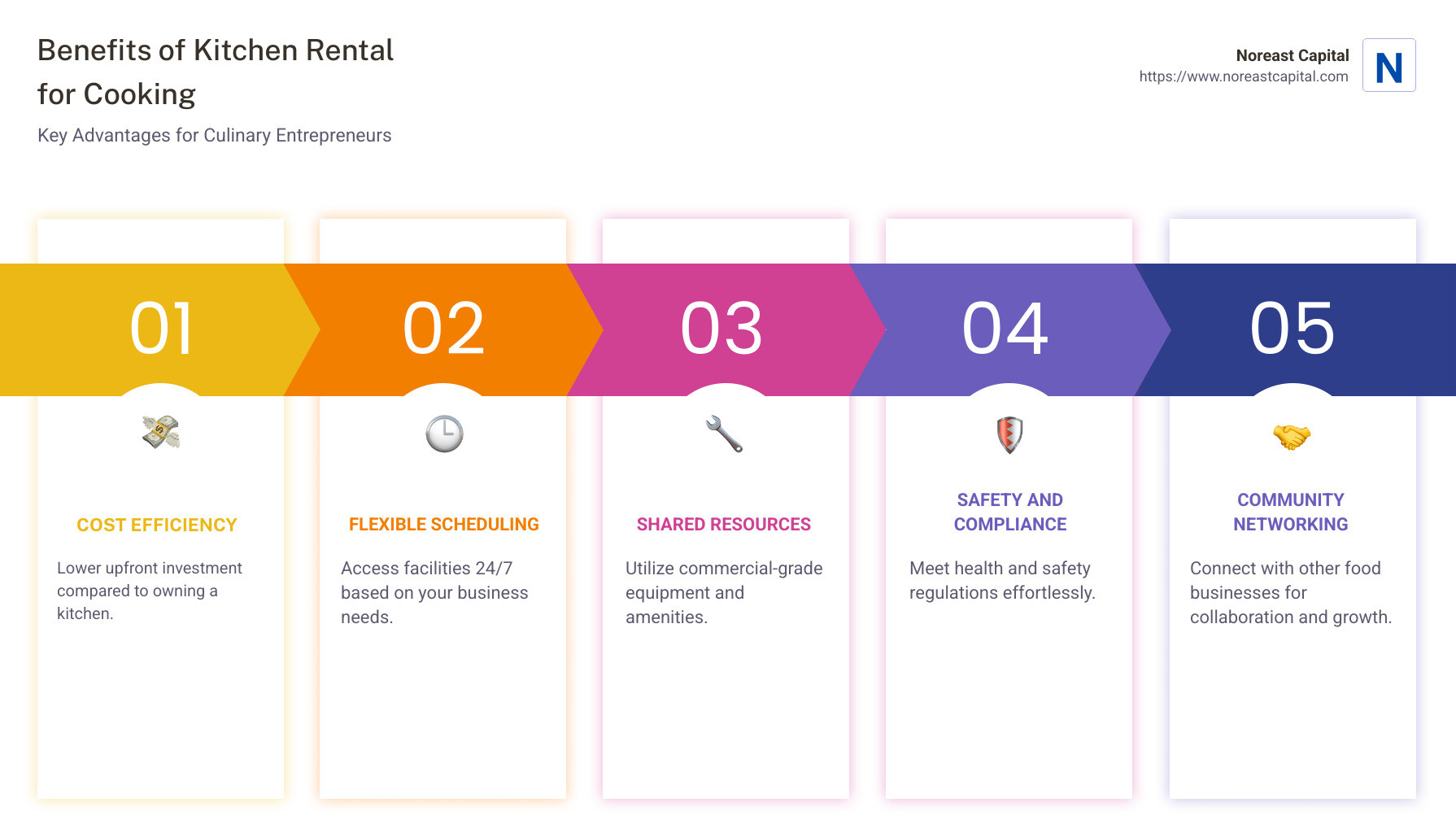
Kitchen rental for cooking has rapidly transformed the culinary landscape for many food entrepreneurs. Whether you’re a budding chef, a catering business, or a food truck owner, renting a commercial kitchen offers you a clean, licensed space to create without the heavy overhead costs of owning a kitchen. Here’s a quick snapshot of what kitchen rental for cooking can provide:
- Cost Efficiency: Lower upfront investment compared to owning a kitchen.
- Flexible Scheduling: Access facilities 24/7 based on your business needs.
- Shared Resources: Use commercial-grade equipment and amenities you might not afford individually.
- Safety and Compliance: Meet health and safety regulations without the hassle.
- Community Networking: Connect with other food businesses for collaboration and growth.
Renting a kitchen is more than just saving on costs—it’s about finding a space that supports your culinary dreams. As Vincent Cerniglia, an expert in equipment financing and leasing solutions, I understand how crucial it is to find a kitchen that aligns with your culinary needs and business goals. At Noreast Capital, we specialize in helping businesses make smart, cost-effective choices for their equipment needs, ensuring they maintain cash flow and avoid depreciation pitfalls.
Glossary for kitchen rental for cooking:
– church commercial kitchen rental
– commissary kitchens near me
– industrial kitchens
Understanding Kitchen Rentals
When you’re diving into food entrepreneurship, the type of kitchen you choose can make a big difference. Let’s break down the three main types of kitchen rentals: commercial kitchens, commissary kitchens, and shared-use kitchens.
Commercial Kitchens
These are fully-equipped, professionally managed spaces designed for food production. They are ideal for businesses that need a licensed space to prepare large quantities of food. Commercial kitchens often come with high-grade appliances and ample storage, allowing businesses to focus on production without worrying about equipment.
Example: CloudKitchens in Detroit offers a streamlined approach for setting up ghost kitchens, making it easier for businesses to focus on cooking rather than permits and licenses.

Commissary Kitchens
Commissary kitchens are similar to commercial kitchens but are often used by food trucks and mobile vendors. They serve as a home base for these businesses, providing a place to prepare and store food. Commissary kitchens may offer additional services like vehicle storage or maintenance.
Case Study: The Growing Hope Incubator Kitchen in Ann Arbor offers assistance with food safety regulations and connections to retail markets, making it a valuable resource for local food startups.

Shared-Use Kitchens
These kitchens are designed to be used by multiple businesses at different times. They offer flexibility and affordability, as you only pay for the time you need. Shared-use kitchens are perfect for startups or small businesses that don’t need a full-time kitchen.
Benefits:
- Lower Overhead Costs: Share the cost of space and equipment with others.
- Community and Collaboration: Work alongside other food entrepreneurs, fostering partnerships and learning opportunities.
- Access to Professional Equipment: Use high-quality kitchen tools without the hefty investment.
Example: Beara Bakes, a pop-up bakery in Ypsilanti, uses a shared-use kitchen to create seasonal baked goods, showcasing the flexibility and community benefits of this model.

Choosing the right kitchen rental depends on your specific needs and business goals. Whether you need a fully-equipped commercial kitchen or a flexible shared-use space, understanding these options will help you make the best decision for your culinary venture.
Benefits of Kitchen Rental for Cooking
Renting a kitchen can be a game-changer for food entrepreneurs. Here’s why:
Reduce Overhead
Starting a food business can be expensive. But with a kitchen rental for cooking, you can cut down on costs significantly. Instead of spending money on buying equipment and maintaining a space, you can rent a ready-to-use kitchen. This means more money stays in your pocket, allowing you to invest in other important areas like marketing or product development.
- Example: Many businesses save thousands by choosing shared-use kitchens, which let you pay only for the hours you need. This is especially beneficial for startups and small businesses.
Clean Space
A clean kitchen is crucial for any food business. Renting a commercial kitchen ensures you have a clean space that meets health and safety standards. These kitchens are regularly inspected and maintained, so you don’t have to worry about compliance issues.
- Fact: The Growing Hope Incubator Kitchen in Ann Arbor offers a spotless environment, helping food businesses focus on what they do best—creating delicious food.
Licensed Space
Operating in a licensed kitchen is not just a good idea; it’s often a legal requirement. Renting a commercial or commissary kitchen provides you with a licensed space that meets all local regulations. This means you can focus on cooking without the hassle of obtaining permits and licenses.
- Quote: “Because we’ve taken care of the hard parts for you, you can begin cooking in no time,” says CloudKitchens, highlighting the ease of starting a food business in a licensed kitchen.
Choosing to rent a kitchen offers these key benefits, making it an attractive option for anyone looking to start or grow a food business. Whether you’re a budding chef or an established caterer, kitchen rentals provide the resources you need to succeed.
How Much Does Kitchen Rental Cost?
Understanding the costs of a kitchen rental for cooking is crucial for any food entrepreneur. Let’s break down the main expenses involved:
Hourly Rates
When you rent a kitchen, you typically pay by the hour. This flexibility is great for managing costs based on your specific needs. Hourly rates can vary widely depending on the location and the amenities offered.
- Example: In some areas, you might find rates as low as $15 per hour. This makes it affordable for small-scale operations or businesses just starting out.
Installation Costs
While renting a kitchen usually means much lower upfront costs than building your own, there might still be some installation costs to consider. These can include setting up any personal equipment or storage systems you might need.
- Tip: It’s important to factor in these potential costs when budgeting for your kitchen rental. However, they are generally much lower than the costs associated with establishing a traditional restaurant kitchen.
Cost Per Square Foot
Another way to understand the cost of kitchen rental is by looking at the cost per square foot. This metric can help you compare different spaces and determine which offers the best value for your needs.
- Fact: The size of the kitchen you need can depend on factors like your menu complexity and service volume. For example, more diverse menus often require more prep space, which can increase the cost per square foot.
Understanding these cost elements helps you make informed decisions about renting a kitchen. Whether you’re a startup or an expanding business, knowing what to expect financially can ensure you find the right space that fits your budget and culinary needs.
Let’s move on to key considerations when choosing a kitchen rental.
Kitchen Rental for Cooking: Key Considerations
Choosing the right kitchen rental for cooking can make or break your culinary venture. Here are the essential factors to consider: location, equipment, and compliance.
Location
Location matters in kitchen rentals. It impacts everything from transportation costs to your ability to meet delivery deadlines.
Proximity to Your Market: If you’re serving a specific area, choose a kitchen that’s nearby. This reduces transportation costs and ensures timely delivery.
Accessibility: Consider how easy it is to reach the kitchen. Is it near major roads or public transport? A convenient location saves time and money.
Equipment
The right equipment is crucial for efficient kitchen operations. Here’s what to think about:
Essential Equipment: Make a list of must-have items for your cooking needs. Do you need a commercial-grade oven, specific mixers, or a walk-in refrigerator? Ensure the kitchen is equipped to handle your menu.
Space for Growth: Will the kitchen accommodate future growth? As your business expands, you may need more space and equipment.
Compliance
Staying compliant is non-negotiable in the food industry. Here’s how to ensure your kitchen rental meets all requirements:
Licensing and Permits: The kitchen should have all the necessary licenses and permits. This saves you the hassle of dealing with red tape.
Food Safety Regulations: A clean and hygienic environment is a must. Verify that the kitchen follows all food safety standards to protect your customers and your business.
By focusing on location, equipment, and compliance, you can choose a kitchen rental that supports your culinary goals. These considerations ensure you have a space that not only meets your current needs but also allows for future growth.
Next up, let’s address some frequently asked questions about kitchen rental for cooking.
Frequently Asked Questions about Kitchen Rental for Cooking
How much does it cost to rent a commercial kitchen by the hour?
The cost of renting a commercial kitchen can vary widely depending on location and features. In Los Angeles, hourly rates can range from $55 to $450. On the East Coast, prices might be different, so always check local listings and ask for detailed quotes. Remember to factor in additional costs like utilities and insurance to get a full picture of expenses.
What is the difference between a commissary kitchen and a commercial kitchen?
While both commissary and commercial kitchens are rented spaces used for food preparation, they serve slightly different purposes. A commissary kitchen often provides additional services like storage and equipment sharing, making it ideal for food trucks and mobile vendors. These kitchens are a hub for off-site food businesses to prepare meals for delivery or catering.
In contrast, a commercial kitchen is a broader term that can include spaces for restaurants, caterers, and bakers. It may not offer the same level of shared services as a commissary but provides a fully licensed space for cooking.
What is the rule of thumb for commercial kitchen size?
When planning a commercial kitchen, size matters. A general rule of thumb is to allocate about five square feet of kitchen space for every seat in your dining area. So, if your restaurant serves 30 people, aim for a kitchen around 150 square feet. This ensures there’s enough room for staff to work efficiently without crowding.
For food trucks or smaller operations, consider how much space you need for equipment and food prep. The layout should support your menu and workflow, accommodating both current operations and future growth.
Conclusion
In culinary entrepreneurship, having access to the right kitchen space can be a game-changer. Kitchen rental for cooking offers a flexible and cost-effective solution for chefs and food businesses. It allows them to focus on what they do best—creating delicious food—without the burden of owning a full kitchen setup.
At Noreast Capital, we understand the importance of maintaining cash flow while accessing top-notch facilities. Our equipment financing solutions are designed to help you secure the essential tools and spaces you need without the heavy upfront costs. By choosing to lease rather than own, you can save money, reduce overhead, and allocate resources where they matter most—your culinary creations.
Our approach is about more than just financing; it’s about partnering with you on your journey to success. Whether you’re just starting out or looking to expand, our flexible options ensure you have the support you need to thrive.
Ready to explore how our financing solutions can support your culinary dreams? Visit our commercial kitchen rental page to learn more.
Your success is our success, and together, we can turn your culinary vision into a reality.