

Lease a car vs loan: It’s a decision many people face when considering car ownership. For those wanting the latest model without a hefty upfront cost, leasing is tempting, while others prefer the long-term equity and freedom that loans offer. Here’s a quick guide to help you decide:
- Leasing offers lower monthly payments, but restricts mileage and customization.
- Loans initially cost more but lead to ownership, unlimited use, and customization.
Navigating between leasing a car versus taking out a loan can significantly impact your financial stability and overall satisfaction with the vehicle. Choosing the right path is not just about the numbers but also about your lifestyle and financial goals.
My name is Vincent Cerniglia, and as a leader with Noreast Capital Corporation, I have experience in guiding businesses through the lease a car vs loan decision. I am here to simplify this complex choice, ensuring you make an informed financial decision. Let’s dig into the benefits and limitations of each option to determine the best route for car ownership.

Understanding Leasing
Leasing a car can be an attractive option for many, especially if you’re eyeing the latest models without breaking the bank. Unlike loans, leasing offers lower monthly payments because you’re only paying for the car’s depreciation during the lease term, not the entire vehicle’s value.
But here’s the catch: no ownership equity. At the end of the lease, you don’t own the car. It’s much like renting an apartment—you enjoy it for a while, but it’s never truly yours.
One of the perks of leasing is that you’re driving a car during its new car warranty period. This means fewer worries about major repairs, as most issues are covered. Some leases even include routine maintenance like oil changes, which can save you time and money.
However, leasing isn’t without its rules. Mileage limits are a big one. Most leases allow between 10,000 and 15,000 miles per year. Go over, and you’ll face steep penalties. It’s crucial to assess your driving habits before committing.

Lastly, be mindful of wear-and-tear charges. Leasing companies expect the car to be returned in good condition. If your car shows more wear than considered normal, you might have to pay extra fees. This means being cautious about parking lot dings, interior stains, and other damages.
In summary, leasing can be a great way to drive a new car with lower monthly payments and less hassle over repairs. But remember, it comes with restrictions and doesn’t lead to ownership. Understanding these nuances can help you decide if leasing aligns with your financial goals and lifestyle.
Exploring Car Loans
When considering car loans, one of the first things you’ll notice is the higher monthly payments compared to leasing. This is because, with a loan, you’re working towards full vehicle ownership. You’re not just paying for the car’s depreciation, but for its entire value. Over time, these payments build equity, allowing you to own the car outright once the loan is paid off.
Owning a car comes with its perks, especially in terms of long-term savings. Once your loan is paid off, you’re free of monthly payments. This can be a significant financial relief and a smart move if you’re planning to keep the car for several years. Unlike leasing, where payments never stop, buying a car means you’ll eventually have a valuable asset without ongoing costs.
Another advantage of buying a car is the customization freedom. Want to add a spoiler, change the paint color, or install a new sound system? Go for it! When you own the car, you’re free to make any changes you like without worrying about returning it in its original condition.
Resale value is another factor to consider. Over the years, cars depreciate, but if you maintain yours well, you can sell it later and recoup some of your investment. This potential resale value can be a financial benefit that leasing doesn’t offer, as you never own the leased vehicle.
In summary, while car loans involve higher monthly payments, they offer the benefits of ownership, long-term savings, customization options, and the potential for resale value. This path is ideal for those who want to eventually own their vehicle and enjoy the freedom that comes with it.
Lease a Car vs Loan: Key Differences
When deciding between leasing a car vs getting a loan, it’s crucial to understand the key differences. These differences can significantly impact your financial situation and lifestyle.
Monthly Payments
Leasing typically offers lower monthly payments because you’re only paying for the car’s depreciation during the lease term, plus any rent charges, taxes, and fees. This can make leasing appealing if you’re looking to reduce monthly expenses.
In contrast, car loans usually have higher monthly payments. This is because you’re paying off the entire purchase price of the car, including interest and other finance charges. However, these payments build equity, leading to eventual ownership.
Ownership
Ownership is a major differentiator. With a lease, you don’t own the car. It’s like a long-term rental. At the end of the lease, you must return the vehicle unless you decide to buy it.
With a loan, you’re working towards full ownership. Once the loan is paid off, the car is yours to keep, sell, or trade in.
Mileage Restrictions
Leases often come with mileage restrictions. Exceeding these limits can result in costly fees. For those who drive a lot, this can be a significant downside.
On the other hand, buying a car with a loan means there are no mileage limits. You can drive as much as you want without worrying about extra charges.
Customization Options
When you lease a car, customization is limited. You must return the car in its original condition, or you might face additional fees. This can be a drawback for those who enjoy personalizing their vehicles.
Owning a car through a loan offers unlimited customization options. You can modify the car to your liking without restrictions.
Early Termination Fees
Ending a lease early can be expensive. You might face hefty early termination fees, making it costly to switch vehicles before the lease term ends.
With a loan, you’re not bound by the same constraints. You can sell or trade in your vehicle at any time without incurring penalty fees, providing greater flexibility.
In summary, when choosing between a lease or loan, consider the importance of monthly payments, ownership, mileage restrictions, customization options, and the potential for early termination fees. These factors will guide you toward the best path for your car ownership journey.
Pros and Cons of Leasing
Leasing a car comes with its own set of advantages and disadvantages. Understanding these can help you decide if it’s the right choice for you.
Lower Upfront Costs
One of the biggest benefits of leasing is the lower upfront cost. Unlike buying, leasing often requires little to no down payment. This makes it an attractive option if you’re looking to minimize your initial expenses.
Always a New Car
Love the smell of a new car? Leasing lets you enjoy a new vehicle every few years. Once your lease term ends, you can return the car and lease a new one. This means you always have access to the latest models and technologies.
Limited Customization
However, leasing has its downsides too. One major drawback is the limited ability to customize your car. Leased vehicles must be returned in their original condition, which means no personal modifications.
Ongoing Payments
Leasing also involves ongoing payments. While these payments are typically lower than car loan payments, they never stop as long as you continue leasing. Once the lease ends, you’ll need to start a new lease or find another transportation option.
Excess Mileage Fees
Be mindful of mileage limits. Most leases come with mileage restrictions, often between 10,000 to 15,000 miles per year. Exceeding these limits can result in hefty fees when you return the car. If you drive a lot, this could quickly become costly.
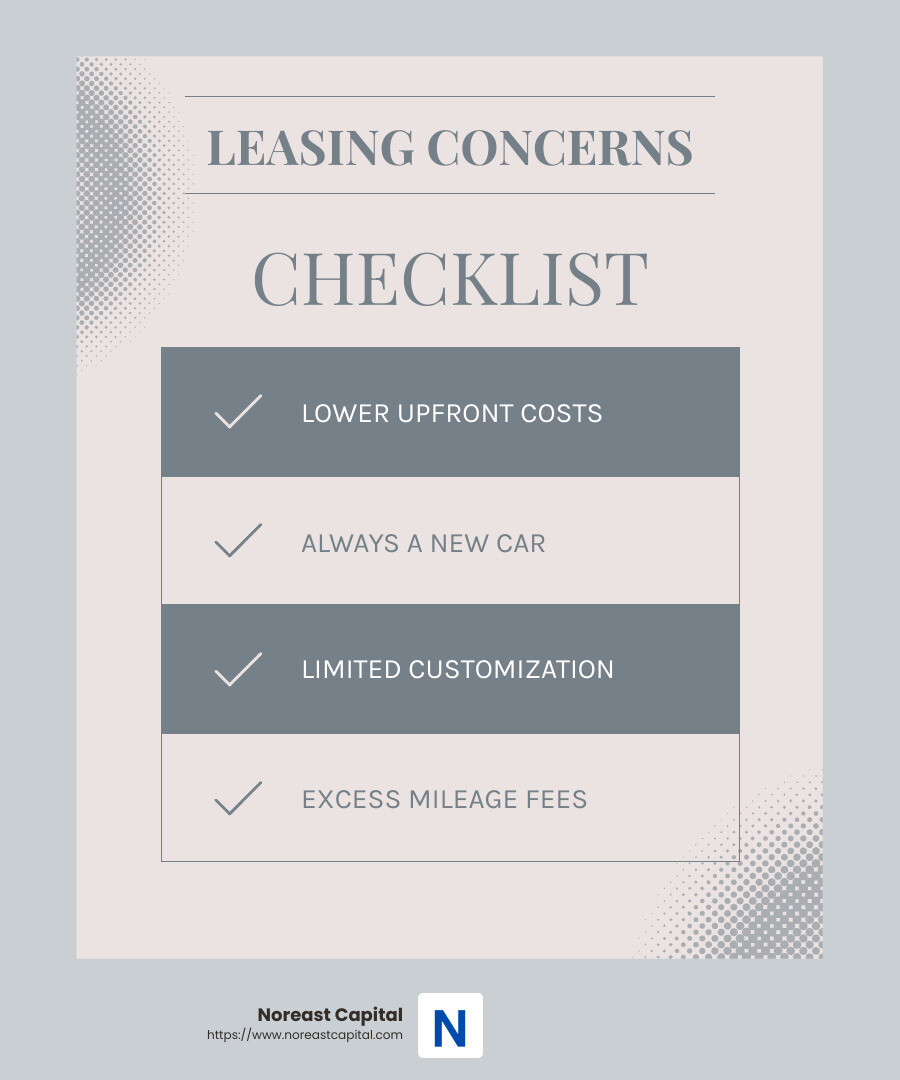
In summary, leasing offers the perks of lower upfront costs and always having a new car, but it also comes with limitations on customization, ongoing payments, and potential excess mileage fees. Consider these factors carefully when deciding if leasing is the best option for you.
Pros and Cons of Buying
Buying a car is a big decision, but it comes with several benefits that leasing can’t offer. Let’s explore the pros and cons of buying a car.
Asset Ownership
When you buy a car, you gain full ownership. This means you can drive as much as you want, customize it to your liking, and keep it as long as you choose. Unlike leasing, where you’re essentially renting, buying turns the car into your asset.
Higher Initial Costs
On the flip side, buying a car typically involves higher initial costs. This includes a larger down payment and higher monthly payments compared to leasing. However, these payments contribute to your ownership of the car, building equity over time.
Long-Term Savings
In the long run, buying a car can save you money. Once you’ve paid off your loan, you’re free from monthly payments. You can drive the car for years without worrying about ongoing costs, unlike leasing, where payments never end.
No Mileage Limits
One of the biggest perks of owning a car is the freedom to drive as much as you want. There are no mileage limits to worry about, so you can take long road trips without facing additional fees.
Potential Resale Value
As the car’s owner, you have the option to sell it in the future. While cars do depreciate, owning a vehicle gives you the potential to recoup some of your investment if you decide to sell or trade it in later. This is a benefit that leasing simply doesn’t offer.
In summary, buying a car offers the advantages of asset ownership, long-term savings, and no mileage restrictions. However, it requires higher initial costs and a commitment to maintaining the vehicle. Consider these factors when deciding between leasing and buying for your next car.
Frequently Asked Questions about Lease a Car vs Loan
Is it better to lease or finance a car?
Deciding whether to lease a car vs loan for one depends on your personal needs and financial situation. Leasing often means lower monthly payments, making it appealing if you’re focused on short-term affordability and driving the latest models. However, you never own the car; it’s like renting long-term.
Financing a car involves higher monthly payments, but you’re building ownership equity. Once the loan is paid off, you can drive payment-free and even sell the car later. If owning a car outright and having the freedom to customize it is important, financing might be the better choice.
What is the 1% rule when leasing?
The 1% rule is a simple financial guideline some people use when considering a lease. It suggests that your monthly lease payment should be no more than 1% of the car’s total purchase price. For example, if a car costs $30,000, your lease payment should be $300 or less.
This rule helps ensure that you’re getting a good deal on your lease, but it’s not a hard-and-fast rule. Other factors like mileage limits, wear-and-tear charges, and lease terms should also be considered.
What are the tax benefits of leasing a car vs buying a car?
When it comes to taxes, leasing can offer some advantages, especially for business owners. Lease payments might be deductible as a business expense, reducing taxable income. This can be particularly beneficial if you use the car primarily for business purposes.
Buying a car doesn’t typically offer the same tax deductions as leasing. However, through the Section 179 Deduction, businesses might be able to deduct the full purchase price of qualifying vehicles in the year they are bought, which can lead to significant tax savings.
In conclusion, whether you choose to lease or finance, consider both the immediate and long-term financial impacts, including potential tax benefits. Always consult with a financial advisor to determine the best option for your specific situation.
Conclusion
Choosing between leasing and financing a car is a significant decision that impacts your financial strategy and long-term goals. At Noreast Capital, we understand that this choice is not just about getting from point A to point B—it’s about aligning your car ownership decision with your financial health and lifestyle needs.
Leasing can be a smart move if you’re looking for lower monthly payments and the ability to drive a new car every few years. This option is especially appealing if you value having the latest safety features and don’t mind the lack of ownership. It’s also worth noting that leasing may offer tax benefits, particularly for business owners who can deduct lease payments as business expenses.
On the other hand, financing a car allows you to build ownership equity. While monthly payments are higher, once the loan is paid off, you own the car outright. This means no more monthly payments and the freedom to customize your vehicle as you see fit. Plus, you can sell the car later, potentially recouping some of your investment.
At Noreast Capital, we’re here to help you steer these options. Our expertise in equipment financing, including car leasing, allows us to offer custom solutions that fit your unique needs. Whether you’re leaning towards leasing for its short-term affordability or financing for long-term ownership, we can guide you through the process.
For more insights and personalized assistance in making your car ownership decision, visit our Noreast Capital service page. We’re committed to helping you find the best path to car ownership that supports your financial strategy and lifestyle.