

Lease purchase option calculator is more than just a tool. It’s your roadmap to making informed decisions about acquiring the equipment you need. With capital constraints being a common hurdle for many small businesses, understanding how a lease purchase agreement works can pave the way for smarter, more flexible financial planning. Here’s what you need to know:
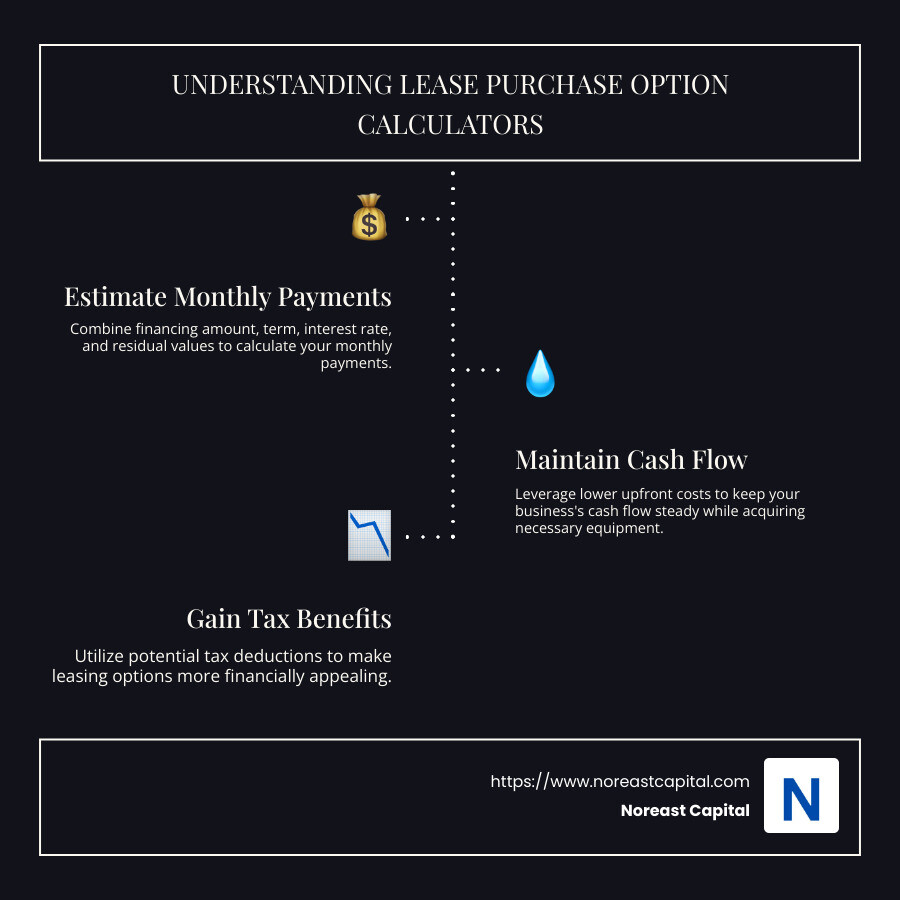
- Lease Purchase Basics: This option lets you lease equipment with the potential to own it by the end of the term.
- Key Benefits: Maintain cash flow, gain tax deductions, and manage lower upfront costs.
- Using Calculators: They help estimate monthly payments by combining financing amount, term, interest rate, and residual values.
Using these insights, you’re equipped to explore leasing options confidently, without the financial strain of outright purchases.
I’m Vincent Cerniglia. As the leader at Noreast Capital, I have emerged as an expert in helping businesses steer equipment financing and leasing markets. Understanding the dynamics of the lease purchase option calculator has been a key focus of my career.
Understanding Lease Purchase Options
When you’re considering acquiring equipment, a lease purchase option might be the perfect fit. This arrangement combines the benefits of leasing with the opportunity to own the equipment eventually. Let’s break it down into simple terms:
Lease Option
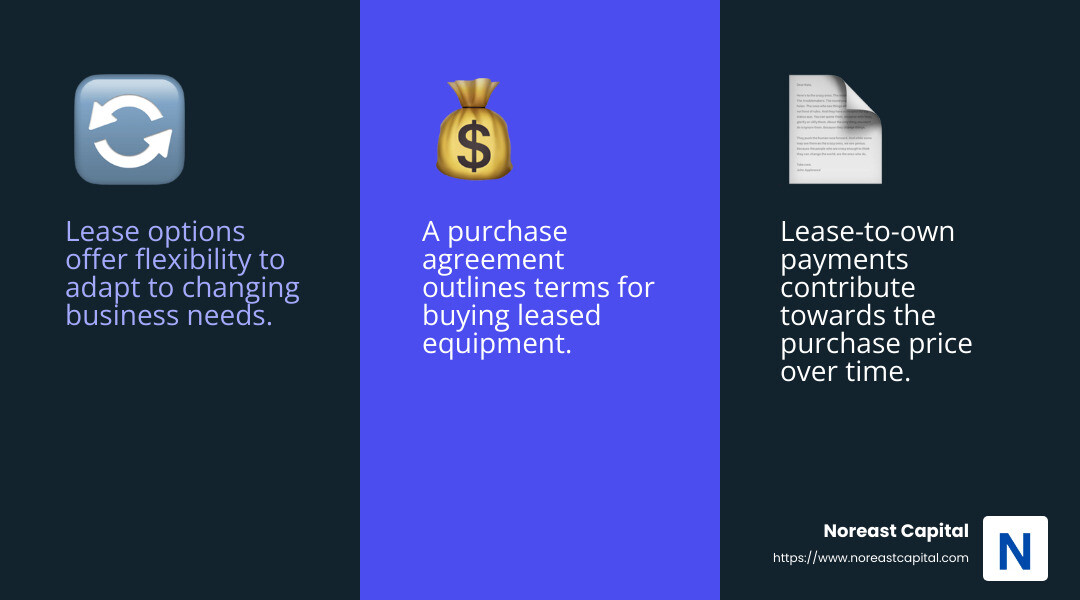
A lease option is a flexible agreement where you lease equipment and have the choice to purchase it at the end of the lease term. This is not a commitment to buy, but rather an option. If your business circumstances change, you can decide not to purchase.
Lease-to-Own
Lease-to-own, also known as rent-to-own, is a type of lease option where the payments you make during the lease term contribute towards the purchase price. This can be advantageous for businesses that want to eventually own the equipment but need to spread out the cost over time.
Purchase Agreement
A purchase agreement is a part of the lease option that outlines the terms under which you can buy the equipment. This includes the purchase price and any conditions you must meet. It’s crucial to read this agreement carefully to understand your rights and obligations.
In business leasing, these options provide a pathway to acquiring necessary equipment without the immediate financial burden of a full purchase. They offer flexibility and time to evaluate whether the equipment suits your needs.
Why Consider Lease Purchase Options?
- Flexibility: Adjust your plans based on business needs.
- Cost Management: Spread payments over time, easing cash flow.
- Ownership Potential: Gain the benefits of ownership without upfront costs.
Understanding these options can empower you to make informed decisions that align with your business goals. Next, we’ll dive into how to use a lease purchase option calculator to further simplify your decision-making process.
How to Use a Lease Purchase Option Calculator
A lease purchase option calculator is a handy tool for figuring out the financial aspects of leasing equipment with the option to buy. Here’s how you can use it to simplify your decision-making:
Key Inputs for the Calculator
Financing Amount: This is the total cost of the equipment you plan to lease. Knowing this helps you understand the scope of your financial commitment.
Residual Value: This is the estimated value of the equipment at the end of the lease term. It’s crucial because it affects your monthly payment and the potential buyout cost. For example, if a piece of equipment has a residual value of 50% of its original cost, you’ll know what to expect at lease-end.
Term Length: Enter the duration of the lease in months. Most equipment leases range from 12 to 60 months, with 36 months being the most common.
Interest Rate: The percentage rate applied to your lease. This affects your monthly payment and overall cost. Interest rates can change, so it’s wise to get the most current rate.
Calculating Monthly Payments
Once you’ve input the necessary data, the calculator will determine your monthly payment. This payment is influenced by the financing amount, residual value, term length, and interest rate. Lower residual values typically mean higher monthly payments, since you’re covering more of the equipment’s cost over the lease term.
Understanding the Outcome
Total Lease Cost: The calculator will show the total cost of leasing the equipment, including interest. This helps you compare leasing to buying outright.
Buyout Option: You’ll also see the potential cost to purchase the equipment at the end of the lease. This is generally the residual value plus any fees.
Using a lease purchase option calculator can provide clarity on whether leasing or buying is the better path for your business. It helps you plan your finances and make informed decisions about equipment acquisition.
Next, we’ll explore the benefits of lease purchase agreements and how they can improve your business’s financial flexibility.
Benefits of Lease Purchase Agreements
Lease purchase agreements offer several advantages that can significantly impact your business’s financial health. Let’s explore some key benefits:
Tax Deductions
One of the most appealing aspects of lease purchase agreements is the potential for tax deductions. Lease payments are often considered operating expenses, which means they can be deducted from your business’s taxable income. This can lead to substantial tax savings. For instance, the Section 179 Deduction allows businesses to deduct the full purchase price of qualifying equipment, making leasing a smart choice for those aiming to reduce their tax bill.
Cash Flow Management
Leasing allows businesses to preserve their working capital. Instead of making a hefty upfront payment, you can spread the cost over time. This approach keeps more cash in your pocket, which can be vital for covering other operational expenses or investing in growth opportunities. With fixed lease payments, you can also forecast your expenses more accurately, ensuring smoother cash flow management.
Financial Flexibility
Leasing provides businesses with flexibility that traditional financing methods often lack. You can tailor lease terms to match your cash flow, and there’s usually an option to upgrade equipment as needed. This is particularly beneficial in industries where technology evolves rapidly, as it allows you to keep up-to-date without a significant financial burden. Moreover, at the end of the lease, you have the choice to purchase the equipment, continue leasing, or simply return it, offering strategic flexibility in asset management.
Lease purchase agreements can be a powerful tool for businesses looking to optimize their financial strategy. They offer tax advantages, improve cash flow, and provide flexibility to adapt to changing business needs.
Next, we’ll dig into how to evaluate lease vs. buy decisions to determine the best financial path for your business.
Calculating Lease vs. Buy Decisions
Deciding whether to lease or buy equipment can be a tough call for any business. To make the right choice, you need to weigh several factors, including net present value (NPV), costs, and strategic needs. Let’s break it down.
Net Present Value
Net present value is a key tool in financial decision-making. It helps you compare the value of leasing versus buying by considering the time value of money. Essentially, NPV calculates the current worth of future cash flows. When comparing leasing and buying, you should calculate the NPV of both options. If the NPV of leasing is higher than buying, leasing might be the better financial decision.
Leasing vs. Buying
Leasing often requires lower upfront costs, which can be a huge advantage for businesses with limited capital. It also offers flexibility, as you can upgrade to the latest equipment without a big financial hit. Plus, lease payments are usually tax-deductible, as mentioned earlier.
Buying, on the other hand, gives you ownership of the asset. This can be beneficial if the equipment has a long useful life or if you plan to use it extensively. However, buying typically involves higher initial expenses and responsibilities for maintenance and repairs.
Decision Factors
When deciding between leasing and buying, consider these factors:
Financial Situation: Assess your cash flow and budget constraints. Leasing can help preserve cash, while buying might be better if you have the capital and want to avoid ongoing payments.
Equipment Usage: Think about how long you need the equipment. If it’s for short-term or temporary use, leasing might be more cost-effective.
Technology Upgrades: In tech-heavy industries, leasing allows you to stay current without the hassle of selling outdated equipment.
Tax Implications: Evaluate the tax benefits of leasing versus buying. Lease payments can often be deducted as business expenses, while buying might offer depreciation benefits.
By taking these factors into account, you can use a lease purchase option calculator to determine the best financial path for your business. The calculator can help estimate costs and compare the benefits of each option, guiding you toward a decision that aligns with your strategic goals.
Next, we’ll address some frequently asked questions about lease purchase options to further clarify your options and considerations.
Frequently Asked Questions about Lease Purchase Options
How do you calculate lease purchase price?
Calculating the lease purchase price involves a few key elements. First, you’ll need the residual value of the asset, which is its estimated worth at the end of the lease term. This value is often pre-determined and expressed as a percentage of the asset’s initial cost.
Next, consider the actual value of the asset, which is its current market worth. The lease purchase price could be influenced by how the residual value compares to this actual value.
Don’t forget to account for sales tax, which can add to the total cost. The tax rate varies by location and can significantly impact the final purchase price.
Is lease purchase a good option?
Whether a lease purchase is a good option depends on several factors, such as your financial situation and long-term goals. One advantage is that lease purchases often require a lower down payment compared to buying outright, which can be beneficial if you need to preserve cash flow.
However, if you’re considering a lease purchase for property, you should also think about mortgage qualification. If you’re unable to qualify for a mortgage at the end of the lease term, this could complicate your purchase plans.
How does a lease with purchase option work?
A lease with a purchase option, often referred to as rent-to-own, allows you to lease an asset with the option to buy it at the end of the lease term. This setup is governed by a legal contract that outlines all terms, including the purchase price, lease duration, and any fees involved.
This type of arrangement can be particularly appealing if you’re not ready to commit to a full purchase right away but want the flexibility to do so later. It’s crucial to thoroughly understand the contract terms to ensure they align with your financial strategy and goals.
In the next section, we’ll dig into the conclusion, summarizing the key takeaways and how Noreast Capital can assist with your equipment financing needs.
Conclusion
Navigating equipment financing can feel overwhelming, but it doesn’t have to be. At Noreast Capital, we specialize in providing custom solutions that make acquiring essential equipment straightforward and stress-free. Our goal is to help businesses like yours thrive by offering flexible leasing options that preserve your cash flow and financial flexibility.
Why Choose Noreast Capital?
Expertise in Equipment Leasing: We understand the ins and outs of equipment financing. Our team is here to guide you every step of the way, ensuring you make informed decisions that align with your business goals.
Flexible Solutions: Whether you’re looking for a short-term lease or a long-term investment, our customizable options cater to your unique needs. This flexibility allows you to adapt as your business grows and changes.
Financial Benefits: Leasing with us can offer significant tax advantages and reduce the financial burden of owning equipment. Our solutions are designed to help you maintain a healthy cash flow while acquiring the tools you need to succeed.
A Trusted Partner: With locations in Annapolis, MD, Baltimore, MD, and Washington, DC, we’re well-positioned to support businesses throughout the region. Our commitment is to your success, and we’re here to provide the support and resources you need.
Ready to explore how our equipment leasing calculator can help you optimize your equipment financing strategy? Find more about our services and let us be your partner in achieving your business objectives. Together, we can pave the way for your business to reach new heights.