

Why Lease to Own Options Are Changing How People Access Assets
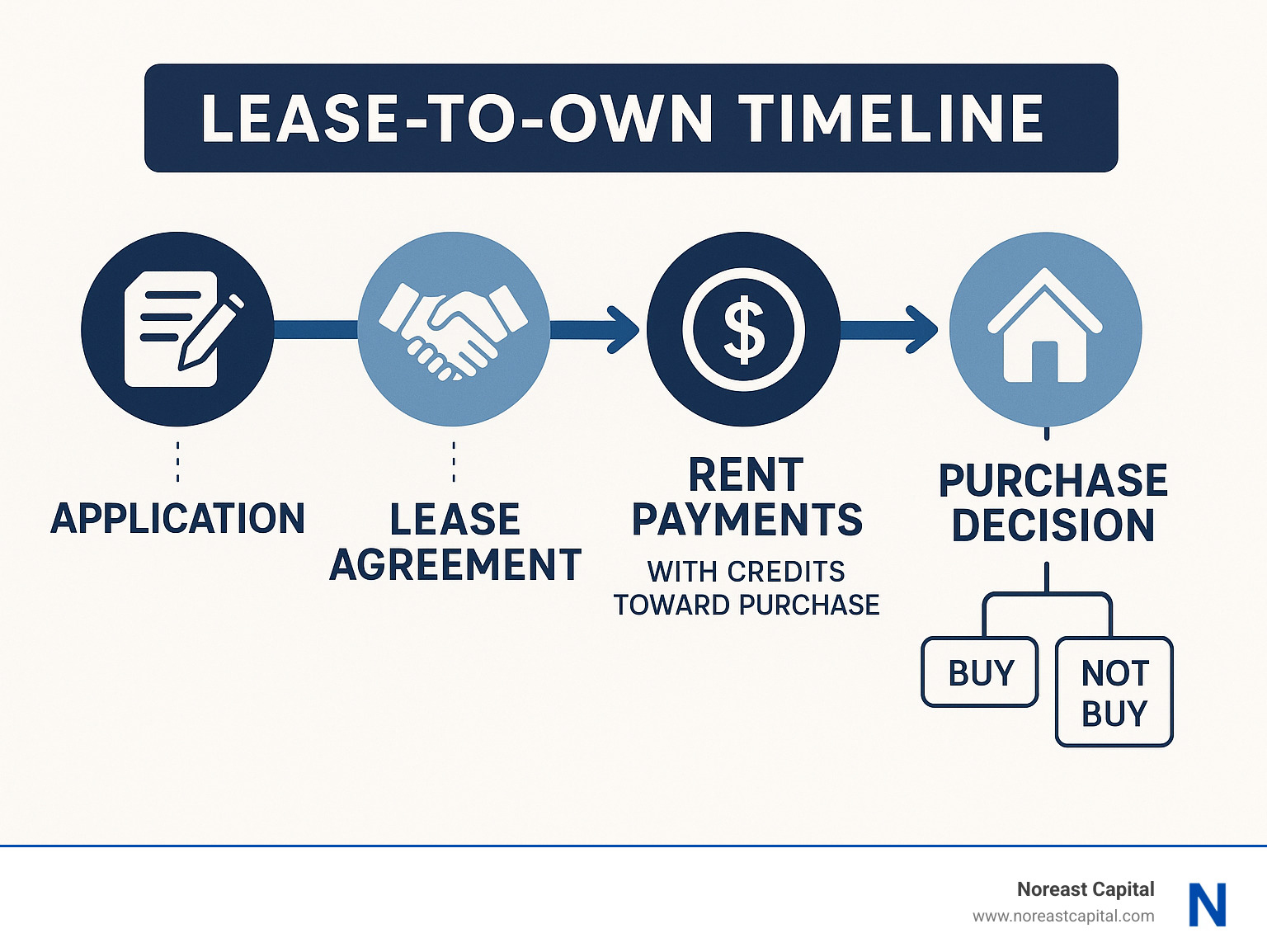
Lease to own options provide a flexible pathway to ownership that combines the benefits of renting with the goal of eventual purchase. These agreements allow you to use an asset while building equity through monthly payments that credit toward the final purchase price.
Key lease to own options include:
- Lease-Option Agreements – Rent with the choice to buy at lease end
- Lease-Purchase Agreements – Rent with the obligation to buy at lease end
- Rent-to-Own Plans – Monthly payments include credits toward down payment
- Commercial Equipment Leasing – Test equipment before committing to purchase
For small business owners, lease to own options solve a critical cash flow problem. Instead of tying up $50,000 in equipment purchases, you can spread costs over time while testing whether the equipment truly fits your operations.
Option fees typically range from 2% to 7% of the asset’s value, and a portion of monthly payments builds toward your eventual down payment. This approach lets you lock in today’s purchase price while improving your credit score and saving for ownership.
Rising asset prices and stricter lending requirements have made traditional financing harder to access. Whether you’re dealing with imperfect credit, limited down payment funds, or simply want to test an asset before buying, lease to own provides an alternative path forward.
I’m Vincent Cerniglia, and through my work at Noreast Capital Corporation, I’ve helped countless businesses steer lease to own options for equipment financing across various industries.
Glossary for lease to own options:
– lease a riding mower
– leasing riding lawn mowers
– zero turn mower lease
Understanding Lease to Own Options
Lease to own options bridge the gap between renting and buying, giving you immediate access to what you need plus a clear path to ownership.
The terminology varies – rent-to-own, lease-option, lease-purchase, or consumer leases – but they’re all variations on the same basic idea. You pay an upfront fee (usually 2% to 7% of the item’s value) to secure your option to buy later. Then your monthly payments cover usage while building credits toward your eventual purchase.
The magic happens in those equity credits that accumulate each month. Unlike regular rent, a portion of each payment builds toward ownership while you lock in the purchase price from day one, protecting yourself from market increases.
There’s an important difference between lease-option and lease-purchase agreements. With a lease-option, you have the choice to buy at the end. Lease-purchase agreements mean you’re committed to buying, which gives the seller more security but leaves you with less flexibility.
For detailed information about consumer rights and protections, check out the scientific research on consumer leasing from the Consumer Financial Protection Bureau.
Lease to Own Options vs Traditional Renting
Regular renting means every dollar you spend is gone forever. Lease to own options flip this script – from day one, you’re building equity toward ownership.
When you know you’re working toward ownership, you naturally take better care of things. This forced savings approach works particularly well for people who struggle to save money on their own while needing immediate access to important assets.
Lease to Own Options vs Traditional Buying
Traditional buying hits you with massive upfront costs. Lease to own options take a gentler approach – instead of needing $50,000 immediately, you might start with a $15,000 option fee and use the lease period to save up the rest while improving your credit score.
This breathing room is especially valuable if you’ve had recent credit challenges. Traditional lenders might reject you, but lease-to-own gives you time to rebuild while securing the asset at today’s prices.
Lease-to-Own Contract Structures & Key Terms
Lease to own options involve two separate contracts working together – a standard lease agreement covering rental terms, and an option-to-purchase agreement giving you the exclusive right to buy at specific terms.
The option period typically runs one to five years, giving you time to arrange financing. The purchase price usually gets locked in when you sign, protecting you if property values rise during your lease period.
You’ll pay an option fee upfront (typically 2-7% of the purchase price) – this is non-refundable if you decide not to buy. However, rent credits mean part of every monthly payment builds toward your equity.
Pay attention to maintenance responsibilities, default clauses, and assignment rights – these vary widely between agreements.

| Contract Type | Purchase Obligation | Flexibility | Typical Use |
|---|---|---|---|
| Lease-Option | Optional | High | Uncertain buyers |
| Lease-Purchase | Required | Low | Committed buyers |
| Rent-to-Own | Optional | Medium | Credit rebuilding |
Lease-option agreements give you the most flexibility – you can walk away if buying doesn’t make sense. Lease-purchase agreements commit you to buying, giving the seller security but locking you in. Rent-to-own plans fall in the middle, often focusing on credit rebuilding.
For more info about lease to own benefits, we’ve put together detailed resources explaining how these arrangements work.
Determining and Locking the Purchase Price
Locking in today’s price is most popular – if property values jump during your lease, you save money. Future appraisal methods tie your purchase price to market value when you buy. Predetermined formulas try to split the difference using inflation or market trend adjustments.
Choose the approach that matches your market confidence and risk tolerance.
Legal Responsibilities During the Lease
Your responsibilities usually go beyond typical rental duties – monthly payments, basic maintenance, and protecting the property as your future investment.
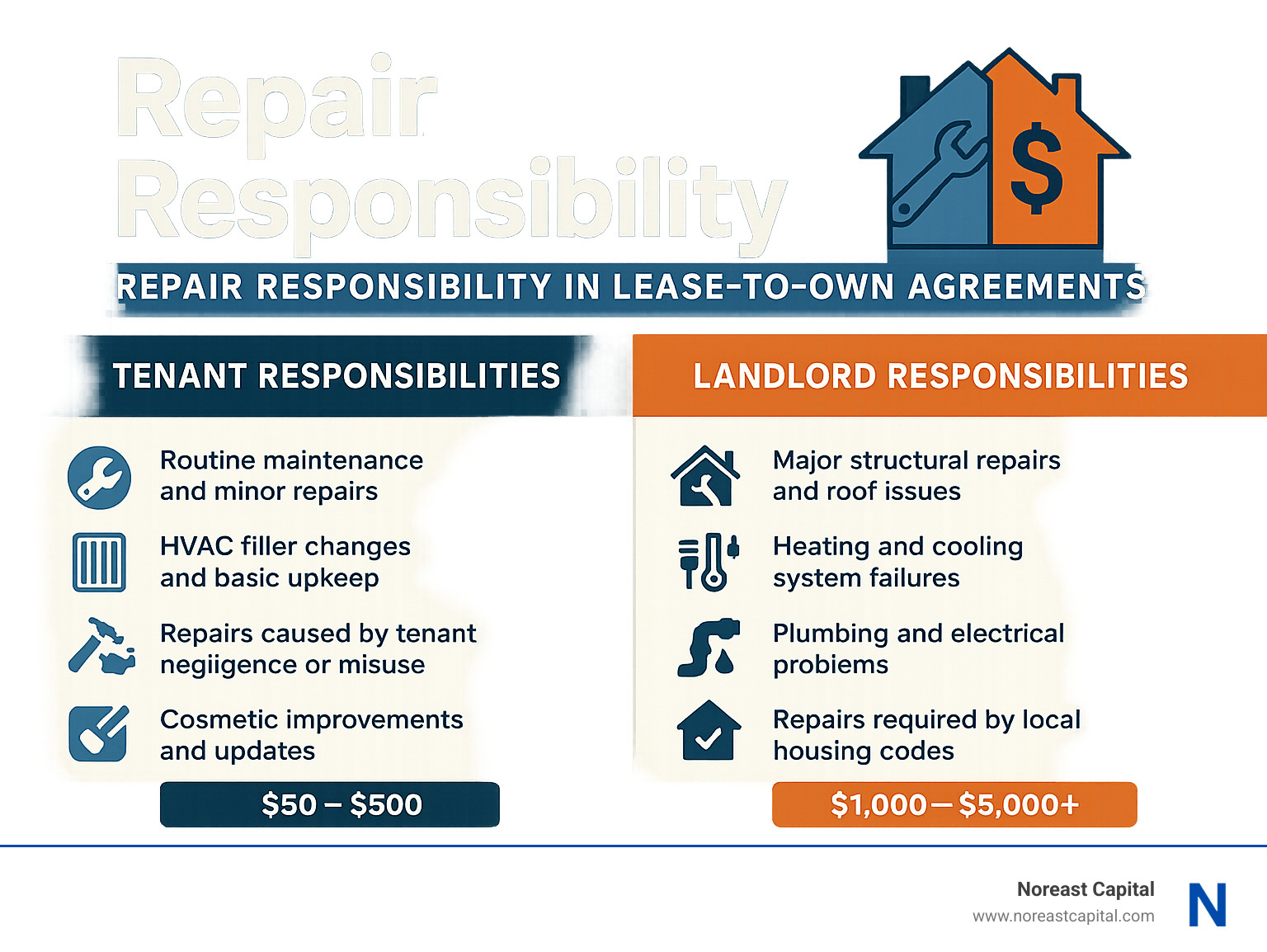
The property owner typically covers major structural repairs, property taxes, and maintaining clear title. Local laws vary significantly – in Ontario, these agreements must comply with the Residential Tenancies Act, while U.S. states have different requirements.
Understanding your local regulatory environment is essential for protecting your rights.
Crunching the Numbers: Upfront Costs, Monthly Payments & Rent Credits
The money side of lease to own options becomes clear once you break down each component. Instead of rent that disappears, you’re paying slightly more monthly with a portion building toward your future down payment.
Upfront costs include your option fee (2-7% of purchase price), security deposit (1-2 months rent), first month’s payment, and inspection/legal fees. On a $300,000 home, expect around $15,000 upfront.
Monthly payments run higher than typical rent because they include rent credits. If market rent is $2,000, your lease-to-own payment might be $2,400 with $400 building toward your purchase.

Real example: $300,000 home, 3-year agreement, $15,000 option fee, $500 monthly credits = $33,000 total toward purchase, requiring only $267,000 in final financing.
For scientific research on financial literacy, the FDIC offers excellent resources for understanding complex financial products.
Rent Credits & Equity Build-Up
Rent credits act as automatic savings – typically 15-25% of monthly payments go toward purchase credits. This forced savings works for people who struggle to save independently.
Many agreements allow extra payments that go entirely toward purchase credits, accelerating your ownership path. Keep detailed records and ensure your agreement specifies how credits are held and applied.
What If You Walk Away?
If you don’t purchase, you typically lose your option fee and accumulated rent credits. However, you’ve had asset use, price protection, and time to improve your finances. Some sellers offer flexibility in special circumstances, but this isn’t guaranteed.
Benefits, Risks & Ideal Candidates
Lease to own options create opportunities but come with both benefits and risks that need careful consideration.
Benefits include: immediate asset access without full purchase price, time to improve credit and save money, price lock protection in rising markets, and forced savings through rent credits. Sellers benefit from higher monthly payments and motivated tenants who care for properties.
Risks include: losing everything if you walk away, paying above-market rates during the lease, handling maintenance responsibilities, and potential legal complications. Sellers risk being locked into below-market sale prices.

Who Should Consider Lease to Own Options
Ideal candidates include: people with credit problems needing time to rebuild, first-time buyers caught in the rent-payment cycle, business owners testing new markets or equipment, self-employed individuals establishing consistent income documentation, and relocating families wanting to test neighborhoods before committing.
Red Flags to Watch For
Watch for option fees above 7%, pressure to sign immediately, unclear rent credit calculations, sellers who don’t own the property, and missing property disclosures or inspection refusals.
The best protection is taking time to understand agreements and getting professional advice.
How to Safely Enter a Lease-to-Own Agreement
Entering lease to own options successfully requires careful planning and attention to detail.
Start with honest budgeting – can you afford higher monthly payments? Search carefully for properties in stable areas with clear ownership. Negotiate terms that protect your interests – sellers often have flexibility on key terms. Get professional review from real estate attorneys. Fulfill obligations by making timely payments and maintaining the property properly.
For more info about lease to own tools, we provide resources to help you steer these arrangements successfully.

Regional Rules & Tax Considerations
Lease to own options operate under different rules by location. In Ontario, agreements fall under the Residential Tenancies Act. U.S. states vary dramatically – some require specific disclosures while others rely on general contract law.
Tax considerations get complicated. The IRS generally treats these as installment sales rather than leases, affecting depreciation and gain recognition. Professional tax advice is essential for significant transactions.
Beyond Homes: Cars, Equipment & Retail Goods
Car lease-to-own serves people with credit challenges, though total costs often exceed conventional financing. Commercial equipment lets businesses test expensive machinery before purchase, reducing risk while accessing current technology.
For more info about lease to own riding lawn mowers, we specialize in helping businesses access equipment through flexible arrangements.
Retail goods lease-to-own covers furniture to electronics but often costs 2-5 times retail price. Understand total costs compared to alternatives.
Frequently Asked Questions about Lease to Own Options
What happens if the property value drops before purchase?
With lease-option agreements, you can choose not to buy if values fall below your locked price. You’ll lose your option fee and credits but avoid overpaying. Lease-purchase agreements create binding obligations regardless of value changes. Some contracts include appraisal adjustment clauses for protection.
Do lease payments improve my credit score?
Most lease to own options don’t automatically report to credit bureaus. However, they help indirectly through forced savings for down payments and time to address other credit issues. Some sellers provide payment history documentation that lenders consider favorably.
Who pays for repairs during the lease period?
Repair responsibilities vary widely. Most agreements shift routine maintenance and minor repairs to tenant-buyers, while landlords handle major structural issues. Get everything clearly documented in your contract to avoid disputes.
Conclusion
Lease to own options have opened doors for countless people who thought ownership was out of reach. These flexible arrangements prove there’s more than one path to owning the assets you need.
The beauty lies in their simplicity – use what you need today while building toward ownership tomorrow. Yes, you’ll typically pay more than traditional financing, but you’re buying valuable time and opportunity to improve credit, save money, or test assets.
Every situation is different. The family rebuilding after bankruptcy has different needs than the business owner testing equipment. Understanding your specific circumstances is crucial before signing any agreement.
Professional guidance is essential. Real estate attorneys, accountants, and financial advisors can spot problems and help negotiate better terms. The investment in professional review could save thousands.
At Noreast Capital, we’ve seen how lease to own options transform businesses by providing equipment access without crushing cash flow. Our clients often tell us that testing equipment before purchase gave them confidence to grow in ways they never thought possible.
For more info about lease to own financing no credit check, we’ve created resources explaining how these arrangements work without traditional credit requirements.
Lease to own options aren’t magic – they’re tools. Like any tool, they work best when used properly for the right job. Take your time, do your homework, and don’t be afraid to walk away if something doesn’t feel right.
The path to ownership doesn’t have to be perfect or traditional. Sometimes the alternative route gets you exactly where you need to go.