

Should You Lease or Buy Gym Equipment?
When it comes to leasing gym equipment, many gym owners find themselves at a crossroads. Should you invest in new equipment outright, or should you lease it? This key decision impacts your finances, operations, and long-term growth. Here’s a quick look at the primary factors:
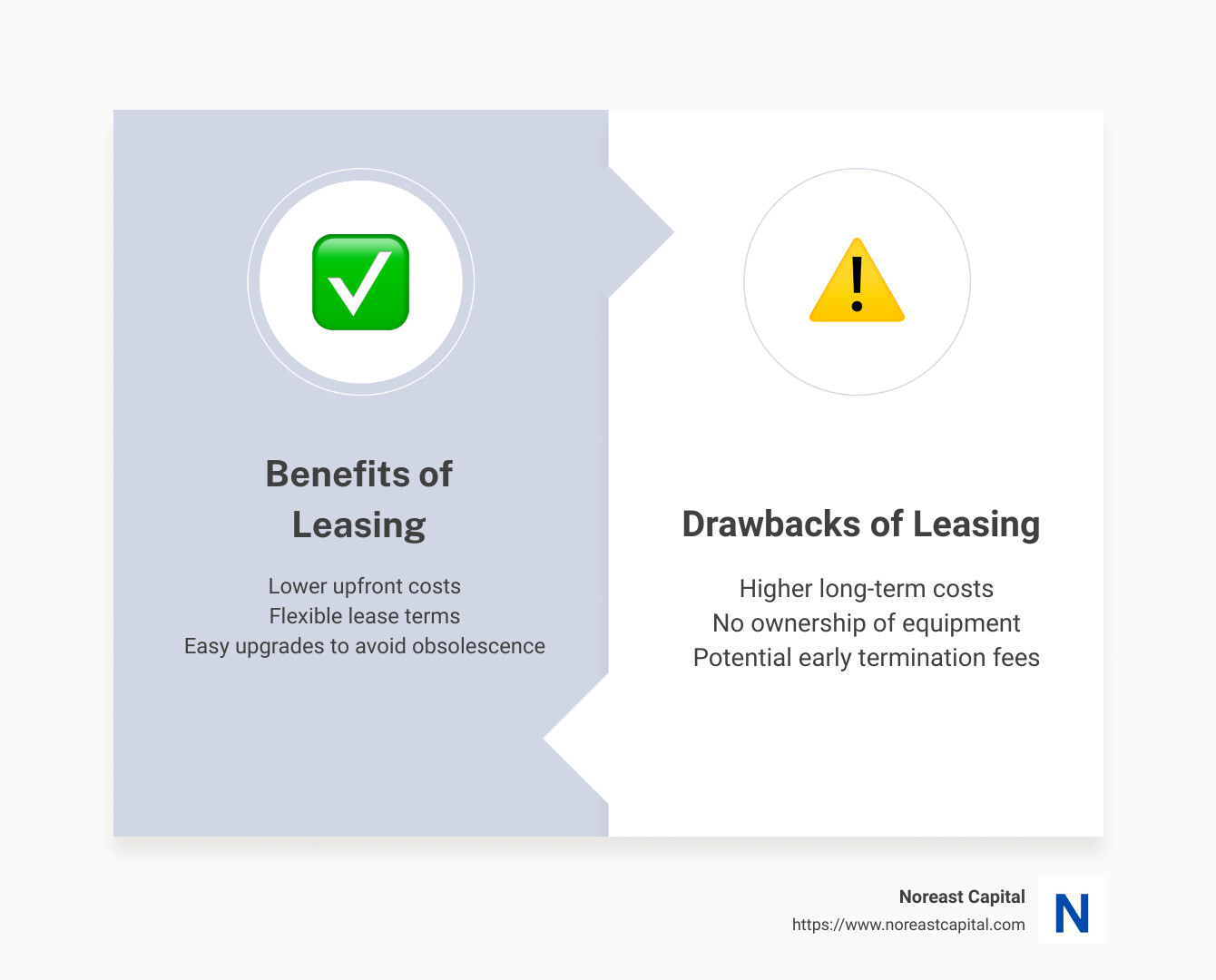
- Benefits of Leasing:
- Lower upfront costs
- Flexible lease terms
Easy upgrades to avoid obsolescence
Drawbacks of Leasing:
- Higher long-term costs
- No ownership of equipment
- Potential early termination fees
Leasing gym equipment can often be a smart financial move, especially for small business owners who want to avoid the high upfront costs and rapid depreciation of purchasing equipment. However, understanding the pros and cons is crucial for making an informed decision.
I’m Vincent Cerniglia from Noreast Capital. With years of experience in equipment financing and leasing, I’ve helped gyms across America make smart choices about leasing gym equipment. Let’s dive into what you need to know to make the best decision for your gym.
Benefits of Leasing Gym Equipment
Leasing gym equipment offers multiple advantages that can make it a smart choice for gym owners. Below, we’ll explore the key benefits, including financial flexibility, tax advantages, and easy equipment upgrades.
Financial Flexibility
One of the biggest advantages of leasing gym equipment is the ability to conserve capital. Instead of a large upfront investment, you spread the cost over time. This helps you keep cash on hand for other critical expenses.
Lower monthly payments make it easier to manage your cash flow. With leasing, you know exactly what your monthly equipment expenses will be, which helps in budgeting and financial planning.
Additionally, leasing opens up lines of credit that would otherwise be tied up in equipment purchases. This can be crucial for gym owners looking to expand or invest in other areas of their business.
Tax Advantages
Leasing gym equipment also comes with significant tax benefits. For one, lease payments are often deductible as business expenses, which can reduce your overall tax burden.
A true tax lease allows you to deduct monthly payments during the life of the lease. This can offer substantial tax savings over time.
Moreover, the Section 179 Deduction allows you to deduct the full purchase price of qualifying equipment financed during the tax year. This immediate tax saving can be a big financial boost, especially for new businesses.
Equipment Upgrades
Leasing provides an easy way to keep your gym equipment up-to-date. In the fast-evolving fitness industry, staying current is crucial for attracting and retaining members.
Leasing helps protect against obsolescence by allowing you to upgrade to newer models more easily. When your lease term ends, you can return the old equipment and lease the latest versions without the hassle of selling or disposing of outdated machinery.
This flexibility also enables you to acquire higher-end equipment that you might not be able to afford if purchasing outright. Leasing companies often offer various plans that include maintenance and upgrades, ensuring your gym remains competitive and appealing.
For instance, many leasing packages include free service, repairs, and preventative maintenance for the life of the lease, taking the burden of upkeep off your shoulders.
By leasing gym equipment, you can conserve capital, enjoy tax benefits, and easily upgrade your equipment, making it a flexible and financially savvy option for many gym owners.
Drawbacks of Leasing Gym Equipment
Long-Term Costs
Leasing gym equipment can be more expensive in the long run compared to buying. While leasing offers lower upfront costs, the cumulative payments over the lease term can exceed the cost of purchasing the equipment outright. For example, a treadmill that costs $3,500 to buy could cost around $307 per month on a 36-month lease, totaling $11,052 over three years.
Another consideration is the potential for additional fees. Lease agreements often include charges for early termination, which can be significant if you need to end the lease before the agreed term. This can lock you into payments even if your business needs change.
Lack of Ownership
When you lease gym equipment, you don’t build equity in the equipment. This means that at the end of the lease term, you must return the equipment unless you have a buyout option. Unlike owning, where you have a tangible asset, leasing leaves you with no equity or resale value.
Obsolescence can also be a concern. While leasing allows for easy upgrades, it also means you’re dependent on the lessor to provide new equipment. If the equipment becomes outdated before the lease ends, you might be stuck with it until the lease term is complete.
Locked Payments
Leasing agreements usually come with fixed monthly payments, which can be both an advantage and a drawback. While predictable payments help with budgeting, they also mean you’re committed to these payments for the entire lease term.
If your gym no longer needs certain equipment or you face financial difficulties, early termination fees can make it costly to break the lease. This lack of flexibility can be challenging for businesses with fluctuating cash flows.
Leasing gym equipment offers many advantages, but weigh these against the potential drawbacks to make the best decision for your gym.
Benefits of Buying Gym Equipment
Financial Ownership
When you buy gym equipment, you gain full ownership. This means you can build equity over time, which can be a significant financial advantage. Unlike leasing, where you make payments but never own the equipment, purchasing allows you to gradually increase your stake in the asset.
Ownership can be particularly beneficial for equipment with a long shelf life, such as strength equipment and free weights. These items don’t become outdated as quickly as cardio machines, making them a solid investment.
Tax Incentives
Buying gym equipment also comes with tax benefits. According to IRS regulations, you can fully deduct the cost of some newly purchased assets in the first year. This is often referred to as a “first-year deduction.” Additionally, you can benefit from depreciation over the years, which can offer further tax savings.
However, tax laws change frequently, so consult with a CPA to understand the current regulations and how they apply to your situation.
Long-Term Value
Another significant advantage of buying gym equipment is the long-term value. When you own the equipment, you have the option to resell it if it’s still in good condition. This can help recoup some of your initial investment.
Strength equipment and free weights, for example, tend to have a longer lifespan and maintain their value better than cardio machines, which can become outdated quickly.

Secure Title and Potential Lower Total Cost
Securing the title to your gym equipment means you have complete control over it. You don’t have to worry about returning it at the end of a lease term or paying any additional fees for extra mileage or wear and tear.
While the upfront costs of buying are higher, the total cost over time can be lower compared to leasing, especially if the equipment has a long useful life.
Resale Potential and Longevity
Finally, owning gym equipment gives you the resale potential. If you decide to upgrade or close your gym, you can sell the equipment. This can be a significant advantage, especially for items that hold their value well.
Strength equipment, in particular, tends to have a longer lifespan and better resale value compared to cardio machines, which may become obsolete more quickly due to technological advancements.
Understanding the benefits of buying gym equipment can help you make an informed decision. Next, we will explore the drawbacks of buying gym equipment to provide a balanced view.
Drawbacks of Buying Gym Equipment
While owning gym equipment has its benefits, there are several significant drawbacks to consider.
Upfront Capital
Buying gym equipment requires a large initial investment. For a commercial gym, this can be anywhere from $30,000 to $50,000. This high upfront cost can strain your cash flow, making it difficult to allocate funds to other essential aspects of your business, such as marketing or staffing.
Financing options are available, but they usually come with interest rates that can add to the overall cost. Unlike leasing, where you can spread out payments, buying requires a substantial amount of capital right away.
Obsolescence Risk
The fitness industry is constantly evolving, and equipment can become outdated quickly, especially cardio machines. Technological advancements mean that newer models with better features are frequently released.
When you own the equipment, you bear the full risk of obsolescence. If your equipment becomes outdated, you may have to invest more money to upgrade, which can be costly. Leasing, on the other hand, allows you to upgrade more easily at the end of the lease term.
Maintenance and Repairs
Ownership means you’re responsible for all maintenance and repairs. This can add up over time, both in terms of cost and downtime. If a machine breaks down, you not only have to pay for the repair but also deal with the inconvenience of having equipment out of service.
Leasing companies often include maintenance and repair services as part of the lease agreement, saving you time and money. When you own the equipment, these responsibilities—and costs—fall squarely on your shoulders.
Next, we’ll dig into the cost breakdown of leasing gym equipment, providing specific examples to give you a clearer picture of what to expect.
Leasing Gym Equipment: Cost Breakdown
Leasing gym equipment can be a smart choice for many gym owners. Let’s break down the costs and factors affecting those costs.
Example Lease Costs
Here’s a look at some common gym equipment and their potential lease prices based on a 6% lease rate:
| Equipment | 12 months | 24 months | 36 months |
|---|---|---|---|
| Strength Rack | $57 | $41 | $35 |
| Treadmill | $502 | $356 | $307 |
| Elliptical | $143 | $102 | $88 |
| Stairmaster | $287 | $203 | $176 |
| Free Weights | $72 | $51 | $44 |
| Bench Press | $29 | $20 | $18 |
Depending on your gym’s size and needs, you might spend between $1,000 to $2,000 per month leasing $30,000 worth of equipment.
Factors Affecting Lease Costs
Several factors impact the cost of leasing gym equipment:
1. Credit Score and Borrowing History
Your credit score and borrowing history play a big role. A higher credit score can get you better lease rates. If your credit is less than stellar, expect to pay more.
2. Equipment Type and Brand
The type and brand of equipment matter. High-end brands and advanced machines usually come with higher lease rates. For example, a treadmill from a top brand will cost more than a basic model.
3. Lease Term
The length of your lease term affects monthly payments. Longer terms generally mean lower monthly payments but higher total costs. For instance, leasing a strength rack for 36 months costs $35 per month, while a 12-month lease costs $57 per month.
4. Additional Fees
Leases may include additional fees for maintenance or early termination. Always read the fine print to avoid surprises.
When considering leasing gym equipment, think about your financial situation, credit score, and the type of equipment you need. This will help you make an informed decision.
Next, we’ll explore frequently asked questions about leasing gym equipment, including tax benefits, cash flow impact, and upgrade options.
Frequently Asked Questions about Leasing Gym Equipment
What are the tax benefits of leasing gym equipment?
Leasing gym equipment can offer significant tax benefits. One key advantage is that lease payments are often deductible as business expenses. This can reduce your taxable income and lower your overall tax burden.
Additionally, under the IRS’s Section 179 Deduction, businesses can deduct the full purchase price of qualifying equipment, which can sometimes include leased equipment. This provides an accelerated tax benefit, making leasing an attractive option for many gym owners.
Always consult with a tax professional to understand how these benefits apply to your specific situation.
How does leasing gym equipment impact cash flow?
Leasing gym equipment can greatly improve your cash flow. Unlike buying, which requires a large upfront investment, leasing spreads the cost over monthly payments. This means you can conserve capital and allocate funds to other areas of your business, such as marketing or hiring staff.
For example, leasing $30,000 worth of equipment might cost you $1,000 to $2,000 per month. This is much more manageable than paying the full amount upfront. Predictable monthly payments also make budgeting easier, helping you plan for future expenses without unexpected financial strain.
Can I upgrade my leased gym equipment?
Yes, one of the major advantages of leasing gym equipment is the ability to upgrade. When your lease term ends, you can choose to lease new, more advanced equipment. This is particularly beneficial in the fitness industry, where technology and trends evolve rapidly.
For instance, cardio equipment like treadmills and ellipticals can become outdated quickly. Leasing allows you to stay current with the latest models without the burden of selling old equipment. This flexibility helps keep your gym competitive and attractive to members.
Next, we’ll discuss the benefits of buying gym equipment, including ownership advantages, tax incentives, and long-term savings.
Conclusion
Choosing between leasing and buying gym equipment is a big decision. Each option has its unique benefits and drawbacks. Let’s summarize what we’ve learned and provide some tips to help you make the best choice for your gym.
Summary
Leasing Gym Equipment offers:
- Financial flexibility: Lower monthly payments and preserved cash flow.
- Tax advantages: Potential deductions and benefits under Section 179.
- Equipment upgrades: Easy access to newer models and protection against obsolescence.
However, leasing can be more expensive in the long run and does not build equity in the equipment.
Buying Gym Equipment provides:
- Ownership: You build equity and can benefit from resale value.
- Tax incentives: Deductions for first-year expenses and depreciation.
- Long-term value: Especially for equipment with a long shelf life, like strength equipment.
But, buying requires a significant upfront investment and assumes responsibility for maintenance and repairs.
Decision-Making Tips
- Assess Your Financial Situation: Consider your cash flow, available capital, and credit score.
- Evaluate Equipment Lifespan: Determine if the equipment is likely to become outdated quickly. Lease cardio equipment and buy strength equipment if needed.
- Consider Tax Benefits: Consult with your CPA to understand current tax laws and how they apply to your situation.
- Plan for Growth: Think about your future needs and whether you might want to upgrade equipment frequently.
Noreast Capital
At Noreast Capital, we understand the complexities of making these decisions. Our leasing and financing options are designed to provide flexibility and support for your business. Whether you’re looking to conserve capital, benefit from tax advantages, or stay current with the latest equipment, we have a solution for you.
Final Thoughts
Both leasing and buying gym equipment have their pros and cons. Your choice will depend on your financial situation, business goals, and the specific needs of your gym. By carefully weighing these factors, you can make an informed decision that supports the long-term success of your fitness center.
At Noreast Capital, we’re here to help you steer these choices and find the best solution for your business. Contact us today to learn more about how we can support your gym’s growth and success.