

The Key to Smart Decisions: Leasing vs. Financing for Your Business
When it comes to acquiring new business equipment, you’re faced with a critical decision: leasing vs financing. This choice hinges on your specific business needs, budget, and long-term goals. Here’s a quick rundown to help you immediately understand the differences:
Quick Comparison: Leasing vs Financing
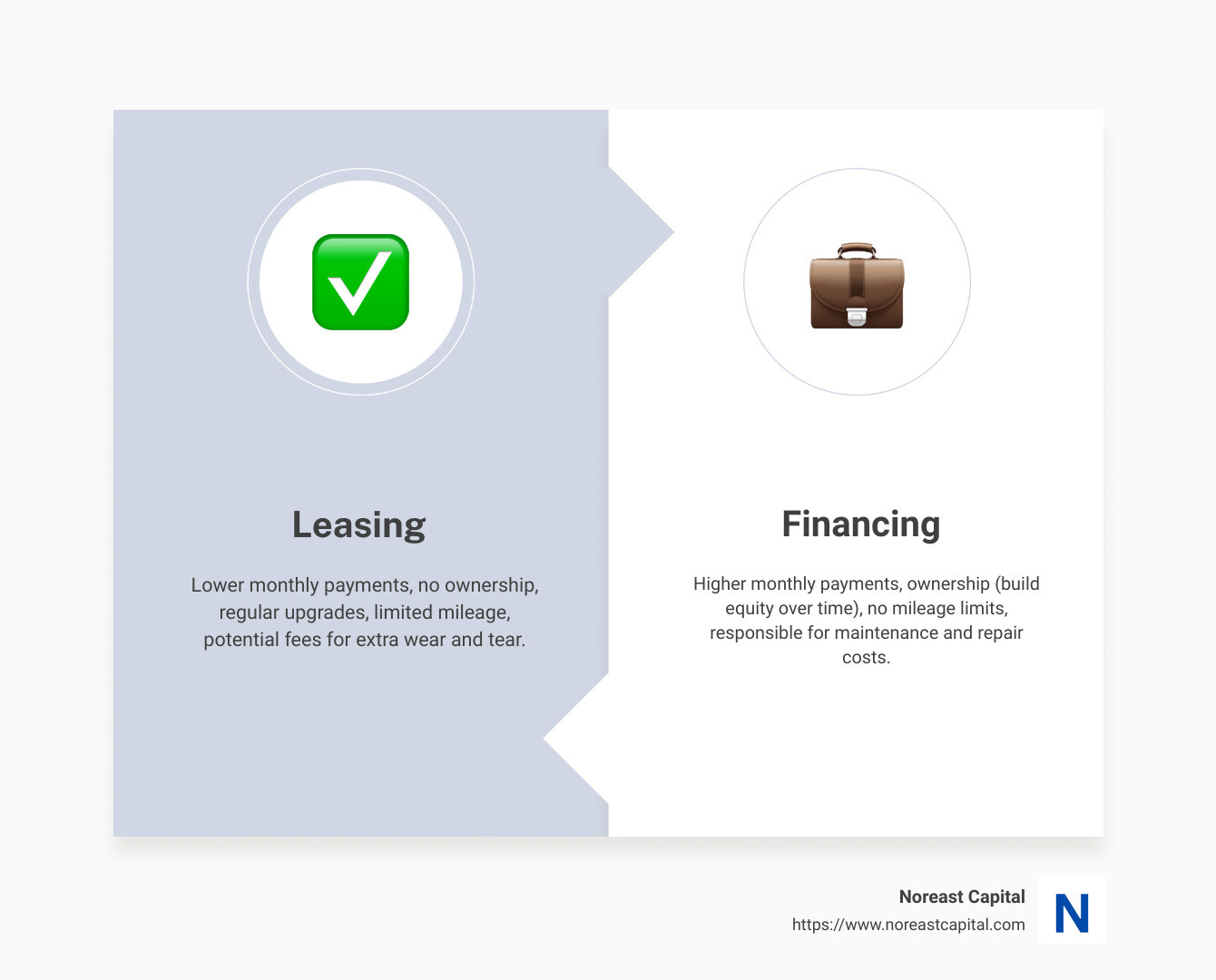
- Leasing: Lower monthly payments, no ownership, regular upgrades, limited mileage, potential fees for extra wear and tear.
- Financing: Higher monthly payments, ownership (build equity over time), no mileage limits, responsible for maintenance and repair costs.
Choosing between leasing vs financing doesn’t have to be a daunting task, but it does require careful consideration of your business’s financial health and operational needs.
I’m Vincent Cerniglia, and I bring years of expertise in the equipment financing and leasing market to help guide you through these important decisions. Let’s break down these options further to see which one aligns best with your business objectives.
Understanding Leasing vs Financing
When deciding between leasing vs financing, it’s crucial to understand the foundational differences between the two options. Let’s break it down simply:
What is Leasing?
Leasing a car is much like renting it for a set period. You make monthly payments to use the vehicle, but you don’t own it at the end of the lease term. Think of it as a long-term rental agreement.
- Lower Monthly Payments: One of the biggest benefits of leasing is the lower monthly payments compared to financing. Since you’re essentially paying for the car’s depreciation during the lease term, the payments are generally more affordable.
- No Ownership: At the end of the lease, you return the car to the dealership. You don’t build equity in the vehicle, so you won’t have an asset to sell or trade-in.
- New Car Models: Leasing allows you to drive the latest car models every few years. If you love having the newest technology and features, leasing might be the way to go.
- Minimal Maintenance: Leases typically cover the duration of the manufacturer’s warranty, so major repair costs are usually not your responsibility.

What is Financing?
Financing a car means taking out a loan to purchase the vehicle. You make monthly payments until the loan is paid off, and then the car is yours to keep.
- Higher Monthly Payments: Monthly payments for financing are generally higher than leasing because you’re paying off the entire purchase price of the vehicle, plus interest.
- Ownership: Once you pay off the loan, you own the car outright. This means you can keep it for as long as you want, sell it, or trade it in for a new vehicle.
- Build Equity: As you make payments, you build equity in the car. This can be beneficial if you plan to keep the car for a long time.
- No Mileage Limits: Unlike leasing, financing doesn’t come with mileage restrictions. You can drive as much as you want without worrying about extra fees.
- Responsible for Maintenance: After the manufacturer’s warranty expires, you’ll be responsible for all maintenance and repair costs.

Key Differences
Let’s summarize the key differences between leasing and financing a vehicle:
| Feature | Leasing | Financing |
|---|---|---|
| Ownership | No | Yes |
| Monthly Payments | Lower | Higher |
| Upfront Costs | Lower down payment, first month’s payment | Higher down payment, taxes, and fees |
| Maintenance | Minimal, usually covered by warranty | Owner’s responsibility after warranty ends |
| Mileage Limits | Yes, typically 10,000-15,000 miles per year | No |
| End of Term | Return the vehicle, option to lease new one | Own the vehicle, sell or trade-in |
Understanding these differences can help you make an informed decision that aligns with your business needs and financial situation.
Next, we’ll dive into the pros and cons of each option to help you weigh your choices more effectively.
Pros and Cons of Leasing
Advantages of Leasing
Lower Monthly Payments
One of the biggest perks of leasing is the lower monthly payments. When you lease, you’re essentially renting the vehicle for a set period, usually 2-3 years. This means your payments are based on the car’s depreciation during that time, not the full purchase price.
New Car Models
Leasing allows you to drive a new car every few years. If you love having the latest model with the newest features, leasing is a great option. You can upgrade without the hassle of selling or trading in your old vehicle.
Minimal Maintenance
Most lease agreements include maintenance and repair costs under the manufacturer’s warranty. This means fewer unexpected expenses for you. If something goes wrong, you can usually take it back to the dealership for a fix at no extra charge.
Disadvantages of Leasing
Mileage Restrictions
Leases often come with mileage limits, usually between 10,000 to 15,000 miles per year. If you exceed these limits, you’ll face hefty penalties, often ranging from 10 to 25 cents per extra mile. This can add up quickly if you drive a lot for work or pleasure.
No Ownership
At the end of the lease term, you have to return the vehicle. You don’t build any equity, so you can’t sell the car or use it as a trade-in. Essentially, you’re paying to use the car but will never own it.
Early Termination Fees
If you need to end your lease early, be prepared for significant fees. Early termination can be costly, sometimes almost as much as sticking with the lease until the end. Make sure you’re committed to the lease term before signing the contract.
Now that we’ve covered the pros and cons of leasing, let’s take a look at the advantages and disadvantages of financing.
Pros and Cons of Financing
Advantages of Financing
Ownership
When you finance a car, you work toward owning it outright. Once you make the final payment, the car is yours. This gives you the freedom to do whatever you want with it—sell it, trade it in, or keep it for as long as you like.
Build Equity
With each payment you make, you build equity in the car. Unlike leasing, where you never own the vehicle, financing allows you to accumulate value over time. By the end of your loan term, you have an asset that can be sold or used as a down payment for your next car.
No Mileage Limits
Financing a car means you can drive as much as you want without worrying about mileage restrictions. Leases often come with mileage caps (usually between 10,000 to 15,000 miles per year), and exceeding these limits can result in hefty fees. With financing, you avoid these penalties altogether.
Disadvantages of Financing
Higher Monthly Payments
One of the biggest drawbacks of financing is the higher monthly payments. Since you’re paying off the entire cost of the car, your monthly installments are generally higher compared to leasing. This can strain your budget if you’re not prepared for it.
Maintenance Costs
Once the manufacturer’s warranty expires, you are responsible for all maintenance and repair costs. This can add up, especially as the car ages. Unlike leasing, where maintenance is often covered by the leasing company, financing puts this responsibility squarely on your shoulders.
Depreciation
Cars are depreciating assets, meaning they lose value over time. When you finance a car, you’re also bearing the brunt of its depreciation. This can be a significant disadvantage if you plan to sell the car in the future, as it will likely be worth much less than what you paid for it initially.
Now that you understand the pros and cons of financing, let’s explore the key factors to consider when choosing between leasing and financing.
Factors to Consider When Choosing
When deciding between leasing and financing, it’s important to evaluate your business needs, cash flow, usage, and long-term plans. These factors will help you determine which option aligns best with your goals and financial situation.
Business Needs and Cash Flow
Budget and Financial Stability
Your budget and financial stability are crucial in making this decision. Leasing typically requires a smaller down payment and lower monthly payments, which can be easier on your cash flow. This is particularly beneficial for businesses that need to keep their monthly expenses predictable and manageable.
Tax Benefits
Leasing can offer tax advantages. Lease payments are often considered a business expense, which may be tax-deductible. However, financed vehicles can also offer deductions, such as depreciation and interest on the loan. Consult with a tax advisor to understand which option provides the most benefits for your specific situation.
Usage and Long-Term Plans
Mileage and Wear and Tear
Consider how much you drive. Leases often come with mileage restrictions, typically between 10,000 to 15,000 miles per year. Exceeding these limits can result in hefty fees. If your business involves a lot of driving, financing might be the better option since it doesn’t impose mileage limits.
Future Needs
Think about your long-term plans. Leasing allows you to upgrade to a new vehicle every few years, which can be beneficial if you want to always have the latest model. On the other hand, financing builds equity over time, and you will eventually own the vehicle outright. This can be advantageous if you plan to keep the vehicle for a long time and want to avoid continuous payments.
By carefully considering these factors, you can make an informed decision that aligns with your business goals and financial situation.
Next, let’s address some frequently asked questions about leasing vs financing.
Frequently Asked Questions about Leasing vs Financing
Is it better to lease a car or finance?
The answer depends on your business needs and financial situation. Leasing generally offers lower monthly payments compared to financing. This is because you’re paying for the car’s depreciation and a rent charge, not the full purchase price.
If you prefer driving new models every few years and want to avoid the hassle of selling a car, leasing might be a better option. However, if you plan to keep the car long-term and want to build equity, financing is the way to go. Over time, owning a vehicle can be more cost-effective since you eventually pay off the loan and are free from monthly payments.
What is the difference between a lease and a finance?
In a lease, you’re essentially renting the car for a specific period, usually 2-3 years. You pay for the car’s expected depreciation, a rent charge, taxes, and fees. At the end of the lease, you return the car unless you decide to buy it.
In financing, you take out a loan to buy the car and make monthly payments that cover the car’s full purchase price, interest, taxes, and fees. Once the loan is paid off, the car is yours to keep, sell, or trade.
What’s the downside of leasing a car?
Leasing comes with some limitations and potential drawbacks:
- Early termination fees: Ending a lease early can result in hefty fees.
- No equity: Since you don’t own the car, you don’t build any equity.
- Mileage limits: Most leases have mileage limits (typically 10,000-15,000 miles per year). Exceeding these limits can result in additional fees.
- Depreciation: While depreciation affects both leased and financed cars, in a lease, you’re directly paying for the car’s depreciation over the lease term.
By understanding these factors, you can better decide whether leasing or financing aligns with your business goals and financial strategy.
Next, let’s explore how to make the best choice based on your specific needs.
Conclusion
Deciding between leasing vs financing is a significant decision that can impact your business’s financial health and operational efficiency.
At Noreast Capital, we understand that every business has unique needs and goals. That’s why we offer custom solutions to help you make the best choice for your situation.
Noreast Capital: Your Partner in Decision-Making
We are committed to helping you steer the complexities of leasing and financing. Our team of experts will work closely with you to understand your business needs, cash flow, and long-term plans. By doing so, we can recommend the best options that align with your goals.
Aligning with Your Business Goals
Whether you choose to lease or finance, the key is to align your decision with your business objectives. If you prefer lower monthly payments and the flexibility to upgrade to the latest equipment, leasing might be the best option. On the other hand, if you want to build equity and have no mileage restrictions, financing could be more suitable.
Making an Informed Decision
Remember to consider all factors, including monthly payments, ownership, maintenance costs, and potential tax benefits. By weighing these aspects, you can make an informed decision that supports your business’s growth and success.
For more information on how we can help you with your office equipment needs, visit our Office Equipment Financing page.
We are here to support you in achieving your business goals, whether through leasing or financing. Let’s work together to find the best solution for your business.