

Rent a ghost kitchen can transform your food business by providing a cost-effective and flexible solution without the obligations of a traditional restaurant space. If you’re considering this innovative approach, here’s what you need to know:
- Affordable entry: Minimal startup costs compared to setting up your own kitchen.
- Scalability: Easily scale operations up or down based on demand.
- Quick set-up: Start operating faster than you would with a brick-and-mortar establishment.
- No upfront buying of equipment: Avoid high costs and depreciation.
In recent years, ghost kitchens have emerged as a pivotal trend in the food industry, propelled by the burgeoning demand for delivery services. Operating from strategic commercial kitchens, these delivery-only ventures help businesses tap into new markets efficiently. As food delivery continues to soar, ghost kitchens offer a scalable model that’s perfect for small business owners looking for new equipment solutions without the traditional financial burdens.
My name is Vincent Cerniglia, and I bring years of experience in the equipment financing and leasing sector, partnering with companies to streamline their kitchen operations through flexible financing solutions. My expertise in the sector helps businesses rent a ghost kitchen confidently, navigating the intricate world of culinary entrepreneurship.

Understanding Ghost Kitchens
Ghost kitchens, also known as cloud kitchens, are changing the food industry. These innovative spaces are designed for delivery-only restaurants, allowing businesses to operate without a traditional dining area.
What is a Ghost Kitchen?
A ghost kitchen is a commercial kitchen space that is leased to food businesses solely for preparing and delivering meals. Unlike traditional restaurants, these kitchens focus entirely on fulfilling online orders. This model is gaining traction as more consumers prefer the convenience of home delivery.
How Do Cloud Kitchens Work?
Cloud kitchens operate by renting out space to multiple food brands under one roof. Each brand uses the shared kitchen facilities to prepare its menu items. These kitchens are equipped with all the necessary tools and appliances, so businesses don’t have to invest heavily in their own equipment.
The Rise of Delivery-Only Restaurants
Delivery-only restaurants are brands that exist primarily online. They save on costs associated with front-of-house services, such as waitstaff and dining space decor. This lean approach allows them to focus on quality food and efficient delivery. As a result, they can quickly adapt to changing consumer preferences and market trends.

The shift towards delivery-only models is driven by consumer demand and changing dining habits. A report by Kitchen United highlights that the off-premise market is booming, with delivery services becoming a staple for many households. This trend is expected to continue, making ghost kitchens a vital part of the future restaurant landscape.
Ghost kitchens provide an opportunity for culinary entrepreneurs to experiment with new concepts without the risk of opening a full-scale restaurant. They offer flexibility, lower overhead costs, and the ability to reach a wider audience through digital platforms.
As the industry evolves, rent a ghost kitchen becomes an attractive option for established brands and startups alike. This model not only reduces initial costs but also allows businesses to scale operations efficiently, making it a smart choice for those looking to capitalize on the growing demand for food delivery services.
How to Rent a Ghost Kitchen
Renting a ghost kitchen can be a game-changer for your food business. Whether you’re a startup or an established brand, the process is straightforward and offers flexible options to suit your needs.
Kitchen Rental Process
Identify Your Needs: Before you begin, determine what you need in a kitchen. Consider factors like space size, equipment, and storage requirements. This clarity will help you find the right fit.
Research Options: Look for available ghost kitchens in your desired location. Platforms like Noreast Capital can help you find spaces that match your needs.
Visit the Kitchen: If possible, visit the kitchen space. Check the equipment, layout, and cleanliness to ensure it meets your standards.
Review the Lease Terms: Pay close attention to lease terms, including rental prices, duration, and any additional fees. Some kitchens offer short-term leases, which can be ideal for testing new concepts.
Sign the Agreement: Once you’re satisfied, sign the rental agreement. Make sure you understand all the terms and conditions.
Start Cooking: With the logistics sorted, you can begin prepping and delivering your culinary creations.
Flexible Leasing Options
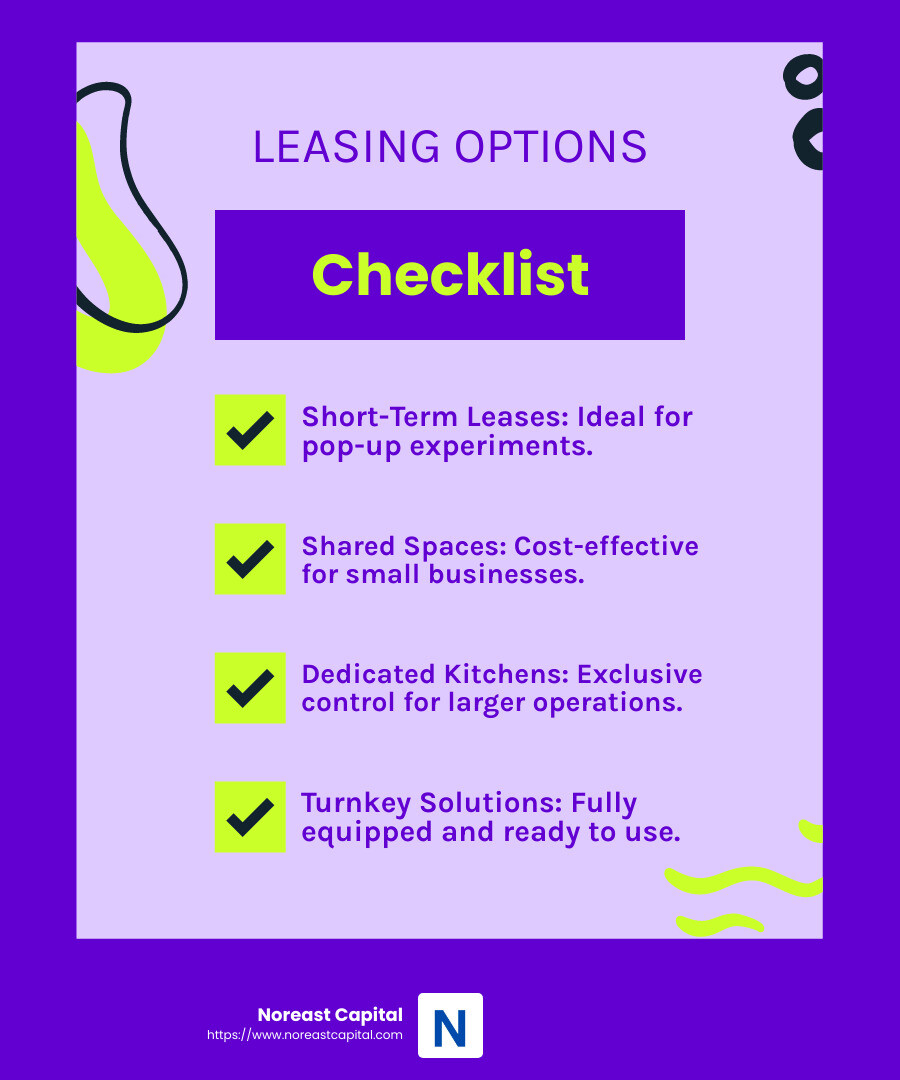
Ghost kitchens often provide flexible leasing options to accommodate different business models:
Short-Term Leases: Ideal for pop-up restaurants or testing new menu items. Short-term leases allow you to experiment without a long-term commitment.
Shared Spaces: Share the kitchen with other food businesses to reduce costs. This option is perfect for small operations or those just starting out.
Dedicated Kitchens: For businesses needing more control, dedicated kitchens offer exclusive use of the space. This option suits larger operations or those with specific requirements.
Turnkey Solutions: Some providers offer fully equipped kitchens that are ready to go. These “turnkey” options save time and reduce setup costs, allowing you to focus on cooking and delivery.
Benefits of Flexibility
Flexible leasing allows businesses to adapt quickly to changes in demand. For instance, a restaurant busy only in the evenings could rent out its kitchen during the day for breakfast or lunch operations. This maximizes space usage and increases revenue potential.
Renting a ghost kitchen is a strategic move for food businesses looking to minimize risk and maximize efficiency. With the right approach, you can tap into the growing demand for delivery services and expand your brand’s reach.
Benefits of Renting a Ghost Kitchen
Renting a ghost kitchen offers numerous advantages for food entrepreneurs. Let’s explore why this model is becoming a preferred choice for many.
Cost-Effective
One of the biggest perks of a ghost kitchen is its cost-effectiveness. Traditional restaurants require significant upfront investments in real estate, decor, and staffing. Ghost kitchens eliminate these expenses. You only pay for the kitchen space and equipment you use.
“Leasing lets you finance the use, without having to finance the purchase,” says Vincent Cerniglia from Noreast Capital.
This model allows you to allocate resources more efficiently, focusing on ingredients and marketing instead of overhead.
Scalability
Ghost kitchens are perfect for scaling your business. If demand increases, you can rent additional kitchen space or upgrade to a larger unit. This flexibility is crucial for growing businesses that need to adapt quickly without the burden of long-term leases.
The global ghost kitchen market could be worth $1 trillion in 10 years, highlighting the scalability potential in this sector.
Reduced Overhead
Operating in a ghost kitchen drastically reduces overhead costs. You don’t have to worry about utilities, maintenance, or decor. Everything is streamlined to focus on food preparation and delivery.
With shared spaces and turnkey solutions available, ghost kitchens provide a hassle-free environment for launching or expanding your business.
Quick Startup
Starting a traditional restaurant can take months or even years. In contrast, ghost kitchens offer a quick startup option. With ready-to-use facilities, you can begin operations almost immediately.
“When you rent a shared-use kitchen, you only pay for the time and resources you use,” explains Vincent Cerniglia, emphasizing the efficiency of this model (Noreast Capital).
This rapid setup allows you to test new concepts or launch seasonal menus with minimal delay.
Renting a ghost kitchen is not just about saving money; it’s a strategic decision that provides flexibility and speed. These benefits make it an attractive option for modern food entrepreneurs looking to thrive in a competitive market.
Challenges and Considerations
Renting a ghost kitchen might sound like a dream come true, but it’s not without its challenges. Let’s explore some key considerations you should keep in mind.
Tight Margins
Operating a ghost kitchen often means dealing with tight profit margins. While you save on overhead costs like dining area maintenance, other expenses can add up. Delivery fees, packaging costs, and platform commissions can eat into your profits.
John Kelly, CEO of Zenreach, points out that when foot traffic is down, maintaining profitability can be tough. “Ghost kitchens can be very attractive from a cost structure point of view,” he says, but managing expenses is crucial.
Brand Building
In a ghost kitchen, you don’t have a physical space to showcase your brand. This makes brand building a challenge. Without a storefront, you need to rely heavily on digital marketing and social media to create a brand presence.
Building customer trust and loyalty without face-to-face interaction requires creativity and a strong online strategy. It’s essential to invest in quality branding and customer service to stand out in a crowded digital marketplace.
Environmental Impact
The delivery-focused nature of ghost kitchens can have a significant environmental impact. Increased packaging waste and delivery emissions are major concerns. As the industry grows, businesses must find sustainable solutions to minimize their environmental footprint.
Consider using eco-friendly packaging and exploring efficient delivery routes to reduce your impact. This not only helps the environment but can also appeal to eco-conscious consumers.
Understanding these challenges is vital for anyone looking to rent a ghost kitchen. While the model offers many benefits, being aware of potential pitfalls will help you steer the landscape more effectively.
Frequently Asked Questions about Renting a Ghost Kitchen
Do ghost kitchens make money?
Ghost kitchens can be profitable, but success depends on several factors. These kitchens eliminate the need for a physical dining space, reducing overhead costs like rent and utilities. However, other expenses, such as food costs, delivery fees, and platform commissions, can impact profitability.
In a discussion about ghost kitchens, Joy Lai, COO of Kitchen United, emphasized the importance of a planned strategy to draw in and engage customers while executing off-premise smoothly.
The key to making a ghost kitchen profitable is managing expenses carefully and optimizing delivery operations. Keeping food costs low and using efficient delivery platforms can help increase your bottom line.
What are the disadvantages of ghost kitchens?
While ghost kitchens offer many advantages, they also come with some disadvantages. One major challenge is plating creativity. Without a physical restaurant space, the presentation of food becomes limited to how it looks upon delivery. This can affect the dining experience and how customers perceive your brand.
Another concern is the environmental impact. The increase in deliveries leads to more packaging waste and carbon emissions. Finding ways to minimize these impacts, such as using eco-friendly packaging, is crucial for sustainability.
Finally, tight margins are another disadvantage. While you save on some costs, expenses like delivery fees and platform charges can eat into profits. It’s essential to keep a close eye on these costs to ensure your ghost kitchen remains viable.
How does a ghost kitchen work?
A ghost kitchen operates as a food service business without a dine-in option. Instead, it focuses on preparing food for delivery. These kitchens often partner with delivery platforms like Uber Eats and DoorDash to reach customers.
The food service operation in a ghost kitchen is streamlined for efficiency. Chefs prepare meals in a commercial space equipped with all the necessary tools and equipment. Orders are received through digital platforms, and delivery drivers pick up the meals for distribution.
This model allows businesses to focus on cooking and delivery, without the distractions of managing a full-service restaurant. By leveraging the power of delivery platforms and efficient commercial spaces, ghost kitchens can serve a wide customer base while maintaining a lean operation.
Understanding the ins and outs of renting a ghost kitchen can help you decide if this model is right for your business. While there are challenges, the potential for growth and profitability is significant.
Conclusion
At Noreast Capital, we understand the unique challenges and opportunities that come with renting a ghost kitchen. Our mission is to support culinary entrepreneurs by providing flexible equipment financing solutions that help businesses thrive without the burden of ownership.
Why Choose Noreast Capital?
Our approach is simple: we offer businesses the chance to use state-of-the-art kitchen equipment without the need for outright purchase. This means you can keep your cash flow steady while accessing the tools you need to succeed.
Flexible Financing Options: We tailor our solutions to fit your specific needs. Whether you’re just starting or looking to expand, our financing options can adapt to your business model.
Cost-Effective Solutions: By choosing to rent a ghost kitchen, you can significantly reduce overhead costs. Our financing services further improve this advantage by allowing you to invest in high-quality equipment without heavy upfront costs.
Scalability and Growth: As your business grows, so do your equipment needs. With our solutions, scaling up becomes seamless, ensuring you have the right resources at every stage of your journey.
Partnering for Success
We’re more than just a financing company; we’re your partners in growth. Our team is dedicated to helping you steer the complexities of the food industry, providing not just financial support but also insights and guidance.
Whether you’re looking to rent a ghost kitchen or need assistance with equipment financing, Noreast Capital is here to help you turn your culinary dreams into reality. Find how we can support your business and join the ranks of successful food entrepreneurs who have trusted us as their partners in success.
Choosing Noreast Capital means choosing a future where your business can flourish without financial constraints. Let’s cook up something amazing together!