

If you’re a culinary professional exploring how to rent commercial kitchen space, you’re in good company. Navigating this process can improve your cooking venture in significant ways. Here’s what to consider:
- Variety: Choose between shared or private kitchen spaces to suit your needs.
- Cost: Understand the pricing structure, including hourly and monthly rates.
- Equipment: Access high-grade appliances without the hefty purchase price.
- Compliance: Ensure your operations align with local health regulations.
Commercial kitchens, often referred to as commissary kitchens, are pivotal for food entrepreneurs. They provide the essentials to produce safe, quality food while maintaining compliance with health standards. These facilities offer flexible, cost-effective solutions, allowing chefs, bakers, and caterers to flourish without heavy initial investments in equipment and space.
As someone who has been intricately involved in shaping financial pathways for businesses like yours, my role, Vincent Cerniglia, is to guide you in efficiently utilizing equipment leasing to manage and expand your enterprise.
Easy rent commercial kitchen space glossary:
– rent a ghost kitchen
– rent kitchen for a day
What is a Commercial Kitchen?
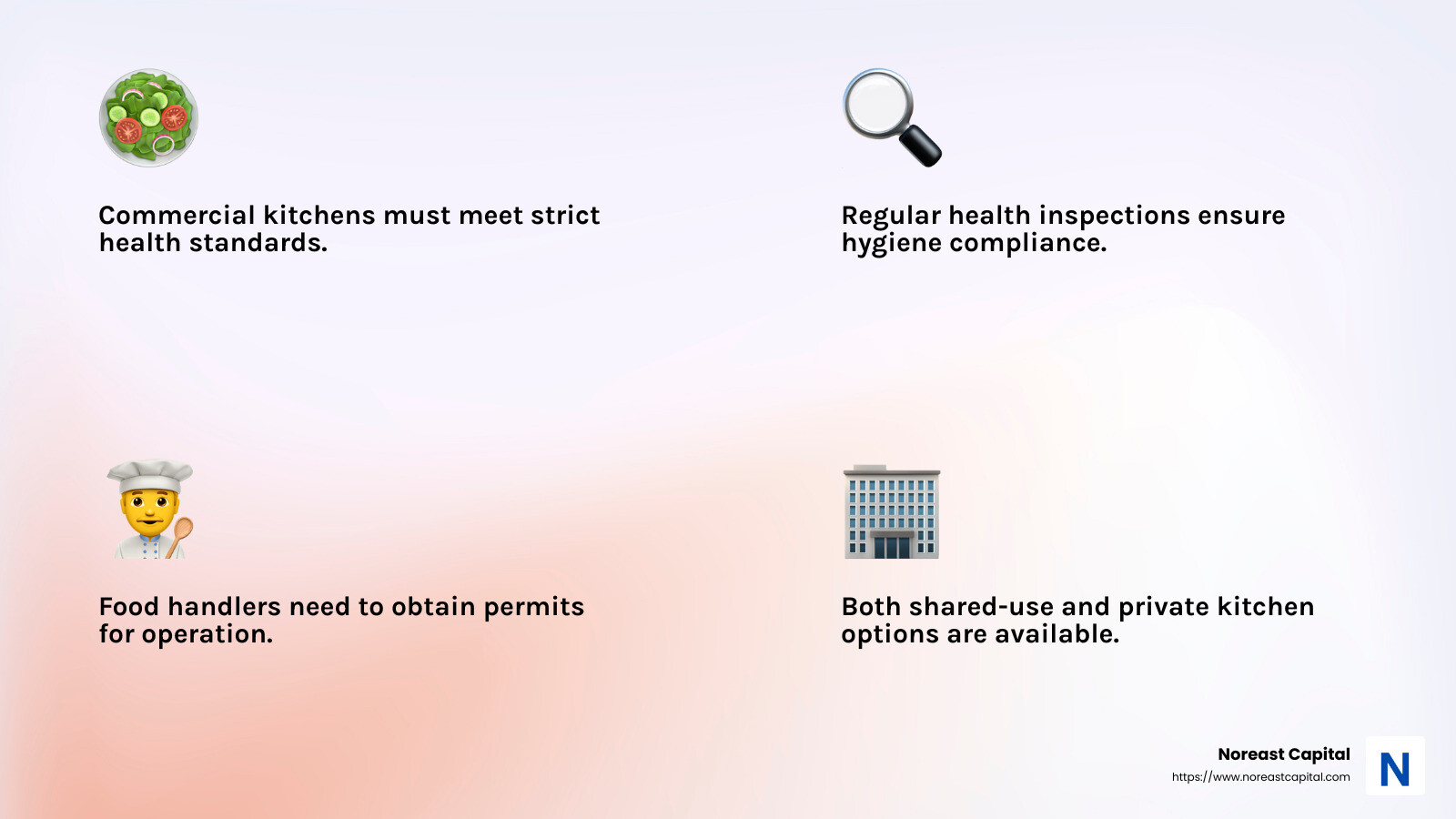
A commercial kitchen, also known as a commissary kitchen, is a professional-grade facility where food is prepared for public consumption. These kitchens are designed to meet strict health and safety standards, ensuring that food is stored and prepared safely.
Types of Commercial Kitchens
Shared-Use Kitchens: These are communal spaces where multiple culinary professionals can work at different times. You reserve a time slot, and while you have access to commercial-grade equipment, you share the space with others. This setup fosters networking and collaboration but requires careful scheduling.
Private Kitchens: In contrast, private kitchens offer exclusive access. You don’t share with others, which means more flexibility and less scheduling hassle. However, this convenience comes at a higher cost.
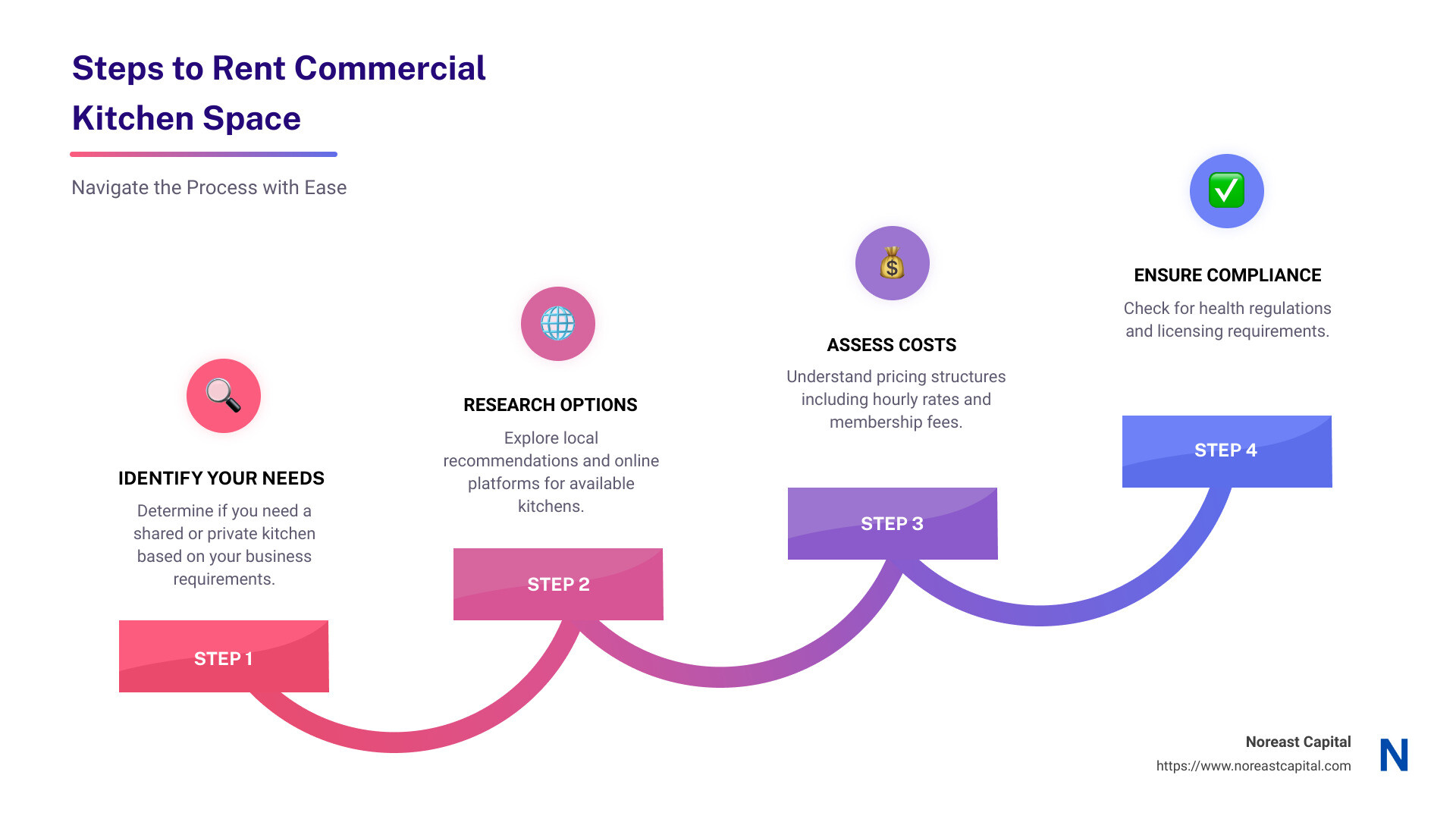
Licensing and Health Inspections
Operating in a commercial kitchen requires compliance with local health department regulations. This typically involves obtaining a food handler’s permit and ensuring the kitchen meets health and safety standards. Regular inspections ensure these kitchens maintain high hygiene levels.
Why Choose a Commercial Kitchen?
Commercial kitchens provide access to industrial-grade equipment, which can be prohibitively expensive for startups. They eliminate the need for significant upfront investment, making them ideal for food entrepreneurs looking to scale their operations.
In the next section, we’ll explore why renting commercial kitchen space can be a strategic move for your business.
Why Rent Commercial Kitchen Space?
Renting a commercial kitchen space offers several benefits that can be crucial for food entrepreneurs and culinary professionals. Let’s break down the key advantages:
Flexibility
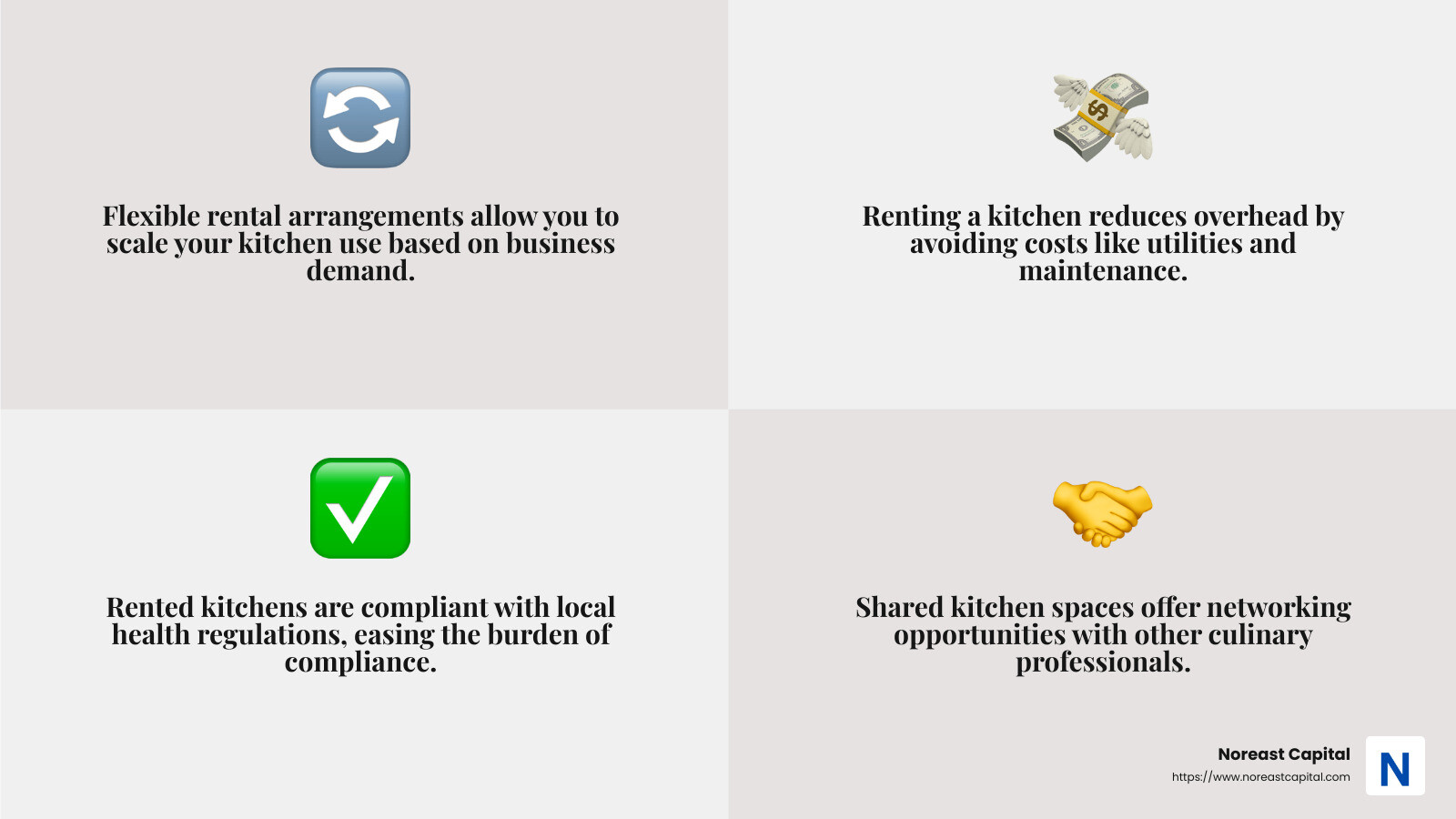
One of the biggest perks of renting a commercial kitchen is the flexibility it offers. You can choose how many hours you need each week or month, allowing you to scale up or down based on your business needs. If a particular kitchen doesn’t suit your style or needs, you can easily move to a different space.
Low Overhead
Owning a commercial kitchen requires a significant investment in equipment, utilities, and maintenance. By renting, you avoid these costs. The kitchen owner takes care of expenses like utilities, building upkeep, and pest control. This means you only pay the rental fee, making it a cost-effective option for many businesses.
Compliance
Commercial kitchens are designed to meet local health and safety regulations. Renting a compliant space ensures that your food preparation meets the necessary standards, which is crucial for selling food to the public. This takes the stress out of meeting regulatory requirements on your own.
Business Networking
Renting a shared kitchen space can be a great way to connect with other culinary professionals. Being part of a community provides opportunities for networking and collaboration. You can share experiences, exchange advice, and even find new business opportunities. This communal environment can be invaluable for learning and growth.
In summary, renting a commercial kitchen is not just about having a place to cook. It’s about accessing a professional environment that supports your business goals while keeping costs manageable.
Next, we’ll look at how to find the perfect commercial kitchen space near you.
How to Rent Commercial Kitchen Space Near You
Finding the right commercial kitchen can be a game-changer for your food business. Whether you’re a budding chef or an established caterer, having access to a professional kitchen can help you scale your operations without breaking the bank. Here’s how to get started:
Local Recommendations
Ask Around: Start by talking to fellow culinary professionals in your area. They might have insights or leads on available kitchen spaces. Local food industry events, such as trade shows and food festivals, are also great places to network. Vendors and participants often have first-hand knowledge of available kitchens.
Community Boards: Check out local community boards or culinary schools. They often have postings about available kitchen spaces or can guide you to the right contacts.
Online Platforms
Use Directories: Websites like The Kitchen Door are excellent resources for finding shared-use kitchens. These platforms list kitchens by location, making it easier to find one nearby. They provide details about the facilities, equipment, and rental terms.
Kitchen Incubators: Consider looking into kitchen incubators. These facilities offer more than just space—they provide business development support too. They can be particularly beneficial for startups looking to grow without the hefty costs of setting up their own kitchen.
Non-Traditional Options
Ghost Kitchens: These are kitchens designed solely for delivery or takeout services. They offer a low-cost entry point for businesses looking to expand their reach without a physical storefront. Companies like REEF are turning underused spaces, like parking lots, into modular kitchen hubs. This can be a flexible and cost-effective solution for many food entrepreneurs.
Use Kitch: Platforms like Use Kitch allow businesses to rent out underused kitchen spaces, such as those in hotels or restaurants during off-hours. This model provides flexibility and can be a perfect fit if you’re looking to test a new market or concept.
By exploring these avenues, you can find a commercial kitchen space that fits your needs and budget. Whether through personal connections, online platforms, or innovative models like ghost kitchens, there’s a solution out there for every culinary venture.
Next, let’s dive into the costs and considerations when renting a commercial kitchen.
Costs and Considerations
Renting a commercial kitchen space comes with various costs and factors to consider. Here’s a breakdown of what you might encounter:
Hourly Rates
The cost to rent a commercial kitchen can vary widely depending on your location and the type of kitchen you choose. Hourly rates typically range from $15 to $40. If you’re in a high-demand area like New York or Los Angeles, expect to pay more. Some kitchens offer lower rates if you book more hours at once, so it’s worth asking about bulk discounts.
Membership Fees
In addition to hourly rates, some kitchens charge a membership fee. This fee often covers access to additional resources or benefits, such as business support or networking opportunities. Memberships can be beneficial if you plan to use the kitchen regularly, but make sure to factor this cost into your budget.
Security Deposits
Most kitchens require a security deposit to cover potential damages or unpaid fees. This deposit is usually equivalent to $250 or one month of kitchen usage, whichever is higher. Make sure you understand the terms for getting your deposit back, as this can impact your cash flow.
Equipment Access
Access to equipment is a major perk of renting a commercial kitchen. Before signing a lease, check what equipment is available and whether it fits your needs. Common equipment includes ovens, mixers, refrigerators, and freezers. Some kitchens may allow you to bring your own tools, while others might charge extra for certain appliances.
Storage Options
Consider storage options if you plan to keep ingredients or equipment on-site. Some kitchens offer dry and cold storage for a monthly fee. Rates can vary, with dry storage starting at around $10 per shelf per month and refrigerator space at about $25 per shelf. Secure storage units might be available for larger or more valuable items.
Waste Removal
Finally, don’t forget about waste removal. Some kitchens handle waste for you, while others require you to manage it yourself. Understanding this service can save you time and hassle, so clarify these details before committing to a rental agreement.
Understanding these costs and considerations will help you make an informed decision when choosing the right kitchen for your business. Up next, we’ll address frequently asked questions about renting commercial kitchens.
Frequently Asked Questions about Renting Commercial Kitchens
What is a rental kitchen called?
Rental kitchens are often known as commissary kitchens or ghost kitchens.
Commissary kitchens are shared spaces where multiple food businesses can operate. They’re equipped with commercial-grade appliances and meet health and safety standards. These kitchens are ideal for catering services, food trucks, or small food businesses looking to scale without the hefty investment of setting up their own kitchen.
Ghost kitchens are specifically designed for delivery-only operations. They don’t have a dine-in area and focus on preparing food for online orders. This model has become popular due to the rise in food delivery services, offering a cost-effective way for restaurants to expand their reach.
How do I set up a rental kitchen?
Setting up a rental kitchen involves a few key steps to ensure it meets your business needs:
Improve Kitchen Layout: Plan the layout for efficient workflow. Position equipment and prep stations to minimize movement and maximize productivity.
Identify Equipment Needs: Determine the appliances and tools your business requires. Common needs include ovens, mixers, and refrigeration units. Renting a kitchen often provides access to these, but make sure the available equipment aligns with your menu.
Meet Health and Safety Standards: Ensure the kitchen complies with local health regulations. This includes maintaining cleanliness and following food safety protocols.
Setting up a rental kitchen can be a flexible and cost-effective way to start or grow your food business without the need for a large upfront investment.
How big should a small commercial kitchen be?
The size of a small commercial kitchen depends on several factors, including the type of food you prepare and your production volume. However, here are some general guidelines:
Square Footage: A small commercial kitchen typically ranges from 200 to 1,000 square feet. This size allows enough room for essential equipment and prep space without being overwhelming.
Space Requirements: Consider your menu complexity and service volume. A more complex menu might need additional prep areas, while high-volume operations might require more storage and larger cooking spaces.
Balancing space with functionality is crucial. Too small, and you risk bottlenecks and inefficiencies. Too large, and you might end up paying for unused space. Always tailor the kitchen size to your specific business needs to optimize productivity and costs.
Next, we’ll explore how Noreast Capital can support your culinary ambitions with equipment financing and business growth strategies.
Conclusion
As you start on your culinary journey, finding the right commercial kitchen space is crucial for success. Whether you’re a caterer, food truck operator, or private chef, renting a commercial kitchen can provide the flexibility and resources you need without the hefty costs of owning your own setup.
At Noreast Capital, we understand that equipping your kitchen with the right tools is essential. Our equipment financing solutions are designed to help you access high-quality commercial kitchen equipment without depleting your capital. This approach allows you to maintain cash flow while ensuring your kitchen is well-equipped to meet your business demands.
By partnering with us, you’re not just securing financing; you’re gaining a team dedicated to supporting your business growth. We offer customizable solutions custom to your specific needs, whether you’re just starting out or looking to expand your operations. Our goal is to help you turn your culinary dreams into reality, efficiently and affordably.
Choosing the right kitchen and equipment can significantly impact your business’s success. With Noreast Capital by your side, you’re well-positioned to steer these decisions and set your culinary venture up for success from the start.
Ready to take your food business to the next level? Explore our ghost kitchen rental options and find how we can help you cook up success, one dish at a time.