

The Financial Benefits of Equipment Leasing for Your Business
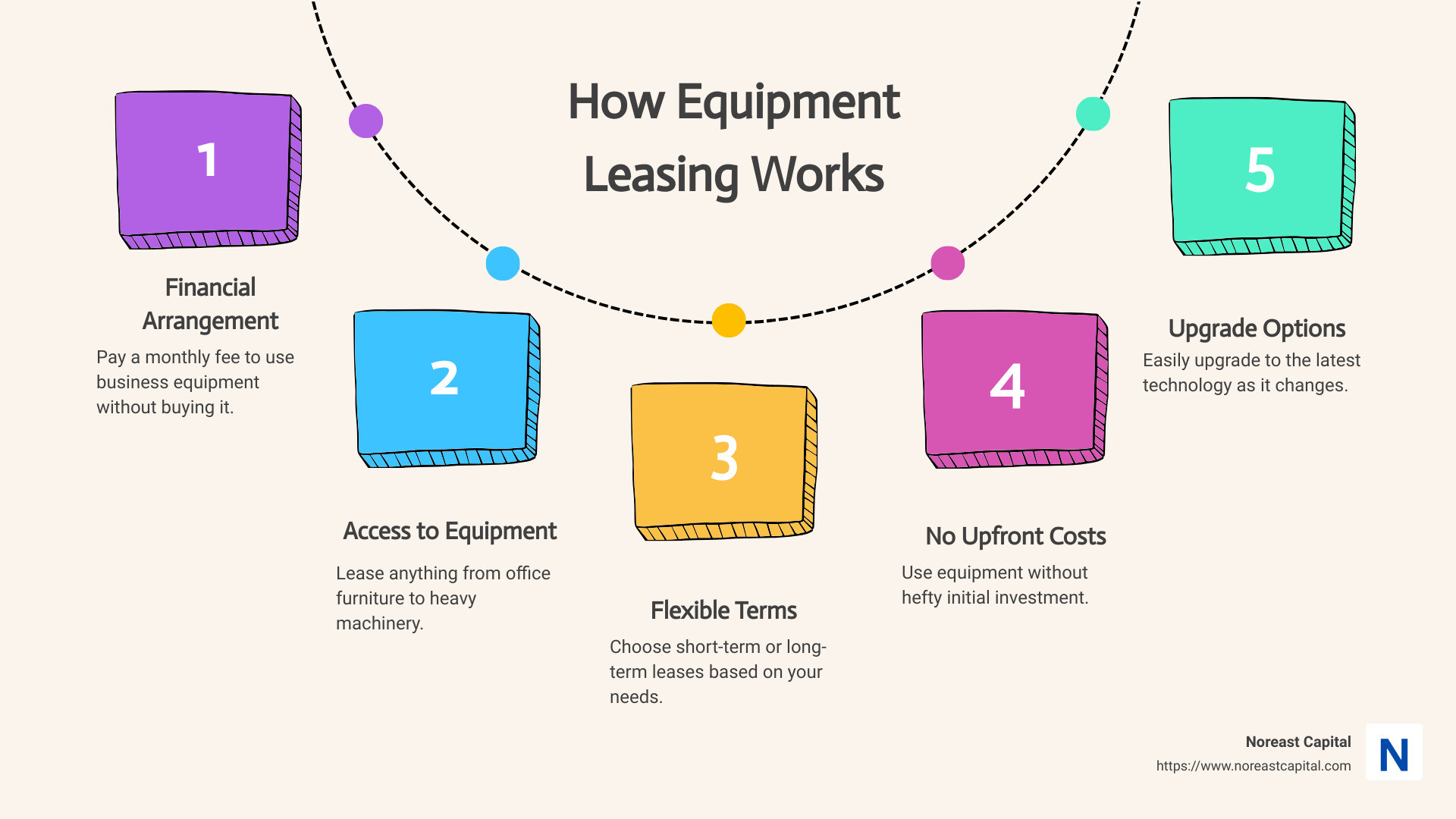
If you want to know how equipment leasing works, here’s a quick rundown:
- Financial Arrangement: Pay a monthly fee to use business equipment without buying it.
- Access to Equipment: Lease anything from office furniture to heavy machinery.
- Flexible Terms: Choose short-term or long-term leases based on your needs.
Leasing equipment can revolutionize your business finances. It allows you to use top-notch equipment without hefty upfront costs or worrying about depreciation. Instead of buying, you pay a monthly fee, giving you the flexibility to upgrade as technology changes.
I’m Vincent Cerniglia, CEO and Founder of Noreast Capital Corporation. With our experience in the equipment financing and leasing marketplace, we help small businesses like yours grow without breaking the bank.
What is Equipment Leasing?
Equipment leasing is a contractual agreement where a business (the lessee) rents equipment from a leasing company (the lessor) for a specific period in exchange for set payments. This arrangement allows businesses to access necessary machinery, vehicles, or technology without the hefty upfront costs of purchasing.
Types of Equipment Leases
There are two primary types of equipment leases: capital leases and operating leases. Each type has its own structure and benefits, catering to different business needs.
Capital Leases
A capital lease is like a long-term loan. It’s usually non-cancelable and designed for businesses that need long-term access to equipment. With a capital lease:
- Ownership Transfer: The lessee often has the option to purchase the equipment at the end of the lease term, usually at a reduced price.
- Maintenance Responsibility: The lessee is responsible for maintaining and insuring the equipment.
- Accounting Treatment: The equipment is recorded as an asset on the lessee’s balance sheet, and the lease payments are treated as liabilities.
For instance, a manufacturing company might lease a production machine under a capital lease because they’ll use it daily for many years.
Operating Leases
Operating leases are more like short-term rentals. They provide flexibility for businesses that need equipment for a shorter period. With an operating lease:
- Cancellation Options: The lessee can cancel the lease with prior notice and return the equipment before the term ends.
- Lessor Ownership: The lessor retains ownership of the equipment during and after the lease period.
- Tax Benefits: Lease payments are often tax-deductible as operating expenses.
Businesses that frequently update their technology, such as IT firms, often prefer operating leases to avoid obsolescence.
Closed-End vs. Open-End Leases
Leases can further be categorized as closed-end or open-end:
- Closed-End Lease: The lessee is responsible for maintaining the equipment but can return it at the lease term’s end without any further obligation.
- Open-End Lease: The lessee must compensate the lessor for any loss in value of the equipment during the lease period, which can be risky if the equipment depreciates quickly.
Understanding these types of leases helps businesses choose the best option for their needs, balancing cost, flexibility, and risk.
How Equipment Leasing Works
Equipment leasing can be a great way for businesses to access the equipment they need without the high upfront costs of buying. Here’s a closer look at how it all works, including the different types of leases available.
Capital Leases
Capital leases are like long-term rentals. They give businesses access to equipment for a set period, often several years. These leases are non-cancelable, meaning you can’t back out without penalties.
Key Features:
- Fixed Rate: Payments are fixed for the lease term, making budgeting easier.
- Predetermined Period: The lease term is set in advance, often lasting several years.
- Purchase Option: At the end of the lease, you can usually buy the equipment for a small amount, like $1 or 10% of its original cost.
- Maintenance Responsibility: The lessee is responsible for maintaining the equipment and insuring it.
Example: A manufacturing company might use a capital lease to get a production machine they’ll use every day for years. This way, they can spread the cost over time and eventually own the machine.
Operating Leases
Operating leases are more like short-term rentals. They give businesses access to equipment for a shorter time, often just a few months to a couple of years. These leases are cancelable, meaning you can end the lease early with proper notice.
Key Features:
- Short-Term Rentals: The lease period is shorter, often less than the equipment’s useful life.
- Cancelable: You can return the equipment before the lease ends, usually with some notice.
- Lessor Ownership: The lessor retains ownership of the equipment.
- Fair Market Value: At the end of the lease, you can buy the equipment at its fair market value, renew the lease, or return the equipment.
Example: A tech company might use an operating lease for computers, which become outdated quickly. This way, they can upgrade to the latest models without worrying about selling old equipment.

In Summary:
- Capital Leases: Long-term, non-cancelable, with a purchase option at the end. Lessee maintains the equipment.
- Operating Leases: Short-term, cancelable, with the lessor retaining ownership. Option to buy at fair market value or return the equipment at the end.
Understanding these types of leases helps businesses choose the best option for their needs, balancing cost, flexibility, and risk.
Next, we’ll explore the financial and operational advantages of equipment leasing.
Benefits of Equipment Leasing
When it comes to acquiring equipment, leasing can offer numerous benefits. These include financial advantages like lower upfront costs and operational advantages such as easy upgrades and maintenance handled by the lessor.
Financial Advantages
1. Low Upfront Costs
Leasing equipment typically requires no down payment, which is great if you’re tight on cash. This allows businesses to conserve their capital for other critical needs. Unlike buying, where you might need a sizable down payment, leasing spreads the cost over the lease term.
2. Lower Monthly Payments
Monthly lease payments are often lower than loan payments for buying the same equipment. This keeps your expenses predictable and manageable, helping you budget more effectively.
3. Conserve Cash Flow
By spreading out payments, leasing helps maintain your cash flow. This is crucial for covering day-to-day operations, investing in growth, or dealing with unexpected expenses.
4. Tax-Deductible Expenses
Lease payments are often tax-deductible as a business expense. This can offer significant tax savings, making leasing an even more attractive option.
5. Flexible Terms
Leasing terms can be custom to fit your business needs. Whether you need a seasonal lease, deferred payments, or a $1 buyout option, there’s a leasing plan that can work for you.
6. Predictable Budgeting
Fixed monthly payments make it easier to predict and manage your budget. Unlike some loans with variable interest rates, lease payments remain constant throughout the term.
Operational Advantages
1. Avoid Obsolescence
Technology evolves rapidly. Leasing allows you to upgrade to the latest models without the hassle of selling outdated equipment. This keeps your business competitive and efficient.
2. Easy Upgrades
When your lease term ends, you can easily upgrade to newer equipment. This is particularly beneficial for industries like tech or medical, where advancements happen quickly.
3. Maintenance Handled by Lessor
In many leasing agreements, the lessor is responsible for maintenance and repairs. This saves you time and money, allowing you to focus on your core business activities.
4. Flexible End-of-Term Options
Leasing offers various end-of-term options. You can choose to return the equipment, renew the lease, or purchase the equipment at its fair market value. This flexibility helps you adapt to your business needs as they change.
Next, we’ll discuss how to get an equipment lease and what criteria you need to meet.
How to Get an Equipment Lease
Qualification Criteria
Before you can lease equipment, you need to meet certain criteria. Here’s what leasing companies typically look for:
1. Credit Score:
Your credit score is crucial. A score of 640 or above is usually favorable. If your score is in the 700s, you might get better rates and terms. Lower scores might still qualify, but expect higher rates.
2. Business Financials:
Leasing companies will review your financial health. This includes your cash flow and profitability. If your business is over two years old and shows steady performance, you have a better chance of approval. Financial statements, tax returns, and other documents will be required to prove this.
3. Cash Flow:
Strong cash flow can offset a lower credit score. Leasing companies want to see that you can make regular payments. They’ll review your recent financial statements to ensure you have enough liquidity.
4. Profitability:
If your business is profitable, you’re in a good position. Even if your credit score isn’t perfect, showing consistent profits can help you qualify for a lease.
Required Documentation
When applying for an equipment lease, you need to provide various documents. Here’s a checklist:
1. Lease Application:
Fill out a lease application form. This usually includes basic information about your business and the equipment you want to lease.
2. Business Plan:
A detailed business plan is often required. This should outline how you’ll use the equipment and how it will contribute to your revenue.
3. Financial Statements:
Provide your most recent financial statements. This includes income statements, balance sheets, and cash flow reports from the past three years.
4. Tax Returns:
Submit your business’s tax returns. These help verify your financial status and profitability.
5. Resumes of Owners:
Leasing companies may ask for the resumes of the business owners. This helps them understand your experience and expertise in the industry.
6. Description of Equipment Use:
Explain why you need the equipment and how it will be used. This helps the lessor understand the purpose of the lease.
Determine Your Budget
Before you start the leasing process, figure out your budget. Leasing usually offers lower monthly payments and lower upfront costs than buying.
1. Upfront Costs:
Consider what you can afford to pay upfront. Some leases require a security deposit or origination fees.
2. Monthly Payments:
Determine what you can afford to pay each month. Leasing spreads out the cost over time, making it easier on your cash flow.
Lease Duration
Decide how long you’ll need the equipment.
1. Short-term Leases:
These are ideal for equipment that becomes obsolete quickly or if your needs might change soon.
2. Long-term Leases:
These are better for expensive equipment that you plan to use for many years.
Once you have this information, you’ll be ready to apply for an equipment lease. In the next section, we’ll discuss the specifics of equipment lease contracts, including rates, terms, and conditions.
Equipment Lease Contract: Rates, Terms, and Conditions
When entering into an equipment lease, it’s crucial to understand the rates, terms, and conditions outlined in the contract. Let’s break down these elements to make it simple.
Lease Terms
Fixed Rates: Equipment leases usually come with fixed rates for the entire duration of the contract. This means your payments won’t change, providing you with predictable budgeting.
Interest Rates: The interest rates on equipment leases typically range between 6% and 9%. These rates are influenced by factors such as your credit score, the type of equipment, and your industry.
Origination Fees: These fees cover the costs of processing your lease application, including credit checks and paperwork. Always review these fees to understand the total cost of your lease.
Interim Rent: Sometimes, lessors charge interim rent for the period between equipment installation and the first payment. This can add to your initial costs, so it’s important to factor this in.
Insurance Costs: Insurance is often a requirement. Some leases include insurance fees in the monthly payment, while others require you to provide proof of your own coverage. Make sure you know who is responsible for this cost.
Lease Duration
Short-term Leases: These are ideal for equipment that becomes obsolete quickly or if your needs might change soon. They offer flexibility but might come with higher monthly payments.
Long-term Leases: These are better for expensive equipment that you plan to use for many years. They often have lower monthly payments but less flexibility.
Early Termination: Some leases allow for early termination, but this usually comes with penalties. It’s essential to understand these penalties before signing the contract.
Renewal Options: At the end of the lease term, you might have the option to renew the lease, purchase the equipment, or return it. Make sure to know your options and any associated costs.
Market Value and Cancellation Provisions
Market Value Disclosure: For high-value equipment, the lease agreement might disclose the market value. This helps you determine the level of insurance coverage needed.
Insurance Coverage: Ensure that the equipment is adequately insured. The lease should specify who is responsible for this coverage.
Cancellation Procedures: If you need to cancel the lease before the term ends, the contract will outline the steps and any penalties involved. Early termination penalties can be substantial, so it’s important to review these details.
Understanding these lease terms and conditions can help you avoid unexpected costs and make informed decisions. Next, we’ll dive into some frequently asked questions about how equipment leasing works.
Frequently Asked Questions about How Equipment Leasing Works
How do you make money from equipment leasing?
Leasing companies like Noreast Capital make money through lease extensions, renewals, equipment upgrades, and continued payments. When a lease term ends, businesses often extend the lease or renew it for a new term, generating additional revenue for the lessor. Equipment upgrades also offer a way for leasing companies to earn more. For instance, if a business needs the latest technology, they can upgrade to newer equipment, leading to a new lease agreement.
Additionally, continued payments throughout the lease term provide a steady income stream for leasing companies. This is especially true for long-term leases where payments are spread out over several years.
How are equipment lease payments calculated?
Equipment lease payments are calculated based on several factors:
- Lease Funding Amount: This is the total cost of the equipment being leased.
- Interest Rate: The interest rate applied to the lease, which is influenced by your credit score and market conditions.
- Residual Amount: The estimated value of the equipment at the end of the lease term. This can affect your monthly payments.
- Lease Term: The length of the lease, which can range from months to years.
- Payment Period: How often payments are made, such as monthly, quarterly, or annually.
These factors combine to determine your monthly or periodic lease payments, ensuring they are manageable and predictable.
What happens to equipment at the end of the lease?
At the end of the lease, you generally have three options:
- Return to Owner: You can return the equipment to the lessor, freeing you from any further obligations.
- Purchase Option: Many leases include an option to purchase the equipment at its fair market value or a predetermined price. This can be beneficial if the equipment is still valuable to your business.
- Lease Renewal: If you still need the equipment but don’t want to buy it, you can renew the lease for another term. This allows you to continue using the equipment without the upfront cost of purchasing it.
Understanding these options helps you plan for the future and make the best decision for your business needs.

Next, let’s explore how to get an equipment lease, including determining your budget, lease duration, and qualification criteria.
Conclusion
At Noreast Capital, we understand that acquiring the right equipment is crucial for your business’s success. Equipment leasing offers a range of benefits that can provide significant financial flexibility and support your business growth.
Financial Flexibility
One of the main advantages of equipment leasing is the financial flexibility it provides. Leasing allows you to access the equipment you need without a large upfront investment. This means you can preserve your cash flow for other essential business activities. Additionally, lease payments are generally lower than loan payments, making it easier to manage your budget.
Access to Latest Technology
Leasing gives you the opportunity to stay up-to-date with the latest technology. This is particularly beneficial in industries where technology evolves rapidly. By leasing, you can upgrade to new equipment at the end of your lease term, ensuring you always have access to the most advanced tools and machinery.
Tax Benefits
Leasing can also provide tax benefits. Lease payments are often considered operating expenses and may be tax-deductible. This can reduce your taxable income and provide additional financial savings for your business.
Maintenance and Support
Many leasing agreements include maintenance and support services provided by the lessor. This can save you time and money on repairs and ensure that your equipment remains in good working condition throughout the lease term.
Flexible End-of-Term Options
At the end of your lease, you have several options: you can return the equipment, purchase it at a predetermined price, or renew the lease. This flexibility allows you to make decisions based on your current business needs and financial situation.
Leasing equipment with Noreast Capital can help you achieve your business goals without the financial strain of purchasing equipment outright. By choosing to lease, you can enjoy the benefits of modern technology, financial savings, and flexible terms that support your business growth.
Ready to explore equipment leasing options? Contact Noreast Capital today to learn how we can help your business thrive.