

TRAC lease calculator is a powerful tool designed to simplify the complexities of leasing commercial vehicles. If you’re looking to better understand how this calculator can benefit your business, you’re in the right place. Here’s a quick look at what a TRAC lease calculator can do for you:
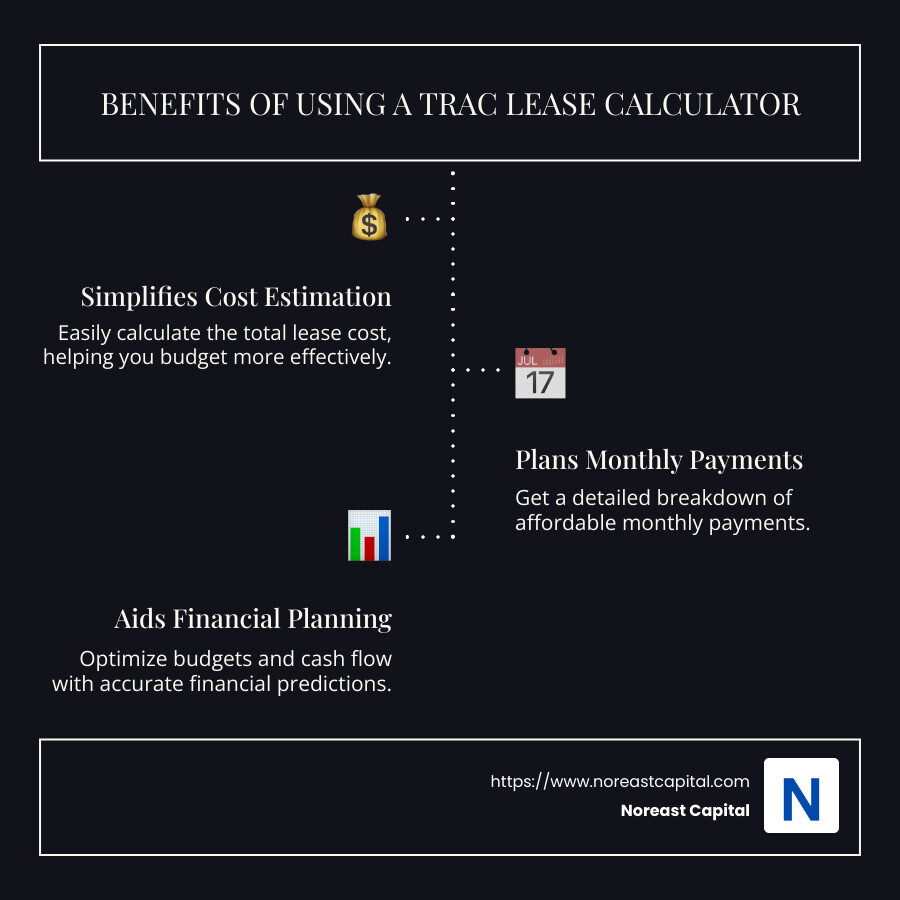
- Simplifies cost estimation
- Helps plan affordable monthly payments
- Aids in financial planning to optimize budgets
In equipment leasing, TRAC leases stand out as a smart choice for businesses aiming to conserve cash flow and avoid hefty initial investments. They offer a unique advantage by allowing you to use commercial vehicles with minimized financial strain. Through leasing, you gain access to essential equipment without the burden of ownership, letting you focus funds on growing your operations instead.
As Vincent Cerniglia from Noreast Capital, I’ve spent years navigating the equipment financing landscape to optimize the use of tools like the TRAC lease calculator. My experience ensures you can lease confidently, balancing your needs with financial sense.
Trac lease calculator terms simplified:
– equipment leasing calculator
– finance lease calculator
– lease amortization schedule calculator
What is a TRAC Lease?
A TRAC lease is a special type of lease designed for commercial vehicles used more than half of the time for business purposes. The term “TRAC” stands for Terminal Rental Adjustment Clause. This clause is what makes TRAC leases unique compared to other types of leases.
TRAC Lease Definition
In a TRAC lease, the lessee enjoys lower monthly payments because the lessor retains the depreciation benefits and passes the tax savings to the lessee. At the end of the lease term, you have the option to buy the vehicle at a predetermined residual value. If you choose not to purchase, the vehicle is sold, and any difference compared to the residual value is settled between you and the lessor.
Operating Leases vs. TRAC Leases
While TRAC leases share some similarities with operating leases, they differ significantly in terms of end-of-lease options and tax treatment. Operating leases are typically used for equipment that is not intended to be purchased by the lessee at the end of the lease term. TRAC leases, however, often include the option to buy the vehicle, making them more flexible for businesses that may want to eventually own their vehicles.
Tax-Oriented Leases
TRAC leases are considered tax-oriented leases. This means they are structured to take advantage of tax benefits. The lessor claims depreciation, which reduces taxable income, and these savings are passed on to the lessee in the form of lower lease payments. Additionally, lease payments are fully tax-deductible, providing a further financial advantage to businesses.
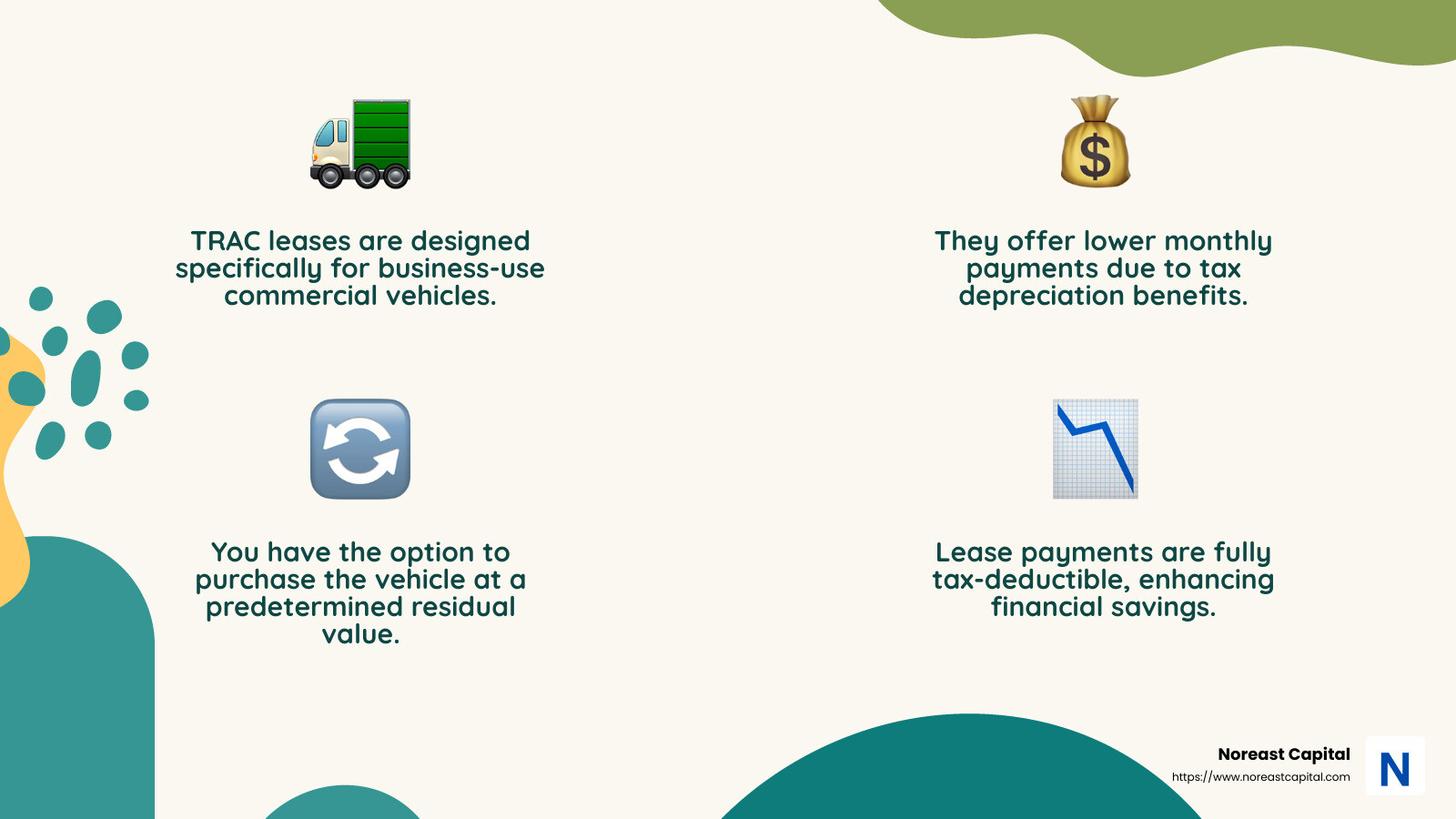
In summary, a TRAC lease is an excellent option for businesses looking to lease commercial vehicles with the flexibility of ownership at the end of the term. The tax benefits and lower monthly payments make it a financially savvy choice for managing business expenses while keeping cash flow steady.
Benefits of Using a TRAC Lease Calculator
When it comes to leasing commercial vehicles, understanding the financial aspects is crucial. A TRAC lease calculator can be your best friend in this process, offering several key benefits:
Cost Estimation
One of the primary advantages of using a TRAC lease calculator is its ability to provide an accurate estimate of costs. By inputting details like the vehicle price, lease term, and residual value, you can quickly see what your monthly payments will look like. This upfront cost estimation helps businesses plan their budgets effectively, ensuring there are no surprises down the line.
Monthly Payments
With a TRAC lease calculator, you can easily determine your monthly payments. This is especially beneficial for businesses that need to manage their cash flow carefully. Knowing your monthly lease payments in advance allows for better financial planning and helps avoid any cash flow hiccups. The calculator considers factors like the money factor (similar to interest rate) and the residual value, giving you a clear picture of your financial commitments.
Financial Planning
A TRAC lease calculator is an invaluable tool for long-term financial planning. It helps businesses assess whether leasing is the right option compared to purchasing. By simulating different scenarios—like varying lease terms or residual values—you can make informed decisions that align with your business goals. This foresight can lead to significant savings and financial stability.
Using a TRAC lease calculator empowers businesses to make informed financial decisions. It provides clarity on costs, ensures predictable monthly payments, and aids in comprehensive financial planning. These benefits make it an essential tool for any business considering a TRAC lease.
How to Use a TRAC Lease Calculator
Using a TRAC lease calculator might seem daunting at first, but it’s pretty straightforward. Here’s a simple guide to help you get started.
Lease Calculation Formula
First, let’s break down the lease calculation formula. The formula typically involves three main components: the vehicle’s capitalized cost, the residual value, and the money factor.
Capitalized Cost: This is the price of the vehicle, similar to the purchase price. It’s the starting point for your lease calculations.
Residual Value: This is what the vehicle is expected to be worth at the end of the lease. It plays a crucial role in determining your monthly payments. A higher residual value usually means lower monthly payments because you’re essentially paying for the depreciation over the lease term.
Money Factor: Think of this as the lease’s interest rate. It’s a small decimal number that affects your monthly payments. To convert the money factor to an annual percentage rate (APR), multiply it by 2,400.
Steps to Use the Calculator
Input the Vehicle Price: Enter the capitalized cost of the vehicle. This might include additional fees or rebates.
Enter Lease Term: Input the lease duration in months. Typical terms range from 24 to 60 months.
Set the Residual Value: The calculator will often have a default percentage, but you can adjust this based on your expectations or the vehicle type.
Adjust the Money Factor: Enter the money factor provided by the lessor. If you have an APR, remember to divide by 2,400 to get the money factor.
Review Monthly Payments: The calculator will compute your monthly lease payments based on these inputs. You can adjust any values to see how changes affect your payments.
Example
Let’s say you lease a vehicle with a capitalized cost of $30,000, a residual value of $15,000, and a money factor of 0.00125. Using these numbers, the calculator will show you what your monthly payment will be, helping you plan your budget effectively.
Using a TRAC lease calculator simplifies the complex process of understanding lease costs. By breaking down each component, you can make informed decisions and ensure that the lease aligns with your financial goals.
With these steps, you’re now ready to explore different leasing options with confidence.
TRAC Lease Calculator vs. Other Lease Calculators
When it comes to leasing commercial vehicles or equipment, choosing the right calculator can make all the difference. Let’s explore how a TRAC lease calculator stacks up against other types of lease calculators, like FMV and auto lease calculators.
TRAC Lease vs. FMV Lease
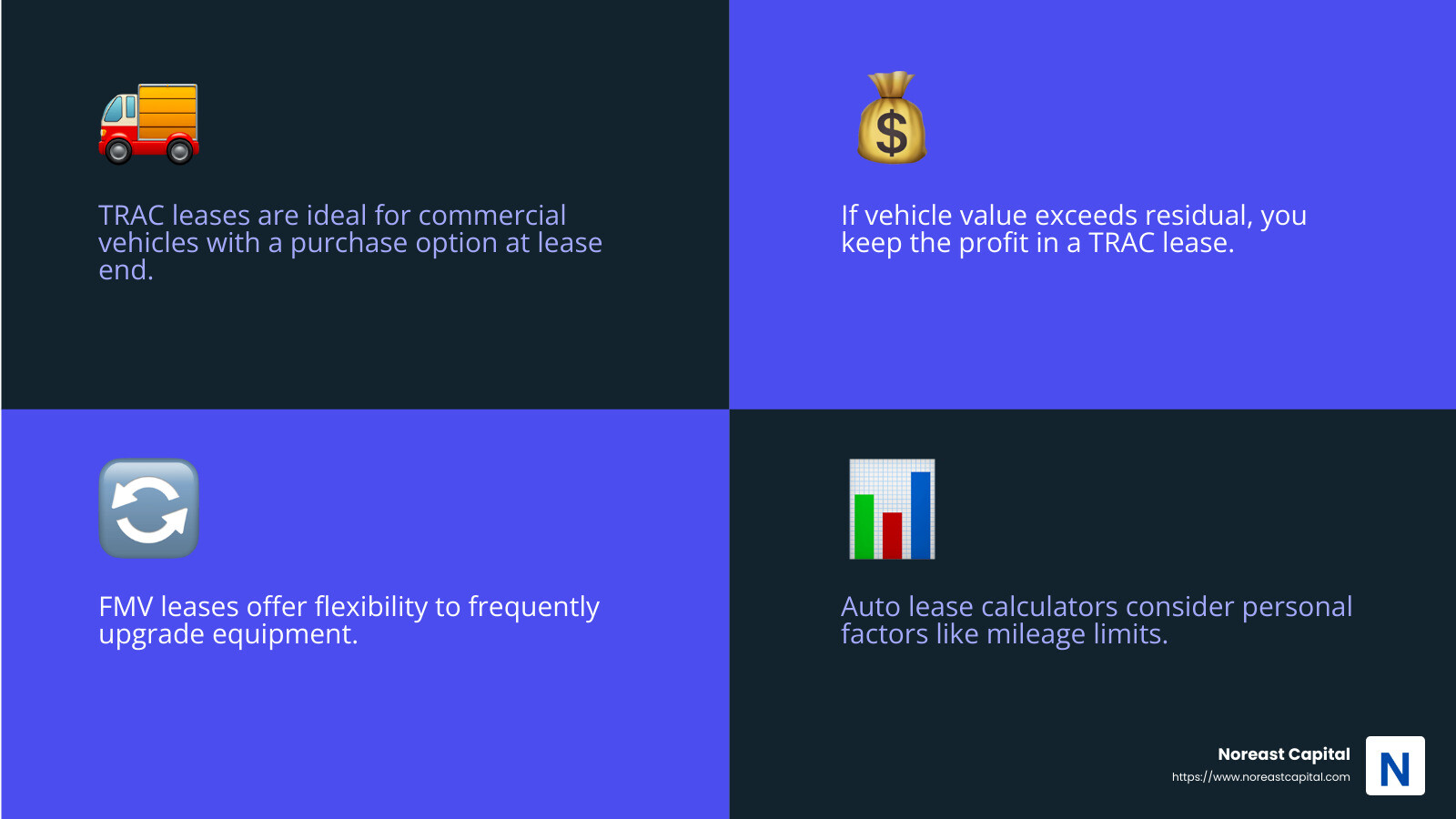
TRAC leases (Terminal Rental Adjustment Clause) are designed for commercial vehicles used primarily for business. They offer flexibility at the end of the lease term, allowing you to purchase the vehicle for a predetermined residual value. If the vehicle sells for more than the residual, you keep the profit. If it sells for less, you cover the difference.
On the other hand, FMV leases (Fair Market Value) provide an option to purchase the equipment at its fair market value at the lease’s end. This type of lease is often used for equipment rather than vehicles. FMV leases can be beneficial for businesses wanting lower monthly payments and the flexibility to upgrade equipment frequently.
Auto Lease Calculator
An auto lease calculator focuses on consumer vehicles and includes factors like the vehicle’s MSRP, negotiated price, and lease term. It also takes into account personal factors like mileage limits and personal credit scores. While useful for everyday car leasing, it may not provide the flexibility needed for commercial operations that TRAC leases offer.
Equipment Lease Calculator
An equipment lease calculator is ideal for businesses looking to lease machinery, computers, or other non-vehicle assets. Like TRAC leases, it considers the equipment’s cost, lease term, and residual value. However, it doesn’t account for the unique resale and purchase options that TRAC leases provide for commercial vehicles.
Choosing the Right Calculator
Each lease calculator serves a specific purpose. For commercial vehicle leases, a TRAC lease calculator provides the custom flexibility and financial insights needed for informed decision-making. It helps you understand potential end-of-lease scenarios, making it easier to plan for future business needs.
In contrast, FMV and equipment lease calculators may be more suitable for other types of assets, offering different benefits based on the asset’s nature and intended use.
By understanding these differences, you can confidently select the right tool to optimize your leasing strategy and manage your business’s financial health effectively.
Frequently Asked Questions about TRAC Leases
Is a TRAC lease a good idea?
TRAC leases can be a smart choice for businesses, especially those needing commercial vehicles or equipment. One of the main advantages is the upfront savings. With no large down payment required, businesses can conserve their operating funds and avoid tying up credit lines. This makes it easier for companies, particularly new ones, to acquire the necessary equipment without a hefty initial investment.
Another benefit is the tax deductibility of lease payments, which can lower a business’s taxable income. Plus, at the end of the lease, you have the option to purchase the equipment at a predetermined residual value, providing flexibility for future planning.
Is a TRAC lease a true lease?
Yes, a TRAC lease is considered a true lease, particularly in the context of corporate fleets and commercial vehicles. This type of lease is structured as an off-balance sheet transaction, meaning it doesn’t appear as a liability on the company’s balance sheet. This can be advantageous for businesses looking to maintain a healthy financial statement while still gaining access to essential equipment.
TRAC leases are designed to give businesses the flexibility they need, with the option to purchase the equipment at the end of the lease or return it and potentially benefit from any sales profit.
What is the difference between a TRAC lease and a FMV lease?
The main difference between a TRAC lease and an FMV (Fair Market Value) lease lies in the residual value and mileage flexibility. A TRAC lease allows for unlimited mileage, which is ideal for businesses that rely heavily on their vehicles for operations. This means you can use the vehicle as much as needed without worrying about penalties for exceeding mileage limits.
On the other hand, an FMV lease typically includes mileage restrictions and focuses on the fair market value of the asset at the end of the lease. This can be beneficial for businesses that frequently upgrade their equipment since it offers lower monthly payments and the option to purchase the asset at its market value.
By understanding these differences, businesses can choose the lease type that best aligns with their operational needs and financial goals.
Conclusion
At Noreast Capital, we understand that managing cash flow is crucial for any business. That’s why we offer flexible equipment financing solutions that are designed to help you maintain your financial health while accessing the equipment you need. With our TRAC lease calculator, you can easily estimate costs and plan your finances with confidence.
Our goal is to make equipment leasing simple and accessible. By choosing Noreast Capital, you can avoid the burdens of ownership and enjoy the financial advantages of leasing. This means more available capital to invest in other areas of your business, allowing you to grow and thrive.
Whether you’re in Annapolis, Baltimore, Washington, DC, or anywhere else, we’re here to support your business with custom leasing options. Our team is committed to helping you find the best financial solutions, ensuring your cash flow remains steady and your business operations efficient.
Ready to explore how equipment leasing can benefit your business? Check out our equipment leasing calculator to get started and lease with confidence. Let us help you manage your finances better and achieve your business goals.