

The Smart Choice: Financing vs Leasing for Your Next Car
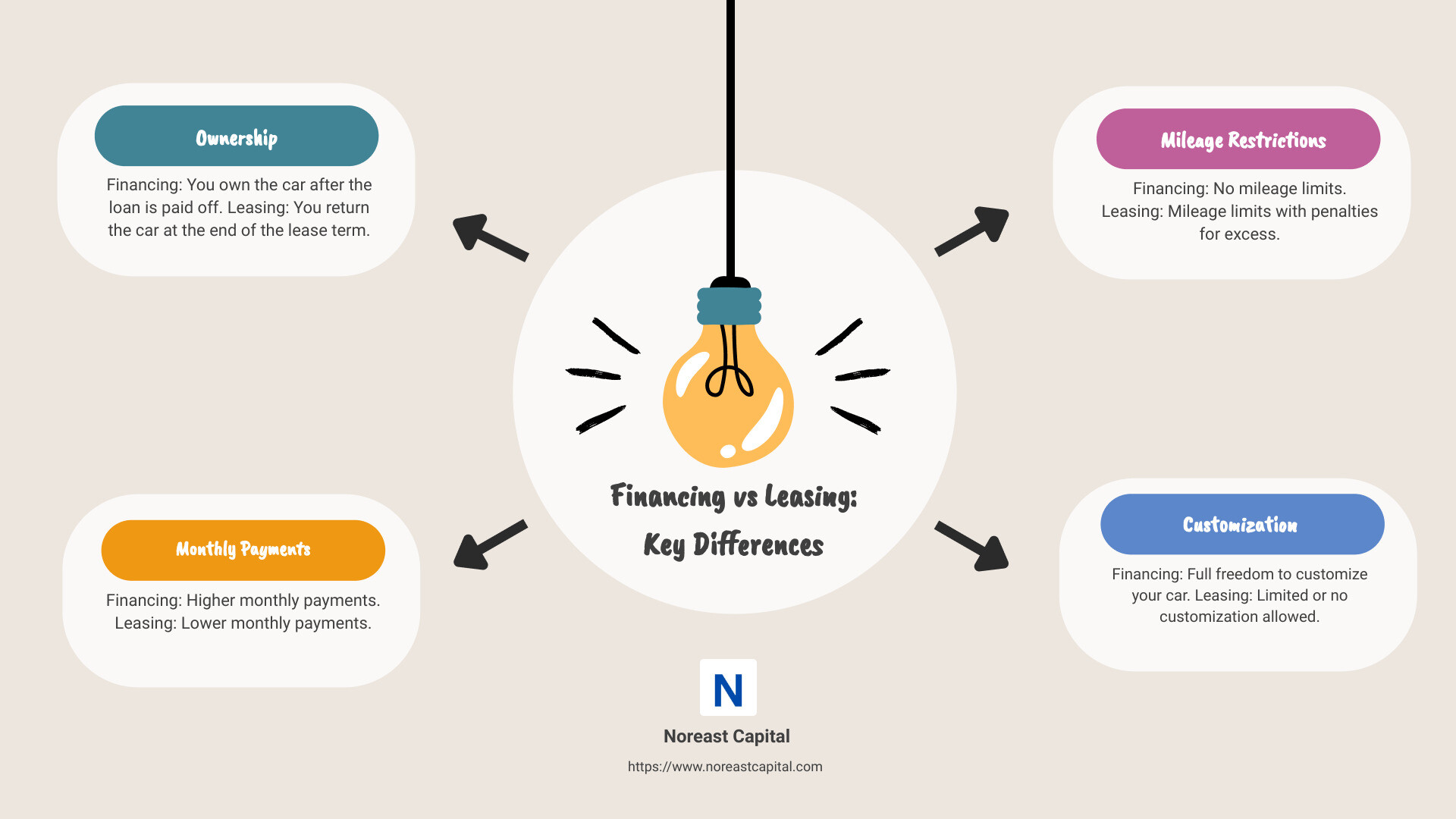
When it comes to getting a new car, you’re faced with two main options: financing or leasing. Understanding why finance a car vs lease is crucial to making an informed decision. Here’s a quick breakdown:
Financing a Car:
– You own the car once the loan is paid off.
– Higher monthly payments but long-term savings.
– No mileage restrictions or wear and tear penalties.
Leasing a Car:
– Lower monthly payments but no ownership.
– Mileage limits and potential additional fees.
– You drive a new car every few years.
Financing a car allows you to build equity, ultimately giving you more financial control and long-term benefits. Leasing, on the other hand, may suit those who prefer lower monthly payments and driving newer models, but it lacks ownership and can come with extra restrictions.
I’m Vincent Cerniglia, and as an expert with years of experience in equipment financing and leasing, I’ve seen the financial impacts and benefits of both options. My goal is to make these complex choices simple for you to understand.
Common why finance a car vs lease vocab:
– financed vs leased
– how is lease vs finance car calculated
Understanding Car Financing
When you finance a car, you’re taking out a loan to pay for it. This means you’ll make monthly payments until the loan is paid off, and then you’ll own the car outright. Let’s explore the benefits of financing a car and some potential drawbacks.
Benefits of Financing a Car
Ownership: The biggest benefit of financing is that you will eventually own the car. Once you’ve paid off the loan, the car is yours to keep, sell, or trade in. This means no more monthly payments, which can be a significant financial relief.
Equity Building: As you make payments, you’re building equity in the car. Equity is the difference between what the car is worth and what you still owe on it. Over time, as you pay down the principal, your equity increases.
No Mileage Restrictions: Unlike leasing, financing doesn’t come with mileage limits. You can drive as much as you want without worrying about penalties.
Customization: When you own the car, you can modify it however you like. Want to add a new sound system or change the paint color? Go for it! There are no restrictions on customization.
Long-Term Savings: While monthly payments might be higher, financing can save you money in the long run. Once the loan is paid off, you no longer have car payments. This can be a significant financial advantage over leasing, where payments never end.
Drawbacks of Financing a Car
Higher Monthly Payments: Financing typically comes with higher monthly payments compared to leasing. This is because you’re paying off the entire cost of the car, plus interest, over a set period.
Long-Term Commitment: When you finance a car, you’re usually committing to a loan term of several years. This long-term commitment can be a drawback if your financial situation changes or if you want a new car before the loan is paid off.
Depreciation: New cars lose value quickly, especially in the first few years. This depreciation can impact the equity you’ve built in the car. You might find yourself “upside down” on the loan, meaning you owe more than the car is worth.
Potential for Being Upside Down: Being upside down on a car loan can be risky. If you need to sell the car or if it’s totaled in an accident, you could end up owing more than the car’s value. This situation can be financially challenging and might require you to roll the remaining balance into a new loan.
Understanding these benefits and drawbacks can help you make an informed decision about whether financing a car is the right choice for you.

Next, we’ll explore the financial benefits of financing in more detail, including how equity, resale value, and the absence of ongoing payments can work to your advantage.
Why Finance a Car vs Lease
Financial Benefits of Financing
Equity and Ownership: When you finance a car, you build equity with each payment. Unlike leasing, where you never own the vehicle, financing means that once the loan is paid off, the car is yours. This equity can be a financial asset. For example, if you decide to sell or trade in the car, the money you get can be used toward your next vehicle. According to Noreast Capital, “The vehicle will depreciate, but its cash value is yours to use as you like.”
Resale Value: Owning a car gives you the flexibility to sell it whenever you want. If your car is well-maintained, it can retain a good resale value, providing you with a lump sum that can be used for future purchases. This is a significant advantage over leasing, where you return the car with no financial gain.
No Ongoing Payments After Loan Term: One of the biggest financial benefits of financing is that your payments will eventually stop. Once you pay off the loan, you no longer have monthly payments, which can free up substantial money in your budget. This contrasts sharply with leasing, where payments continue as long as you lease.
Flexibility and Control
No Mileage Restrictions: When you finance a car, you can drive as much as you want without worrying about mileage limits. Leases typically come with mileage restrictions, often capped at 10,000-15,000 miles per year. Exceeding these limits can result in hefty penalties. As noted by Consumer Reports, “Nearly every lease contract has a mileage cap. Exceed it, and you’ll pay hefty fees at the end of the contract.”
Customization: Financing a car allows you to customize it to your liking. Whether you want to install a new sound system, change the paint color, or add aftermarket parts, financing gives you the freedom to make the car truly yours. Leasing contracts usually prohibit any modifications, and you might have to pay to revert any changes before returning the car.
Ownership Freedom: With financing, you’re not tied down by the terms of a lease. You can keep the car for as long as you want, sell it when it suits you, or trade it in for a new model. This flexibility can be particularly beneficial if your needs change over time, such as expanding your family or moving to a different location.
In summary, financing a car offers significant financial benefits and greater flexibility and control compared to leasing. From building equity and avoiding ongoing payments to enjoying the freedom to drive as much as you want and customize your vehicle, financing can be a more advantageous option for many drivers.
Next, we’ll dig into the drawbacks of leasing to provide a balanced view of why financing might be the better choice for you.
The Drawbacks of Leasing
Financial Disadvantages
Ongoing Payments: One of the biggest financial drawbacks of leasing is that the payments never stop. You are essentially renting the car, so once one lease ends, you often find yourself starting another. This means you will always have a monthly payment, unlike financing, where payments eventually end.
Higher Long-Term Cost: Leasing may seem cheaper month-to-month, but over the long haul, it usually costs more. You’re paying for the car during the period when it depreciates the most, which means you’re covering the steepest part of its value drop.
No Equity: When you lease a car, you never own it. This means you don’t build any equity. At the end of the lease, you have no asset to sell or trade in, leaving you with nothing to put towards your next vehicle.
Early Termination Fees: If you need to get out of a lease early, be prepared for hefty fees. These early termination charges can be thousands of dollars, which you have to pay all at once. This can be a significant financial burden if your circumstances change unexpectedly.
Usage Restrictions
Mileage Limits: Leases come with strict mileage limits, typically around 10,000-15,000 miles per year. If you exceed these limits, you’ll face excess mileage penalties, which can range from 10 to 50 cents per mile. For high-mileage drivers, this can add up quickly.
Wear and Tear Fees: Leasing companies expect you to return the car in good condition. If you don’t, you’ll have to pay for excess wear and tear. This can include everything from minor dents and scratches to more significant damage. If you have kids or frequently park in crowded areas, these fees can become a costly surprise.
Modification Restrictions: Leased cars need to be returned in their original condition, minus normal wear and tear. This means you can’t make any modifications, such as adding a new sound system or custom paint job. If you do make changes, you’ll need to revert them before returning the car, which can be an added expense.
In summary, while leasing might offer lower monthly payments and the allure of driving a new car every few years, it comes with several financial and usage restrictions that can make it a less attractive option compared to financing. Next, we’ll compare the costs of financing versus leasing to provide a clearer picture of why financing might be the better choice for you.
Comparing Costs: Financing vs Leasing
When deciding between financing and leasing a car, understand the financial implications of each option. Let’s break down the costs and long-term implications of both to help you make an informed decision.
Monthly Payments Breakdown
Loan Payments vs Lease Payments:
Loan Payments: When you finance a car, your monthly payments go toward paying off the loan principal and interest. While these payments are generally higher than lease payments, they contribute to building equity in the vehicle. Once the loan is paid off, you own the car outright and no longer have monthly payments.
Lease Payments: Lease payments are typically lower than loan payments because you’re essentially renting the car. These payments cover the vehicle’s depreciation during the lease term plus rental charges. However, at the end of the lease, you return the car and have no equity or ownership.
Interest and Depreciation:
Interest: The interest rate on a car loan affects your monthly payments and the total cost of the vehicle. Higher interest rates mean higher monthly payments and more money paid over the life of the loan. In contrast, lease payments include a rent charge, which is similar to interest but generally lower because the lease term is shorter.
Depreciation: Depreciation is the loss of a car’s value over time. When you lease, your payments cover the estimated depreciation during the lease term. With financing, you bear the full brunt of depreciation, but you also benefit from any residual value when you sell or trade in the car.
Long-Term Cost Analysis
Total Cost of Ownership:
Financing: The total cost of financing includes the purchase price, interest, and any maintenance or repair costs. However, once the loan is paid off, you own the car and can continue driving it without monthly payments. This can lead to significant long-term savings.
Leasing: The total cost of leasing includes monthly payments, potential excess mileage fees, and wear and tear charges. Since you never own the car, you’ll always have ongoing payments if you continue leasing new vehicles.
Equity and Resale Value:
Equity: Financing a car allows you to build equity over time. Once the loan is paid off, you own an asset that you can sell or trade in. This equity can be used as a down payment on your next vehicle, reducing future financing costs.
Resale Value: A financed car’s resale value depends on its condition, mileage, and market demand. While depreciation reduces the car’s value, you still have an asset at the end of the loan term. In contrast, with leasing, you have no asset to sell or trade in at the end of the lease.
Ongoing Payments:
Financing: After the loan is paid off, you no longer have monthly payments. This can free up your budget for other expenses or savings.
Leasing: Lease payments never end if you continue leasing new cars. This can become a perpetual expense, limiting your financial flexibility.
In summary, while leasing may offer lower monthly payments and the convenience of driving a new car every few years, financing provides long-term financial benefits, including ownership, equity building, and the potential for cost savings once the loan is paid off.
Next, we’ll address some frequently asked questions about financing versus leasing to help clarify any remaining doubts.
Frequently Asked Questions about Financing vs Leasing
Is it better to finance or lease a car?
Short-term vs Long-term Costs:
– Leasing: Offers lower monthly payments, making it appealing for those who want to drive a new car every few years without a large financial commitment. However, you never own the vehicle, meaning you always have ongoing payments.
– Financing: While monthly payments are higher, they contribute to ownership. Once the loan is paid off, you no longer have monthly payments, leading to long-term savings.
Equity:
– Leasing: No equity is built. At the end of the lease, you return the car and have nothing to show for your payments.
– Financing: Builds equity over time. Once the loan is paid off, you own the car, which can be sold or traded in for value.
What are the negatives of leasing a car?
Mileage Restrictions:
– Leases typically come with mileage limits (usually 10,000-15,000 miles per year). Exceeding these limits can result in hefty fees.
Additional Costs:
– Leasing can include extra costs like wear and tear fees, early termination fees, and potential penalties for exceeding mileage limits.
No Ownership:
– At the end of a lease, you don’t own the car. This means you’ll need to start a new lease or finance another car, leading to continuous monthly payments.
Why is financing more than leasing?
Monthly Payments:
– Leasing: Monthly payments are lower because you’re only paying for the vehicle’s depreciation during the lease term plus rental charges.
– Financing: Monthly payments are higher because they include the full cost of the car plus interest over the loan term.
Depreciation:
– Leasing: Payments cover the estimated depreciation of the car during the lease period.
– Financing: You bear the full depreciation but benefit from any remaining value when you sell or trade in the car.
Interest Rates:
– Leasing: Includes a rent charge, which is similar to interest but usually lower due to the shorter term.
– Financing: Involves interest on the loan, which can be higher and accumulates over a longer period, increasing the total cost.
In the next section, we’ll compare the overall costs of financing versus leasing to give you a clearer picture of the financial implications of each option.
Conclusion
Deciding whether to finance or lease your next car is a significant decision that impacts your finances and lifestyle. Both options have their merits, but understanding the long-term benefits of financing can help you make an informed choice.
Summary
Financing a car means higher monthly payments initially, but these payments contribute to owning the vehicle. Once the loan is paid off, you have no more monthly payments, leading to long-term savings. You also build equity in the car, which can be valuable if you decide to sell or trade it in. Conversely, leasing offers lower monthly payments and the flexibility to drive a new car every few years but comes with restrictions like mileage limits and no ownership.
Long-term Benefits
The primary long-term benefit of financing a car is ownership. Once you pay off your loan, you own the car outright. This means no more monthly payments and the freedom to keep, sell, or trade the car as you wish. Financing also allows you to customize your vehicle without restrictions, unlike leasing.
Noreast Capital
At Noreast Capital, we understand the complexities of making financial decisions about car ownership. We offer flexible financing options custom to your needs, ensuring you can drive the car you want without compromising your financial stability. Our expert team is here to guide you through the process, making it as smooth and stress-free as possible.
Financial Decision-making
When making your decision, consider your long-term financial goals, how much you drive, and whether you value ownership. Financing is ideal if you want to build equity and eventually own your car. Leasing might be better if you prefer lower monthly payments and driving a new car every few years. However, the long-term savings and equity built through financing often make it the smarter financial choice.
In conclusion, while leasing might seem attractive due to lower initial costs, financing offers significant long-term benefits. With Noreast Capital, you have a trusted partner to help you steer this important decision. Choose financing for a more financially stable and flexible future.