

Why lease equipment? This question is crucial for businesses aiming to balance operational efficiency with financial prudence. Leasing equipment, rather than purchasing it outright, offers multiple advantages:
– Improved Cash Flow: Avoid hefty upfront costs and pay manageable monthly fees.
– Access to Latest Technology: Stay competitive without owning outdated machinery.
– Flexibility at Lease End: Choose to upgrade, return, or purchase the equipment.
– Tax Benefits: Possible deductions for lease payments.
– Protection from Equipment Obsolescence: Keep your equipment updated without additional investments.
Equipment leasing has become an indispensable strategy for many companies looking to optimize financial efficiency and create strategic business value. By leasing instead of buying, businesses can preserve capital, allowing them to reinvest in other areas that drive growth and competitiveness. As technology continues to advance rapidly, leasing ensures that businesses have access to the most current equipment, avoiding the financial burden of obsolescence.
I’m Vincent Cerniglia, a leader at Noreast Capital Corporation with experience in the equipment financing and leasing sector. My background enables me to deeply understand why lease equipment strategies can be beneficial, providing businesses with flexibility, financial stability, and the tools needed to thrive. Let’s explore further how leasing can be a game-changer for your business operations.

Why Lease Equipment?
Leasing equipment can significantly boost your business’s financial health. Let’s explore why it’s a smart choice, focusing on cost-effectiveness and access to the latest technology.
Cost-Effectiveness
Cash Flow and Low Upfront Costs
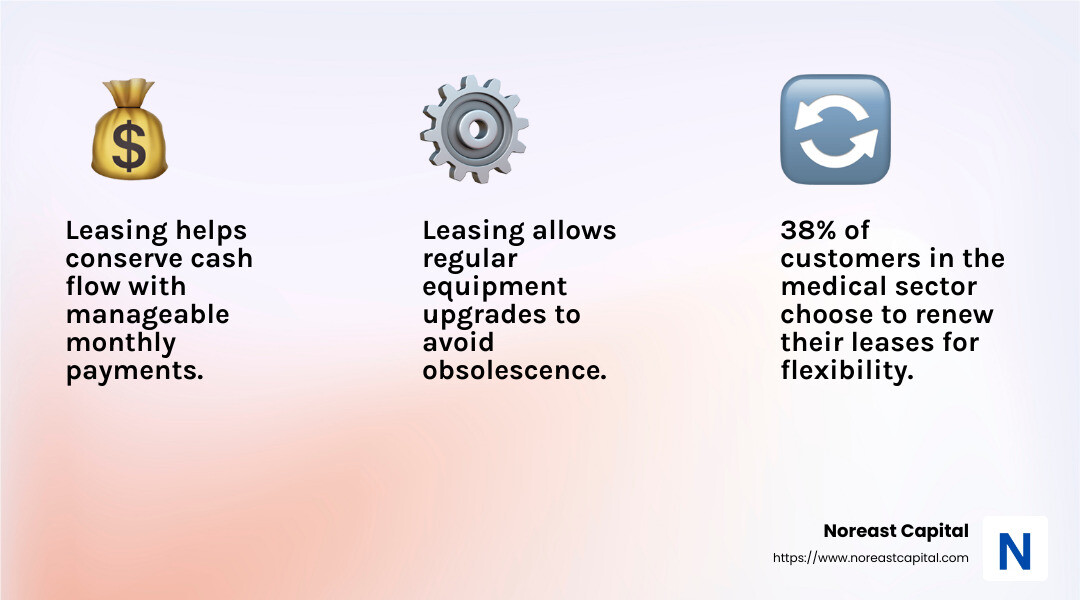
Leasing allows businesses to conserve cash flow by spreading equipment costs over time. Instead of a large purchase, you make manageable monthly payments. This approach keeps your capital free for other critical needs, like marketing or hiring.
For example, Lafayette General, a loyal customer, has managed cash flow effectively through leasing. With an average 30-month lease term, they handle equipment costs of around $3.5 million with monthly payments of just $74,000. This strategy enables them to reinvest in growth without financial strain.
Flexible Options
Leasing offers flexibility that’s hard to match. At the end of a lease, you can choose to upgrade, purchase, or return the equipment. This adaptability ensures you’re never stuck with outdated tools. In fact, 38% of customers in the medical sector choose to renew their leases, highlighting the value of having options.
Access to Latest Technology
Upgrade Flexibility
Staying ahead in today’s world means having up-to-date equipment. Leasing provides the flexibility to upgrade regularly, keeping your business competitive. Deaconess Healthcare System, for instance, upgraded their Stryker system 7 to the latest system 8 within their original lease term, ensuring they always have the best tools available.
Avoid Obsolescence
Technology evolves rapidly, and owning equipment can lead to obsolescence. Leasing protects you from this risk by allowing regular updates without the financial burden of a full purchase. This way, you always have access to the latest advancements without the fear of being left behind.
By focusing on cost-effectiveness and access to the latest technology, leasing equipment becomes a strategic move for any business looking to optimize operations and maintain a competitive edge.
Next, we’ll explore the different types of equipment leases and how they cater to various business needs.
Types of Equipment Leases
When it comes to leasing equipment, there are two main types of leases: capital leases and operating leases. Each type offers distinct advantages and can serve different business needs.
Capital Leases
A capital lease is like buying equipment, but with the flexibility of leasing. It’s designed for businesses that plan to keep the equipment long-term. Here are some key points:
Ownership Benefits: With a capital lease, you often have the option to buy the equipment at the end of the lease term for a nominal fee. This gives you the benefits of ownership without paying the full price upfront.
Tax Implications: Capital leases can offer tax advantages. The leased equipment is treated as an asset on your balance sheet, allowing you to claim depreciation and interest deductions, similar to owning the equipment.
Commitment: These leases are usually for the length of the equipment’s useful life, which can mean a longer commitment. However, this can be beneficial for essential equipment that you plan to use for many years.
Operating Leases
An operating lease is more like renting equipment. It’s ideal for businesses that need flexibility or plan to upgrade equipment frequently. Here’s what you need to know:
Rental Contracts: Operating leases are considered rental agreements, so the equipment remains off your balance sheet. This keeps your liabilities lower and can improve your financial ratios.
Maintenance Responsibility: With operating leases, the lessor often handles maintenance, which can save you time and money. This arrangement is particularly beneficial for businesses that don’t want the hassle of upkeep.
Flexibility: These leases often have shorter terms, making it easier to upgrade to the latest technology. If you’re in an industry where technology changes rapidly, an operating lease can help you stay competitive without the risk of obsolescence.
Both capital leases and operating leases offer unique benefits that can align with your business strategy. Whether you’re looking to eventually own your equipment or prefer the flexibility of renting, understanding these options can help you make the best decision for your needs.
Next, we’ll discuss the pros and cons of leasing equipment to help you weigh your options even further.
Pros and Cons of Leasing Equipment
Leasing equipment can be a smart move for many businesses, but it’s important to weigh the pros and cons. Let’s explore some key points.
Advantages
1. Cash Flow Management
Leasing helps manage cash flow by spreading costs over time. Instead of a hefty upfront payment, you make predictable monthly payments. This frees up capital for other investments or unexpected expenses. For instance, Lafayette General uses leasing to maintain a steady cash flow, paying only $74,000 per month on equipment worth around 3.5 million.
2. Strategic Flexibility
Leasing provides strategic flexibility. You can easily upgrade to the latest technology without being stuck with outdated equipment. Deaconess Healthcare System, for example, upgraded its Stryker system within its original lease, staying competitive without extra costs.
3. Tax Deductions
Leasing can offer tax benefits. Lease payments are often deductible as business expenses, which can reduce your taxable income. This is particularly beneficial for businesses looking to maximize their tax savings.
Disadvantages
1. No Ownership
One downside of leasing is that you don’t own the equipment. This means no equity buildup, which can be a disadvantage if you plan to keep the equipment long-term.
2. Potential Higher Costs
Over time, leasing might end up costing more than buying outright. If you lease equipment for a longer period, the total payments could exceed the equipment’s market value.
3. Possible Fees
Leasing agreements can include various fees. Origination fees, interim rent, or insurance costs can add up. It’s crucial to review all terms and conditions to avoid unexpected charges.
Understanding these advantages and disadvantages can help you decide if equipment leasing aligns with your business goals. Next, we’ll address some common questions about equipment leasing.
Frequently Asked Questions about Equipment Leasing
Why lease equipment instead of buying?
Cash Flow Benefits
Leasing equipment can significantly improve your business’s cash flow. Instead of making a large upfront payment, leasing allows you to spread costs over time with manageable monthly payments. This approach frees up capital, enabling you to invest in other areas of your business or cover unexpected expenses. According to the U.S. Equipment Finance Market Study, 39% of businesses leased new equipment in 2016, up from 17% in 2012, highlighting the growing preference for maintaining liquidity.
Upgrade Options
With leasing, you can stay ahead of technology trends by upgrading your equipment more easily. Industries that evolve rapidly benefit from leasing, as it prevents them from being stuck with obsolete equipment. Many leasing contracts include options for upgrades, ensuring your business remains competitive without incurring the full cost of new purchases.
What are the tax benefits of leasing?
Deductible Payments
One of the key advantages of leasing is the potential tax benefits. Lease payments are often considered deductible business expenses, which can lower your taxable income. This can be a strategic move for businesses aiming to maximize their tax savings. For example, the Section 179 Deduction allows businesses to deduct the full purchase price of qualifying equipment, including leased equipment, providing significant tax relief.
No Depreciation
Unlike buying equipment, leasing does not allow you to claim depreciation on your tax return. However, this can work to your advantage if you prefer the immediate tax benefits of deducting lease payments over time, rather than dealing with depreciation schedules.
How does leasing affect cash flow?
Fixed Payments
Leasing offers fixed monthly payments, which makes budgeting much easier. This predictability helps businesses manage their finances efficiently, as they can plan for consistent expenses rather than dealing with large, unexpected costs associated with owning equipment.
Conserve Capital
By leasing, you conserve your capital, allowing you to allocate funds to other critical areas of your business. This can be particularly beneficial for growing businesses that need to maintain liquidity to seize new opportunities or steer market challenges. Leasing is a practical way to use new equipment without tying up valuable equity cash, ensuring your business remains agile and responsive.
Understanding these aspects can help you determine if leasing equipment is the right choice for your business. Next, we’ll explore the different types of equipment leases available.
Conclusion
At Noreast Capital, we understand that every business aims to maximize efficiency and maintain a healthy cash flow. That’s why we offer custom equipment financing solutions that align with your operational needs and financial goals. Whether you’re a small startup or an established enterprise, leasing equipment can be a strategic choice to keep your business agile and competitive.
Why Choose Noreast Capital?
Leasing with us means you can enjoy the benefits of using top-notch equipment without the hefty upfront costs of purchasing. This not only preserves your capital but also allows you to budget with ease, thanks to predictable monthly payments. Our flexible leasing options mean you’re not locked into outdated technology; instead, you have the freedom to upgrade as your business grows and technology evolves.
Maintain Cash Flow and Flexibility
By choosing to lease equipment through Noreast Capital, you keep your cash flow intact. This allows you to invest in other critical areas of your business, ensuring you can seize new opportunities and adapt to market changes swiftly. Our leasing solutions are designed to support your long-term growth, providing a financial cushion that helps you stay focused on what matters most—running a successful business.
To explore how our equipment leasing solutions can benefit your business, visit our website. Let’s work together to open up the potential of your business and ensure it thrives for years to come.