

Commercial finance equipment leasing is a game-changing solution for businesses that want to acquire essential equipment without the hefty costs of ownership. It allows you to conserve cash, avoid equipment obsolescence, and optimize tax benefits while maintaining operational flexibility.
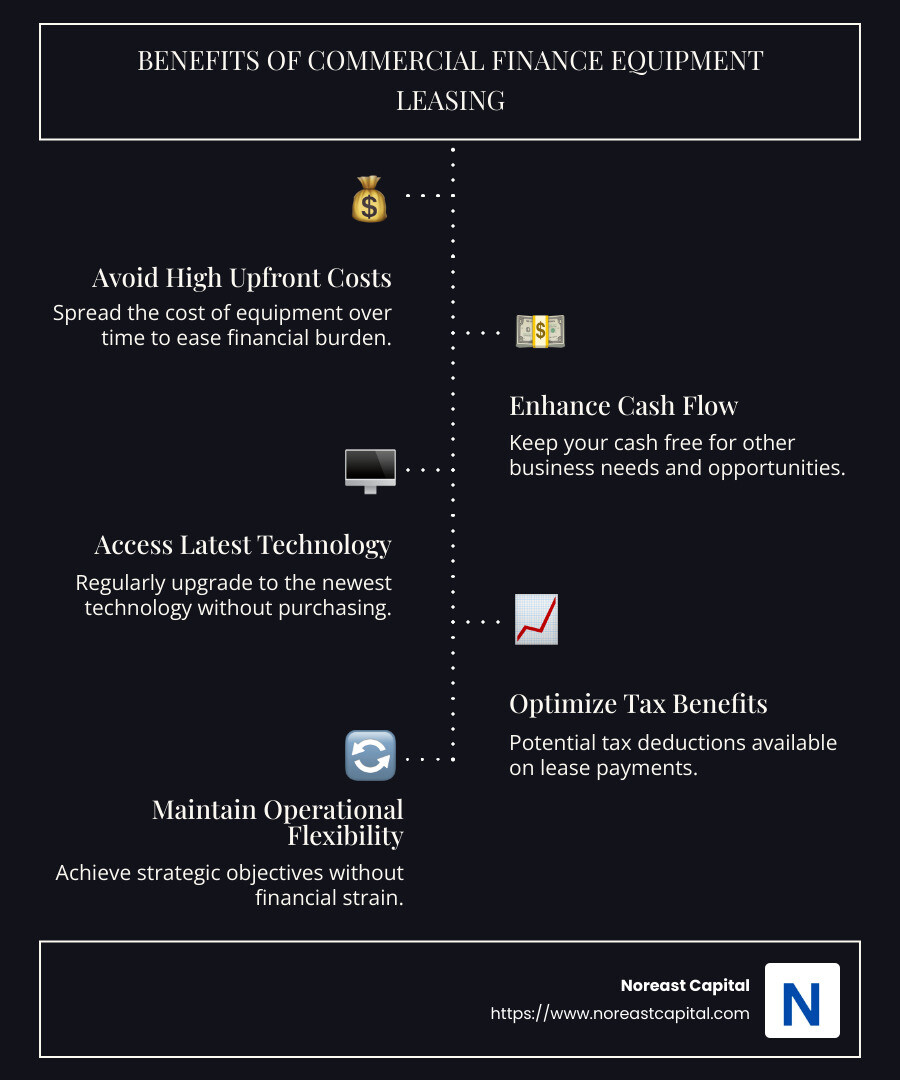
- Avoid High Upfront Costs: Leasing spreads the cost over time.
- Improve Cash Flow: Keep cash free for other business needs.
- Access Latest Technology: Regular upgrades without buying.
- Tax Benefits: Potential deductions on lease payments.
In today’s world, commercial finance equipment leasing empowers small business owners to meet strategic objectives without financial strain. From preserving liquidity to achieving operational goals, it aligns perfectly with businesses aiming for growth and efficiency.
I’m Vincent Cerniglia, with years of expertise in commercial finance equipment leasing. Our team at Noreast Capital offers competitive solutions to clients ranging from startups to Fortune 500 companies, helping them steer the complexities of equipment financing effectively.
Transitioning to “Understanding Commercial Finance Equipment Leasing,” we’ll explore the different leasing options available to your business.
Commercial finance equipment leasing terms to know:
– equipment leasing advantages
– equipment leasing benefits
– how equipment leasing works
Understanding Commercial Finance Equipment Leasing
When it comes to acquiring equipment, businesses have two main options: leasing or taking out a loan. Understanding the differences and benefits of each can help you make the best decision for your company.
Equipment Leasing
Equipment leasing is like renting. You get to use the equipment for a set period without owning it. This option is great for businesses that want flexibility and prefer not to commit to buying. Leasing can be especially beneficial when equipment becomes outdated quickly, like computers or technology.
Lease Types: There are several types of leases, such as operating leases, finance leases, and true leases. Each has its own terms and benefits. For instance, an operating lease lets you use the equipment and return it at the end, while a finance lease might end with you owning the equipment.
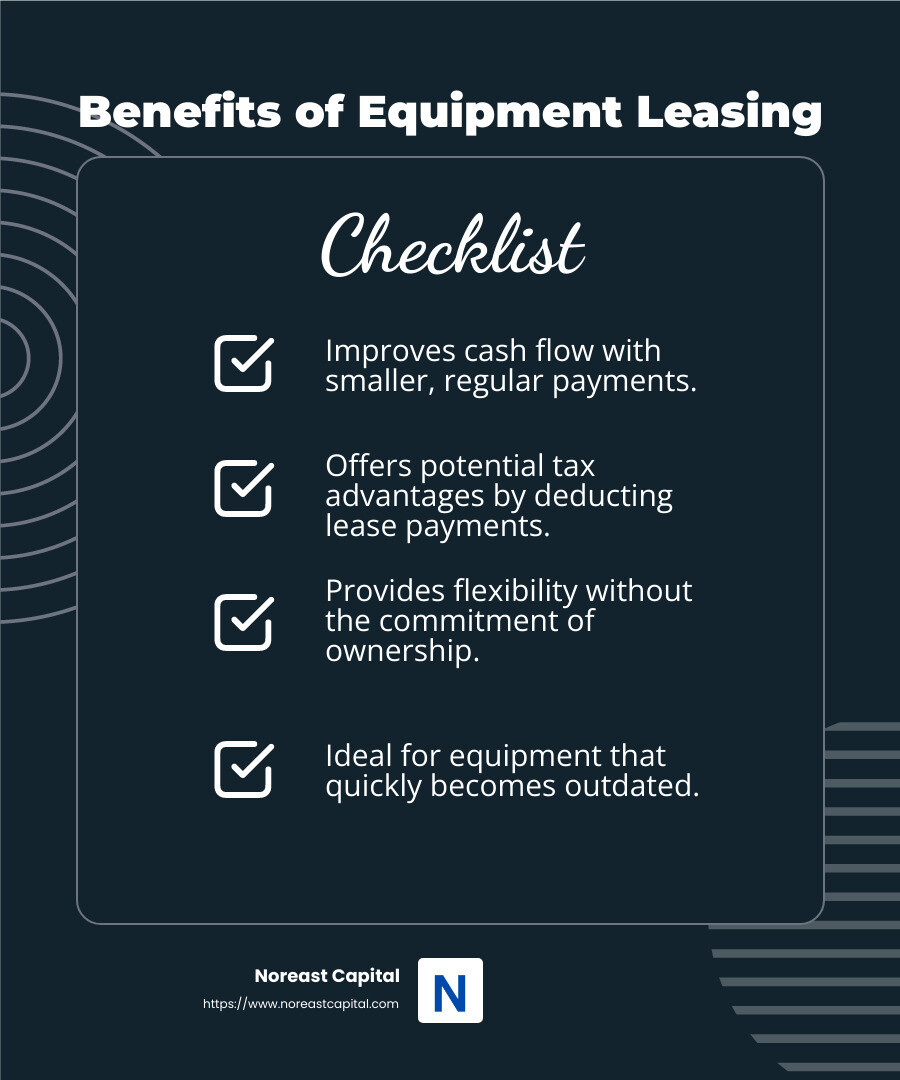
Cash Flow: Leasing helps manage cash flow better. Instead of a large upfront payment, you make smaller regular payments. This can keep your cash available for other needs.
Tax Advantages: Lease payments can often be deducted as business expenses, which can reduce your taxable income.
Financing Options
When we talk about financing options, we’re looking at how to pay for equipment over time. Leasing is one option, but you can also consider a loan.
Loan vs. Lease: A loan means you borrow money to buy the equipment. You own it but also take on the risks, like depreciation. Loans often require collateral, which can be the equipment itself. Leasing, on the other hand, doesn’t give you ownership, but it also doesn’t tie up your capital.
Choosing the Right Option: The choice between leasing and loans depends on your business needs. If you want to own the equipment and use it for a long time, a loan might be better. But if you prioritize cash flow and flexibility, leasing could be the way to go.
Lease vs. Loan: A Quick Comparison
| Feature | Lease | Loan |
|---|---|---|
| Ownership | No ownership | Ownership |
| Upfront Cost | Lower upfront cost | Higher upfront cost |
| Flexibility | High flexibility | Less flexibility |
| Tax Benefits | Potential tax deductions | Tax benefits on depreciation |
| Equipment Upgrades | Easier to upgrade | Harder to upgrade |
In the end, understanding these options helps you align your equipment acquisition strategy with your business goals. Whether you choose to lease or take a loan, it’s about finding what fits your needs best.
Next, we’ll dive into the specific benefits of equipment leasing and how it can support your business’s financial and strategic goals.
Benefits of Equipment Leasing
Leasing equipment can be a game-changer for businesses, especially when it comes to managing cash flow, enjoying tax benefits, boosting productivity, and achieving strategic goals.
Cash Flow
One of the biggest perks of commercial finance equipment leasing is that it helps you keep your cash flow healthy. Instead of a big upfront payment, you spread the cost over time with manageable monthly payments. This means you have more cash on hand for other important things like payroll, marketing, or unexpected expenses.
Imagine opening a new restaurant. You need a lot of equipment, but buying it all at once could drain your bank account. Leasing lets you get what you need without a huge hit to your cash reserves.
Tax Benefits
Leasing can also offer some sweet tax advantages. Monthly lease payments are often considered a business expense, which might be tax-deductible. This can lower your taxable income and save you money come tax time.
For example, under the Section 179 Deduction, businesses can deduct the full purchase price of qualifying equipment leased during the tax year. This can make leasing a very attractive option for tax purposes.
Productivity
Leasing allows you to access the latest technology and equipment without the worry of obsolescence. This means you can stay competitive and productive without having to constantly buy new gear. Whether it’s the latest kitchen appliances or cutting-edge software, leasing helps you keep up with industry advancements.
With the right equipment, your team can work more efficiently, meet deadlines, and deliver better results. It’s all about having the tools you need to do the job right.
Strategic Goals
Leasing aligns perfectly with achieving your strategic goals. By freeing up cash and providing flexibility, leasing allows you to invest in areas that drive growth. Whether it’s expanding your operations, entering new markets, or improving customer service, leasing gives you the financial room to maneuver.
Additionally, with options like operating leases or true leases, you can manage your balance sheet more effectively, keeping debt ratios in check and maintaining a strong financial position.
In summary, equipment leasing is not just about getting the tools you need. It’s about smart financial management and strategic growth. Next, we’ll explore the different types of equipment leases and how to choose the right one for your business needs.
Types of Equipment Leases
When it comes to commercial finance equipment leasing, understanding the different types of leases is crucial. Each type offers unique benefits and is suited for different business needs. Let’s explore the main types: operating lease, finance lease, true lease, TRAC lease, and municipal lease.
Operating Lease
An operating lease is like renting equipment. You use it for a set period without taking ownership. This is great for businesses that don’t want to commit long-term or worry about equipment becoming outdated.
- Flexibility: Upgrade or return equipment at lease end.
- Balance Sheet: Often doesn’t appear as debt, improving financial ratios.
- Tax Benefits: Lease payments can be expensed, potentially reducing taxable income.
Finance Lease
A finance lease, also known as a capital lease, is more like buying on installment. You usually take ownership at the end of the lease.
- Ownership: Transfer of ownership at lease end.
- Tax Benefits: You might benefit from depreciation and interest deductions.
- Cost: Typically involves higher payments than an operating lease.
True Lease
A true lease offers full use of equipment without ownership. It’s similar to an operating lease but with more flexibility at the end.
- Options: Return, purchase, or re-lease equipment at lease end.
- Tax Advantages: Payments may be expensed, potentially reducing tax liabilities.
TRAC Lease
A TRAC lease is specific to vehicles like trucks and trailers. It’s a true lease with a Terminal Rental Adjustment Clause (TRAC).
- Flexibility: Purchase or sell vehicles at the end of the lease based on a pre-agreed value.
- Business Use: Ideal for businesses needing licensed, titled motor vehicles.
Municipal Lease
A municipal lease is designed for government entities like schools or fire departments. It provides a way to acquire essential equipment without lengthy bond issues.
- Convenience: Quick and easy access to necessary equipment.
- Cost-Effective: Avoids expensive bond processes.
Choosing the right type of lease depends on your business goals, the type of equipment you need, and your financial situation. In the next section, we’ll discuss how to select the best leasing option for your specific needs.
How to Choose the Right Leasing Option
Choosing the right commercial finance equipment leasing option can be a game-changer for your business. It’s all about matching your business needs, the type of equipment, and your financial goals. Let’s break it down.
Assess Your Business Needs
First, think about what your business really needs. Are you looking for flexibility or ownership? If you need equipment that changes rapidly, like technology, an operating lease might be best. It allows you to upgrade often without worrying about owning outdated gear.
For equipment that holds value and is used long-term, like heavy machinery, a finance lease could be better. This option leads to ownership, which can be beneficial if you plan to use the equipment for many years.
Consider the Equipment Type
The type of equipment you’re leasing is crucial. For example, if you’re leasing vehicles, a TRAC lease is custom for you. It gives flexibility at the end of the lease with options to buy or sell at a predetermined value.
For essential services like schools or fire departments, a municipal lease provides necessary equipment quickly, without the hassle of bond issues.
Align with Financial Goals
Your financial goals will guide your choice. If maintaining cash flow is a priority, an operating lease with lower monthly payments might be ideal. This option keeps your balance sheet clean and offers potential tax benefits since payments can often be expensed.
On the other hand, if you aim to own the equipment and benefit from depreciation, a finance lease aligns well. It typically involves higher payments, but you gain ownership at the end, which could be a long-term cost saver.
Final Thoughts
Choosing the right leasing option is all about aligning these factors with your business strategy. Evaluate your needs, consider the type of equipment, and think about your financial objectives. This will lead to smart investment decisions that support your business growth.
Frequently Asked Questions about Commercial Finance Equipment Leasing
What is commercial equipment leasing?
Commercial equipment leasing is a strategic way for businesses to use equipment without buying it outright. Instead of paying the full price upfront, you make regular payments to use the equipment over a set period. This approach is different from traditional financing, where you borrow money to purchase the equipment and pay it back over time. Leasing allows you to conserve cash and maintain flexibility, especially if you need to upgrade equipment frequently.
What is a finance lease for equipment?
A finance lease is a type of lease where you eventually gain ownership of the equipment. It’s a full-payout lease, meaning you pay for the entire cost of the equipment over the lease term. This option is great if you want to own the equipment at the end and benefit from its depreciation over time. However, you’re responsible for maintenance, taxes, and insurance during the lease period.
What is a good equipment lease rate?
A good equipment lease rate depends on several factors, including your credit score, the type of equipment, and the lease term. Credit factors play a big role in determining the rate. A higher credit score usually means lower lease rates because it shows you’re a reliable borrower.
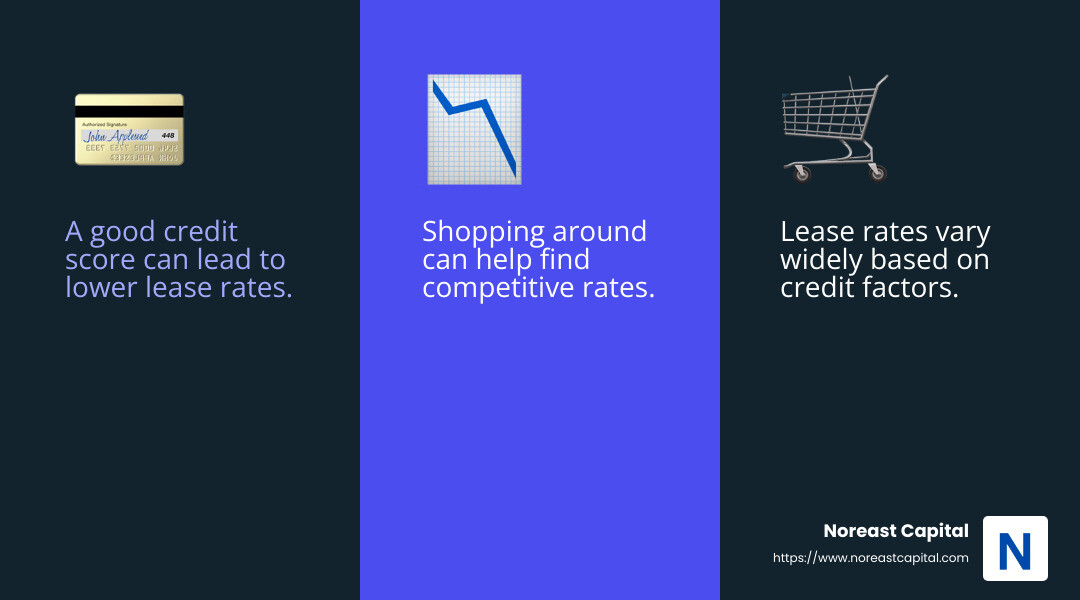
When evaluating lease rates, consider the credit impact and rate expectations. Rates can vary widely, so it’s wise to shop around and understand what different lenders offer. A competitive lease rate will align with your budget and financial goals, ensuring that your business can use the necessary equipment without straining cash flow.
In summary, understanding the nuances of commercial finance equipment leasing can help you make informed decisions that align with your business needs and financial goals. Whether you’re considering a finance lease or looking for the best lease rate, knowing what to expect can guide you toward smart investments.
Conclusion
At Noreast Capital, we understand that choosing the right equipment financing solutions is crucial for your business’s success. As your strategic partner, we offer flexible and customizable leasing options that allow you to use the equipment you need without the burden of ownership. This approach helps you save money and maintain a healthy cash flow, positioning your business for growth and success.
Our expertise in commercial finance equipment leasing is backed by years of experience and a deep commitment to supporting businesses like yours. We offer competitive rates and terms, ensuring that you can acquire high-quality equipment without compromising your financial stability.
With locations in Annapolis, Baltimore, and Washington, DC, we’re ready to serve you with personalized service and support. Our goal is to help you achieve your strategic goals by providing the financial tools and resources you need to thrive.
By choosing Noreast Capital, you’re not just choosing a financing company—you’re choosing a partner dedicated to your success. Let us help you steer the complexities of equipment leasing and find the solution that best fits your needs.
For more information on how we can support your business, visit our equipment lease page. Together, we can turn your business goals into reality.