

Lease Buyout Calculator: Know Your Options and Make Smart Decisions
If you’re exploring ways to efficiently manage your business expenses while acquiring crucial equipment, a lease buyout calculator might be exactly what you need. This tool helps you determine whether buying out a leased vehicle or equipment at the end of your lease term is a smart financial move.
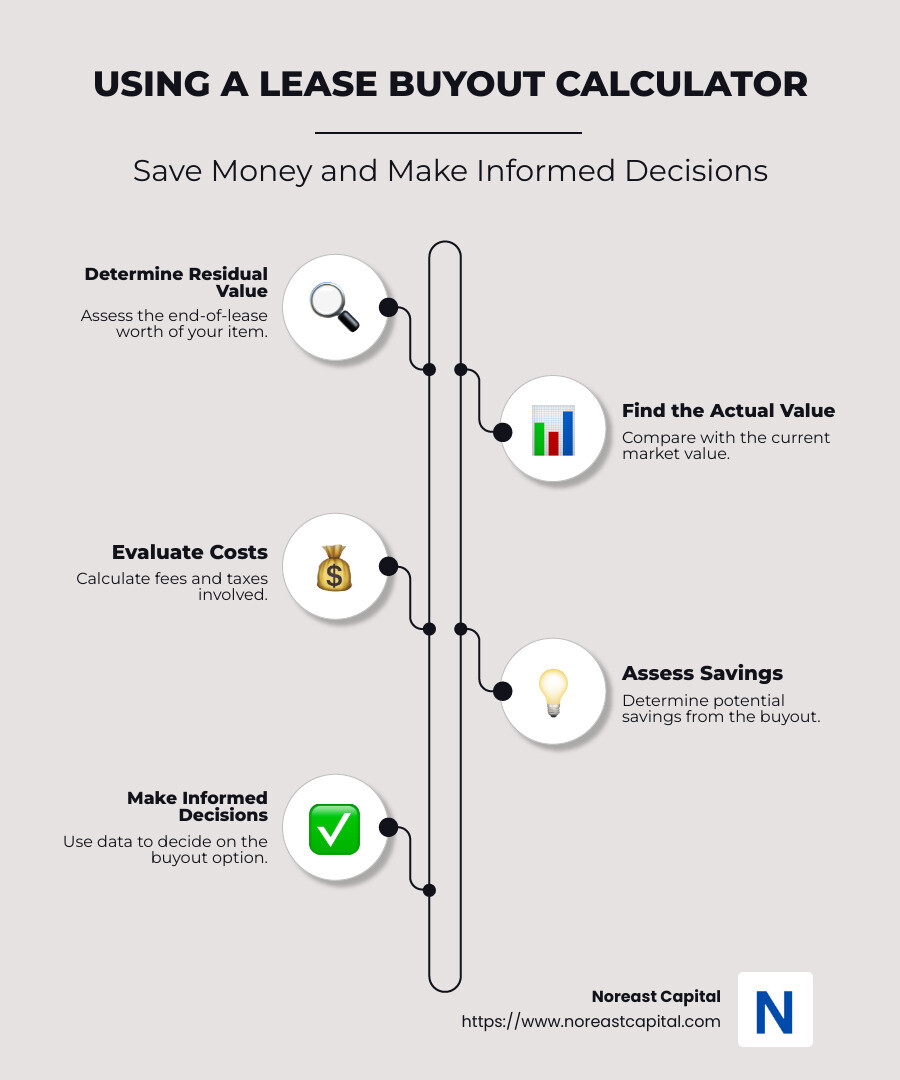
Here’s a quick guide to what a lease buyout calculator can help you with:
- Determine the Residual Value: Understand what your leased item is worth at the end of the lease.
- Find the Actual Value: Compare it with the current market value to assess your deal.
- Evaluate Costs: Look into associated fees and taxes for a comprehensive picture.
Understanding these elements can save you money and maintain your business’s cash flow.
I’m Vincent Cerniglia, and as part of Noreast Capital, I’ve helped countless businesses like yours steer equipment leasing. With experience in providing leasing solutions and insights into lease buyout calculator tools, I’m here to guide you through informed and financially savvy decisions.
Quick look at lease buyout calculator:
– agriculture equipment leasing calculator
– commercial lease calculator
– construction equipment leasing calculator
Understanding Lease Buyout
When considering a lease buyout, it’s crucial to understand a few key terms: residual value, lease contract, and buyout fee. These elements will help you make informed decisions about whether buying out your lease is the right move for your business. Let’s break them down:
Residual Value
The residual value is the estimated worth of your leased asset at the end of the lease term. It’s like a crystal ball prediction made at the start of your lease, showing how much your equipment or vehicle will be worth when the lease ends. This value is important because it directly impacts your buyout decision. If the market value of the asset is higher than the residual value, a buyout might be a smart financial choice.
Lease Contract
Your lease contract is your roadmap. It details all the terms and conditions of your lease agreement, including the residual value, monthly payments, and any potential fees. It’s essential to review this document carefully to understand your obligations and the options available to you at the end of the lease.
Tip: Always check for a section labeled “buyout amount” or “payoff amount.” This will give you a clear idea of what it will cost to purchase the leased asset.
Buyout Fee
A buyout fee is an additional cost you might incur if you decide to purchase your leased asset. This fee can vary, so it’s important to know what you’re getting into. Think of it as the cost of convenience for ending your lease early and gaining ownership.
Pro Tip: Negotiating this fee can sometimes lead to savings, so don’t shy away from discussing it with your lessor.

By understanding these components, you can better steer your leasing options and make decisions that align with your business goals. Whether you’re looking to save money or secure essential equipment, knowing the ins and outs of lease buyouts will empower you to take control of your financial future.
Next, we’ll dive into how to use a lease buyout calculator to further simplify this process and help you make the best choice for your needs.
How to Use a Lease Buyout Calculator
A lease buyout calculator is a powerful tool that helps you make informed decisions about purchasing your leased asset. It simplifies the process by calculating the potential costs and savings involved in a lease buyout. Here’s how you can use one effectively:
Step-by-Step Guide to Using a Lease Buyout Calculator
- Gather Essential Information
- Residual Value: This is the estimated value of your asset at the end of the lease term. You’ll find this in your lease contract.
- Current Market Value: Use online tools or consult with professionals to determine this value. It represents what your asset is worth today.
- Remaining Payments: Calculate the total of all future lease payments you still owe.
Buyout Fee: Check your lease agreement for any additional fees associated with buying out the lease.
Input the Data
- Enter the residual value, current market value, and remaining payments into the calculator.
Include any buyout fees or sales tax that might apply.
Analyze the Results
- The calculator will show you the total cost of the buyout and compare it with the current market value.
- It will also highlight potential savings, helping you see if buying the asset is financially beneficial.
Benefits of Using a Lease Buyout Calculator
- Saves Time: Quickly computes complex numbers and provides clear insights.
- Informed Decisions: Offers a detailed breakdown of costs and savings, helping you make the best financial choice.
- Negotiation Power: Understanding the numbers gives you leverage when discussing terms with your lessor.

By using a lease buyout calculator, you’re not just crunching numbers—you’re gaining a clearer picture of your financial landscape. This clarity can guide you in making smart choices that align with your business goals and cash flow needs.
Next, we’ll explore the specific steps involved in calculating your lease buyout, ensuring you have all the knowledge you need to proceed confidently.
Steps to Calculate Your Lease Buyout
Calculating your lease buyout involves a few key steps. It’s essential to understand each component to make the best financial decision. Here’s a simple guide to help you through the process:
1. Determine the Residual Value
The residual value is the estimated worth of your vehicle at the end of the lease term. This figure is set at the beginning of your lease and can be found in your lease contract. It’s crucial because it forms the base of your buyout calculation.
2. Assess the Actual Value
Next, find out the actual value of your vehicle. This is its current market value. You can use online appraisal tools or consult with a dealership to get this number. Comparing the actual value to the residual value helps determine if buying out the lease is a good deal.
3. Calculate Sales Tax
Sales tax can add a significant amount to your lease buyout cost. The rate depends on your location. Check your state’s sales tax rate for vehicles and apply it to the total buyout amount. This will give you a clearer picture of the total cost.
4. Consider License and Registration Fees
When you buy out your lease, you’ll need to transfer ownership. This process includes paying for license and registration fees. These costs vary by state but are necessary to complete the buyout. Be sure to factor them into your calculations to avoid surprises.
Example Calculation
Imagine your car’s residual value is $15,000, and its current market value is $18,000. If your sales tax rate is 6%, and the license fees are $300, here’s how you’d calculate:
- Residual Value: $15,000
- Sales Tax: 6% of $15,000 = $900
- License Fees: $300
- Total Buyout Cost: $15,000 + $900 + $300 = $16,200
In this example, the total cost to buy out your lease is $16,200. Since the actual value ($18,000) is higher, buying out the lease might be a smart move.
By following these steps, you can accurately calculate your lease buyout and decide if it’s the right financial choice. Next, we’ll dive into how to negotiate your lease buyout to potentially save even more.
Negotiating Your Lease Buyout
Once you’ve calculated your lease buyout, it’s time to consider negotiation. Negotiating can lead to better terms and potential savings. Here’s how you can approach it like a pro:
1. Understand Your Lease-End Options
At the end of your lease, you generally have three options: return the vehicle, buy it out, or lease a new one. Understanding these options gives you leverage. If you decide on a buyout, knowing the residual value and actual value can help you negotiate a fair price.
2. Prepare for Negotiation
Before heading to the dealership, gather all the information you need. This includes your lease contract, market research on your vehicle’s current value, and any quotes you have for similar vehicles. Being well-prepared shows the dealer you’re serious and informed.
3. Leverage Your Position
Dealers often prefer to avoid taking back leased vehicles. They might offer incentives if they believe you’re leaning towards returning the car. Use this to your advantage. If the actual value is lower than the residual, point this out to negotiate a better buyout price.
4. Make an Offer
Once you’re ready, make an offer based on your research. Start lower than what you’re willing to pay, giving room for negotiation. Highlight any discrepancies between the residual and actual values to support your offer. Be polite but firm in your discussions.
5. Be Ready to Walk Away
If negotiations don’t go as planned, be prepared to walk away. Sometimes, showing that you’re willing to explore other options can prompt the dealer to reconsider. You have the power to choose what’s best for you.
By taking these steps, you can effectively negotiate your lease buyout and potentially save money. Next, we’ll address some frequently asked questions about the lease buyout process.
Frequently Asked Questions about Lease Buyout
How to calculate lease buyout amount?
Calculating your lease buyout amount might seem tricky, but breaking it down makes it easier. Start with the residual value, which is the estimated worth of your vehicle at the end of the lease. You can find this in your lease contract. Next, consider any remaining lease payments and add the buyout fee, if applicable.
To get a complete picture, compare the actual value of your car, which reflects its current market value. This comparison helps you decide if buying the car is a smart move. If the actual value is higher than the residual value, buying might be a good deal.
Can you negotiate the buyout price of a leased car?
Yes, you can often negotiate the buyout price. Start by reviewing your lease contract to understand your lease-end options. Knowing the residual value and the actual value of your car gives you a strong position in negotiations.
Approach your financer or dealership with this information. Highlight any differences between the residual and actual values. If the actual value is lower, use this as leverage to negotiate a better price. Dealerships might be open to negotiation, especially if they want to avoid taking back the vehicle.
How do I know my lease buyout?
To know your lease buyout, check your lease contract for details on the buyout amount. This section usually outlines the residual value and any fees associated with purchasing the vehicle at the end of the lease. If you’re unsure, contact your financer or dealership for clarification.
Understanding your lease-end options is crucial. Whether you decide to return the car, buy it, or lease a new one, having all the information helps you make an informed decision. Use a lease buyout calculator to see if buying the car fits your budget and financial goals.
Conclusion
At Noreast Capital, we understand the importance of making informed decisions when it comes to equipment leasing. Our goal is to provide businesses with flexible leasing options that help maintain cash flow without the need for ownership. By choosing leasing over buying, companies can use essential equipment while keeping their finances in check.
Our lease buyout calculator is a valuable tool for businesses considering buying out their leases. It helps you evaluate potential savings and make smart financial choices. With this tool, you can easily assess the residual value, actual value, and any additional costs, ensuring you have a clear picture of your lease buyout options.
Leasing with us means you can enjoy the benefits of using the latest equipment without the burden of ownership. This approach not only preserves your cash flow but also allows you to adapt to changing business needs. Whether you’re in Annapolis, Baltimore, or Washington, DC, Noreast Capital is here to support your equipment financing needs.
For more insights on calculating lease payments and understanding the benefits of equipment leasing, visit our equipment leasing page. Let us help you make the best financial decisions for your business.