
Used agricultural equipment leasing offers a smart financial strategy for many farming businesses seeking to innovate without the heavy burden of ownership. This approach not only mitigates upfront costs but also ensures efficient cash flow management and protection against equipment obsolescence.
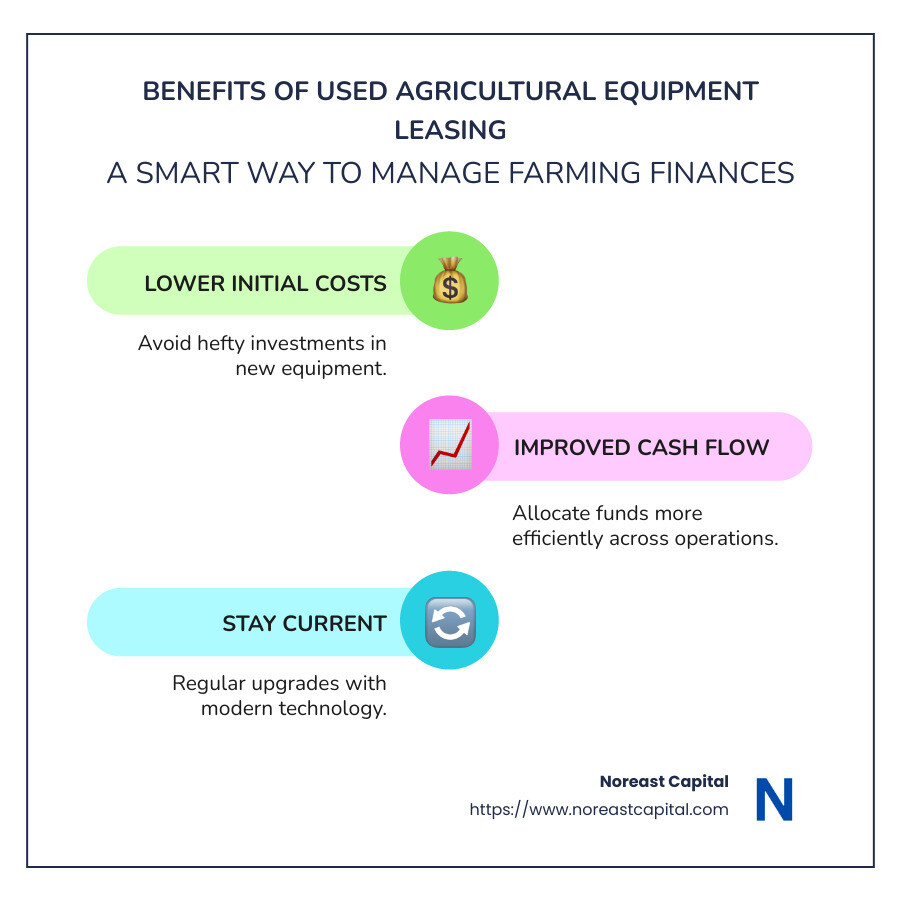
Here’s a quick rundown of why used agricultural equipment leasing might be right for you:
- Lower Initial Costs: Avoid the hefty upfront investment of buying new equipment.
- Improved Cash Flow: Allocate funds more flexibly across different areas of your business.
- Stay Current: Regularly upgrade to newer technology without high replacement costs.
I’m Vincent Cerniglia, an expert in the equipment financing and leasing industry. Leveraging my extensive experience, I’ve seen how used agricultural equipment leasing can empower businesses to stay competitive while managing their finances wisely.
Used agricultural equipment leasing basics:
– equipment finance and leasing association
– office equipment finance
– why lease equipment
Understanding Used Agricultural Equipment Leasing
Leasing used agricultural equipment can be a strategic move for farmers looking to optimize their operations without the financial strain of purchasing new machinery. Here’s a deeper dive into the options, cost savings, and tax advantages that come with this approach.
Leasing Options
When it comes to used agricultural equipment leasing, there are several options to consider:
True Leases: These allow you to deduct full lease payments as operating expenses. It’s a great way to keep your financials straightforward and predictable.
Conditional Sale Leases: This option treats the lease like a loan, allowing you to take depreciation benefits, including Section 179 deductions. At the end of the lease, you own the equipment.
Purchase Leaseback (PLB): Ideal for those who have already purchased equipment, this option allows you to sell your equipment to the leasing company and lease it back, freeing up capital and increasing tax deductions.
Cost Savings
One of the most significant advantages of leasing used equipment is the cost savings:
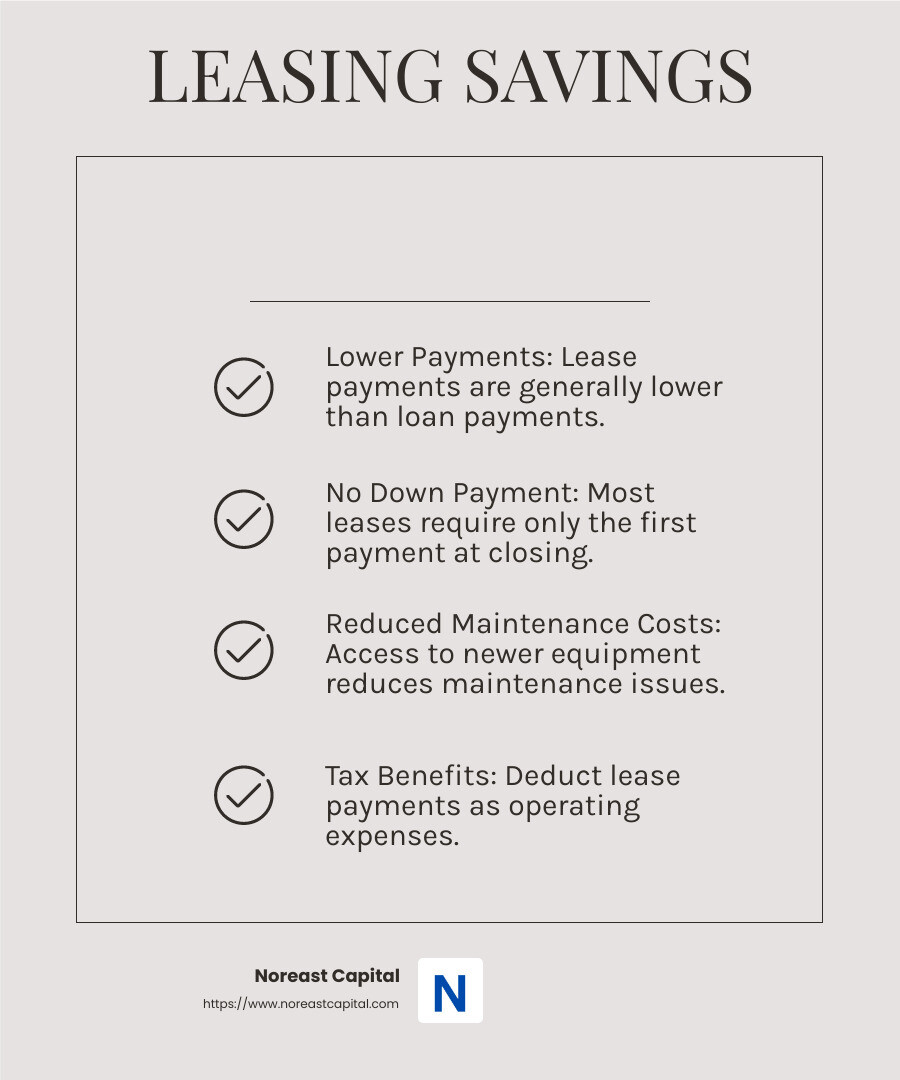
Lower Payments: Lease payments are generally lower than loan payments, as you’re only paying for the equipment’s use during the lease term, not its full value. This can be particularly beneficial during periods of tight cash flow.
No Down Payment: Most leases require only the first payment at closing, which contrasts sharply with the substantial down payments often needed for purchasing equipment outright.
Reduced Maintenance Costs: Leasing can often mean lower maintenance costs, as you have access to newer equipment with fewer wear and tear issues.
Tax Advantages
Leasing used agricultural equipment also comes with notable tax benefits:
Operating Expense Deductions: With a true lease, your payments can be deducted as operating expenses, potentially lowering your taxable income.
Section 179 Deduction: For conditional sale leases, you can take advantage of the Section 179 deduction, allowing you to write off the full purchase price of qualifying equipment.
Tax Advice: Always consult with a tax professional to ensure you’re leveraging these benefits effectively and in compliance with current laws.
In summary, used agricultural equipment leasing provides multiple benefits, including flexible options, cost savings, and tax advantages. These aspects make leasing an attractive option for farmers who need to manage their finances wisely while keeping their operations up to date.
Next, we’ll walk you through the steps to lease used agricultural equipment, ensuring a smooth and informed leasing experience.
Steps to Lease Used Agricultural Equipment
Leasing used agricultural equipment can be straightforward if you follow these steps. Let’s break it down into manageable parts to ensure you’re confident in your decision-making process.
Step 1: Determine Your Equipment Needs
Start by identifying the specific equipment you need for your farm operations. Consider what will best support your productivity. Common options include:
- Tractors: Essential for various tasks, from plowing to hauling.
- Combines: Crucial for efficient harvesting of crops.
- Farm Implements: Such as plows, harrows, and seed drills.
Assess your farm’s requirements and prioritize equipment that will improve your operations.
Step 2: Evaluate Leasing Options
Once you know what equipment you need, it’s time to evaluate your leasing options:
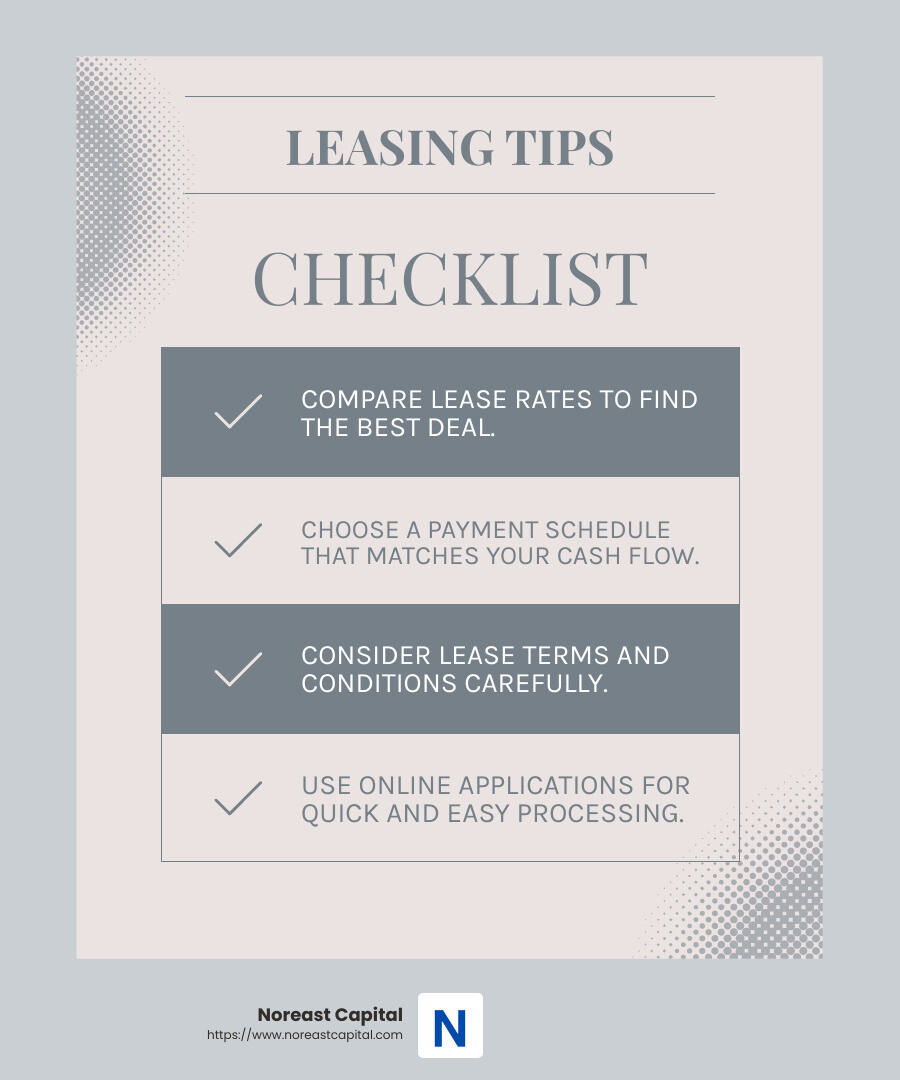
- Lease Rates: Compare rates from different leasing companies. Higher residuals typically result in lower monthly payments.
- Payment Schedules: Choose a schedule that aligns with your cash flow. Options often include monthly, quarterly, or annual payments.
Step 3: Apply for Leasing
The application process is simpler than you might think:
- Online Application: Many companies offer an online application process. This can save time and provide a seamless experience.
- Pre-Sale Credit Decisions: Some leasing companies provide pre-sale credit decisions, giving you an idea of your credit limit before you finalize any deals.
When applying, ensure you have all necessary documents ready, such as financial statements and credit history.
Step 4: Finalize the Lease Agreement
After approval, it’s time to finalize the lease:
- Custom Lease Terms: Negotiate terms that suit your operational needs. This might include lease duration and usage limits.
- Equipment Use: Understand how the equipment will be used and any restrictions that may apply.
Carefully review the lease agreement, including all terms and conditions. Make sure to clarify any uncertainties before signing.
By following these steps, you can steer the leasing process with confidence, ensuring you get the best deal for your farm’s needs. Next, let’s explore the benefits of leasing used agricultural equipment.
Benefits of Leasing Used Agricultural Equipment
Leasing used agricultural equipment offers several key benefits that can significantly impact your farm’s financial health and operational efficiency.
Capital Preservation
Leasing helps you preserve capital, allowing you to maintain cash reserves for other important needs. Instead of tying up large amounts of money in equipment purchases, you can use that cash for daily operations or unexpected expenses. This is especially beneficial in agriculture, where unpredictable factors like weather can affect income.
Flexibility
Leasing provides flexibility in several ways:
Custom Lease Terms: You can tailor lease agreements to suit your farm’s unique needs. Adjust the lease duration, payment schedules, and usage terms to align with your cash flow and operational requirements.
Upgrade Options: At the end of a lease, you can choose to upgrade to newer equipment, ensuring you always have access to the latest technology without the burden of ownership.
Technology Access
Leasing allows you to access the latest agricultural technology without a hefty upfront investment. This is crucial in an industry where technological advancements can lead to improved efficiency and productivity. By leasing, you can stay ahead of the curve and ensure your farm is equipped with the best tools for success.
In Summary: Leasing used agricultural equipment not only helps in capital preservation and provides flexibility, but also grants you access to the latest technology. This combination of benefits can lead to improved cash flow, operational efficiency, and overall farm success.
Next, we’ll address some frequently asked questions about leasing used agricultural equipment.
Frequently Asked Questions about Used Agricultural Equipment Leasing
What credit score is needed for leasing?
When it comes to used agricultural equipment leasing, your credit score plays a crucial role. Generally, a credit score of 650 or higher is considered favorable for leasing. This score indicates to lenders that you are a reliable borrower. However, some lenders might offer options for those with lower scores, but expect higher interest rates or more stringent terms.
Each lender may have different requirements. It’s wise to shop around and understand what different lenders can offer based on your credit profile. Always ask about the specific credit requirements when considering a lease.
How much does it cost to lease a tractor?
The cost to lease a tractor can vary based on several factors:
Lease Rates: These are influenced by the age and condition of the equipment, as well as your credit score. Typically, lease rates for used equipment start at 6.65%.
Payment Factors: Monthly payments are determined by the lease term, equipment value, and any additional services included, such as maintenance.
Down Payment: Many leases require little to no down payment, making it an attractive option for preserving capital.
For example, if you lease a tractor valued at $50,000 over a 5-year term, with a 6.65% rate, expect monthly payments around $980, assuming no down payment or additional fees.
Is it hard to get equipment financing?
Financing ease for used agricultural equipment largely depends on your financial situation and the lender’s criteria. Many financing options are available, aiming to make the process straightforward, even for those new to leasing.
Credit and Down Payment: A decent credit score can simplify the process, but there are options for those with less-than-perfect credit. Many lenders offer financing without a significant down payment, easing the burden on your cash flow.
Online Applications: The application process has become more streamlined, with many lenders offering online applications and pre-sale credit decisions. This means you can apply and receive an approval decision quickly, sometimes in as little as 20 minutes.
In summary, while credit score and financial health are important, the availability of various leasing options makes equipment financing accessible and manageable for many farmers.
Conclusion
In farming, having access to the right equipment is crucial. Noreast Capital is here to help farmers and agricultural businesses achieve their goals without the burden of ownership. Our used agricultural equipment leasing options provide a smart way to maintain cash flow and stay updated with the latest technology.
Leasing Advantages:
Capital Preservation: By leasing, you avoid the large upfront costs of purchasing equipment. This means you can keep your capital for other important needs, like seeds, feed, or unexpected expenses.
Flexibility: Leasing offers the flexibility to upgrade equipment as technology advances, ensuring your farm remains efficient and competitive. At the end of the lease term, you can choose to buy, renew, or return the equipment.
Tax Benefits: Lease payments can often be deducted as an operating expense, potentially lowering your taxable income. This can be a significant advantage come tax season.
Maintaining financial health is vital for any business, and leasing can play a key role in achieving this. By spreading out payments and preserving cash reserves, you can better manage your farm’s finances and invest in other areas of growth.
At Noreast Capital, we’re committed to supporting your success. Our leasing solutions are designed to be straightforward and beneficial, providing you with the tools to thrive in the changing agricultural industry.
For more information on how leasing can benefit your farm, visit our equipment lease page. Let us help you make the most of your agricultural endeavors.